The network for creativity
Join 1.25M professional creatives like you
Connect with clients, get discovered, and run your business 100% commission-free
Creatives on Contra have earned over $150M and we are just getting started
Back to feedPost

Project Title
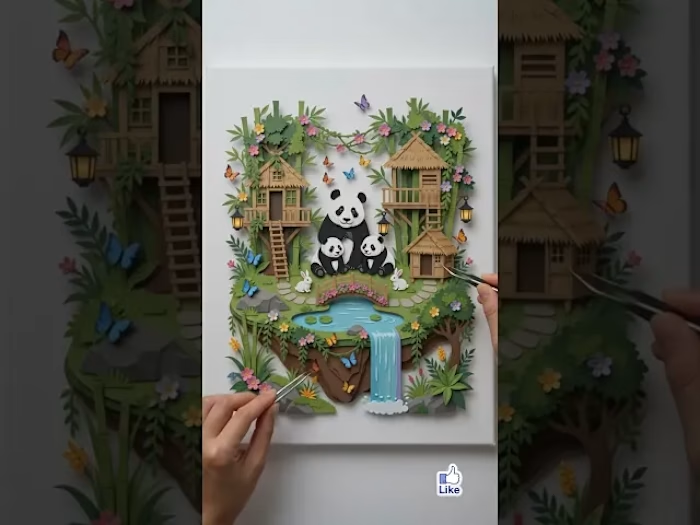
AI-Generated Satisfying Paper Craft Animation | Floating Bamboo Village Diorama
Project Description
Overview
A mesmerizing AI-generated 3D paper craft animation showcasing a floating bamboo village diorama. This project explores the fusion of generative AI tools and fine motion design to create highly engaging, satisfying short-form visual content.
Watch the Video:
https://www.youtube.com/watch?v=ioyd2EHgVxg
Key Highlights:
Multi-layered 3D paper art visual style featuring intricate details like cozy treehouses, crystal-clear ponds, waterfalls, and panda figures.
Smooth ambient lighting and relaxing motion flow optimized for maximum viewer retention.
Tailored specifically for short-form video platforms including YouTube Shorts, Instagram Reels, and TikTok.
Services Offered:
I specialize in creating custom AI-assisted short videos, 3D paper craft visuals, satisfying motion loops, and creative visual content for personal brands, social media creators, and businesses.
AI ArtAI Video ProductionCapCutMidjourneyRunwayaivideogenerationgenerativeaimotiondesign3D Animation


The network for creativity
Join 1.25M professional creatives like you
Connect with clients, get discovered, and run your business 100% commission-free
Creatives on Contra have earned over $150M and we are just getting started







Related posts

Pika just launched their plugin in ChatGPT.
I just used it and created this video.


wow really nice!


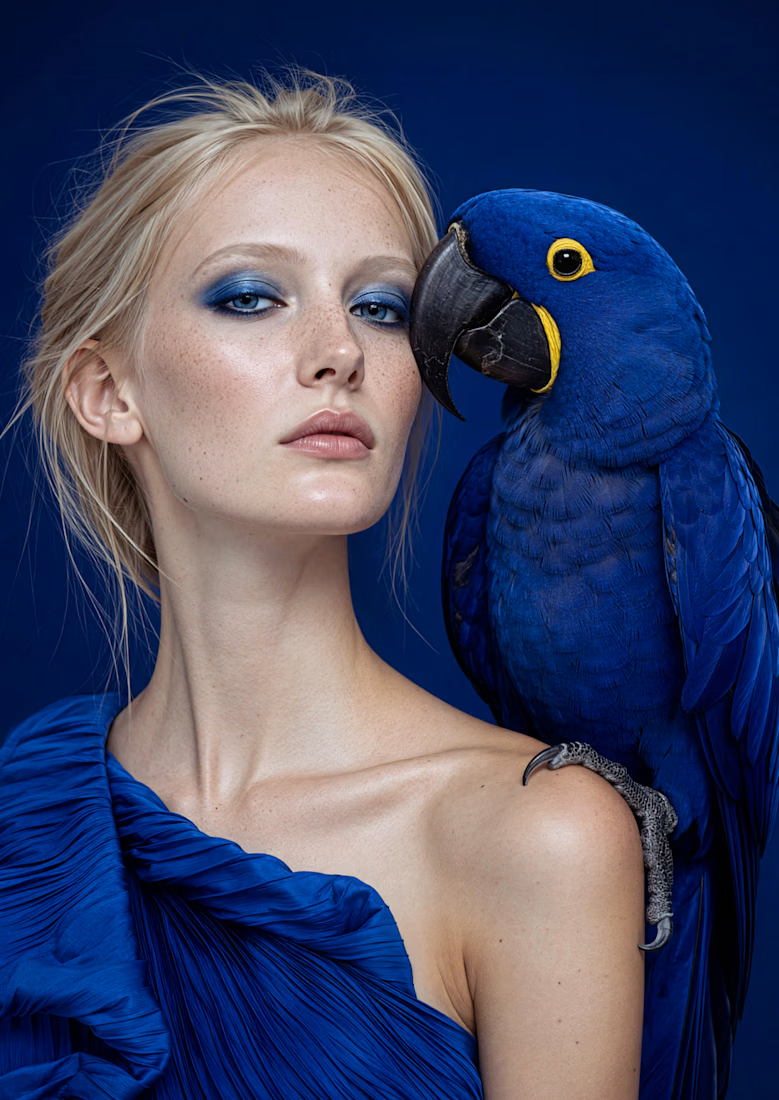
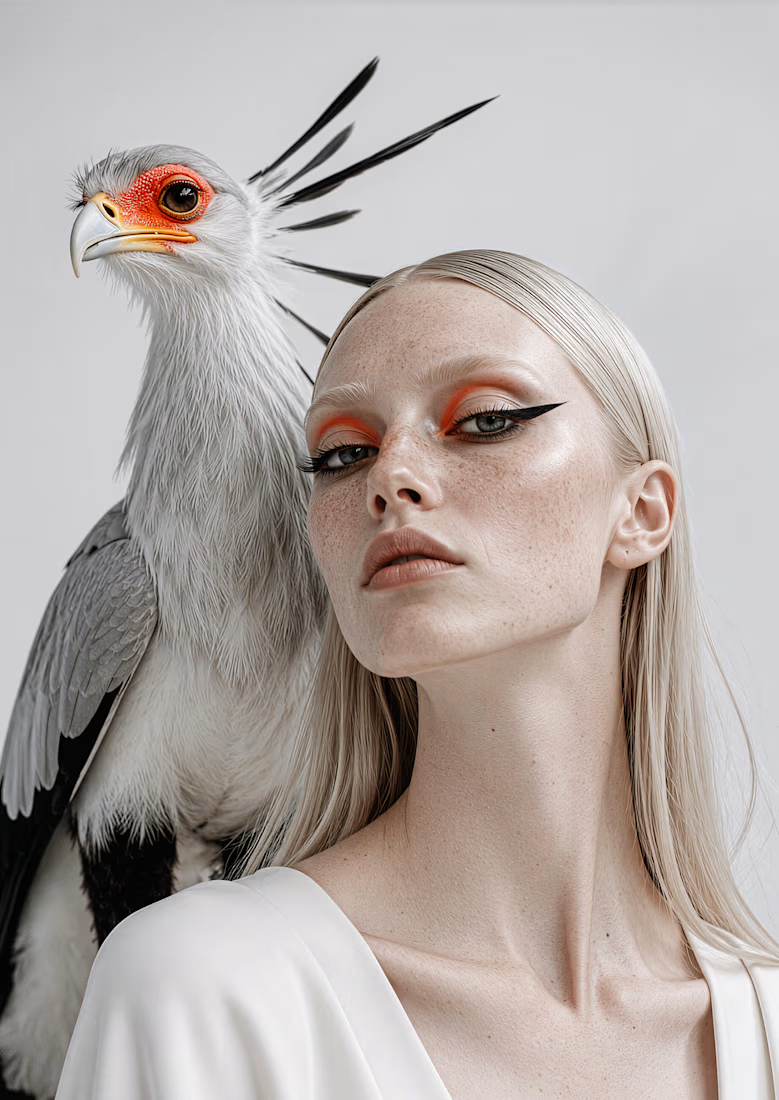
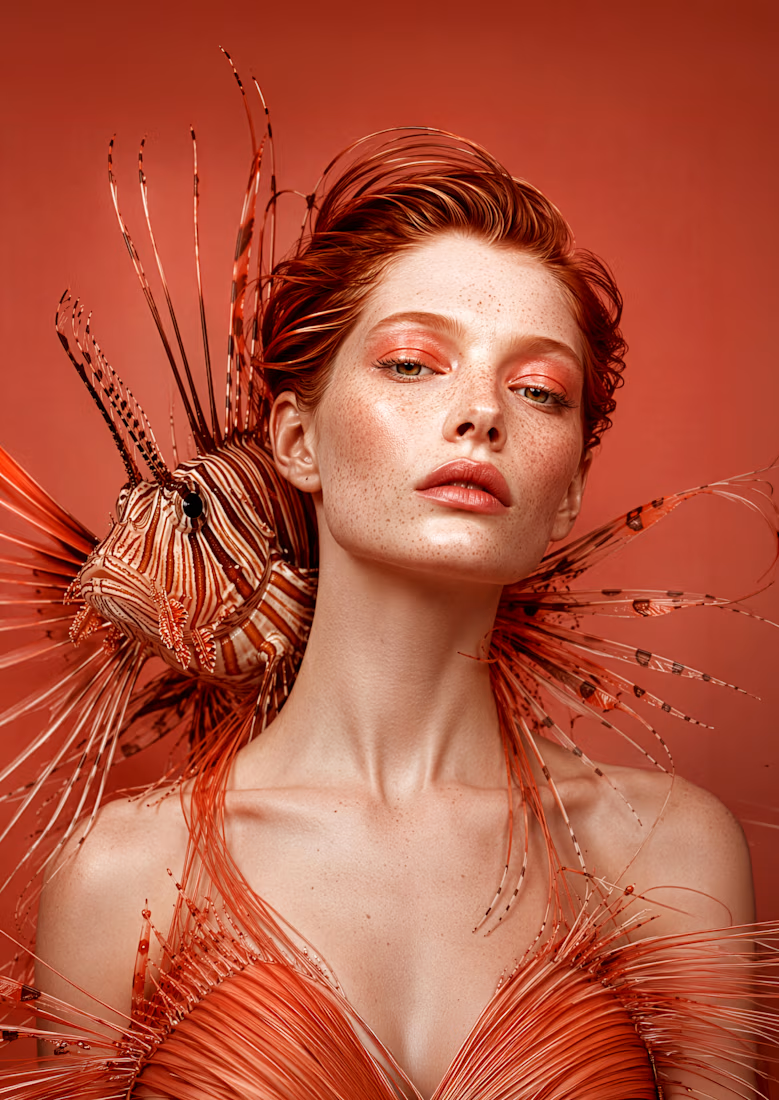
This photoshoot never happened...
But the campaign could.
No studio.
No location.
No styling team.
No animal handlers.
No huge production budget.
In a traditional workflow, a high-concept beauty editorial like this would be extremely difficult, expensive and in some cases almost impossible to produce. Different models, exotic animals, controlled lighting, makeup, styling, retouching, logistics, safety and a production crew.
With AI, the creative process changes.
Once the visual direction is locked, I can build a consistent system and generate hundreds of images within the same world: different animals, color palettes, compositions, crops, moods and campaign formats.
This is not about replacing every photoshoot. It is about opening creative territories that were previously too expensive, too risky or too complex to explore.
These are just experiments, but I can easily imagine this kind of visual direction working for beauty, eye makeup, color cosmetics, fragrance or high-impact product launches.
For brands that sell through visuals, the real value of AI is not one beautiful image. It is the ability to test bold campaign ideas faster, then scale the strongest direction into a full visual system.


No After Effects. No manual keyframes.
Just pure React, frame-level spring math, and code.
Built this SaaS product reel completely with Remotion at 60fps. Programmatic motion design makes it effortless to keep animations 100% true to real product UI while allowing programmatic variant generation.
💯 What you receive as a deliverable:
🎬 Production Video: 4K/60fps .mp4 or .webm ready for social, ads, and landing pages
🪟 Transparent Overlays: Alpha-channel .mov (ProRes 4444) to drop over your existing product footage
🔁 Looping Assets: Optimized .gif files for GitHub readmes and email campaigns
💻 Web Native: Interactive React @remotion/player components or automated server-side render scripts
Stack:
• React
• Remotion (useCurrentFrame, spring, interpolate)
• Headless Chromium render pipeline
Taking on 2 new projects this month for SaaS and dev-tool teams looking for high-end product animations.
DMs are open—let’s build.


