The network for creativity
Join 1.25M professional creatives like you
Connect with clients, get discovered, and run your business 100% commission-free
Creatives on Contra have earned over $150M and we are just getting started
Back to feedPost


Today’s project: second-level communication for a pharmacy I’ve been working with as part of an ongoing brand redesign.
I connected Claude to Affinity through its new scripting capabilities, defined the artboards and dimensions, prepared the content in a structured CSV, and set up a workflow to generate and organise all the assets with consistent naming.
The exciting part for me is that this wasn’t just about using AI to generate something. I designed the workflow myself: structuring the data, defining the visual requirements, and figuring out how to turn a repetitive production task into a streamlined system.
And then… I watched a little robot open Affinity, create everything, organise the files and name every artboard perfectly in about 10 minutes.
I have to admit, watching it happen was slightly surreal. And very, very satisfying. 😍
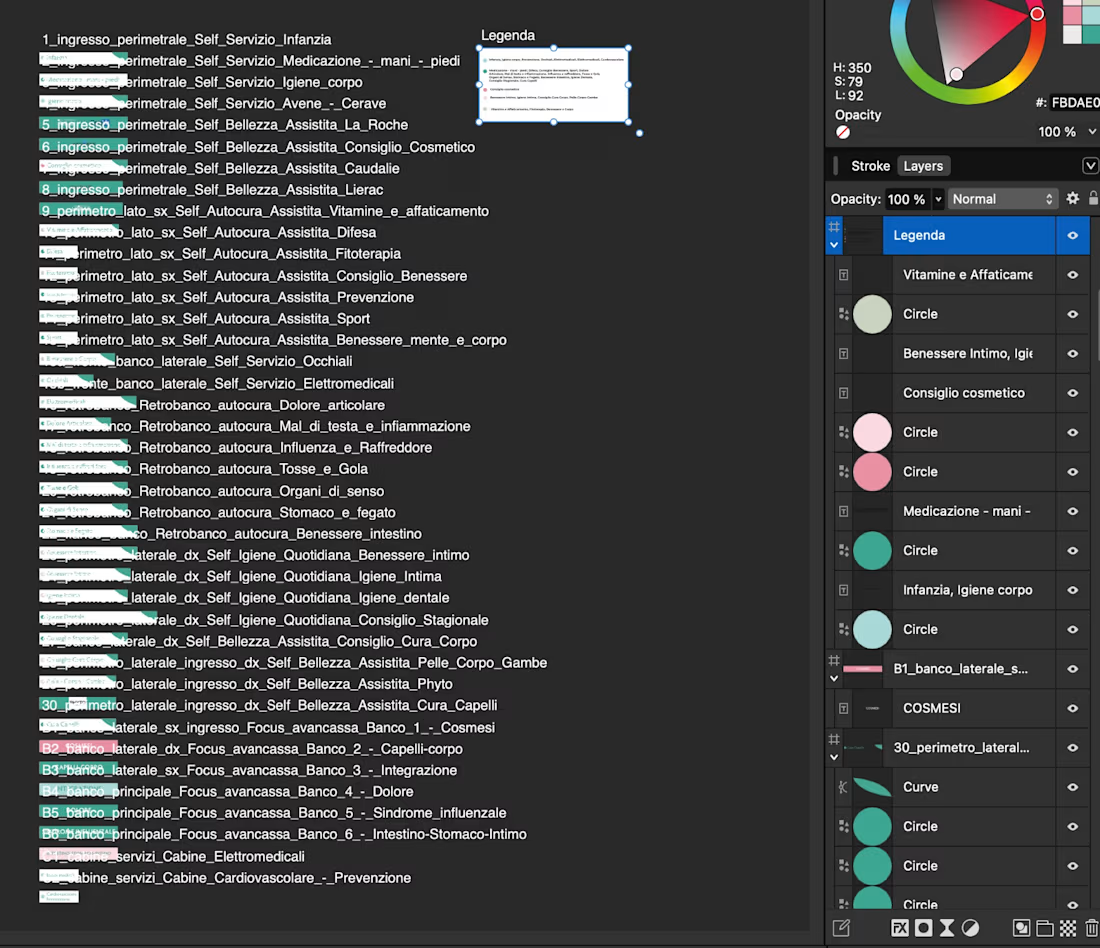

The consistent naming is what makes this feel reusable. I'd add a short change report before each run, so the pharmacy can see which artboards will be regenerated when one CSV row changes.
The network for creativity
Join 1.25M professional creatives like you
Connect with clients, get discovered, and run your business 100% commission-free
Creatives on Contra have earned over $150M and we are just getting started

Challenges
View all


Related posts


I’ve been razzmatazzing and flibbertigibbeting with Claude Code and somehow ended up with a new yels.dev.
It finally feels like me: simple on the surface, slightly complicated underneath, and very much alive.
You can see who I am, what I do, the work behind Herodot, RaptorLabs, CyberLink Security and Solmint, plus a selection of projects I’ve built across AI, cybersecurity, Web3, product systems, education, archives, and experimental digital spaces.
Built to be explored


The simple-on-the-surface, layered-underneath idea comes through so clearly in the presentation. I especially like how the project archive turns the site into something to explore rather than just a résumé of links.

From a simple skincare concept to a complete AI UGC ad!!
I wanted to see how far I could take a simple skincare UGC concept using AI.
I started with the character, making sure her face, skin tone, body shape, hair and overall appearance stayed consistent throughout the video.
Then came the fun part building the story scene by scene.
From the opening skincare hook, to walking into the bathroom, cleansing, rinsing, moisturizing, applying eye serum, and finally showing the finished look, every scene had to connect naturally to the next.
Once the visuals were ready, I edited everything together in CapCut, worked on the pacing, added a conversational voiceover, and turned the individual AI generated scenes into one complete UGC style video.
A lot goes into making AI UGC feel believable. It’s not just generating pretty images, it’s the consistency, storytelling, editing and little details that bring the video together.
AI Character Creation | AI UGC | Scene Generation | Storytelling | Video Editing


Very nice

Assembly | Creative Direction for an AI Platform
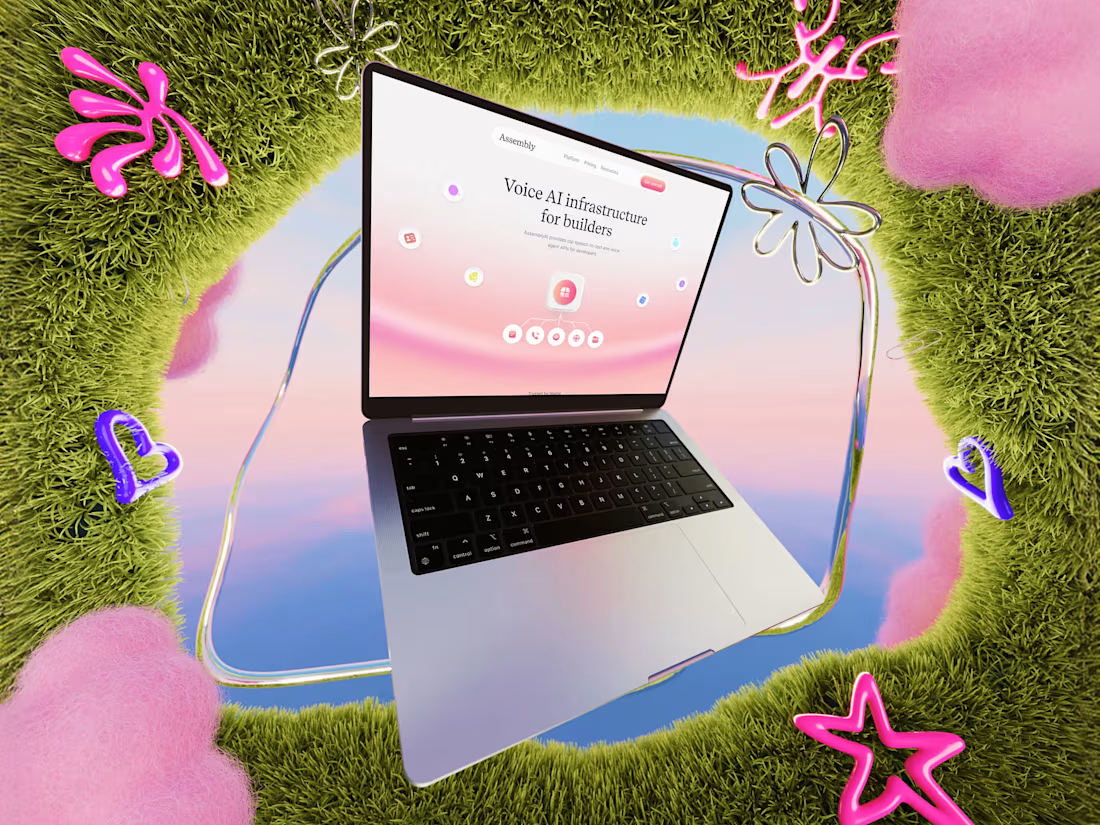
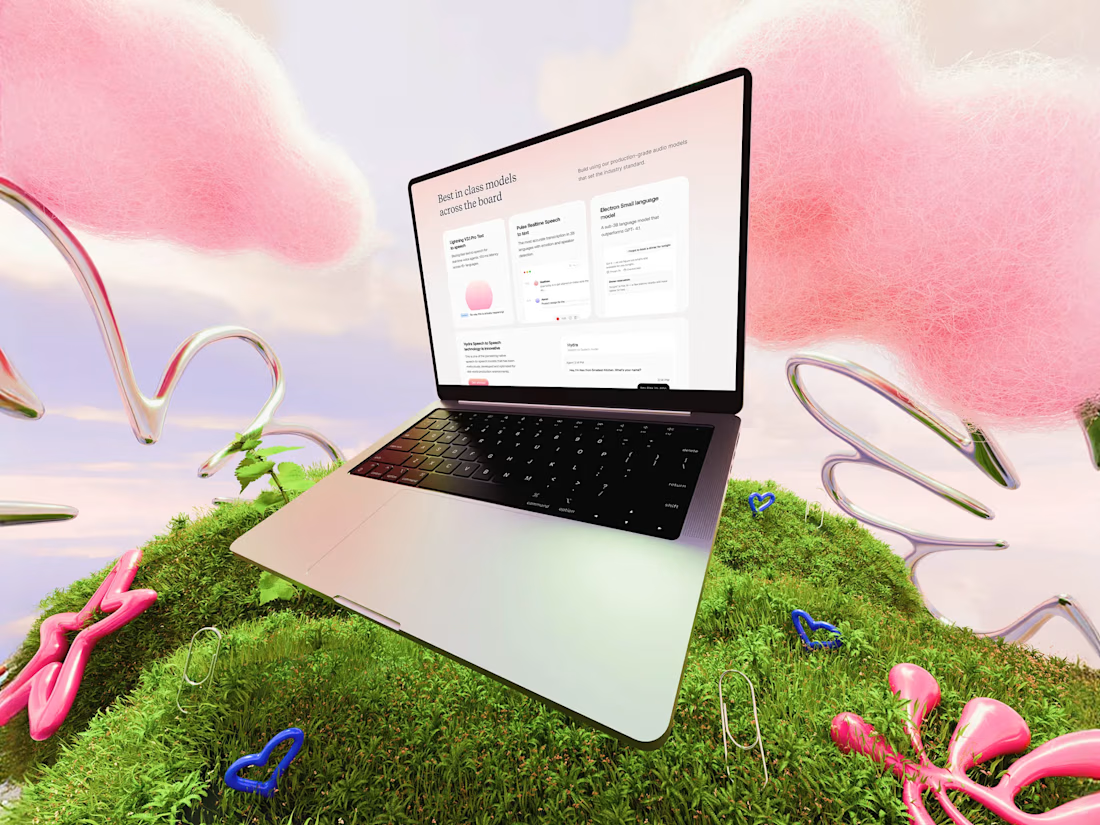
I created a playful and expressive visual direction for Assembly, an AI infrastructure platform built for developers and AI teams.
I wanted to move away from the predictable visual language of AI products and create something that felt more human, experimental, and visually distinctive.
I explored colorful 3D environments, organic textures, playful shapes, and product-focused compositions to create a visual system that could bring personality to Assembly’s brand and digital presence.
The challenge was finding the right balance between a playful aesthetic and the technical nature of an AI infrastructure product.
My Role
Creative Direction · Art Direction · Graphic Design · 3D Composition · Visual Design · Digital Design
Approach
I used the product interface as the foundation and built a visual world around it, combining:
• 3D product compositions
• Color and material exploration
• Organic textures
• Playful graphic elements
• Digital art direction
• Product focused compositions
The result is a more expressive visual identity for Assembly that makes the product feel approachable while still retaining its connection to the technical AI space.



gorgeous!