The network for creativity
Join 1.25M professional creatives like you
Connect with clients, get discovered, and run your business 100% commission-free
Creatives on Contra have earned over $150M and we are just getting started
Back to feedPost

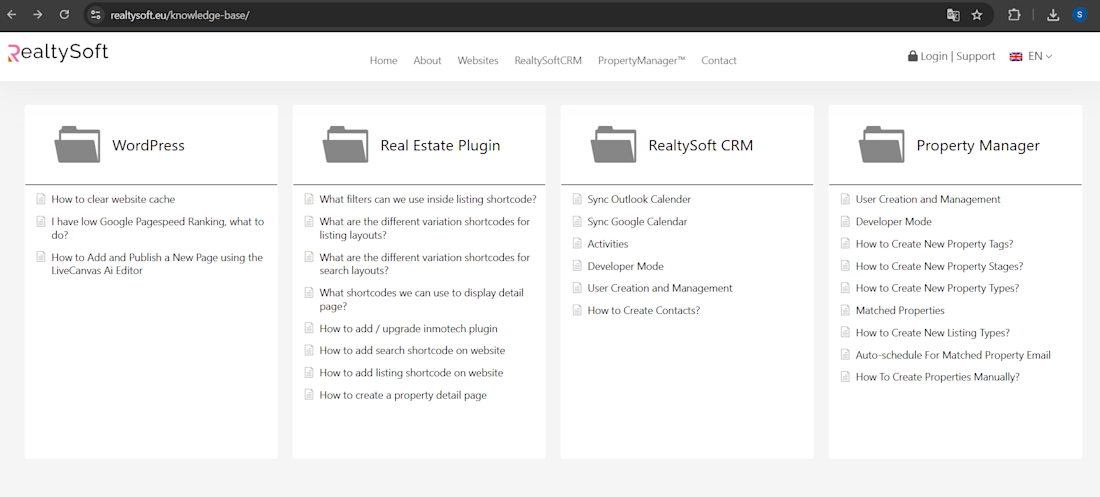
Built and structured a complete knowledge base for RealtySoft, an Europe -based real estate tech company, covering four core product areas.
This involved understanding the software end-to-end, documenting every key process and feature in clear, client-friendly language, and organizing it into a structured knowledge base used by their clients globally.
Worked directly with the CEO to ensure documentation was accurate, complete, and easy to navigate for non-technical users.


The network for creativity
Join 1.25M professional creatives like you
Connect with clients, get discovered, and run your business 100% commission-free
Creatives on Contra have earned over $150M and we are just getting started





Related posts

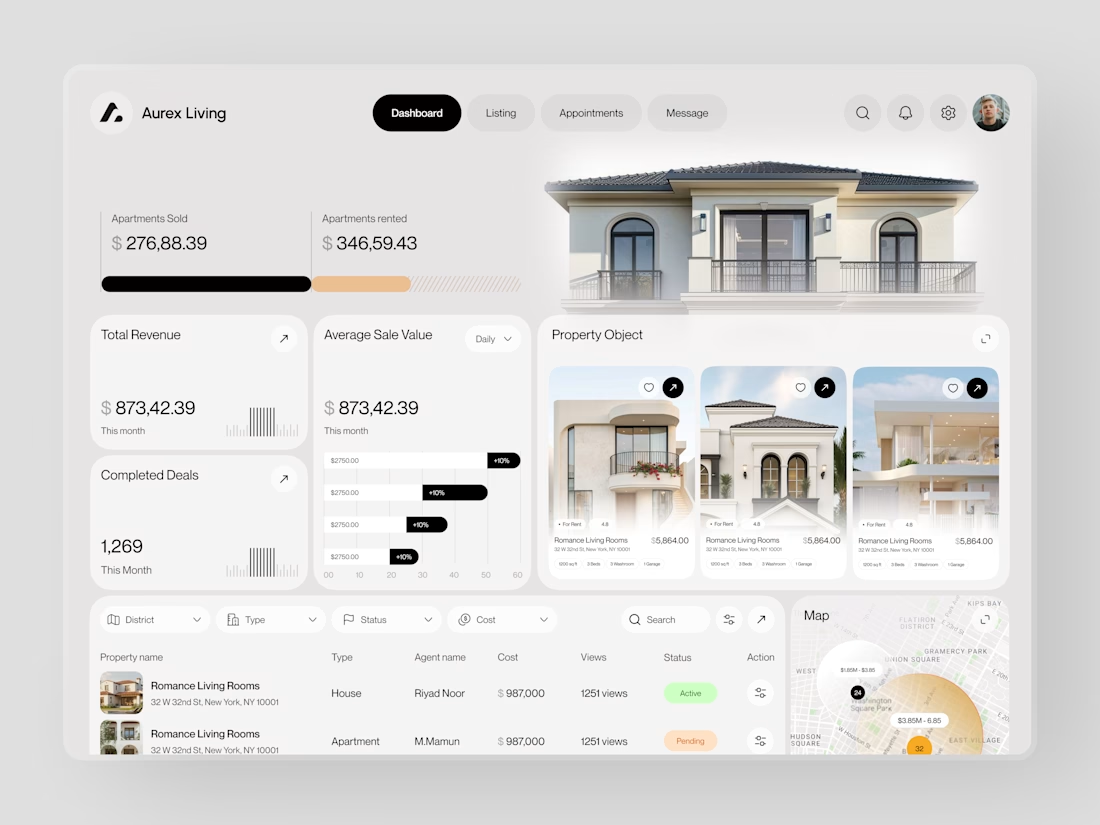
Real estate dashboards are usually built for data entry. Aurex Living was built for decision-making.
$873,42.39 total revenue. 1,269 completed deals this month. $276K sold, $346K rented. Property cards, agent tracking, map view, average sale value trending +10% - every number a real estate operator actually needs, on one clean white canvas.



Vänster Home GmbH
For Vänster Home GmbH, I engineered a high-end European e-commerce build designed to reflect modern architectural design and premium living space aesthetics. The goal was to establish strong brand authority through minimalist visual hierarchy, custom collection navigation, and high-converting storytelling.
I structured the homepage around a cohesive "Designed for..." campaign framework (covering Living, Dining, Lighting, and New Arrivals) to guide buyer intent seamlessly. To maximize user trust and clarity, I completely restructured the inventory data transforming long, cluttered supplier titles into refined product names paired with standardized technical specifications and lifestyle-focused features. This build demonstrates complete end-to-end e-commerce architecture, from editorial layouts down to conversion-focused product listings tailored for luxury retail shoppers.




Clean restructure from supplier titles to real product names, that step alone usually gets skipped. For a GmbH store selling into the rest of the EU, did you end up handling VAT-inclusive pricing per country through Shopify Markets, or did the client stick to one DE price shown everywhere?


Turning an Unbuilt Property Into an Experience
I built this real estate website around a simple problem:
How can a real estate business sell a property when the building itself hasn't been built yet?
Instead of relying only on static floor plans, renders, PDFs, or a few images, I wanted the website to give potential buyers a much clearer understanding of what the final property could look and feel like.
The website uses a scroll-based visual experience to gradually reveal the building and its structure. As the visitor moves through the experience, they can explore the property in a more engaging way and understand the design, structure, spaces, and overall vision of the development.
The goal isn't simply to make the website look impressive.
The goal is to make the future property easier to understand and easier to imagine.
For a developer selling apartments before construction is complete, this can be extremely valuable. A potential buyer cannot physically walk through a building that doesn't exist yet. A well-designed digital experience can bridge that gap by giving them a visual representation of what they are considering investing in.
From Interest to Appointment
The second part of the project focuses on automation.
A real estate business shouldn't have to manually respond to every person who wants to ask a question, request a meeting, or schedule a consultation.
The website allows interested visitors to move directly into the booking process.
Instead of:
Visitor → Message → Manual Response → Find Available Time → Confirm Appointment
the experience becomes:
Visitor → Explore Property → Book Appointment → Confirmation → Meeting
This allows the business owner or sales team to spend less time handling repetitive scheduling tasks and more time actually speaking with qualified prospects.
The idea is simple:
Let the website handle the repetitive work so the business owner can focus on the important conversations.
Why I Built It This Way
For me, a website shouldn't just be a digital brochure.
It should actively help the business communicate its product, create interest, and move potential customers toward the next step.
For real estate developers, especially those marketing properties that are still under construction or haven't started construction yet, the website can become part of the sales experience itself.
A visitor can:
Understand the concept of the development
Explore the building visually
Get a clearer idea of the structure and spaces
Experience the property before it physically exists
Learn about the project
Decide whether they are interested
Schedule an appointment without waiting for a salesperson
That creates a much more complete journey from discovery to conversation.
The Bigger Idea
I built this project with the belief that modern real estate websites should do more than display properties.
They should visualize the future, communicate the value of the development, and automate the journey toward a real conversation.
The combination of immersive visual presentation and appointment automation turns the website into a business tool rather than just another marketing page.
Show the buyer what is coming.
Help them understand the opportunity.
Let them book when they're ready.
And automate everything in between.
