The network for creativity
Join 1.25M professional creatives like you
Connect with clients, get discovered, and run your business 100% commission-free
Creatives on Contra have earned over $150M and we are just getting started
Back to feedPost
Confluence: A Space for Group Therapeutic Work
Inspired by "Vase" (1897–1900) by George E. Ohl
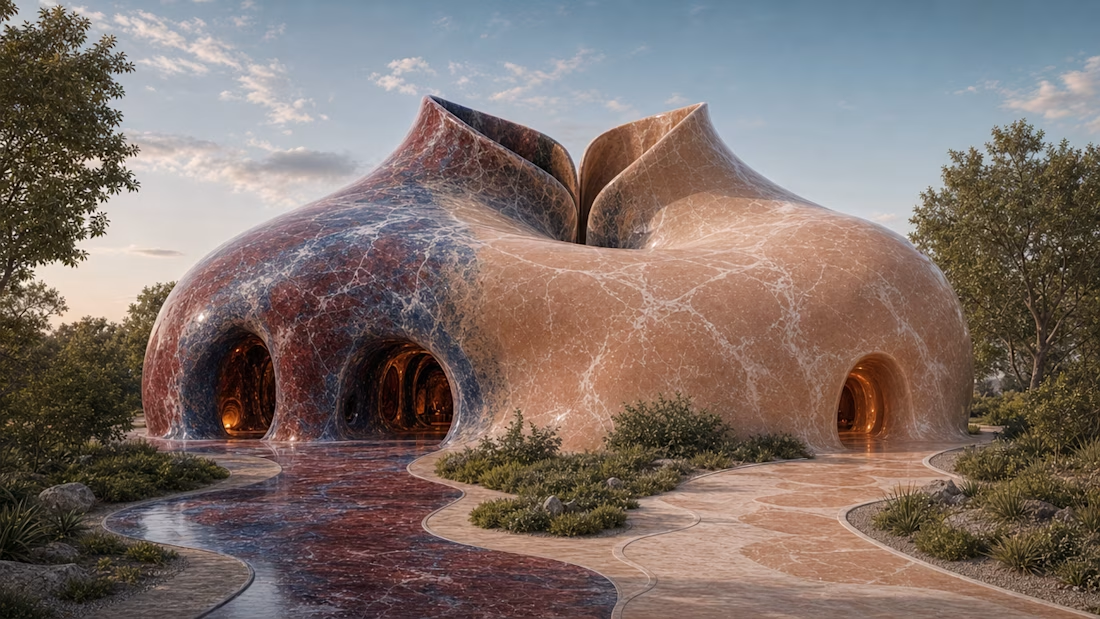
This project began with a vessel whose form and glaze felt strikingly ahead of its time. Its rounded body folds and erupts in turbulent cobalt and wine dark drips, the other calm and softly rose colored. That collision of chaos and stillness on a single surface was the spark.
My first instinct was to translate the piece literally into furniture. After exploring several forms, I arrived at a modular sofa that carried the vessel's split silhouette and rough glaze texture, a piece I loved, but one that felt more like a beautiful object than something with real purpose. The question became how this form could hold not just a body, but a process.
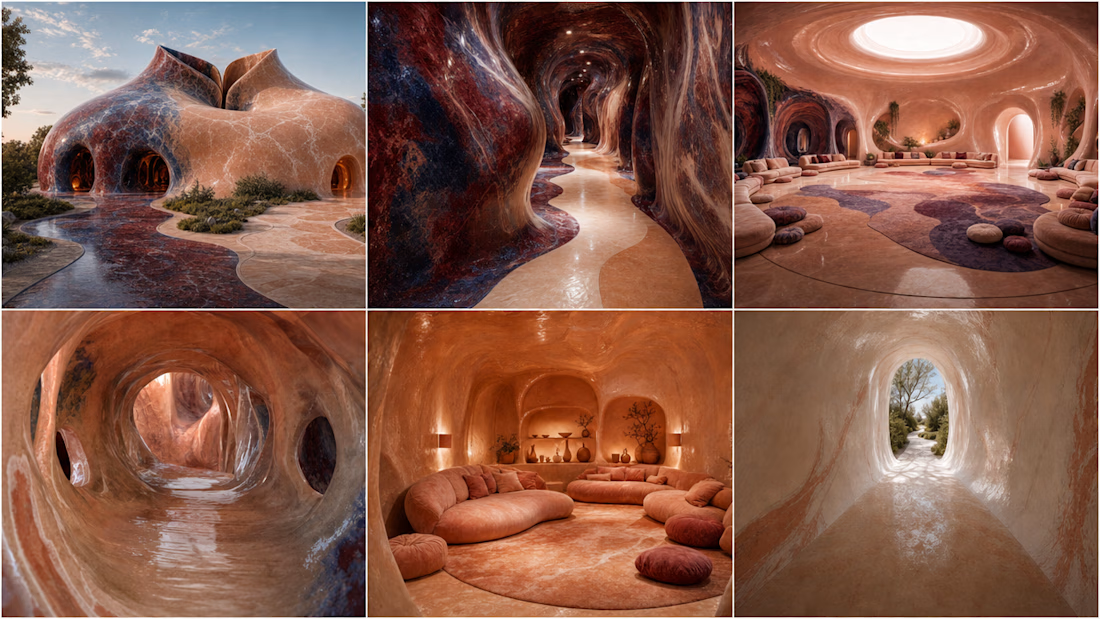
The vessel's palette pointed the way. Its violets and deep blues read as storm, as unresolved feeling. Its blush pink read as calm and clarity. That duality became the emotional architecture of a room, not simply a space to walk through, but a container: a structure designed to hold and support the internal work a person or group does within it.
The design borrows its layout directly from the piece's cleft mouth. Two separate entrances, one for each side of the group, are both rendered in the vessel's darker, turbulent glaze, corridors meant to be walked slowly, carrying in whatever a person brings before the work even begins. These two paths converge into a wide zone of awareness, the room's core, a space that holds the group as they confront and work through what surfaces, together. From there, the space narrows into a smaller, rose toned room of calm, for quiet integration once the work has settled. Finally, a single exit, distinct from the two entrances and opening outward rather than closing inward, lets the group leave carrying what they came with, but changed.
The room's journey mirrors the vessel's own gesture: two turbulent openings that fold into one, and, ultimately, release. The architecture doesn't just frame the therapeutic process, it holds it.
https://www.metmuseum.org/art/collection/search/20357
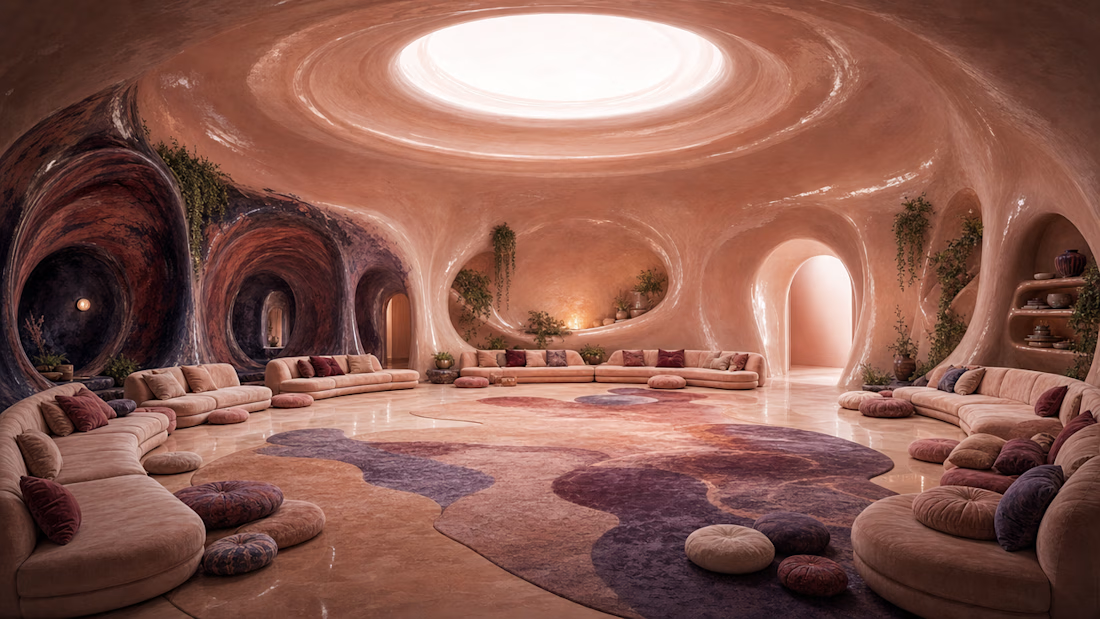
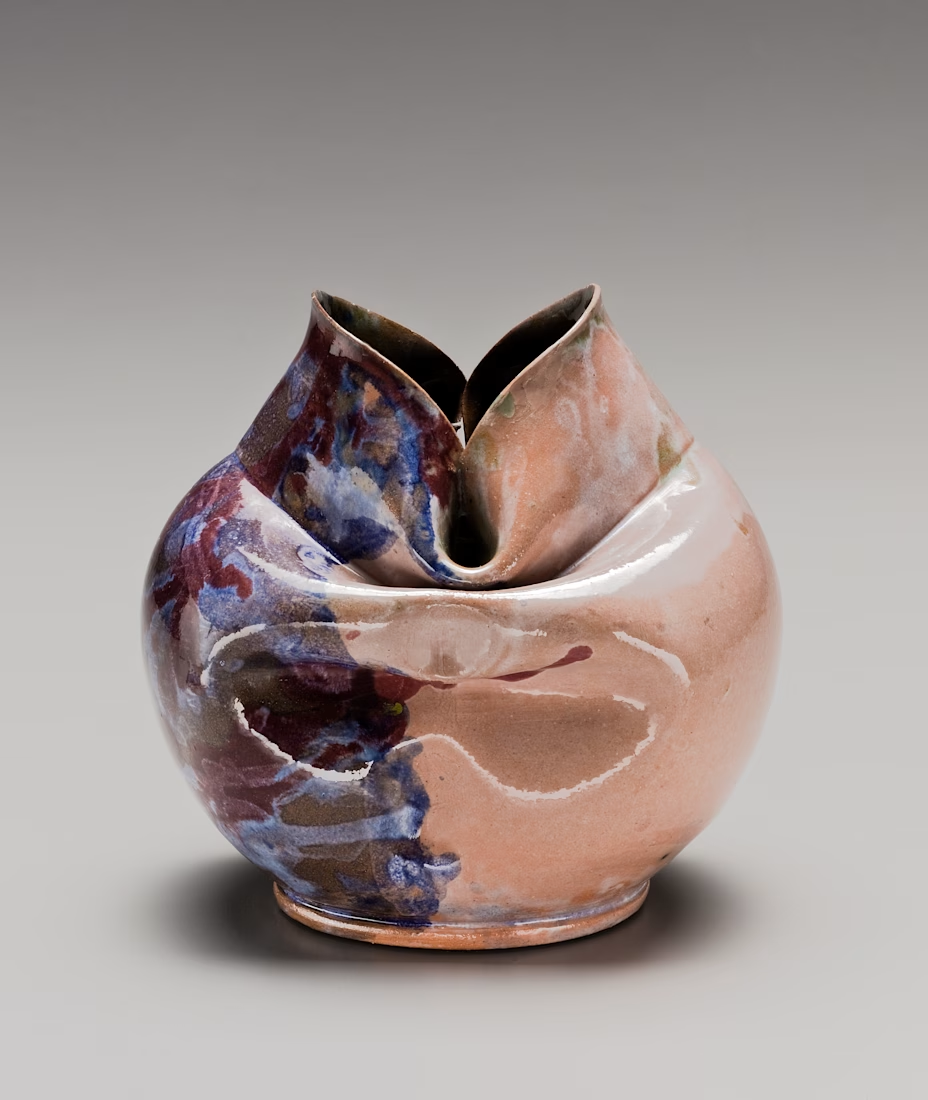

Mapping the two entrances and the narrowing into the rose toned room straight from the vessel's cleft mouth is such a specific translation, most people would have stopped at color palette. What almost didn't make it into the final layout?

Thank you, that means a lot! Two things almost didn't make it into the final version:
The first was a modular sofa. Before I got to the room, I translated the vessel directly into a piece of furniture, keeping its split silhouette and rough glaze texture. I actually loved the...
The network for creativity
Join 1.25M professional creatives like you
Connect with clients, get discovered, and run your business 100% commission-free
Creatives on Contra have earned over $150M and we are just getting started
Trending
retrofuturism
Share your favorite designs from the past exploring the distant future. Or your own take on the aesthetic 🚀
halftone
Dots. Texture. Grain. Let's see your designs using the halftone technique.

Midjourney
Creatives are showing off what they're making with Midjourney.
colorgrade
Video editors sound off: How do you enhance the mood of your video in color grading?
Related posts

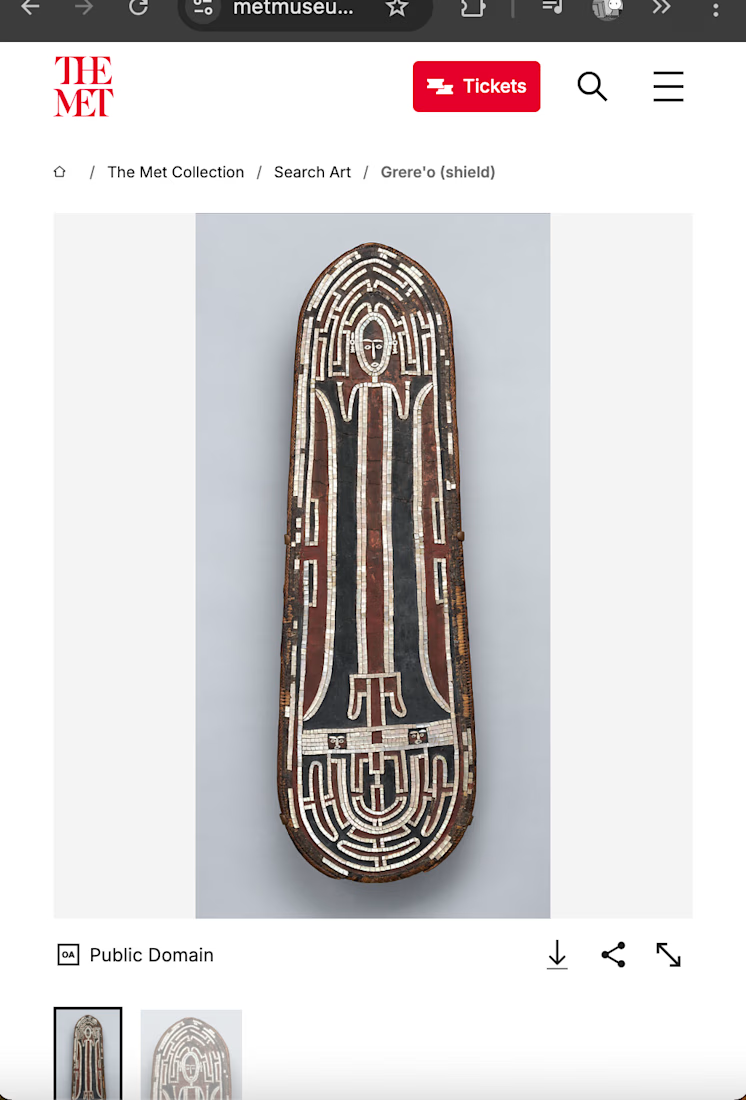
Inspired by: Grere'o (Shield), Solomon Islands, early-to-mid 19th century, from The Met's open archive.
Link to Original Art : https://www.metmuseum.org/art/collection/search/310073
I liked this shield because of its beautiful pattern and shine. It has a detailed design with a human figure in the middle, made from woven cane and shiny shell pieces. It looked like something made to be seen, not just used.
What I made: I turned the shield into a surfboard, but kept its design exactly the same, same pattern, same shine, same figure. I only changed its shape into a board. I picked a surfboard because its long shape already matches the shield's shape, so it felt like a natural change.
How I made it: I downloaded the Sheild image from Met's open archive, then imported the sheild picture in flora , connected picture with text prompt node, then I connected both picture and text prompt node to the video node and I selected the seedance 2.5 model with 30sec clip, I kept the work flow simple because I am new to flora and I was afraid maybe I may use all the credits before even creating good video, add this in how I made it
Why I made this: I wanted to take this design out of the museum and give it a new life in something people can use and see in motion. I think the shield's pattern is still beautiful enough to belong in The Met today, just now on a different object.
Instagram post link: https://www.instagram.com/p/Dc3Nn8IAT2O/
Twitter(X) post link: https://x.com/AhmadSauleh/status/2095827847915163648?s=20

Such a clean fusion of culture and modern sport! Did you encounter any issues getting FLORA to keep the intricate shell pattern consistent across different camera angles


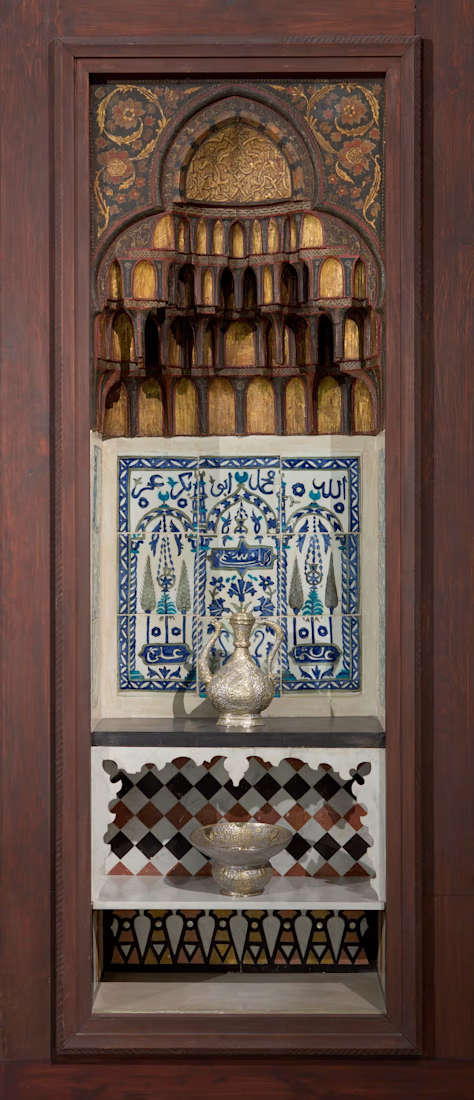
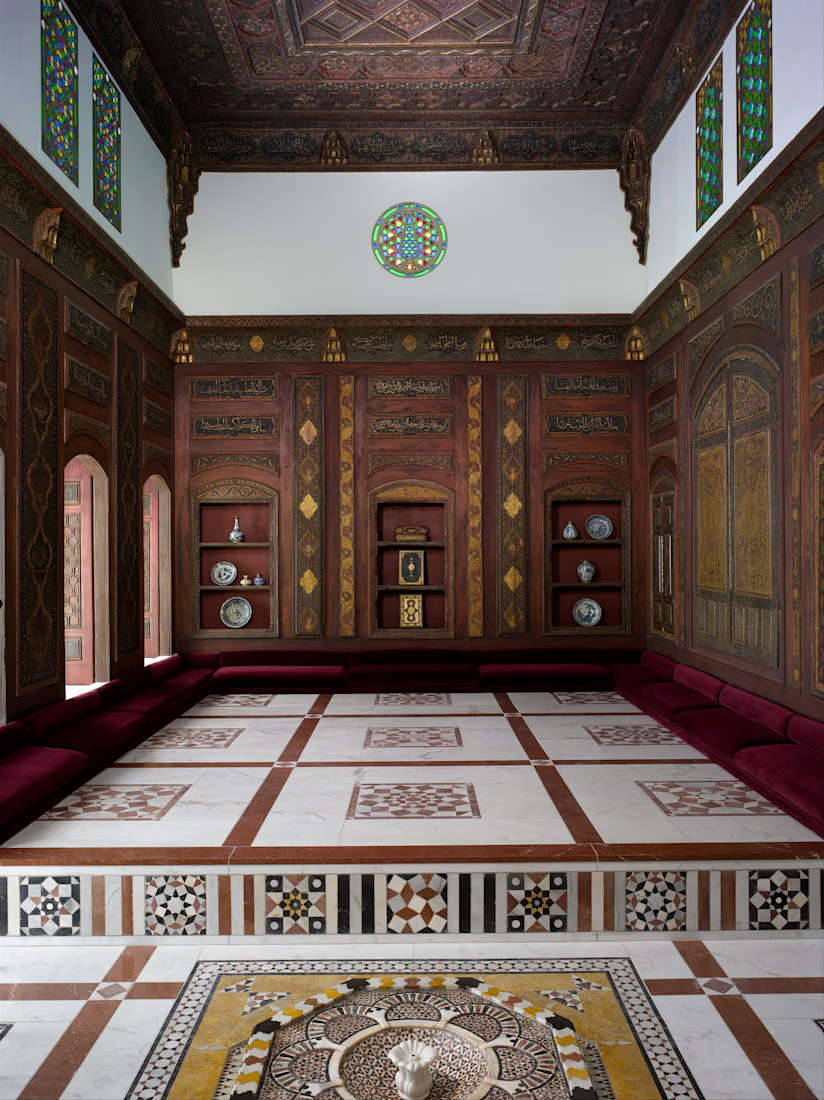
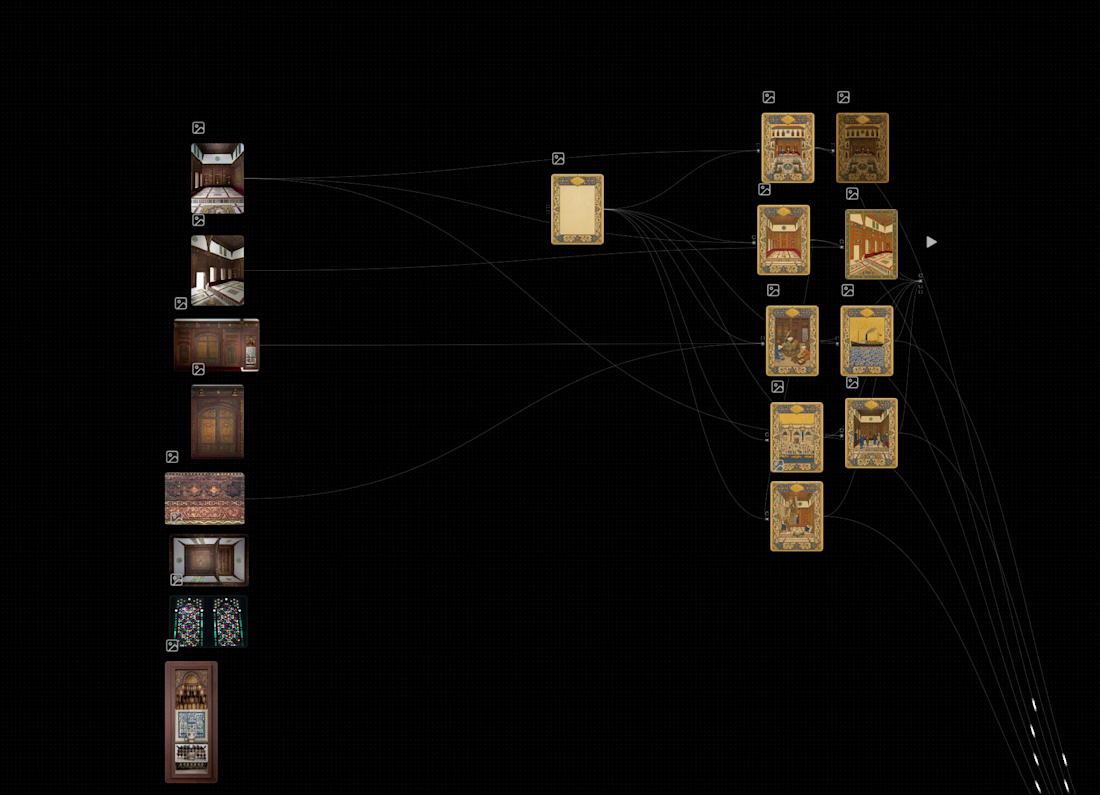
My piece is inspired by the Damascus Room at the Met: a winter guest room built in 1707 in Ottoman Damascus, carved from poplar wood and covered in gesso relief, gold leaf and forty stanzas of poetry. It was removed from its house in the early 1930s, shipped to New York in 1934, and sat in crates for about forty years before being installed at the Met. I retold its whole life as a 30 second animated film in the style of the art of its own era, an Ottoman miniature manuscript, ending with the visitors who stand in it today. The narrator quotes a real line from the room's walls.
https://www.metmuseum.org/art/collection/search/452102

“A splash of life in a summer landscape.”
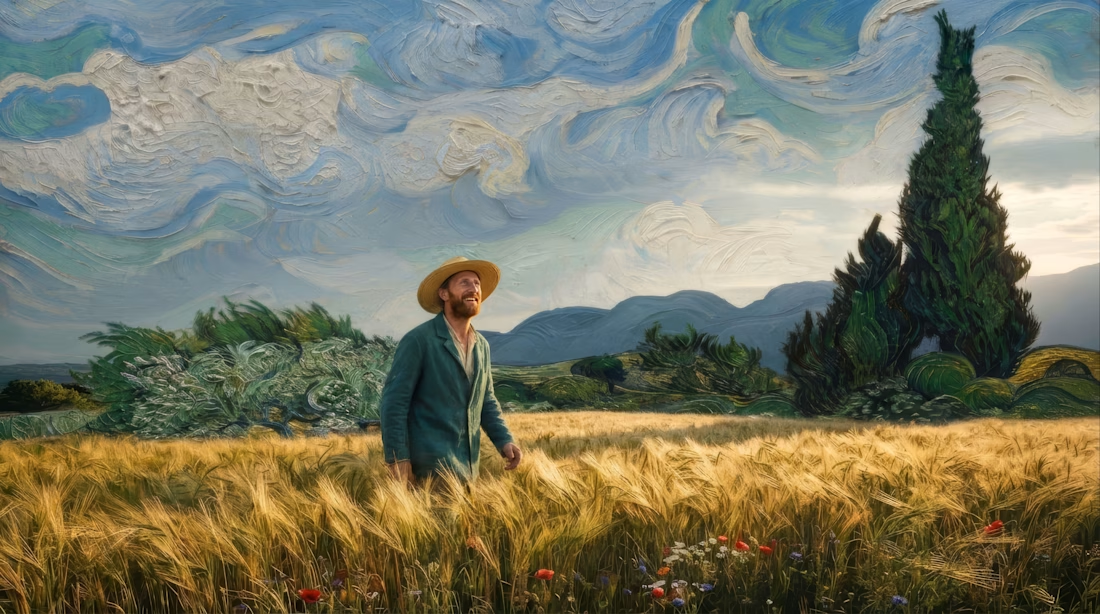
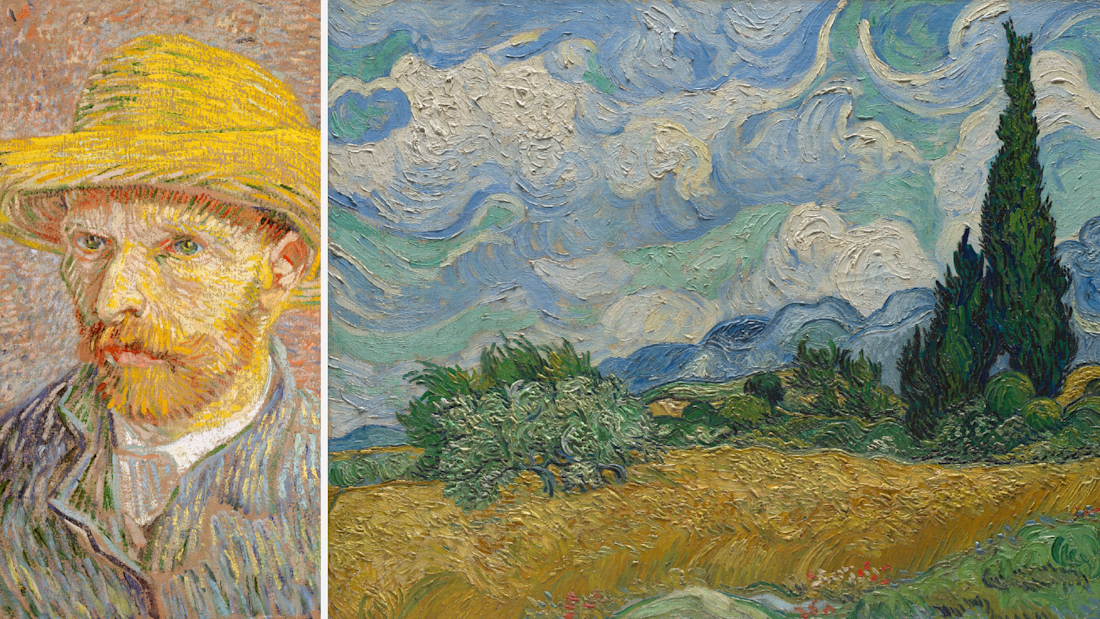
For the #FLORAMuseumChallenge, I brought together two Vincent van Gogh paintings from The Met’s public domain collection: Self-Portrait with a Straw Hat and Wheat Field with Cypresses.
https://www.metmuseum.org/art/collection/search/436535
https://www.metmuseum.org/art/collection/search/436532
I have always wondered what it would feel like for Van Gogh to step inside one of his own paintings. Not simply to visit it, but to finally live within the beauty and peace he created for everyone else.
His self-portrait shows a young artist determined to improve, even when he could not afford a model. Just two years later, he painted Wheat Field with Cypresses, which he considered one of his best summer landscapes. He described its cypresses as “a splash of black in a sunny landscape.”
That line became the emotional center of my piece. It felt like more than a description of the painting. It felt like a reflection of his life, carrying so much darkness while still creating something full of color, movement, and light.
Using Flora AI, I imagined him entering that landscape and slowly becoming part of it. A version of paradise where he is no longer restless or fighting to be understood. A place where he can finally see that his work survived, that it mattered, and that the world eventually saw what he was trying to show us.
He never received that peace or recognition during his lifetime.
This is my small way of giving it to him. 🌾