The network for creativity
Join 1.25M professional creatives like you
Connect with clients, get discovered, and run your business 100% commission-free
Creatives on Contra have earned over $150M and we are just getting started
Back to feedPost

Most real estate websites stop at showcasing listings.
This project went far beyond that.
Our team designed and developed a complete real estate platform engineered to handle property discovery, lead generation, marketing automation, and long-term scalability -all within a single ecosystem.
Delivered end-to-end by our team:
→ Advanced IDX/MLS property search & intelligent filtering
→ Conversion-first lead generation architecture
→ Google Analytics 4, GTM & Meta Pixel implementation
→ Enterprise SEO with structured data & technical optimization
→ Cloudflare CDN, Amazon S3 & performance engineering
→ Responsive UX, accessibility compliance & production deployment
From product strategy and UX to development, testing, optimization, and deployment - every layer was delivered by our team.
The projects we're most proud of aren't the ones that simply look good.
They're the ones where design, engineering, marketing, and business strategy work together to solve real-world problems.


Impressive end-to-end execution; combining property discovery, lead generation, performance, and marketing automation creates far more value than a typical listing website.
Appreciate that. We approached it as a business platform rather than a brochure website. Every feature, integration, and workflow was intentionally engineered to support business outcomes, performance, and long-term scalability.
The network for creativity
Join 1.25M professional creatives like you
Connect with clients, get discovered, and run your business 100% commission-free
Creatives on Contra have earned over $150M and we are just getting started







Related posts

Check the Live Sitemap Before Signing Off the Release
A sitemap can export correctly while the live website still serves an older URL list. The task needs a check at the public sitemap address after deployment.
That check should compare the published file with the pages the team agreed to include.
Imagine an export containing 200 URLs. The public sitemap also contains 200, but it still lists a retired service page and omits the new replacement. The totals match. The contents do not.
Before closing the task, check:
• The production sitemap address returns the expected XML.
• Its complete URL list matches the agreed inventory.
• Each intended page type is represented, including a newly published page.
• Deliberately excluded pages remain absent.
• Someone owns the process that keeps the file current.
Start with the sitemap already on the site. It may be an index pointing to several smaller files. Include those files in the comparison so a working index does not hide an outdated section underneath it.
Keep the inventory decision explicit: which service pages, locations, articles or products belong in this release? A crawler's export tells you what it discovered. Compare that list with the pages the site was supposed to publish.
Open a sample of the listed URLs as well. Check that they reach the intended production pages and use the preferred addresses. If the sitemap includes modification dates, those dates should reflect significant page updates; exporting the file again does not make every page newly updated.
For a site that publishes regularly, document how new pages enter the sitemap and how retired pages leave it. An automated generator still needs clear inclusion rules and a check when those rules change.
Keep the public address, inventory comparison and update owner in the release notes. Make the sitemap discoverable through Search Console or robots.txt, and check for retrieval or processing errors. Submission does not guarantee that every listed page will be crawled or indexed.
I put together the generation, export and publishing steps in the full guide on Technical SEO Notes:
https://technicalseonotes.org/how-to-generate-and-export-an-xml-sitemap/
Projects and client work: NikoCodes
https://nikocodes.com/
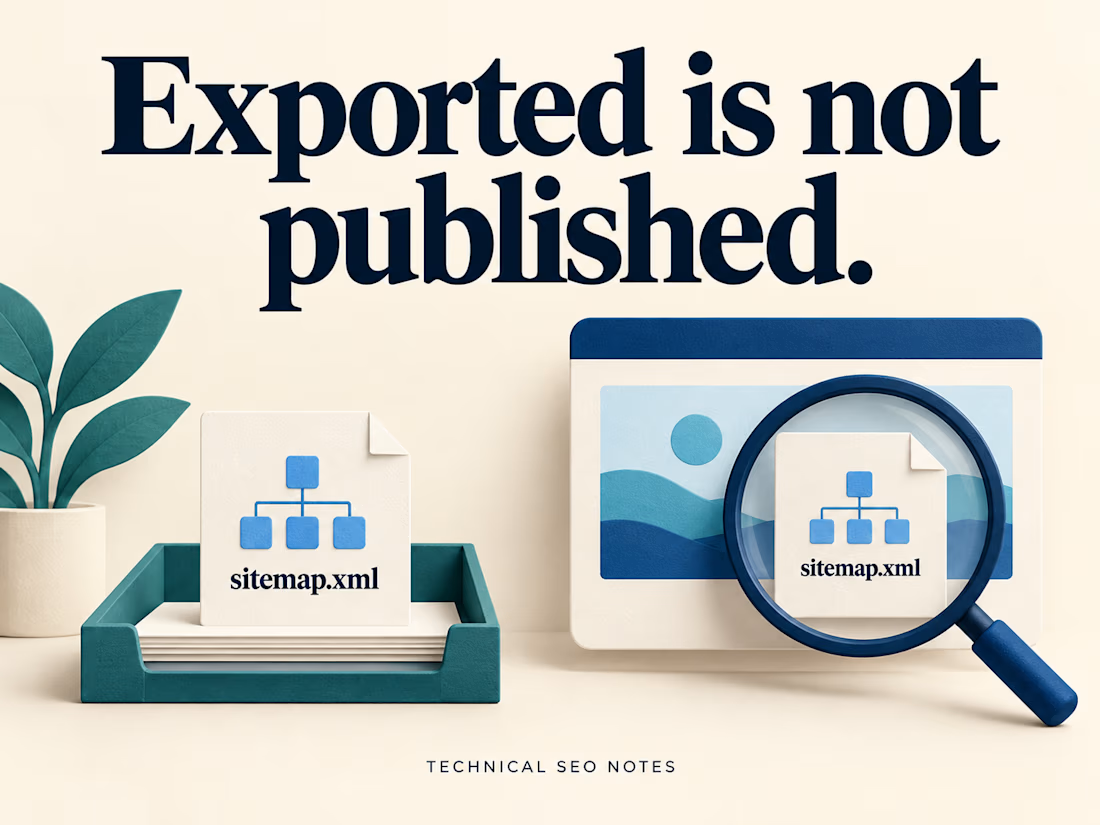

Solid checklist. I'd add lastmod: if every release stamps today's date on every URL, Google learns to ignore it. It should only change when the page content changes. Also worth confirming every sitemap URL returns a direct 200, not a redirect.

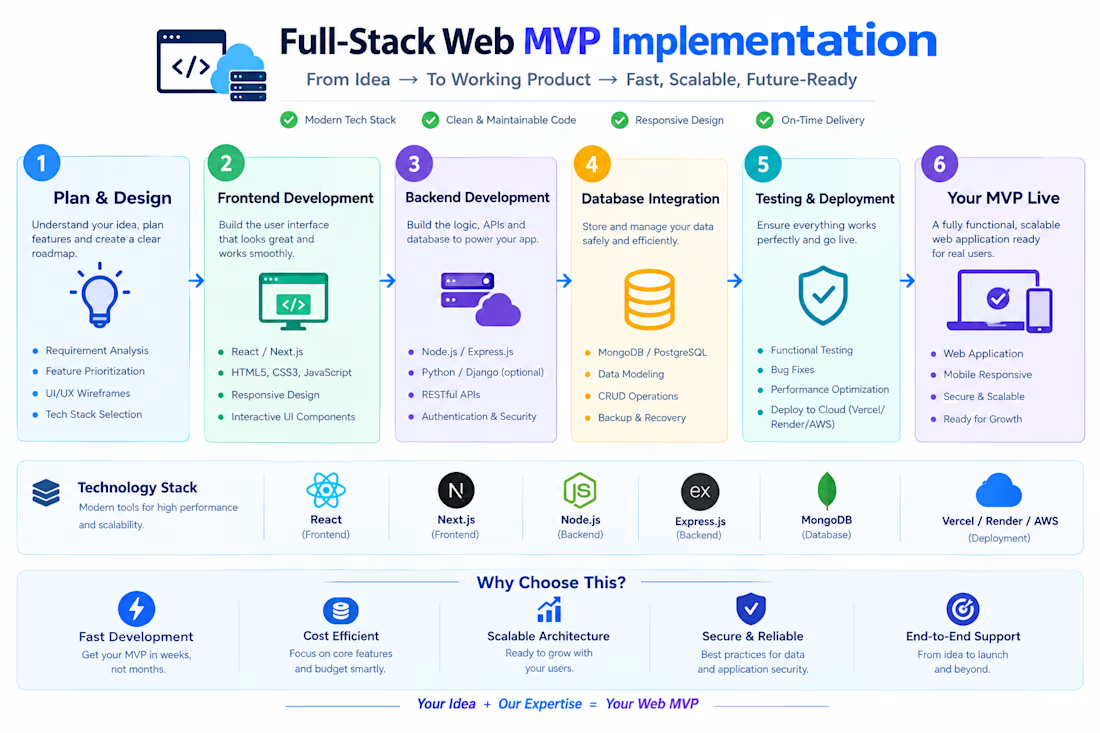
Built a highly responsive web application prototype focusing on smooth user interfaces and swift database connectivity. Optimized web performance to ensure rapid load times and cross-platform compatibility.



𝗧𝗵𝗲 𝟱 𝗙𝗮𝘁𝗮𝗹 𝗦𝗘𝗢 𝗠𝗶𝘀𝘁𝗮𝗸𝗲𝘀 𝗕𝗲𝗴𝗶𝗻𝗻𝗲𝗿𝘀 𝗠𝗮𝗸𝗲 𝗶𝗻 𝗪𝗼𝗿𝗱𝗣𝗿𝗲𝘀𝘀 (𝗔𝗻𝗱 𝗛𝗼𝘄 𝘁𝗼 𝗙𝗶𝘅 𝗧𝗵𝗲𝗺)
Having a great WordPress site means nothing if nobody finds it on Google. 𝗧𝗵𝗲 𝟱 𝗺𝗼𝘀𝘁 𝗰𝗼𝗺𝗺𝗼𝗻 𝗦𝗘𝗢 𝗯𝗹𝘂𝗻𝗱𝗲𝗿𝘀:
Leaving default permalinks as plain IDs.
Ignoring Image Alt Tags and compression.
Missing XML Sitemaps in Google Search Console.
Having multiple H1 tags per page.
Not setting canonical URLs.
𝗕𝗼𝗼𝗸𝗺𝗮𝗿𝗸 𝘁𝗵𝗶𝘀 𝗰𝗵𝗲𝗰𝗸𝗹𝗶𝘀𝘁 𝘁𝗼 𝗮𝘂𝗱𝗶𝘁 𝘆𝗼𝘂𝗿 𝘀𝗶𝘁𝗲 𝗯𝗲𝗳𝗼𝗿𝗲 𝗹𝗮𝘂𝗻𝗰𝗵𝗶𝗻𝗴!


Good list. I'd add a 6th: the "Discourage search engines from indexing this site" box under Settings → Reading. It often stays ticked after a staging launch and adds noindex to every page. Small note on #4: multiple H1s aren't a problem on their own for Google; a clear heading structure matters more.