The network for creativity
Join 1.25M professional creatives like you
Connect with clients, get discovered, and run your business 100% commission-free
Creatives on Contra have earned over $150M and we are just getting started
Back to feedPost

Check the Live Sitemap Before Signing Off the Release
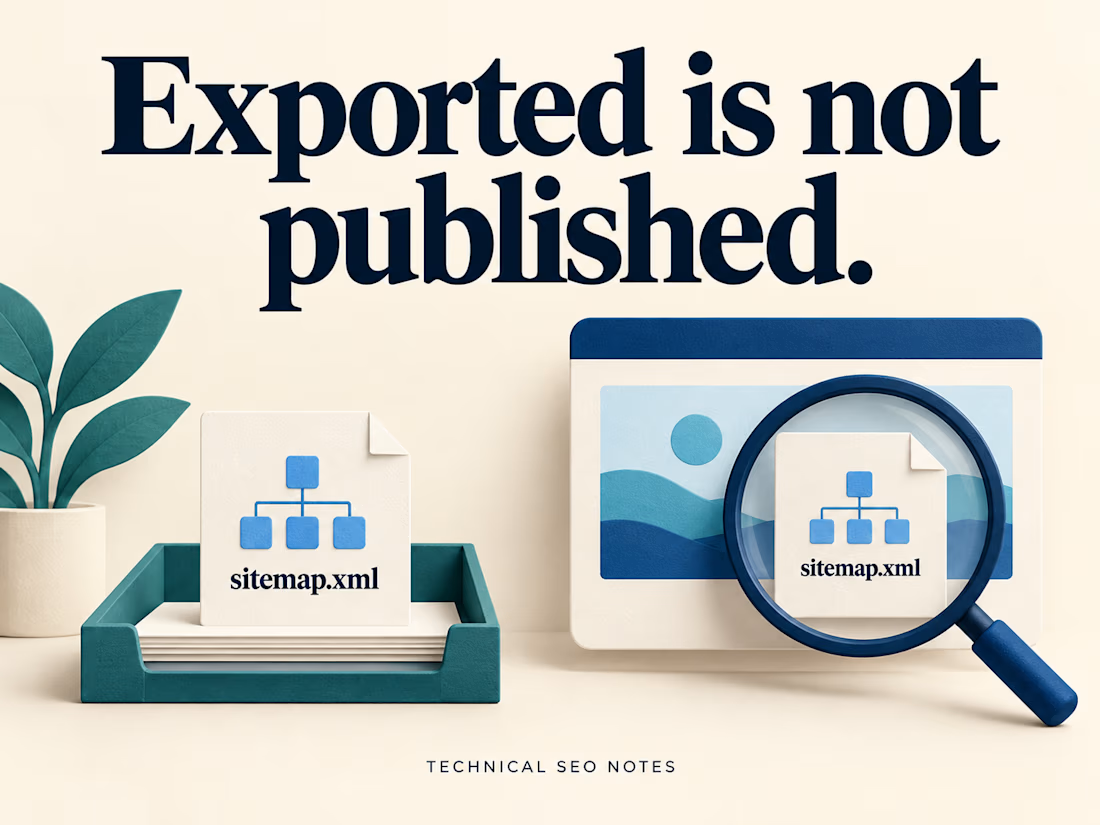
A sitemap can export correctly while the live website still serves an older URL list. The task needs a check at the public sitemap address after deployment.
That check should compare the published file with the pages the team agreed to include.
Imagine an export containing 200 URLs. The public sitemap also contains 200, but it still lists a retired service page and omits the new replacement. The totals match. The contents do not.
Before closing the task, check:
• The production sitemap address returns the expected XML.
• Its complete URL list matches the agreed inventory.
• Each intended page type is represented, including a newly published page.
• Deliberately excluded pages remain absent.
• Someone owns the process that keeps the file current.
Start with the sitemap already on the site. It may be an index pointing to several smaller files. Include those files in the comparison so a working index does not hide an outdated section underneath it.
Keep the inventory decision explicit: which service pages, locations, articles or products belong in this release? A crawler's export tells you what it discovered. Compare that list with the pages the site was supposed to publish.
Open a sample of the listed URLs as well. Check that they reach the intended production pages and use the preferred addresses. If the sitemap includes modification dates, those dates should reflect significant page updates; exporting the file again does not make every page newly updated.
For a site that publishes regularly, document how new pages enter the sitemap and how retired pages leave it. An automated generator still needs clear inclusion rules and a check when those rules change.
Keep the public address, inventory comparison and update owner in the release notes. Make the sitemap discoverable through Search Console or robots.txt, and check for retrieval or processing errors. Submission does not guarantee that every listed page will be crawled or indexed.
I put together the generation, export and publishing steps in the full guide on Technical SEO Notes:
https://technicalseonotes.org/how-to-generate-and-export-an-xml-sitemap/
Projects and client work: NikoCodes
https://nikocodes.com/

The 200 vs 200 example is exactly how it slips through. I'd also check that the sitemap URLs match the canonical tags on those pages, those can drift apart too.
Yes, good addition. The sitemap can list the new URL while the page still declares the old one as canonical. That belongs in the same release check.

Solid checklist. I'd add lastmod: if every release stamps today's date on every URL, Google learns to ignore it. It should only change when the page content changes. Also worth confirming every sitemap URL returns a direct 200, not a redirect.
Exactly. I’d also check where lastmod comes from, a build timestamp can make unchanged pages look newly updated on every deployment. If the CMS can’t supply a reliable date, leaving it out is better than inventing one. A useful QA test: rebuild unchanged pages and confirm their...
Agreed, no date beats a fake one. On static builds I take lastmod from the last git commit that touched the page's content file, so it only moves when the content really changes. Easy to automate, and it passes that rebuild test.
Yep, and that gives you a useful audit trail too. If a lastmod date looks wrong, you can trace it back to the commit behind it and check what actually changed.

This very solid
Thanks, Dim. Easy to overlook when everything looks correct in the export.
The network for creativity
Join 1.25M professional creatives like you
Connect with clients, get discovered, and run your business 100% commission-free
Creatives on Contra have earned over $150M and we are just getting started

Challenges
View all


Related posts

I just couldn't help myself.
18 templates now with the All-Access.
Browse them all and view the demos: https://no-code.supply/


I loved .. Iris Vey


More pages ≠ better SEO.
A common mistake is creating dozens of pages just to target more keywords.
But if those pages have:
– Thin content
– Similar intent
– Little unique value
– No clear purpose
They can make your site harder to manage and harder for search engines to understand.
Before creating a new page, ask:
“Does this deserve its own page?”
Create pages for users first.
Optimize them for search second.
Useful pages > more pages.
#seo #seotips #technicalseo #wordpress #webdevelopment #contra



Absolutely agree. SEO isn’t about publishing more pages—it’s about creating genuinely useful pages that satisfy search intent and provide unique value. Quality and purpose should always come before quantity.

DR Finance Consultancy – Loan & Financial Services Website
Project Overview :-
I designed and developed a modern financial services website for DR Finance Consultancy. The goal was to create a professional and trustworthy online presence that helps users explore loan solutions, insurance services, and financial consultation options.
The website was designed with a focus on credibility, lead generation, and seamless user experience across desktop and mobile devices.
The Challenge :-
Financial service businesses need to establish trust quickly while presenting multiple services in a simple and organized manner.
Key challenges included:
Creating a professional financial brand identity
Showcasing multiple loan products clearly
Designing a mobile-friendly experience
Improving lead generation through strategic CTAs
Maintaining a clean and trustworthy visual hierarchy
Solution :-
I developed a responsive website featuring:
✅ Modern hero section
✅ Loan service categorization
✅ Insurance partner showcase
✅ Mobile-first responsive design
✅ Clear call-to-action buttons
✅ Professional financial industry branding
✅ User-friendly navigation



I love this