The network for creativity
Join 1.25M professional creatives like you
Connect with clients, get discovered, and run your business 100% commission-free
Creatives on Contra have earned over $150M and we are just getting started
Back to feedPost

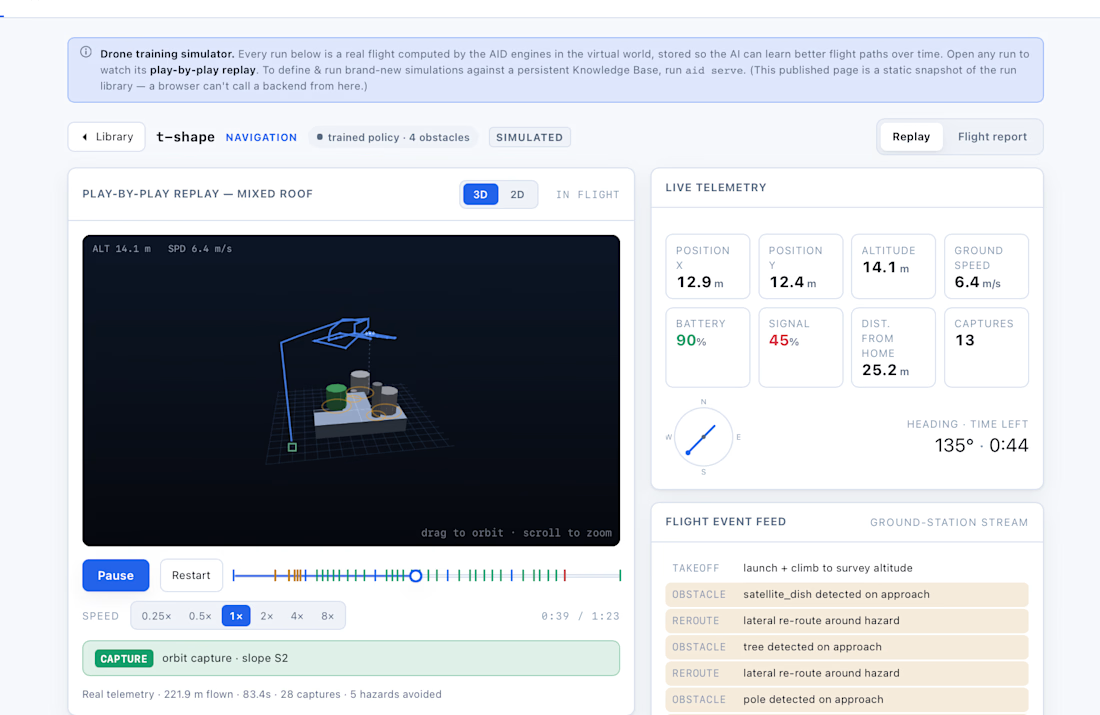
AID is a runnable, offline skeleton of an autonomous drone roof-inspection platform organized as nine coordinated engines bound by a master orchestrator. A mission flows through a fixed pipeline — mission planning, spatial reconstruction, flight execution, computer-vision damage detection, uncertainty and coverage validation, risk and insurance analysis, and reporting — advancing a seven-state mission machine. Several engines are genuine computation: mission planning uses 2D computational geometry to infer roof planes and generate coverage flight paths, coverage is geometrically measured rather than assumed, spatial mapping reconstructs a 3-D digital twin from camera poses, damage runs through a classical computer-vision detector, and risk and insurance produces real construction-cost bands (P10/P50/P90), RCV/ACV depreciation, and claim-eligibility scoring. An orchestrator enforces integrity rules — no orphan data, an uncertainty gate that blocks reporting and triggers re-inspection, and a safety override. It ships a REST API, a SQLite-backed mission store, a fleet scheduler, multi-format report rendering, a Gym-style RL environment, and an operations console UI.


The network for creativity
Join 1.25M professional creatives like you
Connect with clients, get discovered, and run your business 100% commission-free
Creatives on Contra have earned over $150M and we are just getting started





Related posts

Hero section - "Gleam" Cleaning Service Framer Template 🧽
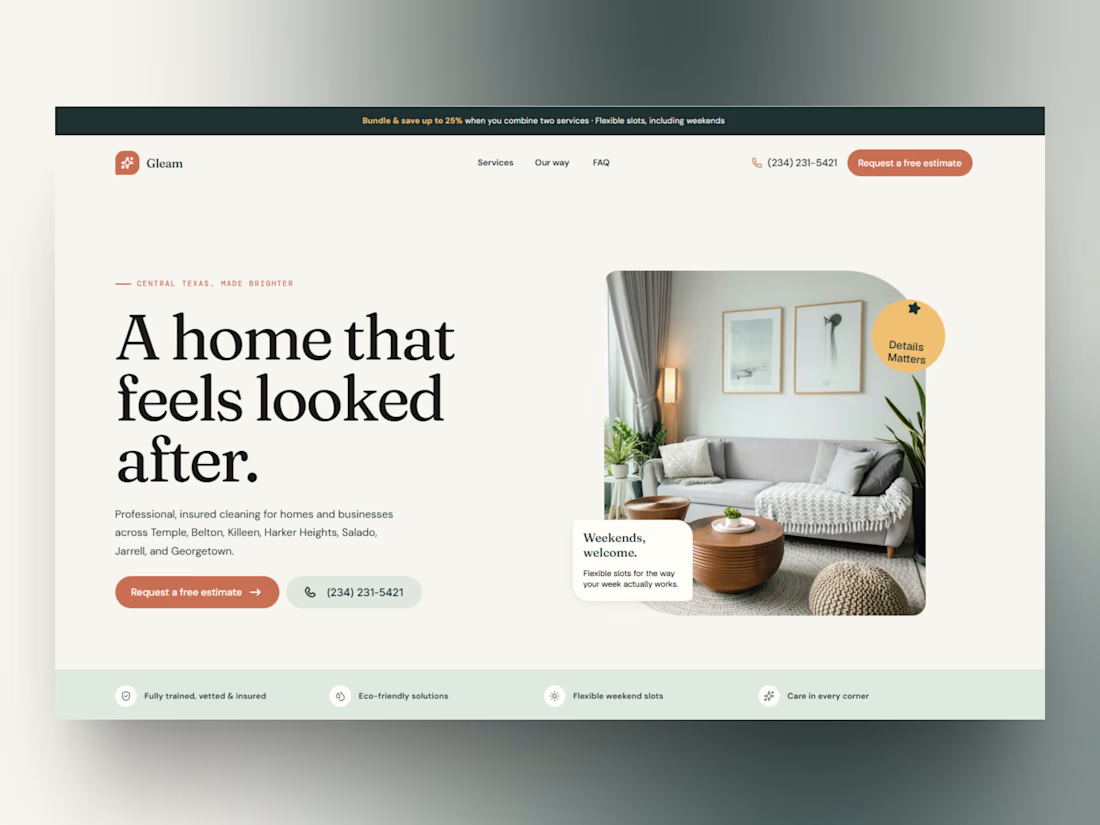
This pass focused on making the hero feel warm and trustworthy instead of clinical. A few things I leaned into:
Large serif headline ("A home that feels looked after") paired with a clean sans body for contrast
A promo bar up top for bundle discounts - easy to reuse for any offer
Floating micro-cards over the hero image ("Details Matters," "Weekends, welcome") to sneak in extra selling points without cluttering the copy
Trust bar at the bottom (insured, eco-friendly, flexible slots) so credibility shows immediately
Cleaning businesses live or die on trust - this hero is built to earn it in the first scroll.
More sections coming as the template comes together.


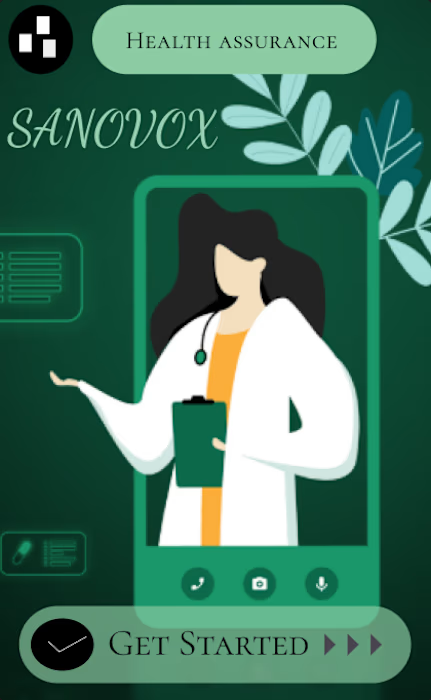
Designed a 26-screen healthcare mobile application in Figma as part of a hackathon project. The design covers onboarding, authentication, doctor discovery, AI-assisted health interaction, health dashboards, challenges, and medicine/prescription flows. Focused on creating a consistent and user-friendly mobile experience with clear navigation and engaging visual design.



GlowHaus Studio — From Inquiry to Confirmed Booking
GlowHaus Studio is a solo beauty salon based in Takoradi, Ghana, where most customer appointments are currently handled manually through WhatsApp.
The problem is simple: customers ask about services and availability, while the owner has to check her schedule, respond to messages, confirm appointments, send reminders, and handle rescheduling — creating unnecessary back-and-forth and increasing the risk of missed appointments.
I designed and built a streamlined booking experience that turns the entire process into a simple self-service flow:
Choose a service → Select an available date → Pick a time → Enter details → Confirm → Booked.
The experience also supports appointment confirmation, cancellation, and rescheduling, giving customers more control while reducing repetitive administrative work for the owner.
The goal was not simply to create a beautiful booking interface, but to solve a real operational problem: helping a small business spend less time managing appointments and more time serving customers.
Built with Lovable.


Lovely 😍