The network for creativity
Join 1.25M professional creatives like you
Connect with clients, get discovered, and run your business 100% commission-free
Creatives on Contra have earned over $150M and we are just getting started
Back to feedPost
Taste Test

I've been working on a 3D render of Mac Miller's iconic mirror used in the album artwork for "The Divine Feminine". I wanted to challenge myself to make close up renders in Blender to accompany a different camera angle that I'm deciding to animate. I'm torn because I LOVE the depth of field on the flowers, but I wonder if it might be too much. What are your thoughts?


36 voted
82%

8 voted
18%

44 votes
Closed

Amazing! Love Mac miller and the Divine Feminine is one of my favorite album covers of his


This is stunning work, Jerry! The craftsmanship on Mac Miller's mirror is spot on — it's such an iconic piece. My vote is for "tons of flowers" — the depth of field makes it feel alive and cinematic, which perfectly matches the dreamy atmosphere of The Divine Feminine. Can't wait to see the animation!

Tons of flowers


Love the flowers, seems like a more balanced composition too!

As a fellow Mac, 'STAN'. I absolutely love this. I went to every concert of his in Ohio. Even got hand tats like his.

Great Job!

Tons of flowers looks great!


The depth of field looks incredibly premium, and if you’re aiming for a conversion-centered aesthetic, those blurred flowers act as a perfect natural frame to keep the focus exactly where it belongs—on the mirror.

Tons of flowers look much better, it gives the image a sort of depth and character

Stunning design


tons of flowers, the depth and softness feels right for the divine feminine vibe

I love this!
The network for creativity
Join 1.25M professional creatives like you
Connect with clients, get discovered, and run your business 100% commission-free
Creatives on Contra have earned over $150M and we are just getting started







Related posts

Title: Echo — a place you can only hear 🔊
Primary effect: Bring your own effect: "Echo" 🌊
invideo Editor timeline:https://invideo.io/share/ECHO-editable-timeline-n92j4troIbx
Process note:
🌑 Echo is a black screen where every sound sends a wave of light through the scene in real depth.
🎞️ Starting footage: one licensed stock clip of a temple corridor from invideo's stock library. The sound is original, synthesised for this piece. The voiceover is my own.
💬 What I asked for: a black screen where each ping lights the scene by distance, built from a depth map, with controls for each wave, afterglow, wave thickness, contour lines, outlines, colour and a final reveal.
🛠️ What was built: a depth map (Depth Anything Video), two "Echo" custom effects on the depth map (a Multiply layer for light and an Add layer for glow), an "Echo colour" effect on the footage, and keyframes for six waves and the reveal. The first build was done by Claude, connected to invideo Editor through invideo's MCP server.
🎚️ Refinement: I asked invideo's own agent (Agent Two Lite) in the editor to raise Afterglow from 0.14 to 0.3 on both Echo effects. It made the change on the timeline, and that conversation is shown in the video. I also tried a longer afterglow and a gold colour, both shown.
✅ All building and the final cut were done in invideo Editor.


Wow ✨

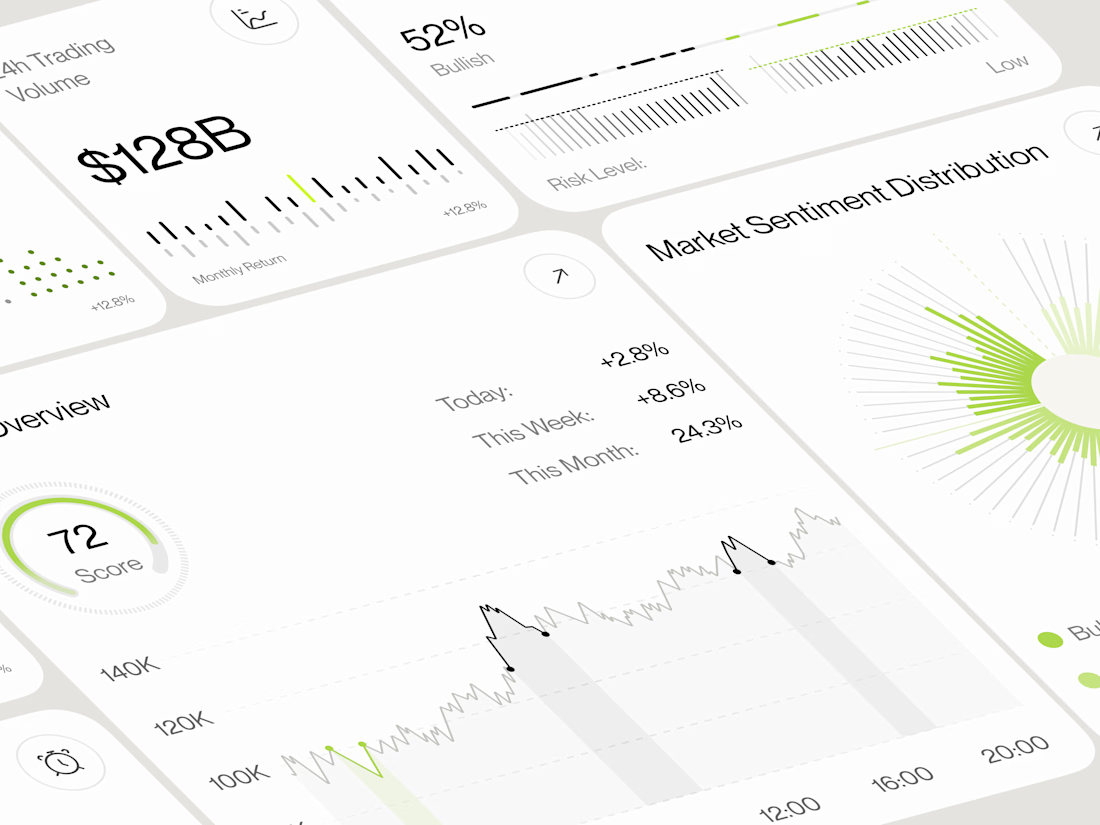
Most crypto dashboards show numbers. Great design turns those numbers into decisions.
Meet Orbit — a crypto analytics dashboard where real time insights meet a premium, data-driven experience.
Would you trust this interface with your next trading decision?
#UIDesign #DashboardDesign #CryptoTrading #FintechDesign #ProductDesign





Clean work

Generative image and video models don't keep a face: the same woman drifts from one shot to the next, and garments lose the details that make them recognisable. on-model-pipeline generates fashion stills and clips with a fixed cast.


