The network for creativity
Join 1.25M professional creatives like you
Connect with clients, get discovered, and run your business 100% commission-free
Creatives on Contra have earned over $150M and we are just getting started
Back to feedPost

The network for creativity
Join 1.25M professional creatives like you
Connect with clients, get discovered, and run your business 100% commission-free
Creatives on Contra have earned over $150M and we are just getting started








Related posts

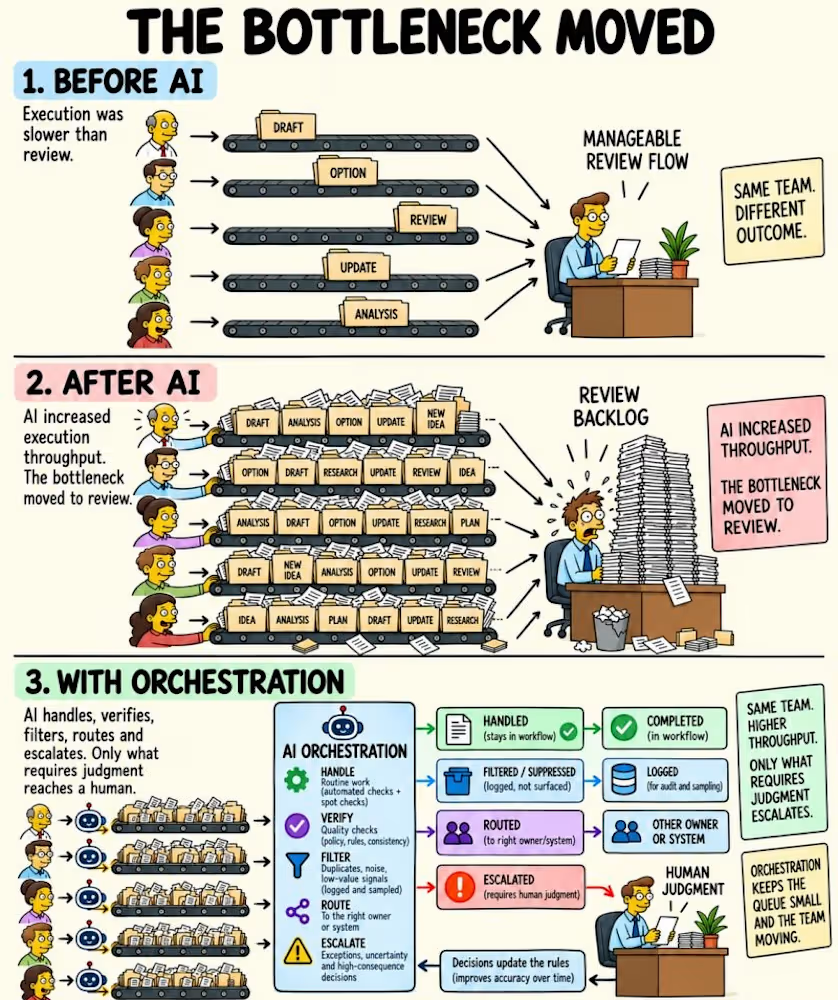
AI made the work faster.
But it all still flowed into the same human review queue.
More drafts. More alerts. More recommendations.
Same people deciding what happens next.
The answer isn’t faster review.
𝗜𝘁’𝘀 𝗱𝗲𝗰𝗶𝗱𝗶𝗻𝗴 𝘄𝗵𝗮𝘁 𝗻𝗲𝘃𝗲𝗿 𝗻𝗲𝗲𝗱𝗲𝗱 𝗿𝗲𝘃𝗶𝗲𝘄 𝗶𝗻 𝘁𝗵𝗲 𝗳𝗶𝗿𝘀𝘁 𝗽𝗹𝗮𝗰𝗲.
That’s what orchestration is for.
A well-designed system knows what to:
→ 𝗛𝗔𝗡𝗗𝗟𝗘 routine work within clear limits.
→ 𝗩𝗘𝗥𝗜𝗙𝗬 against policy, rules, and expected outcomes.
→ 𝗙𝗜𝗟𝗧𝗘𝗥 duplicates, noise, and low-value signals.
→ 𝗥𝗢𝗨𝗧𝗘 work to the right owner or system.
→ 𝗘𝗦𝗖𝗔𝗟𝗔𝗧𝗘 uncertainty and high-consequence decisions.
Humans handle the judgment calls.
Sampling and audits check what did not escalate.
Those findings improve the rules, not just clear today’s queue.
It is how I run my own agent fleets.
Because if your dashboard counts AI output but ignores the human hours needed to review it, it isn’t measuring productivity.
𝗜𝘁’𝘀 𝗺𝗲𝗮𝘀𝘂𝗿𝗶𝗻𝗴 𝗽𝗿𝗼𝗱𝘂𝗰𝘁𝗶𝗼𝗻.
The goal isn’t to remove humans.
It’s to stop making human attention the tollbooth every piece of work must pass through.
AI makes output abundant.
𝗛𝘂𝗺𝗮𝗻 𝗷𝘂𝗱𝗴𝗺𝗲𝗻𝘁 𝘀𝘁𝗮𝘆𝘀 𝘀𝗰𝗮𝗿𝗰𝗲.
The winning systems won’t generate the most.
They’ll know 𝘄𝗵𝗮𝘁 𝗻𝗲𝘃𝗲𝗿 𝗻𝗲𝗲𝗱𝗲𝗱 𝘁𝗼 𝗿𝗲𝗮𝗰𝗵 𝗮 𝗵𝘂𝗺𝗮𝗻 𝗶𝗻 𝘁𝗵𝗲 𝗳𝗶𝗿𝘀𝘁 𝗽𝗹𝗮𝗰𝗲.
If you’re building this into your workflows
DM me for the escalation scorecard we use:
five metrics, how to measure them, and what we check before expanding autonomy.
From Pilots to Platforms



There's a sentence I hear from experts more than almost any other.
"I've hired help before. It didn't move anything."
It shows up in different words from different people. A VA who did the tasks. A designer who made the pages look great. A strategist who handed over a plan and moved on.
Usually everyone did what they were asked. That's the frustrating part.
What was missing was someone looking at how the pieces connect. So the tasks got done, the pages got prettier, the plan sat in a folder, and the founder was still the one holding it all together.
If that's you, there's nothing wrong with you, and nothing wrong with wanting help again. You were handed pieces when what you needed was a system built around how your business actually works.
That's the gap I care most about closing.


This is such a real frustration. The line about everyone doing what they were asked being the frustrating part nails it. Pieces versus systems is the difference between busy and moving. Do you find most clients come to you already knowing this, or is part of the work helping them see the gap?

Top 1% Devs can do this. Check it out lemme know your thoughts. #base44challenge

Built SpeedPulse AI — an automated website performance teardown and local client acquisition engine.
Most local businesses lose over 35% of their mobile conversions due to slow load times and missing Google SEO schema. Auditing each client manually took hours, so I automated the...