The network for creativity
Join 1.25M professional creatives like you
Connect with clients, get discovered, and run your business 100% commission-free
Creatives on Contra have earned over $150M and we are just getting started
Back to feedPost

Build in Public
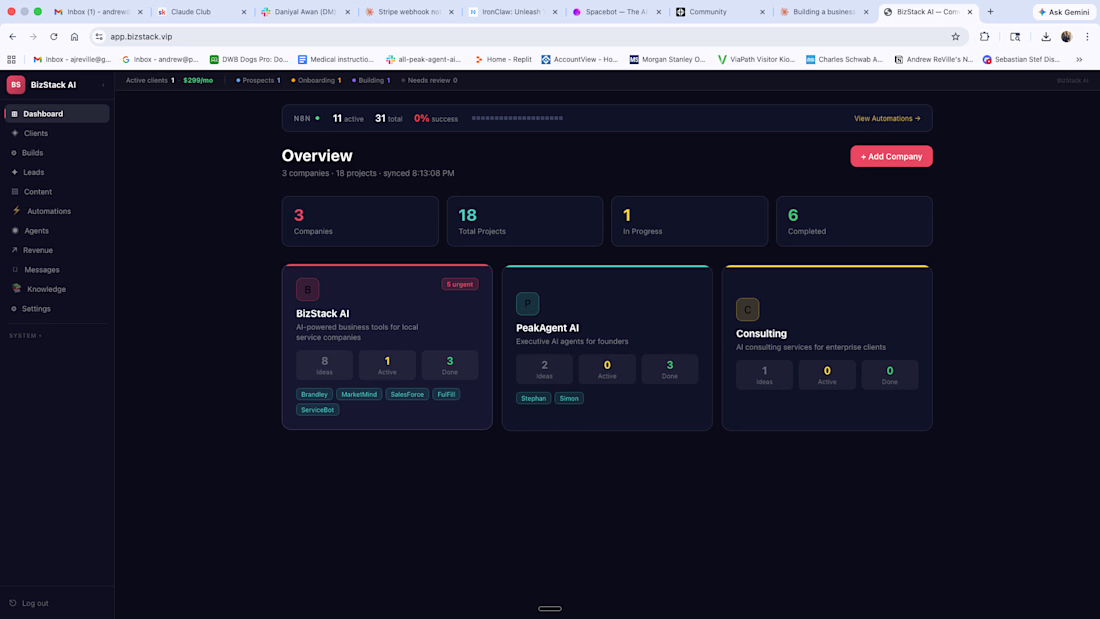
Built an entire client delivery engine yesterday. One day.
18 deployments. 6 AI agents. Delivered SAME DAY.
Client pays → onboarding auto-fills → they hit submit → six agents start building their website, CRM, emails, chatbot, content, and voice system. In parallel. No human in the loop.
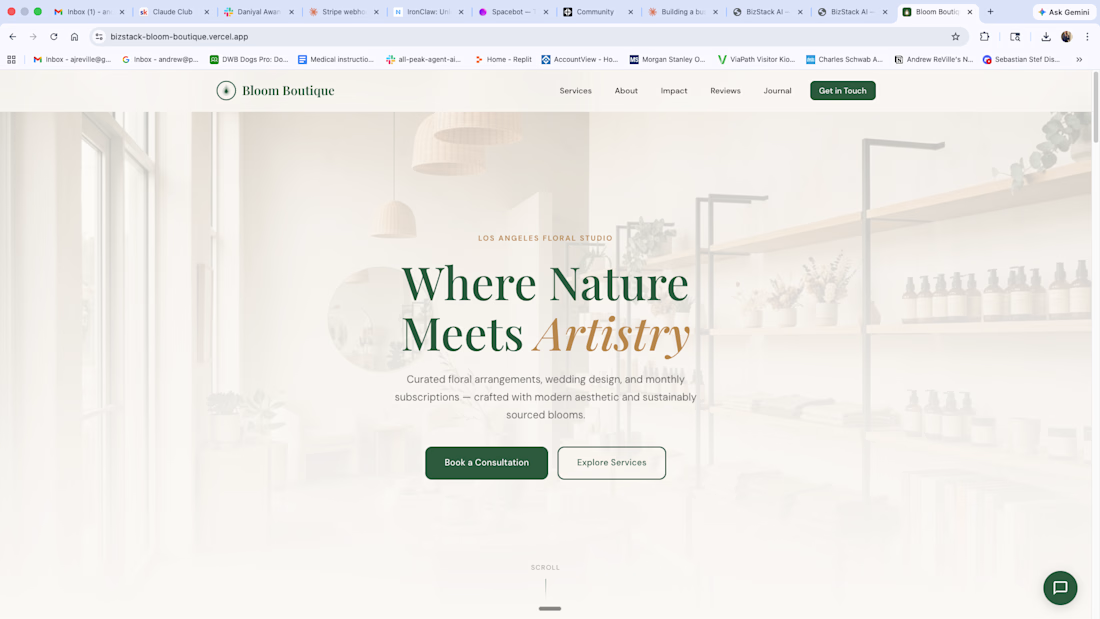
First site out of the pipeline? A floral boutique with scroll animations, a working chatbot, and AI-generated images. Live in under 20 minutes.
This is what I build for small businesses at BizStack.vip. DM me .


The network for creativity
Join 1.25M professional creatives like you
Connect with clients, get discovered, and run your business 100% commission-free
Creatives on Contra have earned over $150M and we are just getting started





Related posts

THREADLINE ATELIER
A premium booking experience for a custom fashion studio in Lagos.
I wanted to solve a simple problem: when someone asks, “Can I book with you?”, the designer shouldn't have to spend the next hour going back and forth about availability, measurements, event dates, and scheduling.
Threadline Atelier turns that into one smooth flow:
Inquiry → Design Brief → Availability → Booking → Deposit → Confirmation
Customers can choose what they're making, share their occasion and event date, upload inspiration, select a real available consultation time, pay the consultation deposit, and get booked.
For the designer, it reduces manual coordination, follow-ups, and scheduling headaches.
Visually, I wanted it to feel like a luxury fashion house with a digital experience editorial typography, contemporary African fashion, cinematic motion, and subtle thread-inspired interactions.
The signature moment:
“YOU'RE BOOKED.”


This is a well structured website but the booking experience is what I looks good.

🍝 A little something I’ve been cooking recently.
Had the opportunity to work with Secret Sauce Agency on bringing their new digital experience to life.
The goal: translate a bold creative identity into a website that feels just as distinctive, combining design, motion and development into one smooth experience.
Really enjoyed bringing this one to life.
Here’s a quick look at the result 👇


Building a 4-role real-time SaaS taught me one uncomfortable lesson: the hard part was never the code.
I've been building RestaurantOS — one platform connecting Owner, Kitchen, Waiter, and Cashier in a single live workflow (Table → Order → Kitchen → Serve → Billing → Reports).
The tech stack was the easy part. The real challenge: keeping 4 different roles in sync in real time without any of them stepping on each other's data — a waiter updating a table while the kitchen marks an item ready while the cashier is mid-billing.
That forced decisions most tutorials never cover:
⚡ How much state should live client-side vs. source-of-truth server-side
⚡ What "real-time" actually needs to mean per role (a kitchen screen needs sub-second updates, a report dashboard doesn't)
⚡ Designing failure states — what happens when the waiter's app loses connection mid-order
Currently redesigning the UI/UX layer too (motion, better visual hierarchy) while keeping this real-time core intact.
If you've built multi-role or real-time systems — curious what broke first for you. And if you're a founder who needs something like this built, my DMs are open.


the role based flow is easy to follow. what part was hardest to keep real time?