The network for creativity
Join 1.25M professional creatives like you
Connect with clients, get discovered, and run your business 100% commission-free
Creatives on Contra have earned over $150M and we are just getting started
Back to feedPost

Peer-reviewed research published in Proceedings of the National Academy of Sciences (PNAS) demonstrating severe declines in native mammal populations associated with the spread of invasive Burmese pythons in the Florida Everglades.
Led field data collection, analysis, and manuscript development as part of a long-term ecological research program. This work has been widely cited and covered in major media outlets, contributing to national awareness of invasive species impacts.



The network for creativity
Join 1.25M professional creatives like you
Connect with clients, get discovered, and run your business 100% commission-free
Creatives on Contra have earned over $150M and we are just getting started



Related posts



Nice work!!

The brief asked for five test clips. I went past it on purpose.
The question: can AI reach "blue chip" quality, the gold standard of nature documentary? The clips were meant to be unconnected, 3 to 5 seconds each, each one testing a shot AI usually gets wrong.
But five loose clips only prove the pictures. "Blue chip" is also a feeling. So I gave the audience someone to follow: a weathered 19th-century explorer, on an expedition into the Maya world of 1200 AD.
Then, on my own, I made a second film in Cleopatra's Egypt.
Over the next four posts I'll show you how: the four hard shots, keeping one man the same in every frame, recasting an AI actor, and every tool I used.
Part 1 of 5. Follow for part 2: the four shots where AI video usually breaks.

impressive

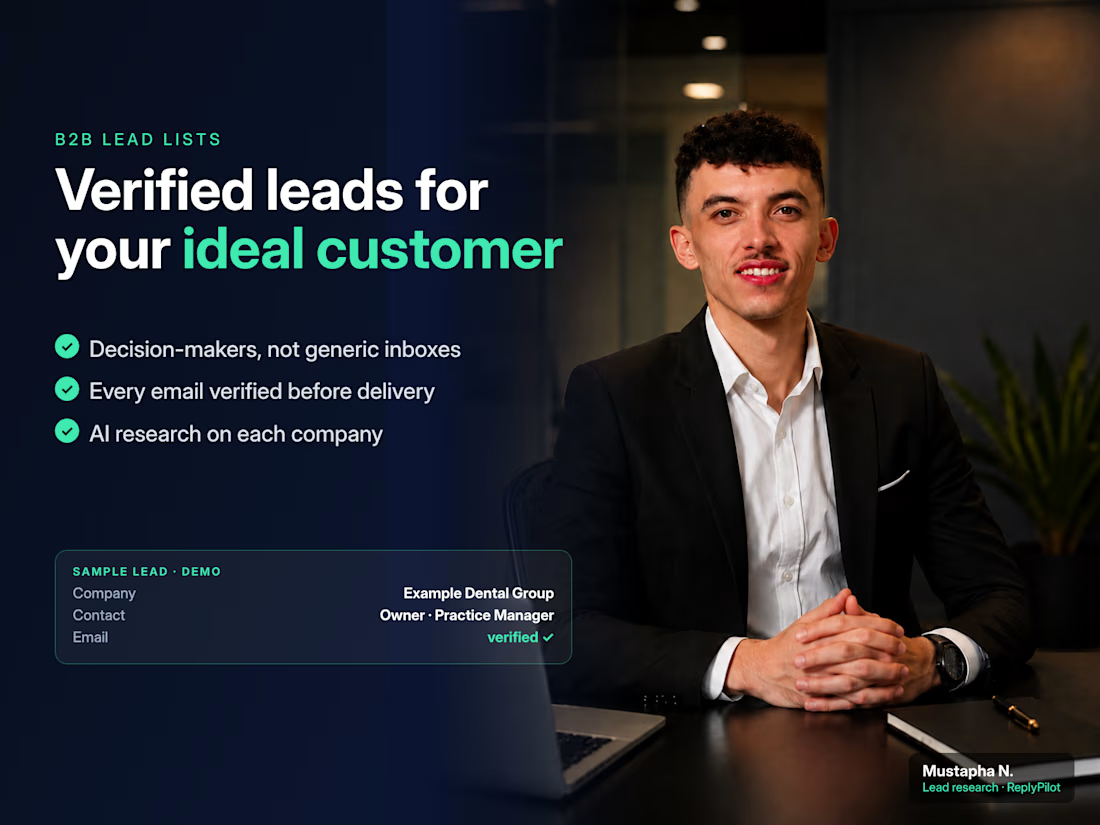
Built a lead list workflow in n8n for a US cleaning company targeting dental practices.
Google Maps → smart filters → AI reads each team page to find the owner → verified emails → a buying signal from Google reviews → ranked Google Sheet.
Every list is built fresh. No old databases.
Need verified leads for your ideal customer? Send me a message.


Using Google reviews as the buying signal is a smart touch, since a practice with recent cleanliness complaints is a warmer lead than any firmographic filter. How often does the AI pick the wrong person as owner?