The network for creativity
Join 1.25M professional creatives like you
Connect with clients, get discovered, and run your business 100% commission-free
Creatives on Contra have earned over $150M and we are just getting started
Back to feedPost

How Our Team Kicks Off Work On a Digital Product.
From day one, we make it crystal clear:
• what we’re building
• who it’s for
• what result the product must deliver
A full design kick-off looks like this:
1. Define the product + strategy (foundation)
We lock in:
• what we’re building (and what we’re not)
• who it’s for and how it helps
• why us / why this product
• which features create an advantage vs. noise
• how it will be implemented technically (so design doesn’t drift from development)
This is where we define the value, the customer profile, and what makes it unique.
2. Competitor analysis
We review direct and indirect players: what works (and why) and what doesn’t. If we have audience access, we add surveys/interviews to understand what people are actually willing to pay for.
3. JTBD / GTBD: the user’s real job
We describe the product from the end: the outcome a person needs and the context they come in. This grounds decisions in data:
• desired outcome
• the moment they choose a product
• what blocks purchase/activation
• required trust signals.
4. Product funnel: growth is baked in
We design the journey:
• acquisition
• activation
• retention
• monetization
This is where design becomes a business tool: conversion, return rate, payments.
5. References → branding
Once strategy and funnel are set, we look for references. Often we run minimal branding in parallel (logo, colors, basic rules) to save time and keep the product cohesive.
6. Low-fidelity → (research) → high-fidelity
We start with low-detail wireframes and structure. If possible, we prototype and test (focus groups / usability). If not, we move to high-fidelity — remembering every screen is part of the funnel.
7. High-fidelity → presentation → review → UX audit
In the final step:
• we present to the team
• run reviews
• conduct a UX audit (external or in-house; sometimes with AI as an extra review layer).
The goal is to catch mistakes before development—cheaper and faster.
8. Hand off to development
We deliver one package: design + brand system + scenario logic + technical constraints/agreements.
Why this way?
To get a ready-to-ship solution you can launch and scale:
• clear positioning
• clear user value
• a funnel where design supports metrics
• minimal rework risk
• a fast path to product–market fit (or an honest understanding you’re not there yet).
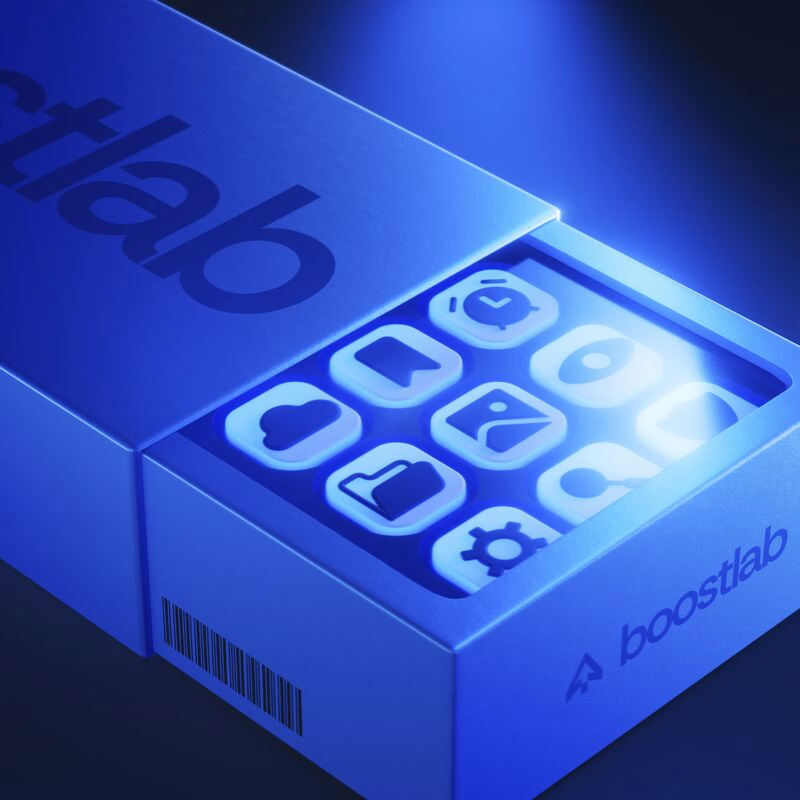
If you’re at the stage of "we have an idea / we have an MVP / we need to package it and grow it" — DM Boostlab.


The network for creativity
Join 1.25M professional creatives like you
Connect with clients, get discovered, and run your business 100% commission-free
Creatives on Contra have earned over $150M and we are just getting started
Related posts

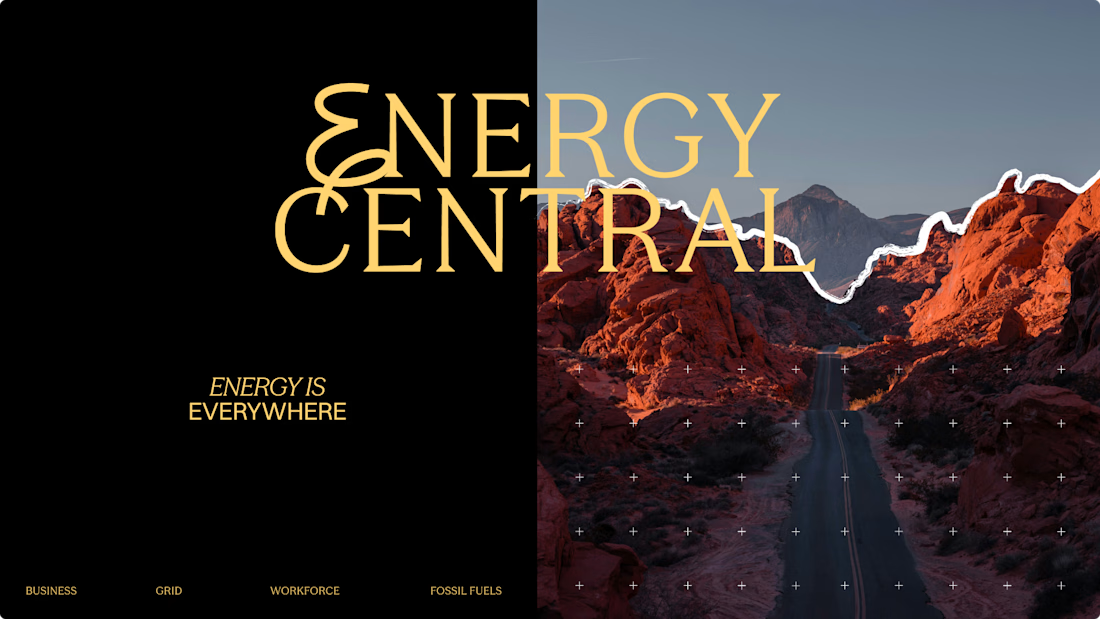
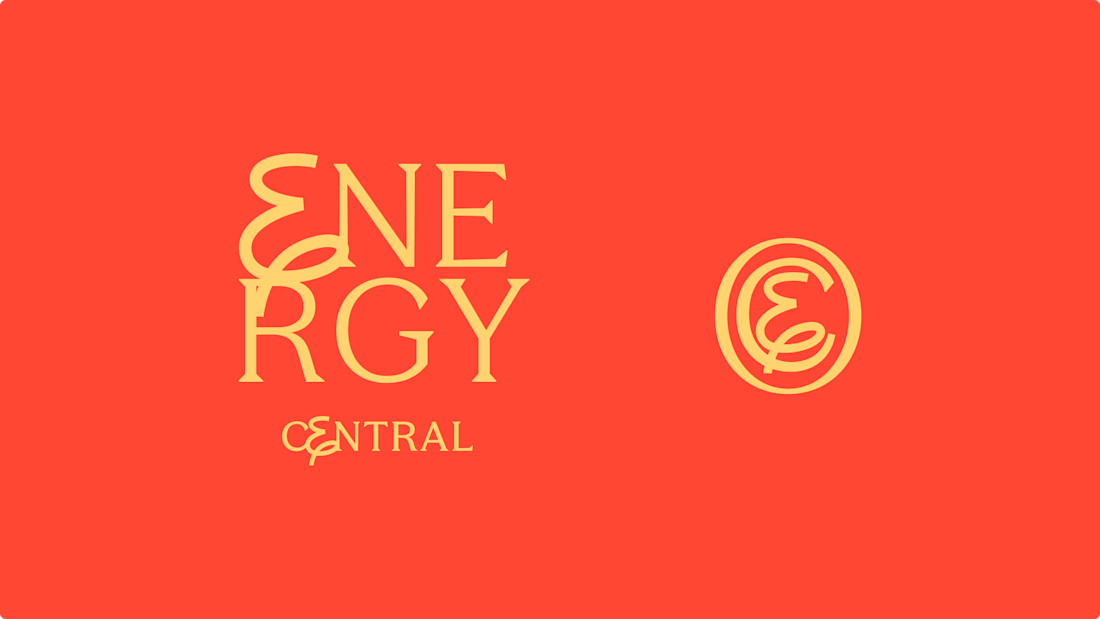
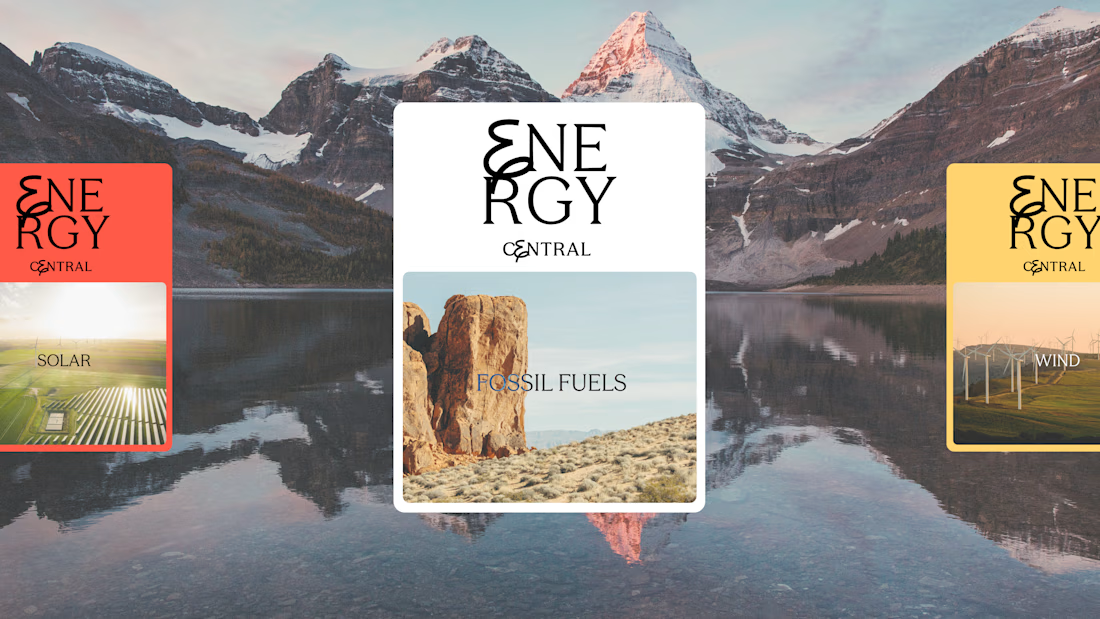
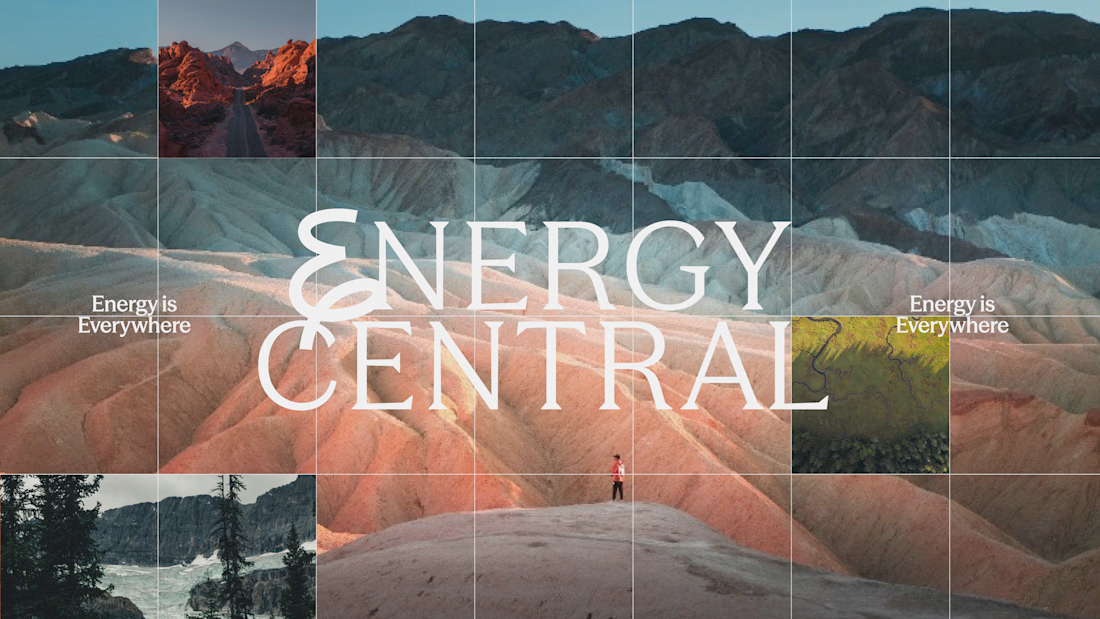
Just wrapped up one of my favourite projects recently for EnergyCentral's brand refresh and I am OBSESSED with how this direction has come together
Final creative dropping soon but for now here is a teaser of one of the many creative concepts that I created early on.
Still love the overall vibe of this one. Some styling made it into the final though!

This is sooo STUNNING

I built this fully functional frontend prototype in under 24 hours using Figma Make. ✨
From first idea to a working web experience with real user input and a complete frontend flow.
The concept:
An app that lets you send personalized digital posters to someone on a flight, displayed directly on their seat screen. You can even enhance the moment with real world surprises delivered during the flight.
Bringing a bit of emotion and connection into a place that usually feels pretty distant.
Really enjoying what’s possible with Figma Make right now.
Curious what you think about the idea. 👀


nice work

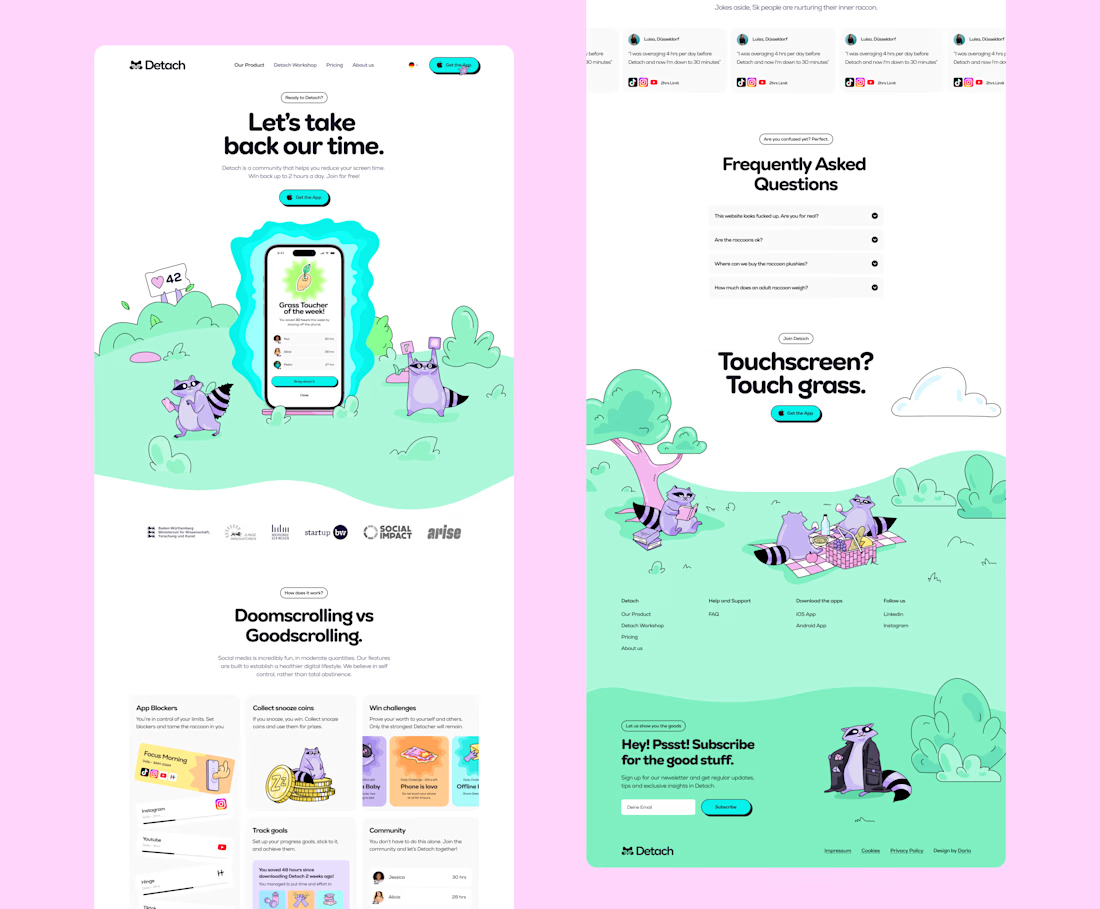
Yay! Detach went live today on the Appstore! (Only Germany for now, sadly). To celebrate this, sharing for the billionth time the website design xDDDDD
(In my defense, it still looks kinda cute!)

Looks really good mate!















Trending


Notion
Notion isn’t just where you work, it’s starting to work for you. What agents are you building?
portfolioreview
The best portfolios tell a story, not just show a grid. Share yours for feedback.
brandguidelines
Brand guidelines are becoming living systems, not static documents. What are you building for your clients?
aivideo
AI video tools are moving at warp speed. Which ones are you experimenting with?
freelancerlife
Freelancer life is wins, pivots, and everything in between. What’s yours right now?