The network for creativity
Join 1.25M professional creatives like you
Connect with clients, get discovered, and run your business 100% commission-free
Creatives on Contra have earned over $150M and we are just getting started
Back to feedPost

How To Improve Patient Communication
A treatment plan only works when patients understand how to follow it. Even after receiving the right diagnosis, patients may leave an appointment unsure about their medication, next steps, or what to expect during recovery. That’s where effective communication makes a real difference. By explaining medical information clearly and involving patients in decisions, healthcare professionals can reduce confusion and help patients feel more confident about their care. In this article, we’ll explore practical ways to improve patient communication using simple psychological techniques.
7 Practical Tips for Communicating with Patients
Understanding the psychology behind these interactions can help make patient communication more effective. Here are seven practical tips to help healthcare providers communicate with patients more clearly and confidently.
Build Trust
Trust grows when patients feel respected and know their concerns matter. Doctors can build a strong patient-provider relationship through active listening and empathy. Give patients time to explain how they feel and acknowledge their concerns without judgment. A calm tone and respectful approach can also help patients feel safe enough to speak openly about their health.
Manage Patient Stress
You can help patients manage stress by explaining their treatment in simple words and telling them what to expect next. Give them time to share their worries and answer their questions honestly. You can also involve patients in shared decision-making so they feel more confident about their choices. This technique supports patient-centered care and helps reduce patient anxiety.
Frame Medical Risks
The way doctors explain a risk can change how patients understand it. This is called the framing effect. For example, “90 out of 100 patients recover” sounds more positive than “10 out of 100 patients do not recover,” even though both mean the same thing. Good risk communication means explaining the benefits and side effects clearly without hiding any risks. This helps patients understand their options and make informed decisions.
Read Emotional Cues
A patient who avoids eye contact or speaks nervously may be feeling worried. Doctors can use emotional intelligence to understand these signs of nonverbal communication and notice changes in body language. For example, if a patient seems uncomfortable, ask, “Is there anything about your treatment that worries you?” This gives patients a chance to share their concerns.
Reduce Cognitive Load
Patients can feel confused when doctors explain too much at once. To make things easier, share the most important details first and use simple words. Explain what a medicine does and how to take it before discussing possible side effects. Also, give patients time to ask questions so they know what to do next.
Motivate Behavior Change
Start by asking patients what they want to improve about their health and what makes change difficult for them. Their answers can guide a more practical conversation. A patient who struggles to exercise because of a busy schedule might begin with a 10-minute walk each day. Setting realistic goals and recognizing small changes can help patients build confidence and maintain healthier habits.
Encourage Treatment Adherence
Patients are more likely to follow their treatment plans when their daily routines are easy to manage. Encourage them to use simple tools such as phone alarms, medication reminder apps, or weekly pill organizers to remember their doses. If taking several medicines becomes difficult they can ask their doctor or pharmacist whether a simpler schedule is possible. Regular communication also helps patients discuss problems and find solutions that work for them.
Using Technology to Communicate With Patients
Today, many doctors and clinics use technology to stay connected with patients.
AI medical scribes: Notes are written automatically, so doctors can focus on the patient instead of the screen.
Wearable devices: Real-time data from smartwatches and glucose monitors keeps consultations based on facts, not guesswork.
AR health education: Patients can view 3D models on their phone to understand a procedure before it happens.
After-visit chatbots: Quick questions get answers at any hour even after the clinic closes.
Plain-language summary tools: Technical medical notes are turned into simple, easy-to-read summaries.
Conclusion
Let’s wrap up! Effective patient communication is not about giving patients more information; it is about making that information easier to understand and act on. A patient who feels comfortable asking questions and understands the next step is better prepared to take part in their care. Small changes in how healthcare professionals listen, explain, and respond can make everyday medical conversations more useful and meaningful.
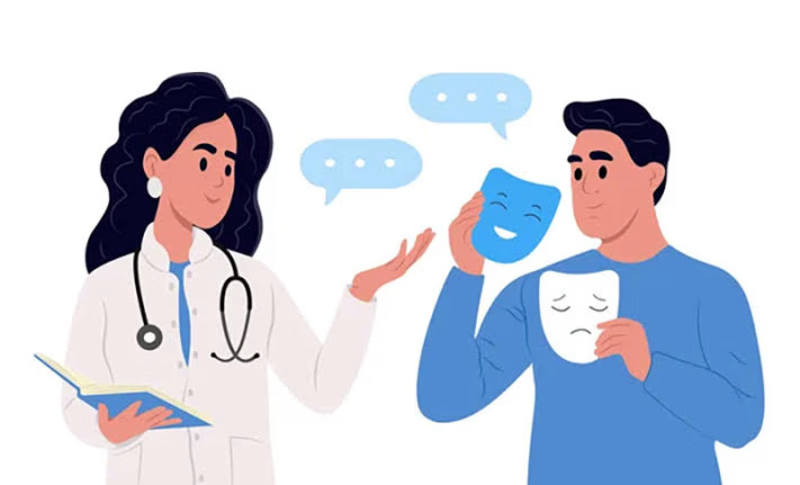


do patients remember more from a written summary or the talk itself?
The network for creativity
Join 1.25M professional creatives like you
Connect with clients, get discovered, and run your business 100% commission-free
Creatives on Contra have earned over $150M and we are just getting started








Related posts

Alder is a boutique dental studio website concept created to bridge the trust gap between healthcare providers and patients. The design replaces intimidating clinical layouts with an editorial, transparent digital experience that drives direct patient consult bookings.
The Problem:
Hidden Information and Anxiety: Traditional healthcare sites fail to display treatment fees or timelines upfront, creating hesitation during the decision making process.
Generic Visual Identity: Standard medical templates look repetitive and lack the luxury feel expected by modern boutique studio clients.
Friction in Conversion: Buried contact details and unclear clinic operating hours lead to high bounce rates.
The UX Strategy and Solution:
1. Transparency First UX Framework:
Integrated upfront callouts for fees and treatment breakdowns right in the primary hero section to remove patient fear and boost booking confidence.
2. Live Operational Indicators:
Added active status pills like "Open now until 6:30 pm" to provide immediate clarity on clinic availability without requiring extra navigation.
3. Empathetic Value Proposition:
Framed core studio values around patient comfort and clarity ("They fear not knowing... So we show you everything first") to establish immediate emotional connection.
4. Editorial Aesthetic and Layout Hierarchy:
Utilized dark obsidian themes, sophisticated glass textures, and clean sans serif typography to elevate Alder as a high end, luxury healthcare brand.


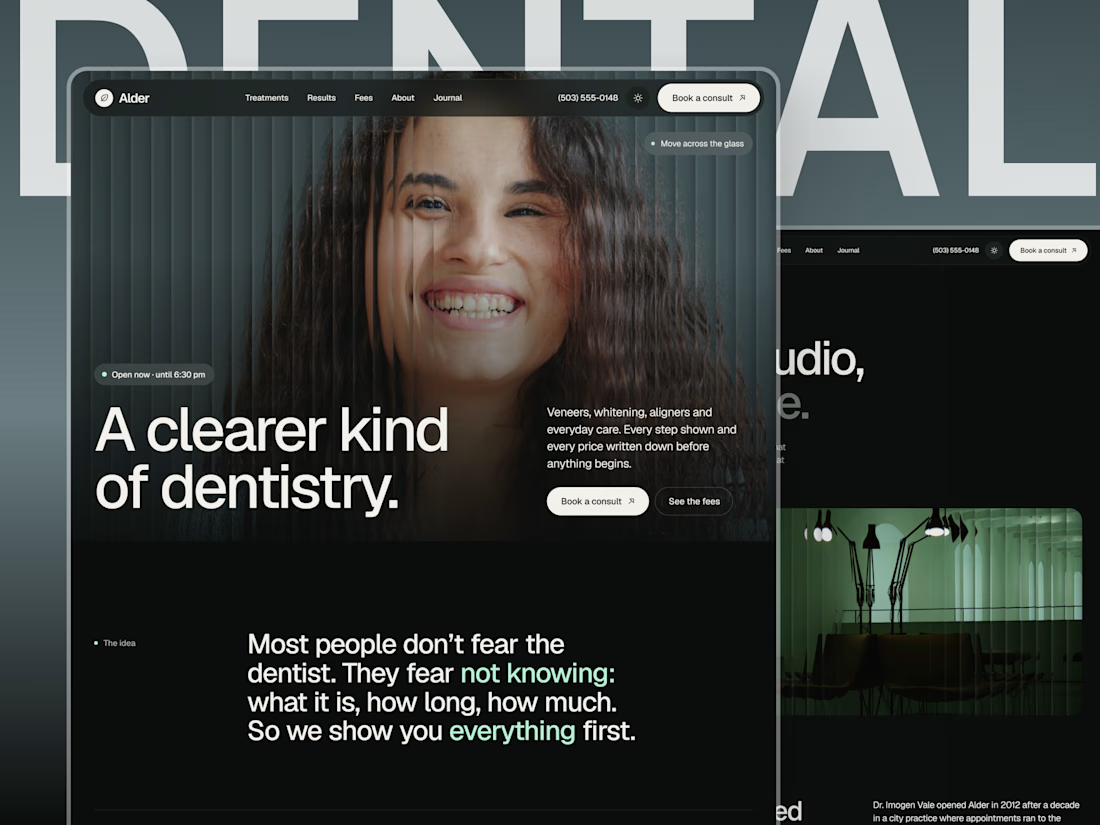

The Open now until 6:30 pm status pill is such a small but brilliant detail. Turning trust anxiety into transparent information is the whole thesis, and the dark obsidian editorial look makes it feel premium instead of clinical.

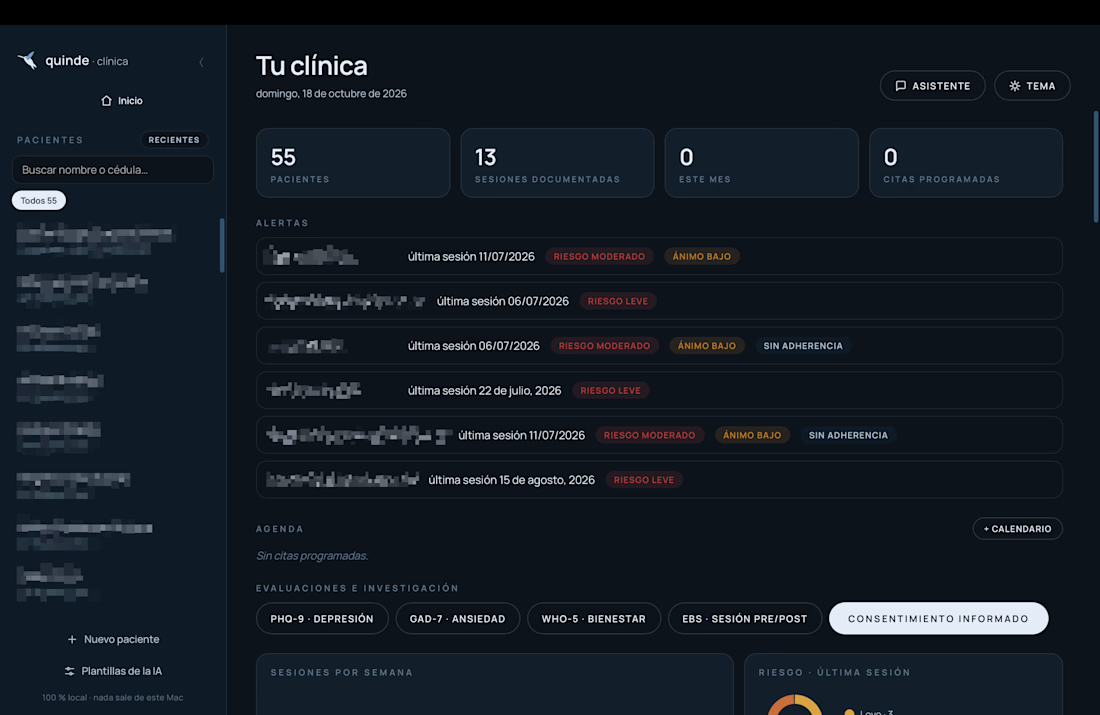
As a psychologist and technical designer, I've always been interested in how technology can simplify complex workflows.
Managing a clinical practice involves much more than conducting therapy sessions. There are patient records, clinical notes, assessments, follow-ups, appointments, and administrative tasks. Each one takes time and attention that could otherwise be dedicated to patients.
Instead of adapting my workflow to another generic management platform, I decided to build something around the way I actually work.
That's how Quinde Clínica started.
I designed and developed a clinical management application that brings my essential tools into a single interface, with local AI capabilities to support my daily workflow.
Designing for Real Needs
My approach was simple: understand the problem first, then design the solution.
I wanted a clean interface where I could quickly access patient information, document sessions, identify clinical alerts, manage appointments, and work with psychological assessment tools.
Every design decision focused on reducing friction, improving information hierarchy, and making everyday tasks easier.
Bringing Local AI into the Workflow
One of my priorities was exploring how AI could support clinical work without making everything dependent on external cloud services.
By incorporating local AI capabilities, I could experiment with intelligent assistance while keeping privacy and control over sensitive information at the center of the design.
The goal was never to replace clinical judgment. It was to create a tool that helps me organize information, reduce repetitive work, and dedicate more attention to the human side of my profession.
Building Something I Actually Use
What started as a personal experiment became a practical tool for my clinical workflow.
The most rewarding part has been seeing how design, software development, and AI can come together to solve a problem I understand firsthand.
This project also changed how I think about building software.
You don't always need to start with a revolutionary idea. Sometimes, the most meaningful products begin with a problem you face every day.
Quinde Clínica is an ongoing personal project, and perhaps the most valuable thing I've learned is that understanding a problem deeply can be just as important as knowing how to code its solution.



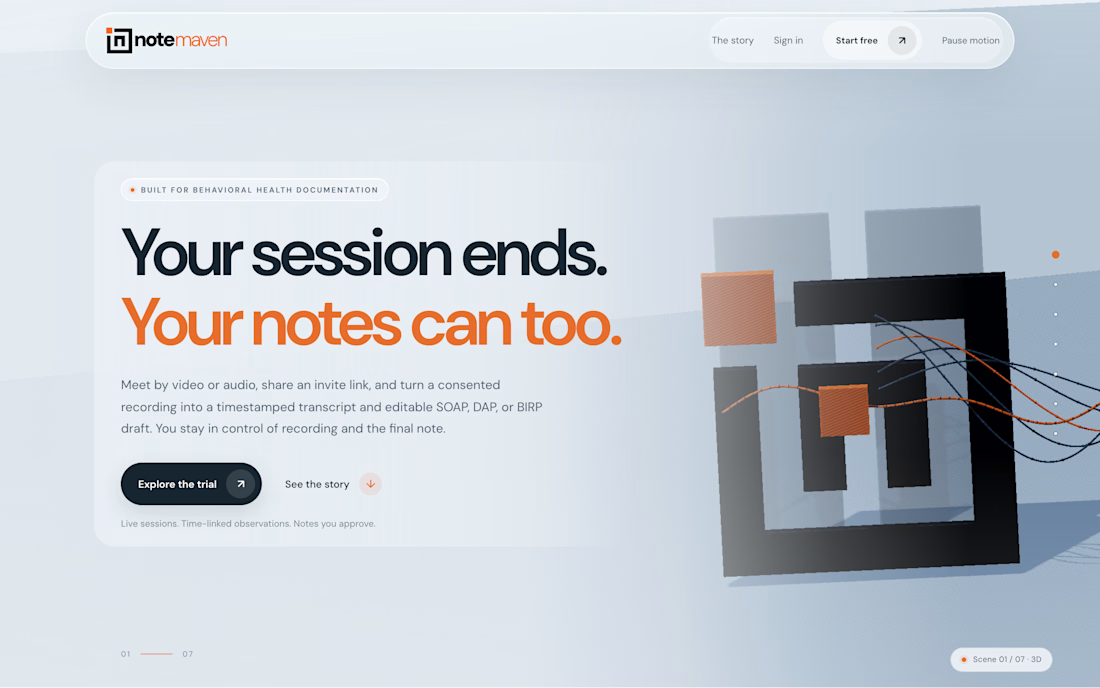
A therapy session ends. Then the second shift starts: writing the note.
NoteMaven began with one question. Could the note start itself, without the clinician giving up control?
The hard part wasn't the AI. It was trust. A clinician has to know exactly when they're being recorded, and that nothing becomes part of the record until they say so. So in September I rebuilt the whole product around the session itself: pick a client, choose video, audio or an upload, and everything after follows from there.
• Meet by video or audio in NoteMaven and send your client a join link, or upload a recording you already have.
• Camera, mic and recording all start off. Recording begins only after everyone agrees.
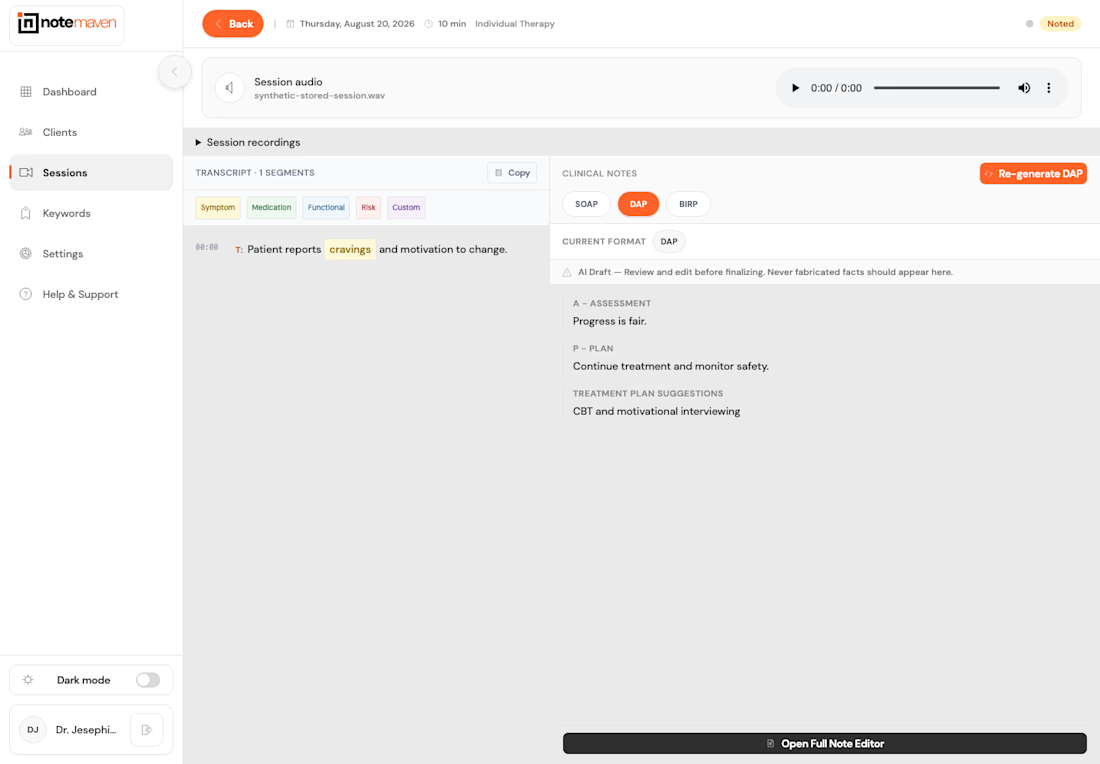
• After the session, NoteMaven transcribes the conversation with timestamps and drafts the note you chose: SOAP, DAP or BIRP.
• While reviewing, you can pin a private observation to the exact moment it happened. It stays separate from the clinical note.
• Every draft is marked for review. Edit any section and finalize only when the note is yours.
The look follows the same idea: a calm consultation room, not a cockpit. Warm grays, one orange for the next step, and a plain text label on every status.
Behind the screen, the AI keys stay on the server, each provider sees only their own clients, and actions are logged.
I designed and built NoteMaven end to end, from the interface to the transcription pipeline.
See the story in seven 3D scenes: notemaven.tech