The network for creativity
Join 1.25M professional creatives like you
Connect with clients, get discovered, and run your business 100% commission-free
Creatives on Contra have earned over $150M and we are just getting started
Back to feedPost

Many businesses don't have a technology problem.
They have an efficiency problem.
Manual processes.
Slow operations.
High cloud costs.
Deployment bottlenecks.
Systems that don't scale when growth happens.
These issues quietly drain time, money, and opportunities.
That's where I help.
I work on cloud and DevOps solutions that help businesses:
☁️ Optimize cloud infrastructure costs
⚡ Automate deployment workflows with CI/CD
🐳 Containerize applications using Docker
📈 Improve scalability and system reliability
🔄 Reduce manual operational work through automation
🔍 Implement monitoring and performance visibility
The goal isn't simply to deploy technology.
The goal is to build systems that are:
✅ More efficient
✅ More scalable
✅ More reliable
✅ More cost-effective
Technology should help businesses grow, not create additional complexity.
If your team is spending too much time managing infrastructure instead of building products, it may be time to rethink the architecture behind the scenes.
What is the biggest operational challenge your team is facing right now?
#CloudComputing #DevOps #AWS #Docker #Automation #CloudArchitecture #CostOptimization #CICD #Technology #BusinessGrowth
The network for creativity
Join 1.25M professional creatives like you
Connect with clients, get discovered, and run your business 100% commission-free
Creatives on Contra have earned over $150M and we are just getting started
Related posts

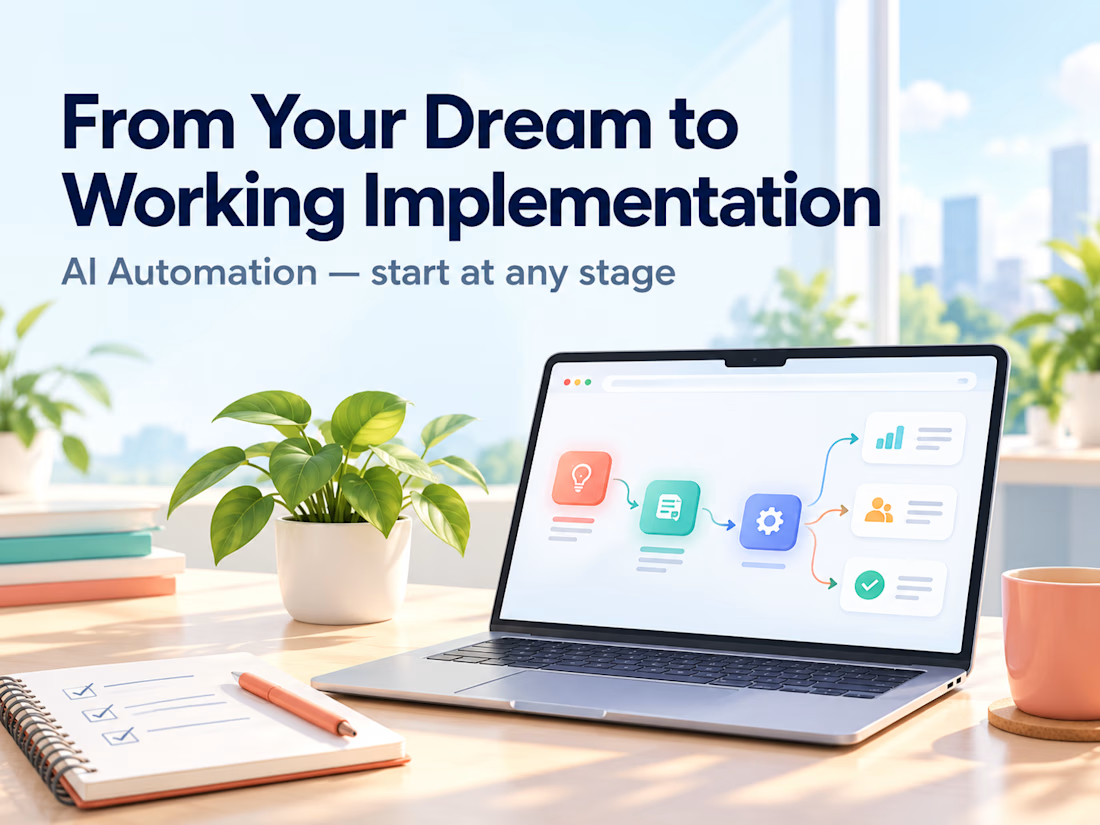
Clients often start with the same request: "Let's build an AI agent."
My counter-question is always: which manual process actually costs you time, errors, or money right now?
My selection rule: remove it first. If it can't be removed, simplify it. If it's still needed, automate it with a plain script. Only then add an integration or an agent. Often the best result is the process that no longer exists.
Safe automation means real scenarios, error handling, and alerts. Without alerts, a workflow can silently lose data for weeks. I always define what stays with a human and what goes to the system.
Question for you: which process would you automate first, and why is it still manual?
Service for audit and implementation: https://contra.com/s/BmWLbgFU-ai-automation-from-your-dream-to-working-implementation?r=auto_booster



🚀 Is Your Customer Support Team Spending Too Much Time on Repetitive Tasks?
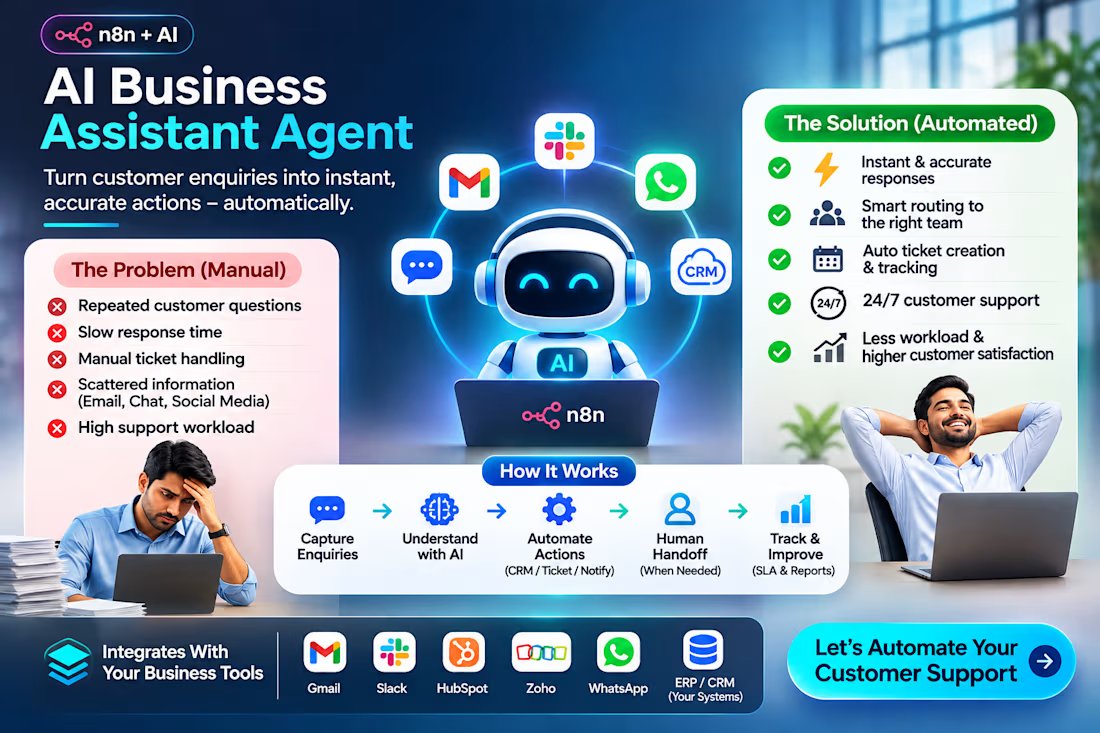
Customer enquiries, delayed responses, manual ticket handling, and disconnected systems can slow down business operations.
I build AI Business Assistant solutions using n8n, AI Agents, and API integrations.
Here's what the solution can automate:
✅ Customer enquiry classification and response drafting
✅ Priority-based routing and escalation
✅ Ticket creation and tracking
✅ CRM updates and team notifications
✅ Human-in-the-loop approvals for complex cases
✅ Integration with existing business tools
The goal: Faster response handling, less repetitive work, and better operational visibility.
I've built working AI assistant and customer support automation demonstrations and am available for custom implementation and subcontracting projects.
Are you a business owner, operations manager, or automation agency looking to automate customer support?
📩 DM me with your requirements. I'll share a relevant workflow demo and discuss a fixed-price implementation.
#n8n #AIAgents #CustomerSupportAutomation #BusinessAutomation #AIIntegration



For the human-in-the-loop approvals on complex cases, what decides when a ticket gets escalated: a confidence score from the classification step, or rules like keywords and customer tier? That threshold is usually where these n8n flows either save time or create review noise.

🚀 Have a SaaS idea? Let's turn it into a real product!
Looking to launch your own SaaS platform or take your business to the next level with a custom web application?
I help businesses and startups build modern, scalable, and reliable SaaS solutions.
What I can help you build:
💻 Custom SaaS Platforms & Web Applications
📊 Professional Dashboards & Admin Panels
🔐 User Authentication & Account Management
🔗 Backend Development & API Integration
🗄️ Database Design & Integration
☁️ Cloud Deployment & Infrastructure Setup
⚡ Scalable and High-Performance Applications
Whether you're starting from scratch or improving an existing product, I'll help turn your vision into a functional, professional solution.
📩 Have an idea? Let's discuss your project!