The network for creativity
Join 1.25M professional creatives like you
Connect with clients, get discovered, and run your business 100% commission-free
Creatives on Contra have earned over $150M and we are just getting started
Back to feedPost

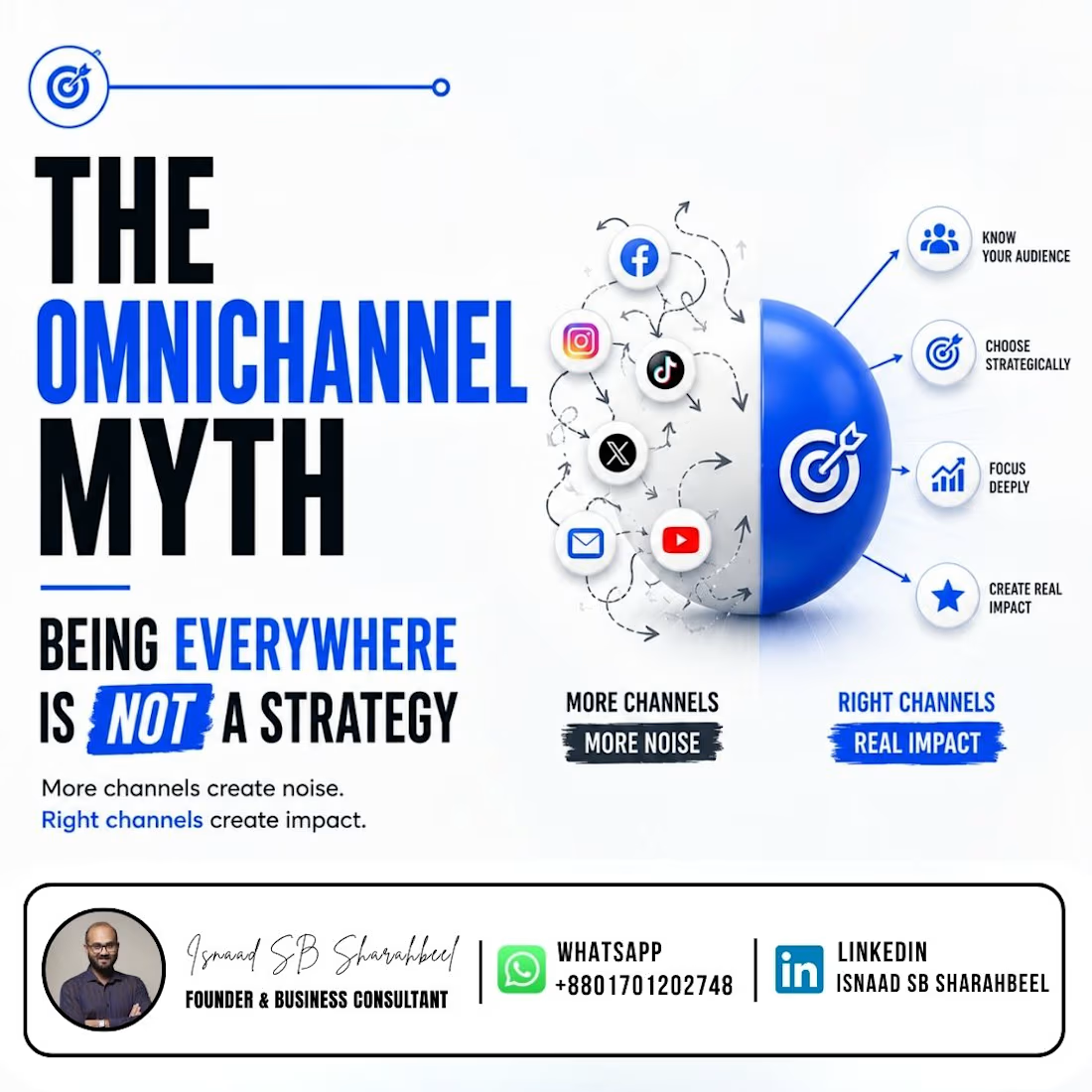
# 𝐓𝐡𝐞 𝐎𝐦𝐧𝐢𝐜𝐡𝐚𝐧𝐧𝐞𝐥 𝐌𝐲𝐭𝐡: 𝐁𝐞𝐢𝐧𝐠 𝐄𝐯𝐞𝐫𝐲𝐰𝐡𝐞𝐫𝐞 𝐈𝐬 𝐍𝐨𝐭 𝐚 𝐒𝐭𝐫𝐚𝐭𝐞𝐠𝐲
One of the most expensive growth mistakes we've seen is confusing 𝐦𝐨𝐫𝐞 𝐜𝐡𝐚𝐧𝐧𝐞𝐥𝐬 𝐰𝐢𝐭𝐡 𝐦𝐨𝐫𝐞 𝐠𝐫𝐨𝐰𝐭𝐡.
LinkedIn, Instagram, Facebook, TikTok, YouTube, email, podcasts, communities, search. The list keeps growing, and it is tempting to believe that showing up everywhere means capturing more demand.
Usually, it means spreading your resources thinner.
Every new channel creates more than another distribution opportunity. It creates another content system, another audience dynamic, another set of creative requirements, another measurement problem, and another place where your team can underperform.
The real question isn't:
“𝗪𝗵𝗲𝗿𝗲 𝗲𝗹𝘀𝗲 𝗰𝗮𝗻 𝘄𝗲 𝗺𝗮𝗿𝗸𝗲𝘁?”
It is:
“𝐖𝐡𝐞𝐫𝐞 𝐜𝐚𝐧 𝐰𝐞 𝐜𝐫𝐞𝐚𝐭𝐞 𝐚 𝐝𝐢𝐬𝐩𝐫𝐨𝐩𝐨𝐫𝐭𝐢𝐨𝐧𝐚𝐭𝐞 𝐚𝐝𝐯𝐚𝐧𝐭𝐚𝐠𝐞?”
Before adding another channel, answer three questions.
𝟏. 𝐖𝐡𝐞𝐫𝐞 𝐝𝐨𝐞𝐬 𝐲𝐨𝐮𝐫 𝐢𝐝𝐞𝐚𝐥 𝐜𝐮𝐬𝐭𝐨𝐦𝐞𝐫 𝐚𝐜𝐭𝐮𝐚𝐥𝐥𝐲 𝐩𝐚𝐲 𝐚𝐭𝐭𝐞𝐧𝐭𝐢𝐨𝐧?
Don't confuse platform popularity with customer relevance.
Your customers may technically use six platforms, but that doesn't mean they are equally valuable on all six. One might be where they discover problems, another where they consume entertainment, and another where they actually evaluate solutions.
You want to understand 𝐰𝐡𝐞𝐫𝐞 𝐚𝐭𝐭𝐞𝐧𝐭𝐢𝐨𝐧 𝐭𝐮𝐫𝐧𝐬 𝐢𝐧𝐭𝐨 𝐢𝐧𝐭𝐞𝐧𝐭, not simply where impressions are available.
𝟐. 𝐇𝐨𝐰 𝐝𝐨𝐞𝐬 𝐲𝐨𝐮𝐫 𝐜𝐮𝐬𝐭𝐨𝐦𝐞𝐫 𝐦𝐚𝐤𝐞 𝐚 𝐛𝐮𝐲𝐢𝐧𝐠 𝐝𝐞𝐜𝐢𝐬𝐢𝐨𝐧?
Different products require different paths to trust.
A complex B2B product may require education, authority, repeated exposure, and conversations with decision-makers. A consumer product might depend more heavily on social proof, demonstrations, convenience, or frequency.
Your channel strategy should reflect the buying process, not the latest platform trend.
A channel is valuable when it helps move someone from 𝐮𝐧𝐚𝐰𝐚𝐫𝐞 → 𝐢𝐧𝐭𝐞𝐫𝐞𝐬𝐭𝐞𝐝 → 𝐜𝐨𝐧𝐯𝐢𝐧𝐜𝐞𝐝 → 𝐜𝐮𝐬𝐭𝐨𝐦𝐞𝐫, not simply when it generates reach.
𝟑. 𝐂𝐚𝐧 𝐲𝐨𝐮 𝐦𝐚𝐢𝐧𝐭𝐚𝐢𝐧 𝐚𝐧 𝐚𝐝𝐯𝐚𝐧𝐭𝐚𝐠𝐞 𝐭𝐡𝐞𝐫𝐞?
This is where most omnichannel strategies break down.
A company may technically be present on seven platforms but genuinely good at none of them.
The result is predictable: inconsistent publishing, recycled creative, weak engagement, poor experimentation, fragmented data, and teams spending more time producing content than learning from it.
𝐏𝐫𝐞𝐬𝐞𝐧𝐜𝐞 𝐢𝐬 𝐧𝐨𝐭 𝐩𝐞𝐫𝐟𝐨𝐫𝐦𝐚𝐧𝐜𝐞.
The companies that scale effectively often do something less exciting: they find one or two channels where they have a genuine advantage, build a repeatable acquisition process, understand the economics, and then expand.
That advantage could be superior creative, proprietary expertise, a strong founder voice, a community, better distribution, lower acquisition costs, or simply a deeper understanding of the audience than competitors have.
And there is another important reason to resist premature expansion:
𝐘𝐨𝐮 𝐧𝐞𝐞𝐝 𝐞𝐧𝐨𝐮𝐠𝐡 𝐯𝐨𝐥𝐮𝐦𝐞 𝐰𝐢𝐭𝐡𝐢𝐧 𝐚 𝐜𝐡𝐚𝐧𝐧𝐞𝐥 𝐭𝐨 𝐥𝐞𝐚𝐫𝐧.
If your budget, creative capacity, and attention are split across five channels, you may never generate enough meaningful data from any one of them to understand what is actually working.
Start narrow.
Find the channel where your customer, message, economics, and capabilities intersect. Build a system that can reliably produce results. Then expand when the data justifies it.
Because the goal isn't to be everywhere.
𝐓𝐡𝐞 𝐠𝐨𝐚𝐥 𝐢𝐬 𝐭𝐨 𝐛𝐞𝐜𝐨𝐦𝐞 𝐝𝐢𝐟𝐟𝐢𝐜𝐮𝐥𝐭 𝐭𝐨 𝐜𝐨𝐦𝐩𝐞𝐭𝐞 𝐰𝐢𝐭𝐡 𝐬𝐨𝐦𝐞𝐰𝐡𝐞𝐫𝐞 𝐭𝐡𝐚𝐭 𝐦𝐚𝐭𝐭𝐞𝐫𝐬.
Adding channels can increase reach.
𝐂𝐨𝐧𝐜𝐞𝐧𝐭𝐫𝐚𝐭𝐢𝐧𝐠 𝐲𝐨𝐮𝐫 𝐚𝐝𝐯𝐚𝐧𝐭𝐚𝐠𝐞 𝐢𝐬 𝐰𝐡𝐚𝐭 𝐜𝐚𝐧 𝐜𝐫𝐞𝐚𝐭𝐞 𝐠𝐫𝐨𝐰𝐭𝐡.
If you’re unsure where to focus, evaluate your customer, buying journey, and economics first. 𝐓𝐡𝐞 𝐫𝐢𝐠𝐡𝐭 𝐜𝐡𝐚𝐧𝐧𝐞𝐥 𝐢𝐬𝐧’𝐭 𝐭𝐡𝐞 𝐨𝐧𝐞 𝐰𝐢𝐭𝐡 𝐭𝐡𝐞 𝐦𝐨𝐬𝐭 𝐫𝐞𝐚𝐜𝐡. 𝐈𝐭’𝐬 𝐭𝐡𝐞 𝐨𝐧𝐞 𝐰𝐡𝐞𝐫𝐞 𝐲𝐨𝐮 𝐜𝐚𝐧 𝐰𝐢𝐧 𝐜𝐨𝐧𝐬𝐢𝐬𝐭𝐞𝐧𝐭𝐥𝐲.
Let’s evaluate your channels, customer journey, and acquisition economics.
The network for creativity
Join 1.25M professional creatives like you
Connect with clients, get discovered, and run your business 100% commission-free
Creatives on Contra have earned over $150M and we are just getting started



Related posts


Started From Zero, Built Real Opportunities!
I started this campaign from scratch, and the results speak for themselves! 📈
Here’s what I’ve achieved so far for my client:
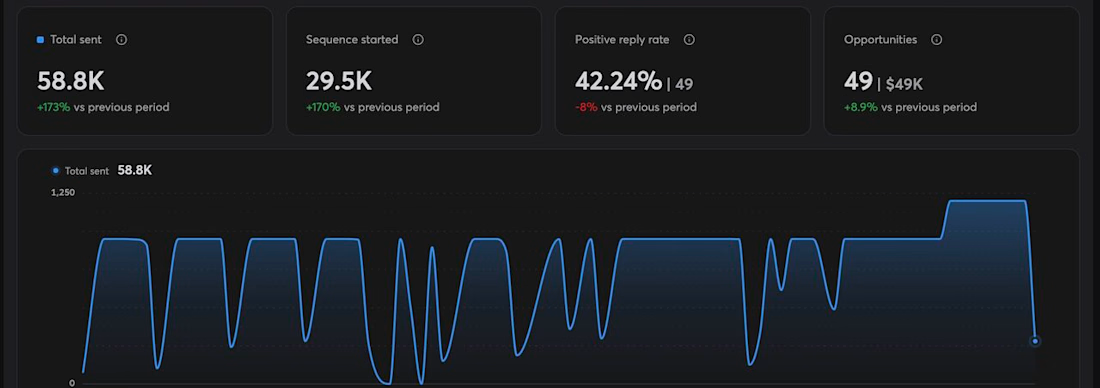
✅ 58.8K Total Emails Sent
✅ 29.5K Sequences Started
✅ 42.24% Positive Reply Rate
✅ 49 Opportunities Generated
✅ $49K in Potential Opportunities
This is what a well-planned and consistently managed outreach campaign can achieve!
Are you a small business owner struggling to find new clients?
I can help you generate leads, reach potential customers, and create more business opportunities through targeted email outreach.
Let's turn your cold leads into real opportunities! 🤝
📩 DM me if you want to grow your business and get more clients.
#LeadGeneration #ColdEmailOutreach #SmallBusinessGrowth #ClientAcquisition #EmailMarketing #BusinessGrowth
Another Campaign, Another Success Story
Started this outreach campaign from scratch, and here are the results so far! 📊
Here’s what we achieved:
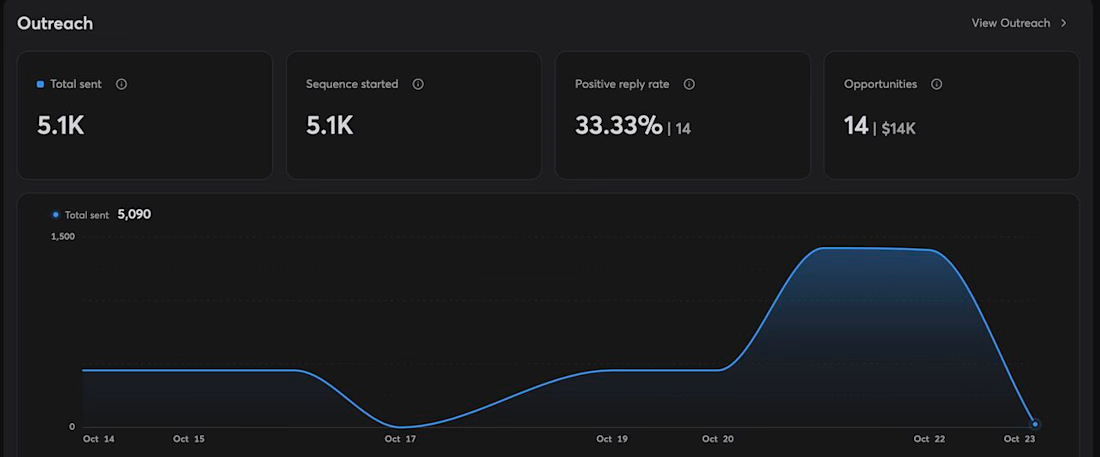
✅ 5,090 Emails Sent
✅ 5.1K Sequences Started
✅ 33.33% Positive Reply Rate
✅ 14 Opportunities Generated
✅ $14K in Potential Business Opportunities
No shortcuts, just smart targeting, strategic cold email outreach, and consistent execution.
Are you a small business owner looking for more clients?
I can help you reach your ideal customers, generate qualified leads, and turn cold outreach into real business opportunities.
Your next client could be just one campaign away!
📩 DM me to discuss how I can help grow your business.
#ColdEmailOutreach #LeadGeneration #SmallBusiness #ClientAcquisition #EmailMarketing #BusinessGrowth

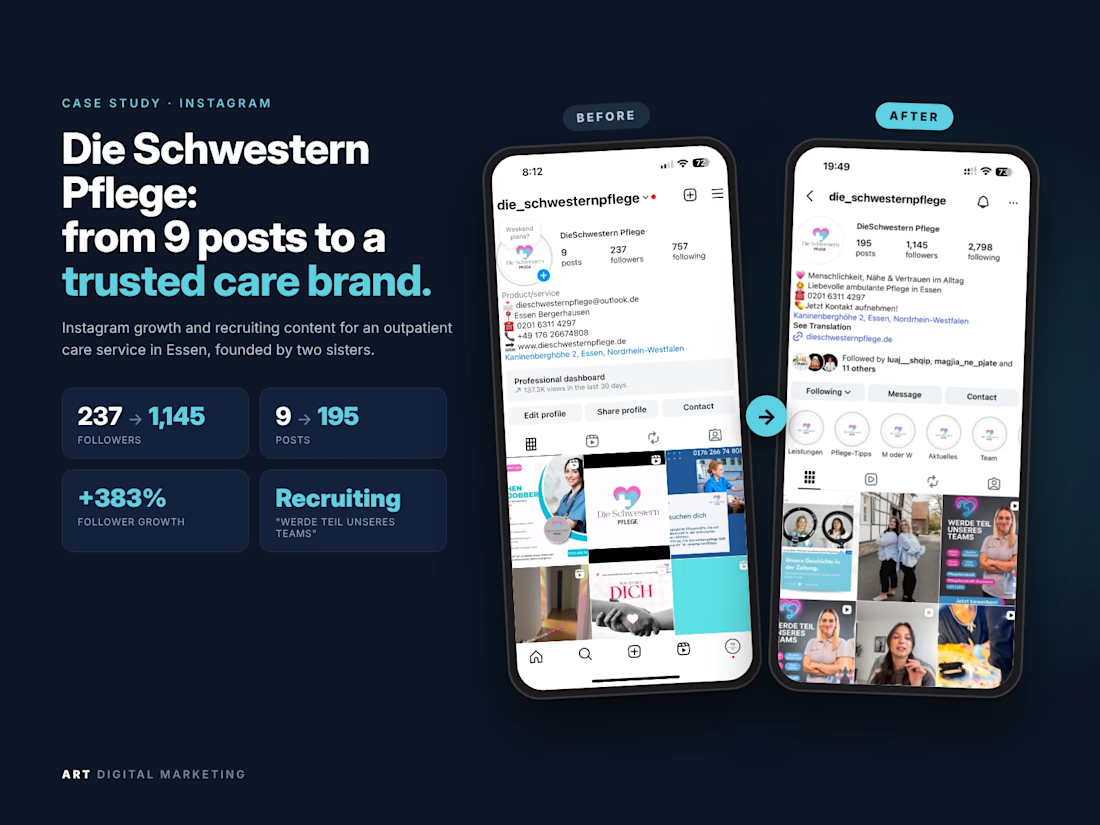
237 → 1,145 followers (+383%) for a home care service in Germany. 🩵
The secret wasn't going viral. It was showing the real people behind the care: the founders, the team, and honest answers to the questions families ask.
What worked:
→ Reels with the team, not stock photos
→ "Myth or Fact?" posts that educate families
→ A recruiting campaign in an industry with a huge staff shortage
Which matters more for small businesses on Instagram: real faces or polished design? 👇