The network for creativity
Join 1.25M professional creatives like you
Connect with clients, get discovered, and run your business 100% commission-free
Creatives on Contra have earned over $150M and we are just getting started
Back to feedPost

Your Food Safety Records Shouldn't Depend on Spreadsheets | n8n Compliance Automation
One missing inspection record can create hours of unnecessary work during a compliance audit.
Food manufacturers, commercial kitchens, and processing facilities handle large amounts of operational documentation every day.
But when critical records live across spreadsheets, inboxes, and paper forms, maintaining compliance becomes harder than it needs to be.
The Hidden Operational Problems
Quality inspection records entered manually.
Temperature and hygiene checklists scattered across departments.
Supplier certificates expiring without timely reminders.
Corrective actions getting lost in email threads.
Audit documents taking too long to collect.
Limited visibility into unresolved quality issues.
The Solution: AI-Powered Food Safety Workflow Automation
I can develop a custom n8n compliance automation system that connects inspection forms, document storage, AI-powered classification, and operational alerts.
The goal is simple: reduce repetitive documentation while keeping quality teams in control of important compliance decisions.
How the Workflow Works
Inspection Form → n8n → Data Validation → AI Classification → Compliance Register → Alerts → Audit Reporting
Step 1 — Digital Inspection Capture
Employees submit quality checks using structured digital forms.
Step 2 — Automated Validation
n8n checks mandatory fields, timestamps, and expected data formats.
Step 3 — AI Document Processing
OpenAI can help classify inspection notes, extract supplier certificate details, and organize unstructured information.
Step 4 — Centralized Compliance Records
Validated records are stored in Airtable with references to supporting documents.
Step 5 — Exception Detection
Rule-based checks identify missing inspections, overdue actions, and approaching certificate expiration dates.
Step 6 — Quality Team Notifications
Responsible staff receive alerts for review and corrective action.
Step 7 — Audit Preparation
The system organizes inspection history and outstanding issues for easier reporting.
Important: AI supports documentation and triage. Qualified personnel remain responsible for food safety decisions and regulatory compliance.
Business Benefits
✓ Less time spent copying inspection data.
✓ Better visibility into missing documentation.
✓ Faster follow-up on quality issues.
✓ More organized audit preparation.
✓ Clearer accountability for corrective actions.
✓ Consistent recordkeeping across departments.
Your quality team should focus on food safety, not chasing paperwork.
Let's Improve Your Compliance Workflow
Already know which processes need automation? → Let's build an n8n workflow around your existing quality management system.
Not sure what can be automated safely? → Share your inspection and documentation process, and I'll help identify practical automation opportunities.
#n8n #n8nAutomation #FoodSafetyAutomation #ComplianceAutomation #FoodManufacturing #QualityAssurance #HACCP #FoodSafetyManagement #AIAutomation #WorkflowAutomation #DocumentProcessing #InspectionAutomation #QualityControl #AuditPreparation #Airtable #OpenAI #APIIntegration #ManufacturingAutomation #BusinessProcessAutomation #DigitalTransformation


The network for creativity
Join 1.25M professional creatives like you
Connect with clients, get discovered, and run your business 100% commission-free
Creatives on Contra have earned over $150M and we are just getting started






Related posts

Built an n8n automation that recovers missed customer calls, starts an AI conversation, checks CRM context, routes urgent requests, and tracks callback SLAs until the customer is handled.


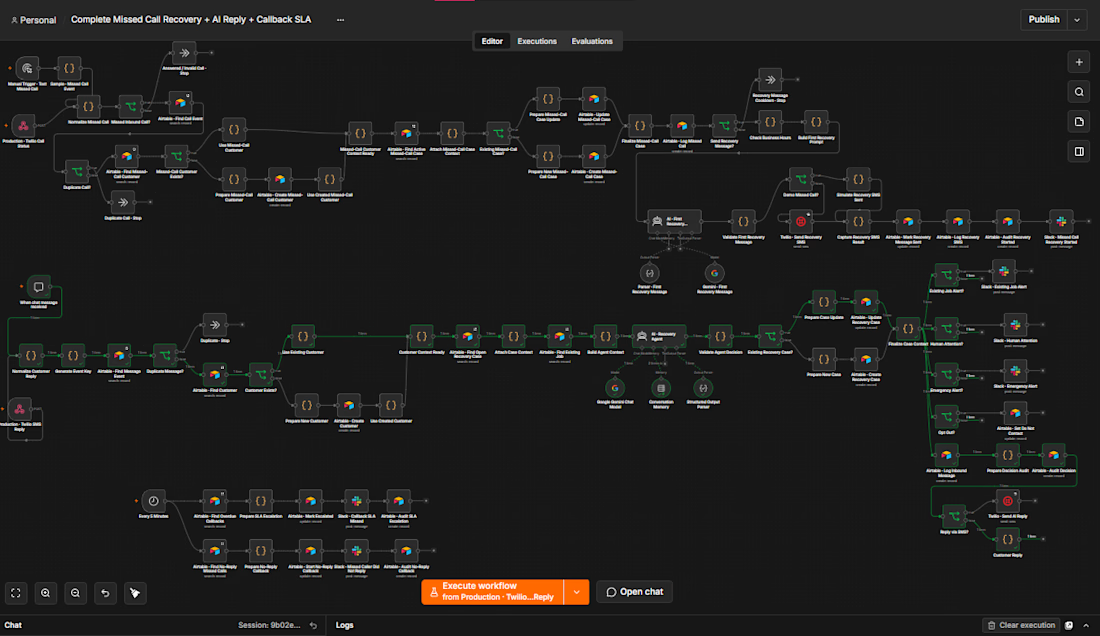

nice that it tracks the callback until someone actually handles it. which businesses is this built for, trades or more like clinics

AI Automation SaaS Landing Page
A modern AI automation SaaS website design focused on simplifying workflows, automating repetitive tasks, and helping businesses work smarter. Designed with a clean interface, intuitive user experience, and a scalable visual system to communicate the value of AI-powered automation.


Amazing

Automated follow-up that wins back declined jobs
Every repair or service a customer declines is revenue left on the table. This engine tracks those declined items and follows up at the right moment to bring the customer back.
following up on declined jobs is a cool angle. how do you decide when to follow up, fixed days or based on the job