The network for creativity
Join 1.25M professional creatives like you
Connect with clients, get discovered, and run your business 100% commission-free
Creatives on Contra have earned over $150M and we are just getting started
Back to feedPost

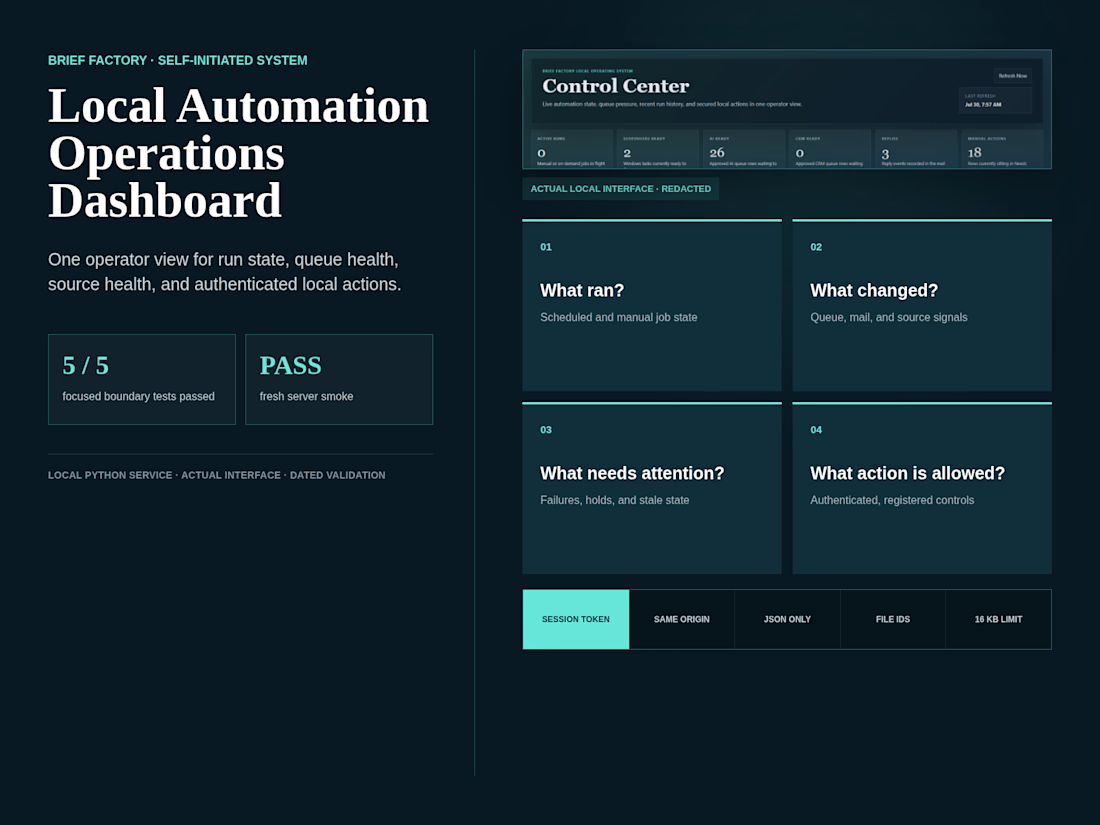
A self-initiated local automation dashboard that consolidates run history, queue state, source health, and secured operator actions into one review-first control surface.
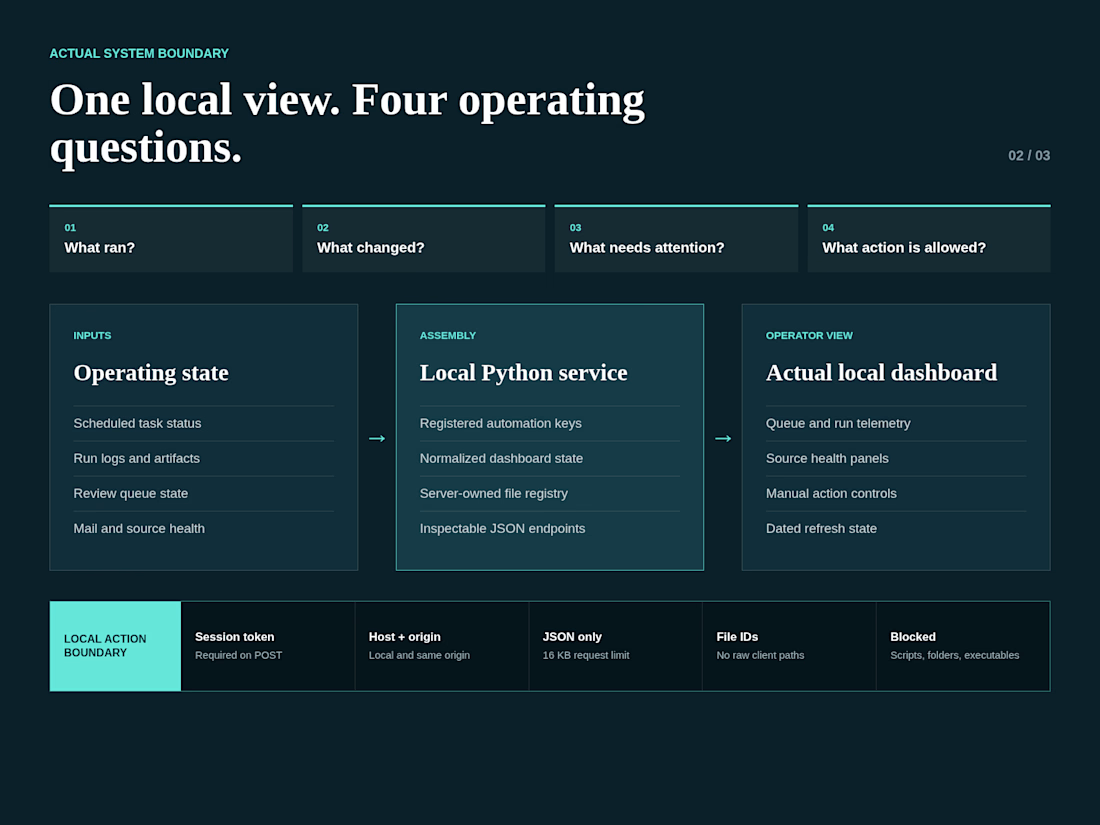
I built this to answer four operating questions quickly: what ran, what changed, what needs attention, and what action is safe to take next.
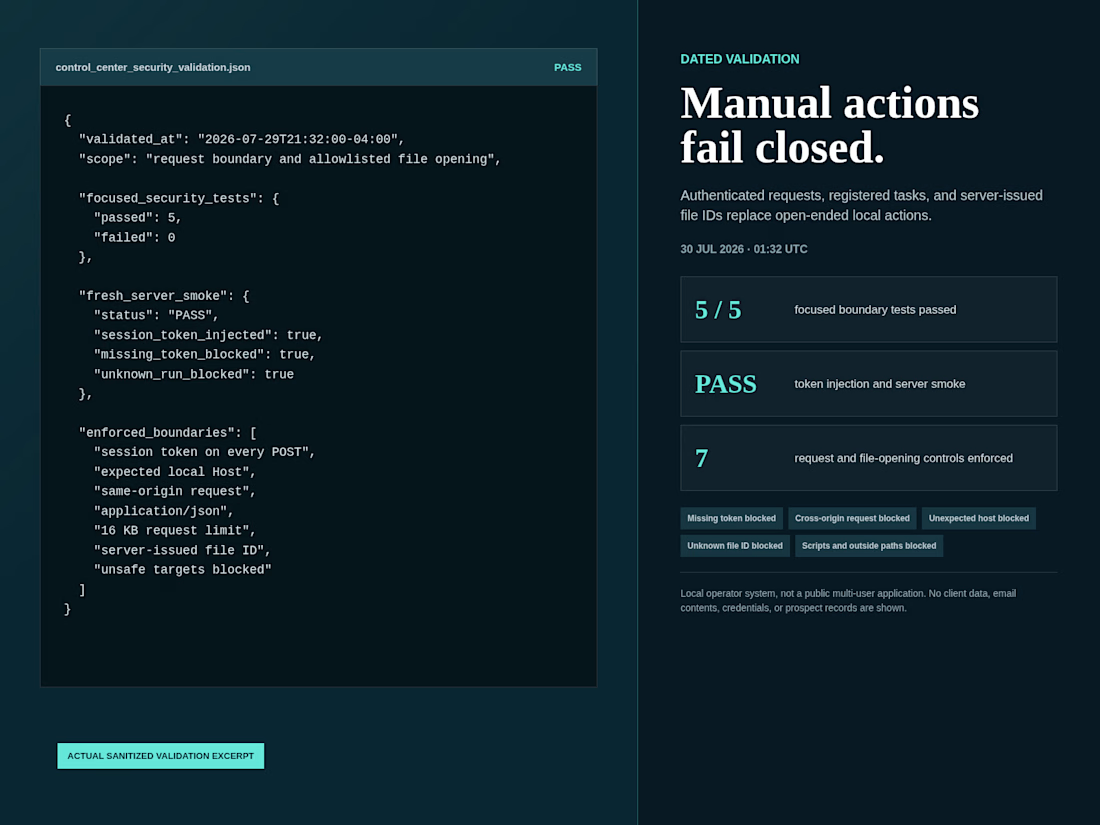
The gallery shows the actual redacted interface, the system boundary, and dated validation proof. The dashboard uses registered actions instead of arbitrary commands, requires local/session checks for POST requests, and blocks unsafe file or path access.
Best fit: automation operations dashboards, failed-run triage, queue monitoring, scheduled-job visibility, and controlled internal workflow tools.


The network for creativity
Join 1.25M professional creatives like you
Connect with clients, get discovered, and run your business 100% commission-free
Creatives on Contra have earned over $150M and we are just getting started





Related posts

Renewable energy production changes constantly, and grid operators need faster ways to understand what is happening across load, generation, storage, and market conditions.
Gridora explores a SaaS dashboard experience built for energy forecasting and balancing.
The dashboard surfaces forecasted peak load, curtailment risk, available storage, spot market price, generation sources, and recommended next actions in one clear workspace.
Natural imagery, soft neutral surfaces, and green accents connect the interface to the renewable energy context while keeping the product practical and easy to scan.


Building AI for healthcare leaves zero room for error.
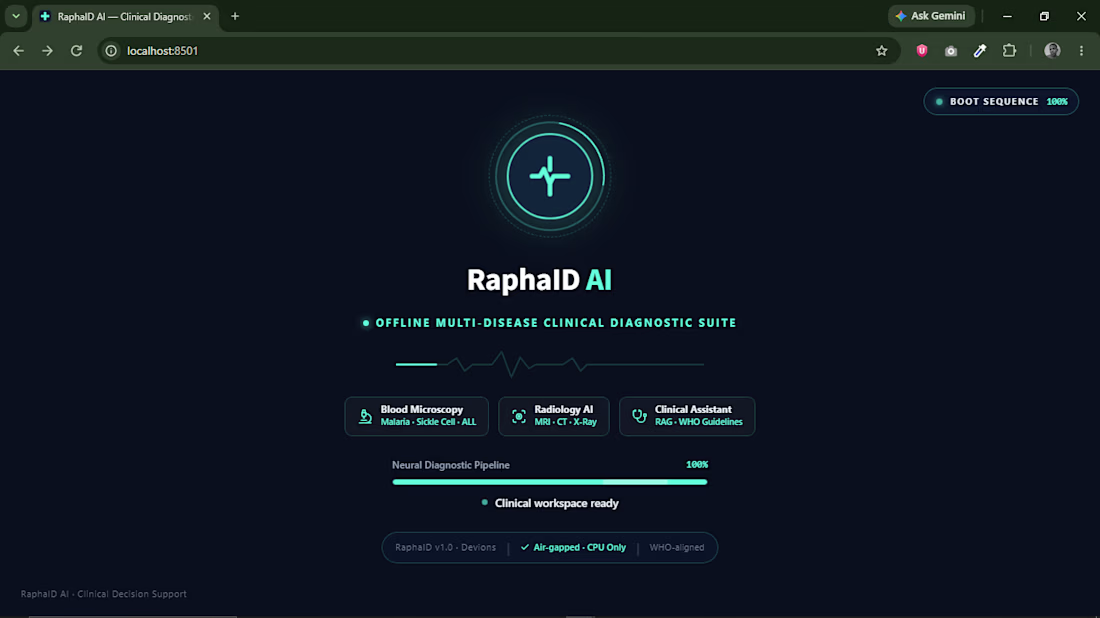
I’m currently collaborating with an incredible team on Raphald AI, a medical detection application. Building the systems for a project with stakes this high is a massive reminder that the underlying backend architecture matters just as much as the machine learning model itself.
When integrating diagnostic AI, your API endpoints cannot drop requests, and your database workflows demand absolute integrity. You aren't just passing JSON payloads; you are handling critical, real-time workflows where stability is non-negotiable.
Engineering these systems continues to shape my approach to building robust Python backends. If you are developing a product that requires reliable AI integration or rock-solid FastAPI infrastructure, check out the newly updated services on my profile. Let's build something that works when it counts.


I built Webmaster 95 as a living component library for a 1990's retro design system. It recreates the classic Windows 95 desktop look. The website is built with plain HTML, CSS, and vanilla JavaScript. It uses zero npm dependencies and zero build tools. All five font files are inside the local folder. It runs completely offline.
The page includes a color mixer. It updates modules on click and checks brightness so text stays readable. The tabs work with keyboards, including the arrow keys, Home button, and End key. A visitor counter with a dark and green effect (similar to Matrix).
I also added an audio easter egg button. It plays...something (go check it out, you'll like it) using the Web Audio API. The guestbook takes your name and message on the spot. It shows new posts right at the top of the list with a real time and text.🔥 😊

