The network for creativity
Join 1.25M professional creatives like you
Connect with clients, get discovered, and run your business 100% commission-free
Creatives on Contra have earned over $150M and we are just getting started
Back to feedPost
🚀 Contra Quest - Week 2
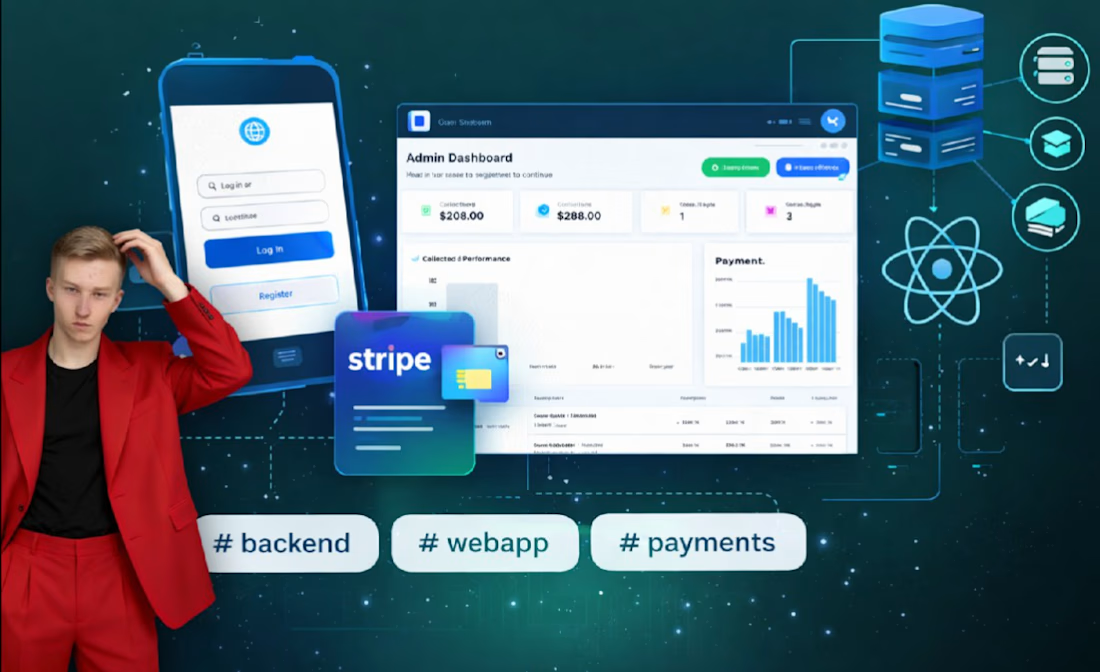
The project I’m most proud of right now is a full-stack web app + admin dashboard built from scratch.
What I built:
Authentication & role-based access
Admin dashboard with real-time stats
Payments & backend logic
Clean, scalable UI focused on usability
What I learned:
How to design backend-first systems that don’t break when the product scales
How much small UX decisions matter for real users
How to move fast without sacrificing structure
Tools I used:
Frontend: React
Backend: Node.js / Python
Database & APIs
Stripe for payments
What I want more of in 2026:
Web & mobile apps with real users
Backend-heavy projects
Payments, automation, and scalable systems


Thanks a lot!
The network for creativity
Join 1.25M professional creatives like you
Connect with clients, get discovered, and run your business 100% commission-free
Creatives on Contra have earned over $150M and we are just getting started







Related posts

Just published a new case study on Contra for Tiun.io 🚀
A 3-minute product launch video combining UI animation, motion graphics, and dynamic transitions to showcase their backend infrastructure platform.
Check it out and let me know what you think💭


Project Management Dashboard UI – A powerful and intuitive interface designed to enhance team collaboration, productivity, and workflow efficiency.


the yellow date card gives the eye a clear place to start, which most dashboards skip. how does the to-do list hold up when someone has 30 tasks instead of 5?

Agri Guard is a full-stack web application that helps farmers identify plant diseases instantly using AI. Users can upload a photo of an affected plant or describe symptoms in text, and the app returns a diagnosis along with a verified treatment plan.
What I built:
A clean, dark-themed landing page with a hero section, trust badges, feature highlights and clear call-to-action buttons (Get Started, Login to Dashboard)
A Node.js and TypeScript backend with REST API routes, utility modules and environment-based configuration
AI integration for image analysis and text-based diagnosis through the OpenRouter API
A disease database with treatment recommendations, plus scripts to extend it with new diseases
Login and dashboard flow for returning users
My focus: a clear, conversion-friendly landing page, readable typography, consistent spacing and a responsive layout that works on both desktop and mobile.


How do you connect the model's diagnosis to the treatment database? Does it have to match a known disease entry before showing a treatment, or can the model generate recommendations outside that list?


