The network for creativity
Join 1.25M professional creatives like you
Connect with clients, get discovered, and run your business 100% commission-free
Creatives on Contra have earned over $150M and we are just getting started
Back to feedPost

Every board deck has a cash flow slide. Almost none of them show the right cash flow.
Here's what I mean: leadership teams build one consolidated cash flow statement and treat it as ground truth. But that statement is really three separate systems colliding and treating them as one is how healthy-looking companies quietly go insolvent.
The revenue-timing system is a sales and collections problem, not a finance problem. It lives in your quote-to-cash cycle, your contract terms, your AR automation stack. Fix it in finance and you're treating a symptom.
The cost-structure system is a procurement and vendor-management problem wearing a finance costume. Renegotiating payment terms, consolidating vendor spend, and using supply chain financing all move cash without touching a single expense line.
The working-capital system is the quiet killer inventory sitting on shelves, unbilled receivables, prepaid contracts. It's the cash that exists on paper but isn't liquid, and it's growing fastest right now because of one 2026 trend: companies over-indexed on AI infrastructure spend (GPUs, compute commitments, long-term vendor contracts) are trapping enormous capital in prepaid and deferred cost lines that don't show up as "spend" until much later.
The fix isn't a better cash flow statement. It's assigning ownership:
→ RevOps owns cash-in velocity
→ Procurement owns cash-out timing
→ FP&A owns cash-trapped visibility, with real-time treasury dashboards replacing the monthly close as the decision cadence
The companies with the strongest liquidity right now aren't the most profitable ones. They're the ones who stopped asking "how much cash do we have" and started asking "where exactly is our cash stuck, and who's accountable for unsticking it."
Three cash flows. Three owners. One number that finally means something.
#Treasury #CashFlow #CFOInsights #WorkingCapitalManagement #FinanceLeaders #FPandA #CapitalMarkets #StartupCFO #FinanceStrategy #LiquidityManagement
The network for creativity
Join 1.25M professional creatives like you
Connect with clients, get discovered, and run your business 100% commission-free
Creatives on Contra have earned over $150M and we are just getting started





Related posts

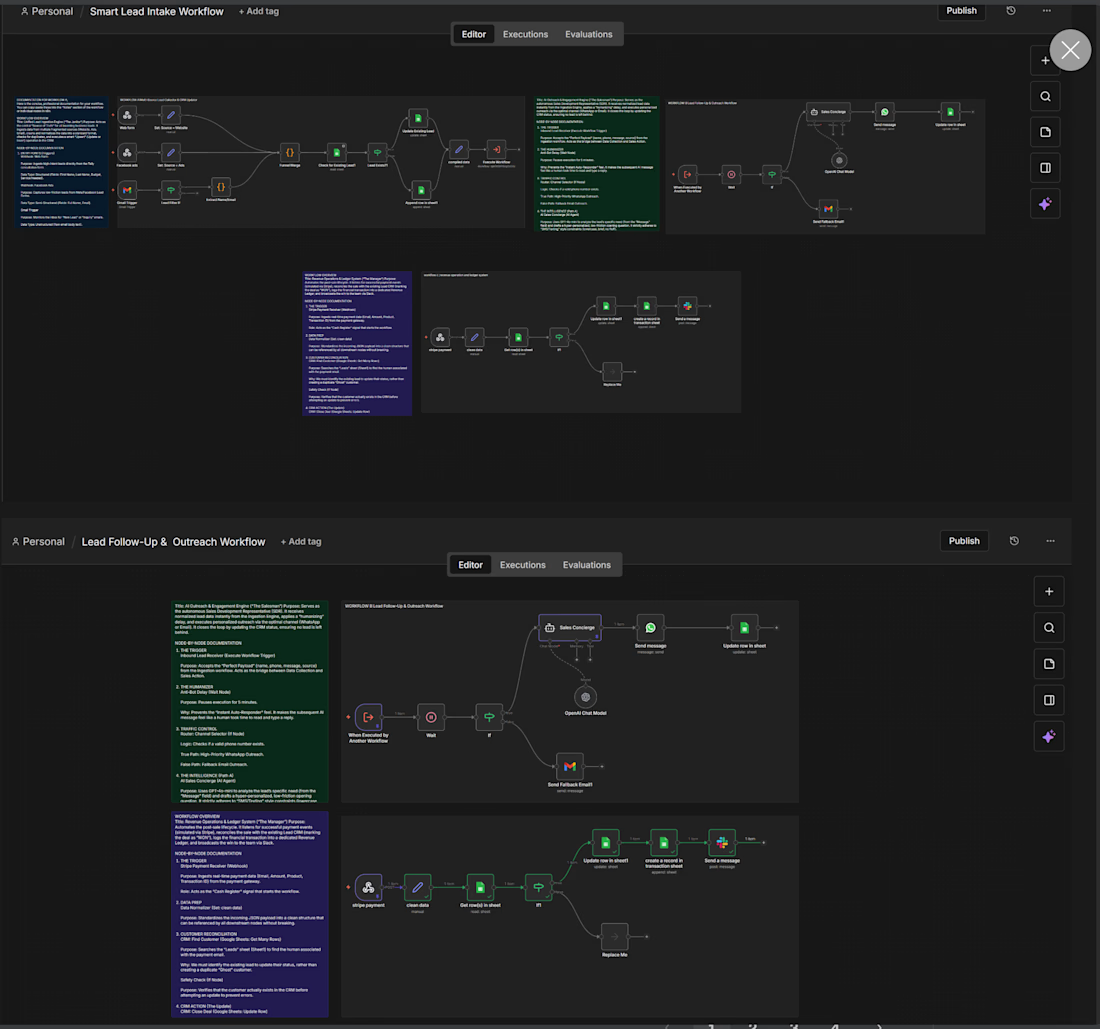
I built a 3-part automation system to handle the client’s full sales lifecycle. Workflow 1 captures and normalizes leads from website forms, Facebook Ads, and email, removes duplicates, and stores them in a CRM. Workflow 2 uses AI to generate personalized WhatsApp follow-ups with email fallback and updates lead status automatically. Workflow 3 listens for payment events, marks deals as won, logs revenue, and notifies the team in Slack. The system eliminated manual lead handling and ensured instant follow-up and accurate sales tracking.



Clean cash dashboard design
Buoy is a cash dashboard for finance teams. Every number is measured against one line: the least cash the company wants in the bank. Here, the weekly cash update: pick who gets it, add a line, send.
A concept I designed in Figma and built as a working prototype.
Case study: https://buoy-case-study.vercel.app


Crisp, clean, and effective.

Spent way too long on the small stuff in these widgets for a SaaS product I’m designing.
Things like keeping numbers aligned when values update, labels that truncate cleanly, and charts that still read well with only a couple of data points.
Nobody notices when it’s right. Everyone feels it when it’s wrong.