
Brandon Grutkowski
Local-first AI engineer • ex-Amazon finance • Real products



Fantasy Studio - Game Engine side: Fantasy Studio is an all in one local AI system that generates characters, scenery, lighting, physical dynamics and motion, all from professional grade hardware. No AI diffusion used in rendering, only in character meshing to 3D. This is applicable to Video generation (Blender) and game development now as well (from images attached)
1
99
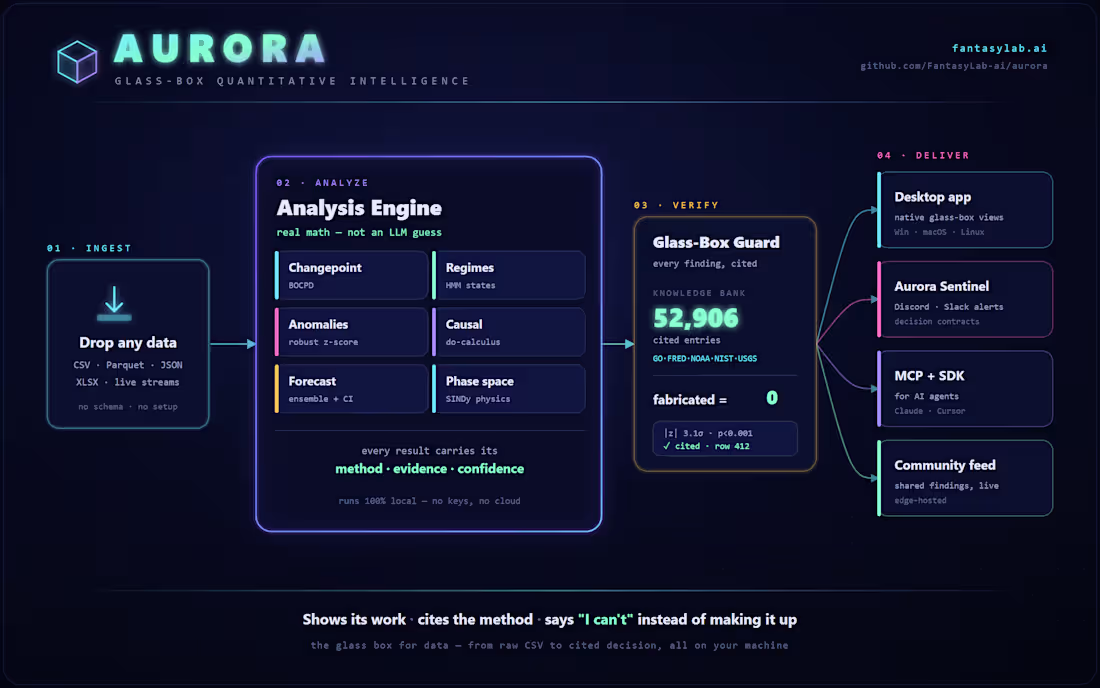
Local-first AI isn't a niche anymore. It's how I build everything.
Here's the full system architecture behind Aurora, my glass-box quantitative intelligence engine. 82 commits, 599 tests passing, 24+ analytical methods. No cloud. No API keys. No telemetry. Every piece runs on your hardware.
Let me walk through what's actually happening in this diagram.
The Substrate Layer
Aurora isn't a wrapper around an LLM. The core engine is a multi-stage pipeline: your data hits a preflight layer (schema validation, missingness detection, irregular-sampling checks) before any analysis runs. If the data has problems, you know before a single method fires.
24+ Research-Grade Methods, Not Vibes
The analytical engine runs Isolation Forest, Hampel z-scores, HMM Baum-Welch, Granger causality, persistent homology, SINDy (sparse identification of nonlinear dynamics), Gaussian processes, mutual information, VAR, DTW, BOCPD, Robust PCA, EMD, Kalman filtering, spectral entropy, and more. Each method either produces a cited finding or explicitly reports why it skipped (no time axis, negative values, cross-sectional data). No silent failures. Ever.
The Glass-Box Contract
Every finding is a typed, structured object: method, severity, threshold, evidence, citation. When Aurora says +448.6σ with p < 0E+0, that's a Hampel z-score on a specific row you can re-run yourself. The 0 fabricated chip isn't marketing. It's a contractual counter audited live on every run.
Knowledge-Grounded Synthesis
The "What This Means" narrative cites seed:* entries from a local knowledge bank. Newton (1701), Pierson & Moskowitz (1964), Torrence & Compo (1998), NIST, NOAA NDBC. Real papers. Real institutions. No invented citations.
Two Surfaces, One Engine
Aurora Copilot is the human-facing studio: six analytical lenses (Overview, Anomalies, Regimes, Motifs, Forecast, Physics), spacetime worldlines, phase-space projections, causal do-calculus. Aurora Cortex is the machine-facing API: an MCP server (7 tools, path-allowlisted, 2MB output cap), a Python SDK, Decision Contracts that fire webhooks to Slack/Discord/email when findings match programmable predicates, and streaming mode with Kafka + Postgres CDC connectors.
Fully Local, Fully Packaged
The desktop app (Tauri 2 shell + PyInstaller-bundled backend) is a double-click install. No Python, no venv, no terminal. Drop a CSV on the window and watch it analyze. The Docker path is one command: docker compose up. BYO-LLM with 5 pluggable backends (Ollama, Anthropic, OpenAI, Gemini, OpenAI-compatible), or run with no LLM at all. Aurora computes. It doesn't need to guess.
I built this because I spent years in Amazon finance watching decisions get made on black-box outputs nobody could trace. Cloud LLMs guess. Aurora computes. That's the whole thesis.
Open source. Apache 2.0. 100% free.
What's stopping you from running your AI stack locally?
1
166
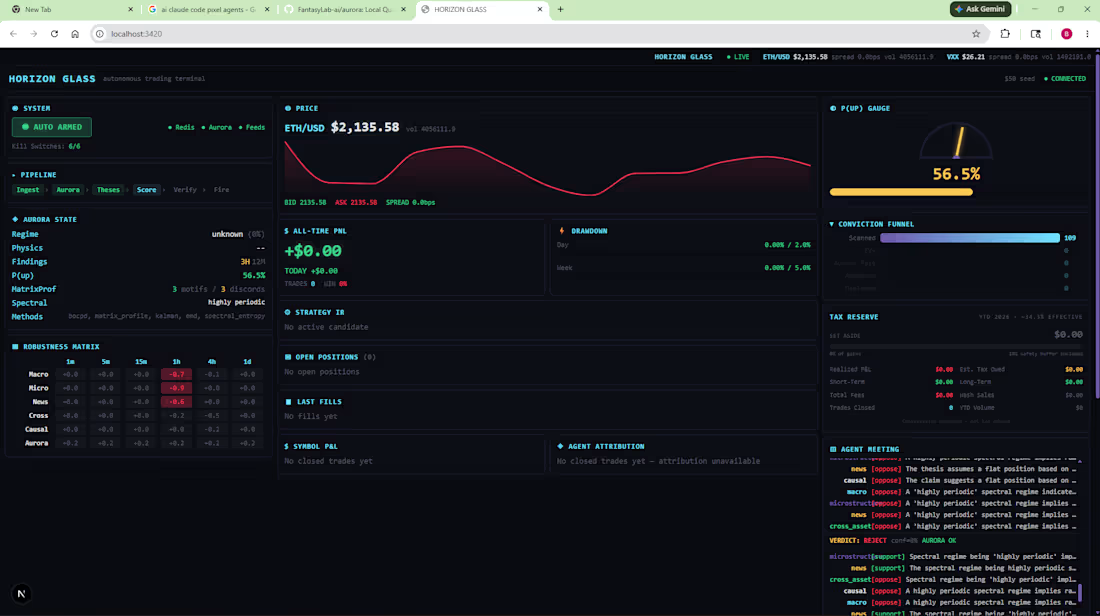
Horizon: Local AI Quantitative Investment Engine (Powered by Aurora).
1
72
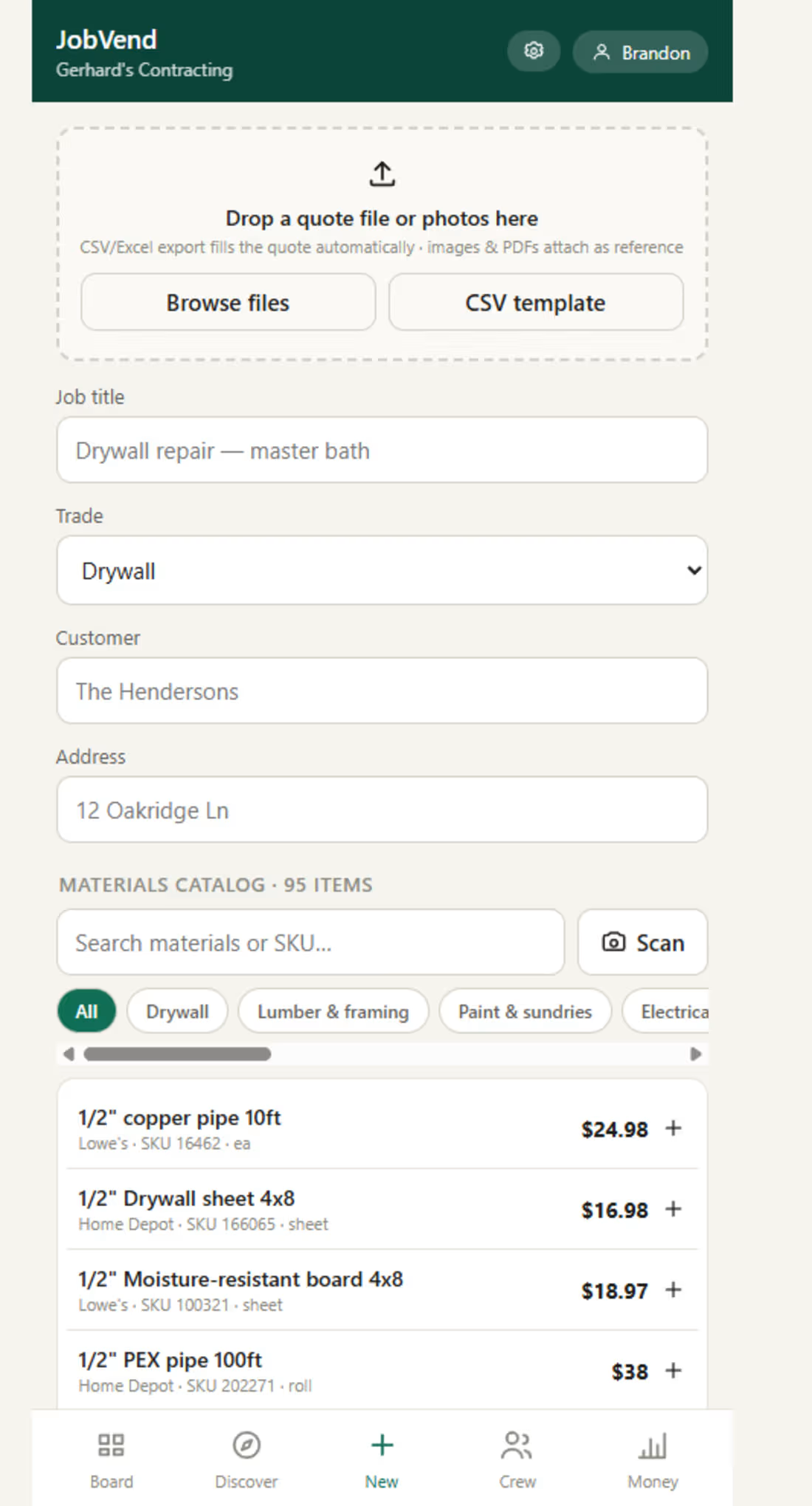
JobVend: Mobile Application for General Contractors to manage, and grow their business in real time. Real time Quote development, payment processing, work assignments to crew etc.
2
127