
Bhoomil Dayani
DevSecOps & Cloud | AWS | GCP | Cloud Infrastruct



🚀 Exploring how LLMs work in real systems
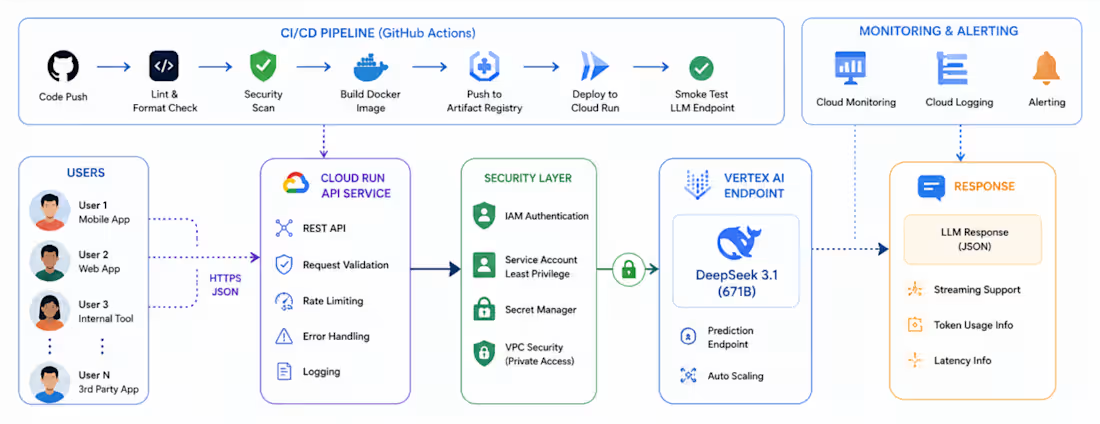
Recently, I explored how to take a Large Language Model beyond simple testing and design a scalable, secure, and production-ready architecture around it.
Instead of focusing only on prompt → response, I worked on building a complete system flow:
• Multiple users interacting through applications
• A backend API layer handling requests, validation, and control
• A security layer ensuring proper access and safe communication
• An LLM inference layer generating responses in real time
• Monitoring and logging to track performance and reliability
Also explored how CI/CD pipelines can be used to automate deployment and testing for such systems.
This helped me understand that working with LLMs is not just about models — it’s about building reliable, scalable systems around them.
#AI #LLM #DevOps #Cloud #SystemDesign #LearningInPublic
0
57
🔐 Server Security Hardening with Ansible
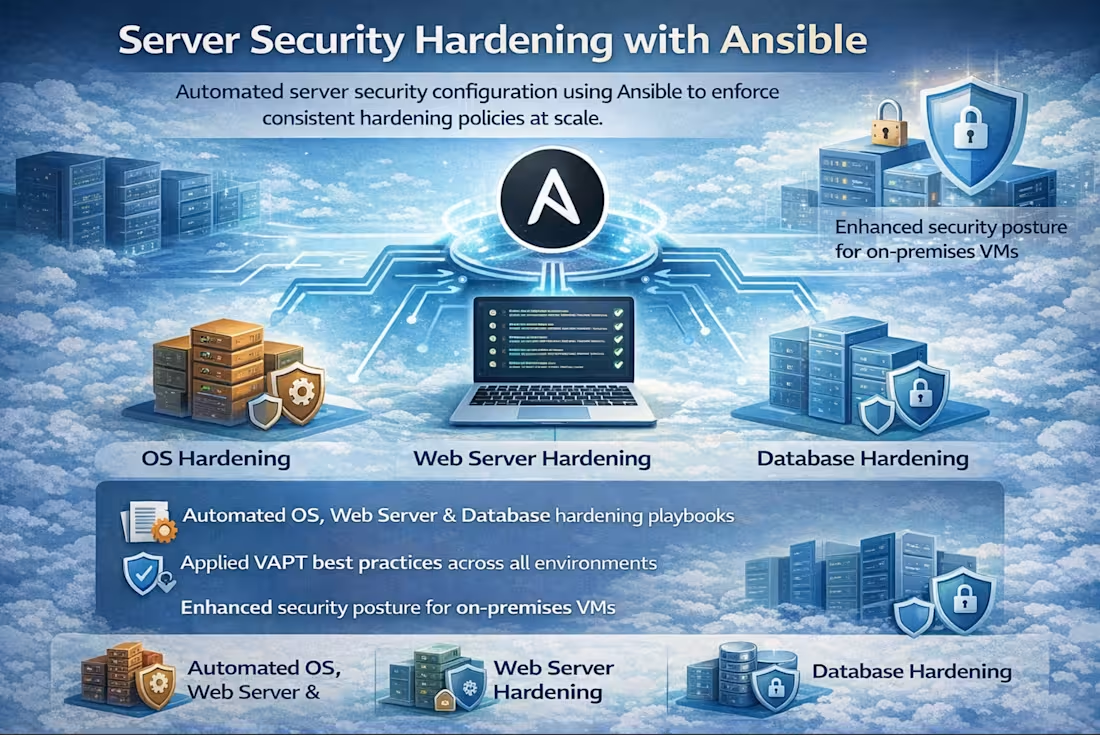
Excited to share a project focused on automating server security hardening using Ansible, ensuring consistency, scalability, and strong security across infrastructure.
🔹 Overview:
Implemented automated configuration management to enforce standardized hardening policies across multiple environments, reducing manual effort and improving compliance.
🔹 Key Highlights:
⚙️ Automated Hardening Playbooks
Developed Ansible playbooks to secure Operating Systems, Web Servers, and Databases, ensuring uniform configurations across all systems.
🛡️ Security Best Practices (VAPT)
Applied Vulnerability Assessment and Penetration Testing (VAPT) guidelines to strengthen system defenses and minimize attack surfaces.
🏢 Enhanced On-Premises Security
Improved the overall security posture of on-premises VMs by enforcing strict access controls, configurations, and security policies.
0
64
🚀 Cloud-Native DevSecOps CI/CD Platform
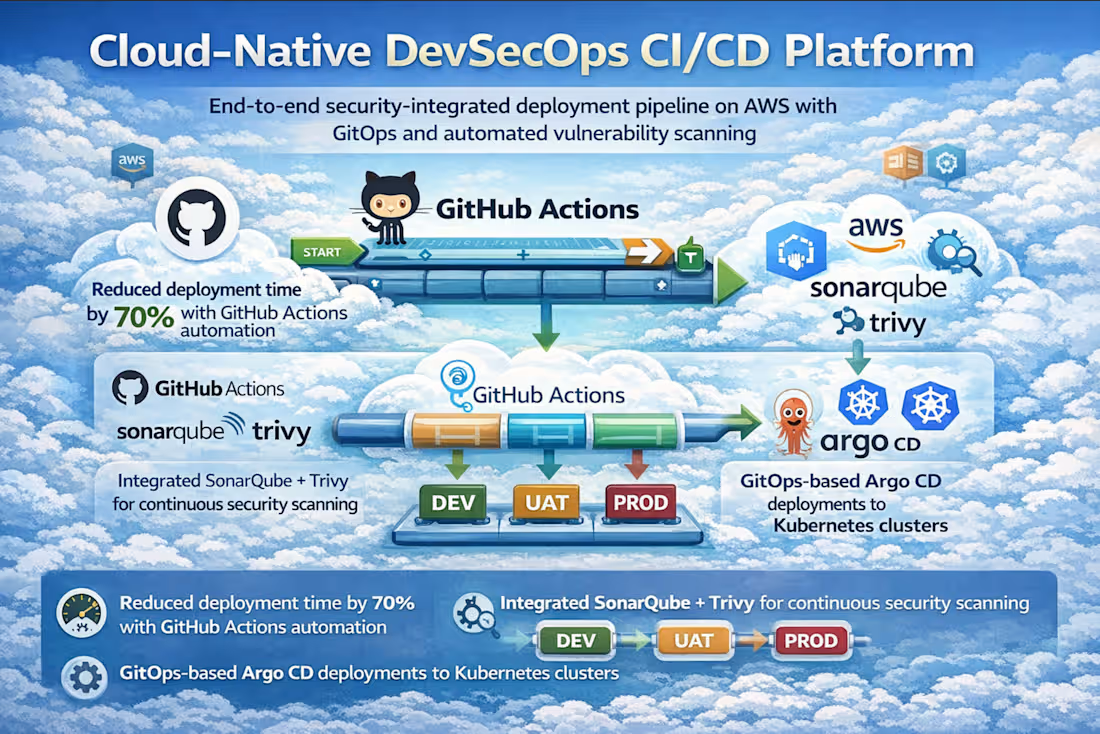
Excited to share a secure, scalable, and fully automated DevSecOps pipeline built on AWS, integrating GitOps practices and continuous security at every stage of deployment.
🔹 Key Highlights:
✅ End-to-End Secure CI/CD Pipeline
Designed a cloud-native pipeline with built-in security, ensuring safe and reliable deployments across all environments.
⚡ 70% Faster Deployments
Optimized delivery speed using GitHub Actions, significantly reducing deployment time and improving release efficiency.
🔐 Continuous Security Scanning
Integrated SonarQube and Trivy for automated code quality checks and vulnerability scanning throughout the pipeline.
🔄 GitOps-Based Deployments
Implemented Argo CD for declarative, version-controlled deployments to Kubernetes clusters, ensuring consistency and traceability.
🌍 Multi-Environment Pipeline Strategy
Structured pipelines for Dev, UAT, and Production, enabling controlled releases and environment-specific configurations.
0
70
🚀 SmartATP – Enterprise Automation Platform
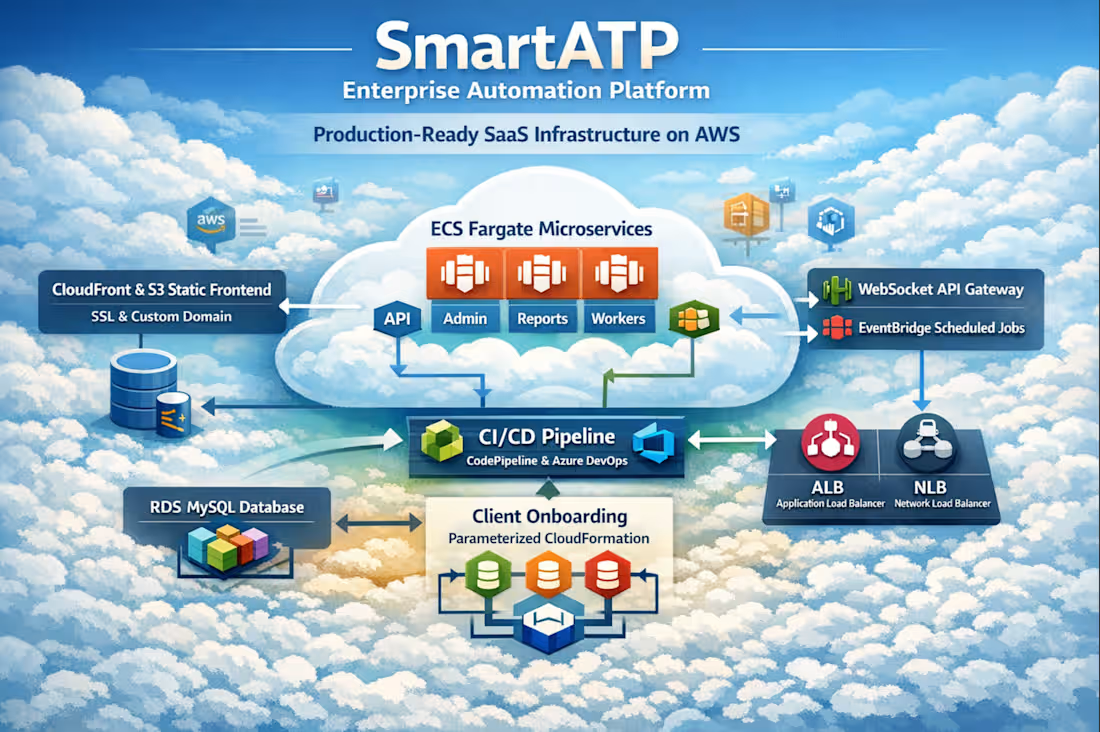
Proud to share a production-ready, cloud-native SaaS platform built on AWS, designed for scalability, automation, and multi-tenant architecture.
🔹 Key Highlights:
✅ Cloud-Native SaaS Architecture
Built on AWS with a fully scalable, secure, and resilient infrastructure supporting multi-service workloads.
✅ Microservices with ECS Fargate
Deployed containerized services including API, Admin, Report, and Worker for efficient workload separation and scaling.
✅ Modern Frontend Delivery
Leveraging CloudFront + S3 for high-performance static hosting with SSL and custom domain integration.
✅ Robust Data & Event Handling
Integrated RDS MySQL, WebSocket API Gateway, and EventBridge for real-time communication and scheduled job processing.
✅ CI/CD Automation
Seamless deployment pipelines using AWS CodePipeline and Azure DevOps, ensuring faster and reliable releases.
✅ Multi-Tenant Client Onboarding
Automated infrastructure provisioning using parameterized CloudFormation templates for scalable client onboarding.
✅ High-Performance Load Balancing
Architected with Application Load Balancer (ALB) and Network Load Balancer (NLB) to handle diverse traffic patterns across application and reporting layers.
0
81