
Behiye Bedir
AI Engineer | Machine Learning | NLP | Data Science
New to Contra
Behiye is ready for their next project!

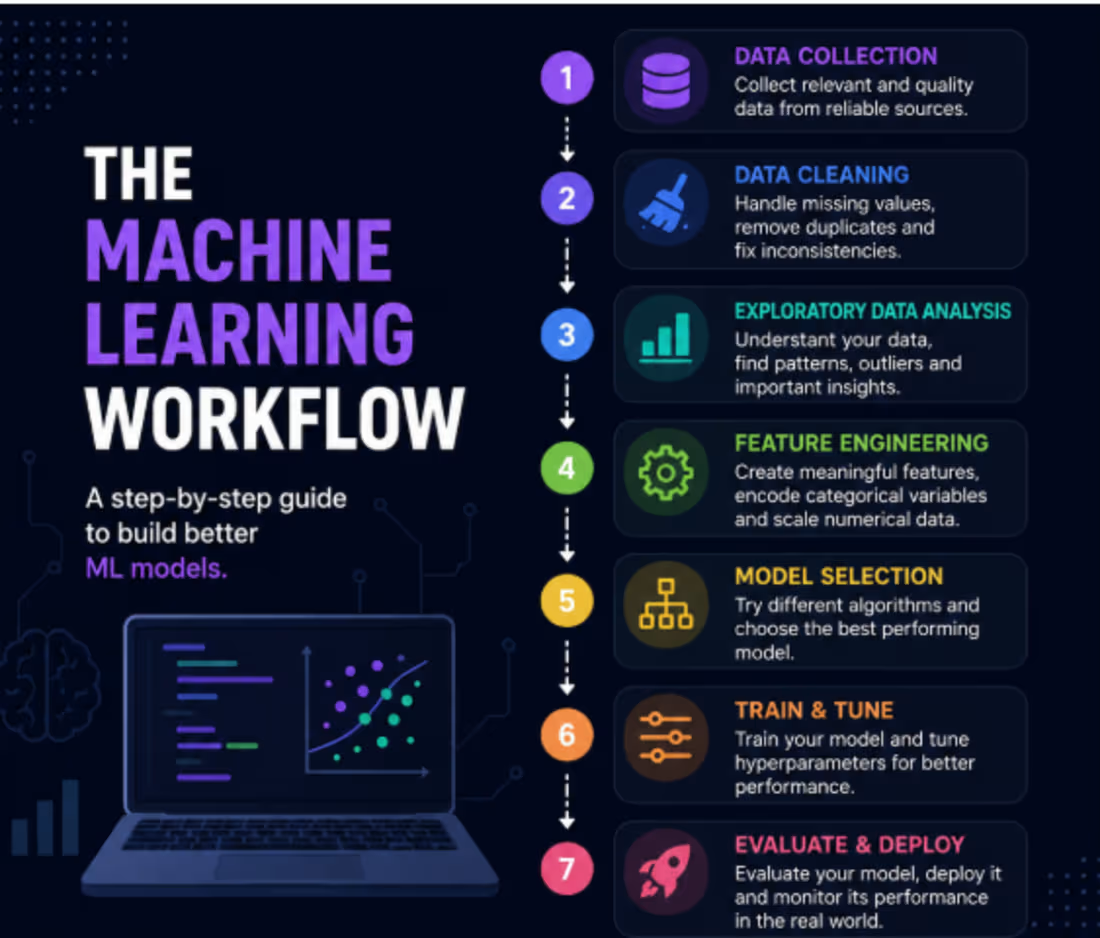
Building a successful Machine Learning model isn't just about choosing the most advanced algorithm.
The real difference comes from following the right workflow.
Here's the process every ML practitioner should master:
- Collect high-quality data
- Clean and preprocess your dataset
- Explore patterns with exploratory data analysis (EDA)
- Engineer meaningful features
- Compare multiple models instead of relying on one
- Tune hyperparameters only after your data is ready
-Evaluate performance and deploy with confidence
One of the biggest lessons I've learned is this:
Better data beats a better algorithm.
Many beginners spend days tuning models while overlooking data quality and feature engineering, where the biggest performance improvements often happen.
Whether you're working on your first ML project or building production-ready models, mastering this workflow will save you time and improve your results.
What step do you think has the biggest impact on model performance?
#MachineLearning #DataScience #ArtificialIntelligence #Python #ML #AI #DataAnalytics #FeatureEngineering #DataScientist #Tech #LearningInPublic
1
52
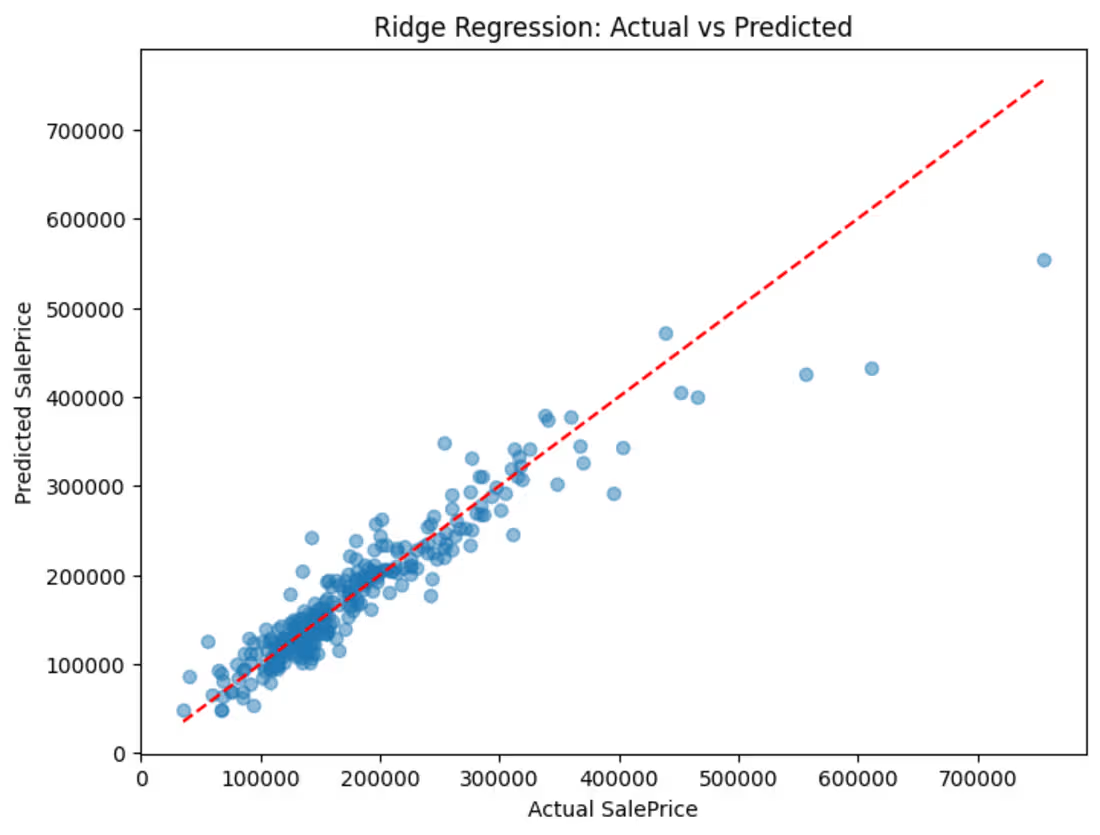
Built a predictive model estimating residential sale prices from 79 property features, turning a noisy dataset (1,460 homes, many missing values) into a reliable pricing tool.
Cleaned and imputed data based on its real meaning, encoded categorical variables, then compared Linear vs Ridge Regression. Used cross-validated grid search to tune regularization, then validated results with residual analysis.
Result: Ridge Regression cut prediction error by 43% vs. baseline (RMSE $52,399 → $29,921), giving a defensible, data-backed price estimate instead of a rule-of-thumb figure.
0
35
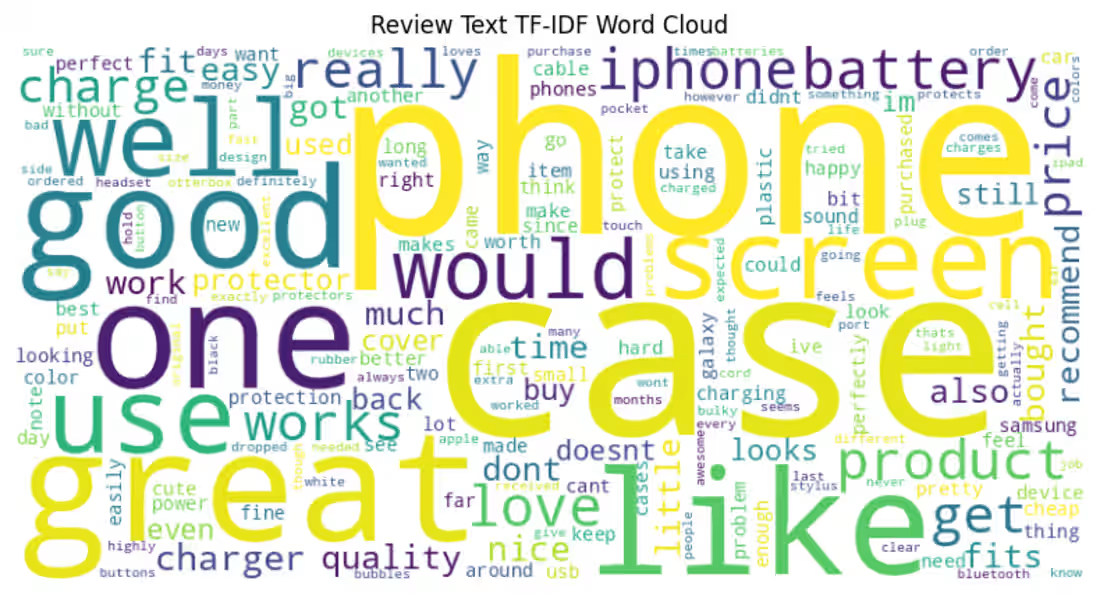
Analyzed 194K Amazon reviews to test whether star ratings reflect actual text sentiment, and which model best detects negative/neutral feedback despite 77% positive imbalance. Built 4 models: baseline & class-weighted Logistic Regression, Naive Bayes, and XGBoost. Evaluated on macro F1 and minority-class recall, not just accuracy. Key finding: Balanced Logistic Regression won baseline model hit 85% accuracy but missed 73% of neutral reviews. XGBoost's added complexity didn't beat the simpler linear model on sparse text features.
0
41

MerhemAI is an AI-powered healthcare assistant designed to support family caregivers of elderly and chronic patients in Turkey. The platform provides empathetic digital support by helping caregivers manage medication schedules, doctor appointments, health tracking, and daily care responsibilities.
The system offers AI-powered conversations, WhatsApp reminders, caregiver burnout tracking, and personalized summaries to help families prepare better for medical visits.
0
45