
Ayush Agrawal
AI/ML builder turning ideas into real-world solutions.
New to Contra
Ayush is ready for their next project!

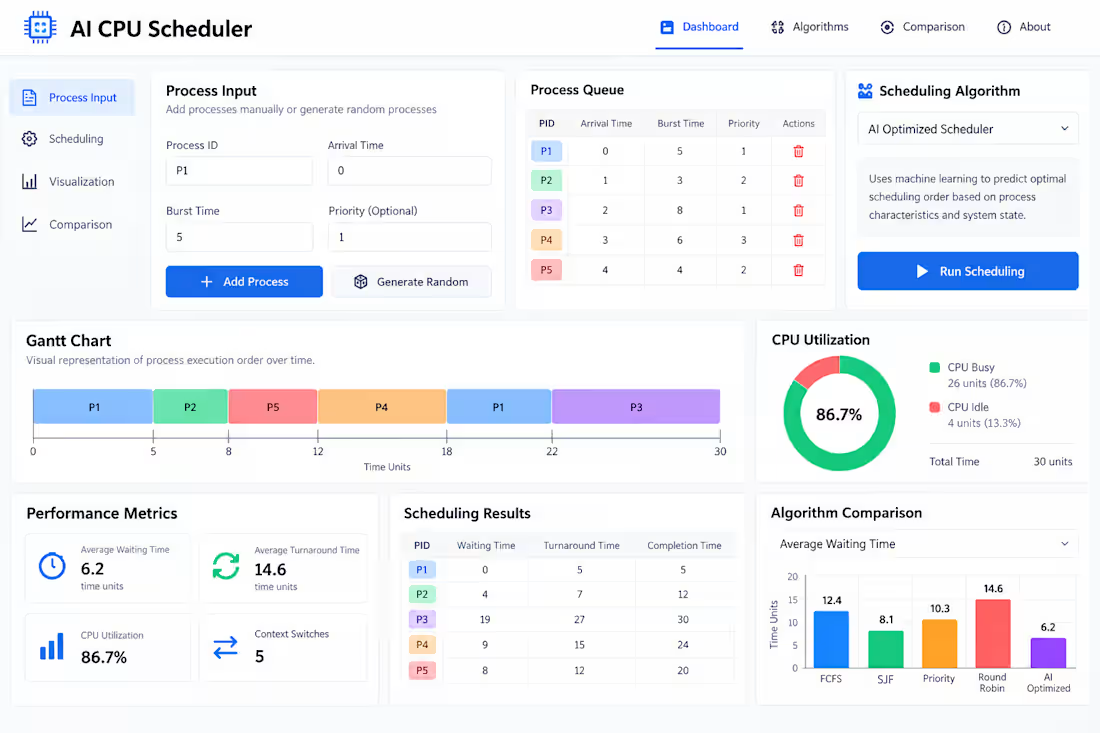
AI CPU Scheduler | Intelligent Process Scheduling
Developed an AI-driven CPU scheduling project that explores the use of machine learning techniques to improve process scheduling decisions. The system combines operating-system scheduling concepts with intelligent decision-making to evaluate process workloads and optimize scheduling performance.
Key Features
Intelligent Scheduling: Applies AI-based decision-making to process scheduling.
Process Management: Works with process characteristics such as arrival time, burst time, and scheduling requirements.
Scheduling Optimization: Aims to improve CPU utilization and reduce process waiting and turnaround times.
Performance Evaluation: Supports evaluating scheduling decisions using relevant process-scheduling metrics.
Algorithm Comparison: Provides a foundation for comparing AI-driven scheduling with traditional scheduling approaches.
Operating Systems Concepts: Demonstrates process execution, scheduling policies, and resource allocation.
Tech Stack: Python and AI/ML techniques, subject to confirmation against the repository.
Objective: Explore how intelligent scheduling can improve resource utilization, process execution efficiency, and overall scheduling performance.
0
2
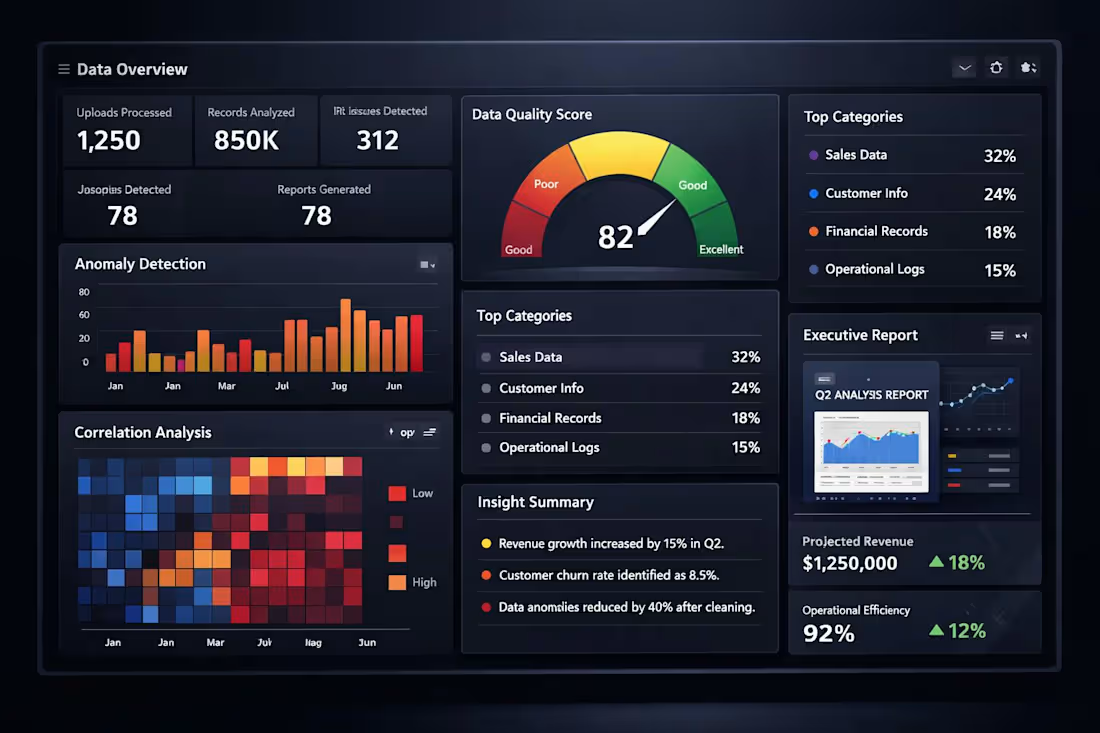
AutoCleanML | Automated Data Cleaning & Preprocessing Framework
AutoCleanML is a Python-based framework designed to simplify data preparation by automating repetitive cleaning and preprocessing tasks. It combines data profiling, statistical analysis, and AI-assisted recommendations to help make datasets more consistent and ready for machine learning workflows.
Key Features
Missing Value Handling: Detects missing data and supports automated cleaning strategies.
Outlier Detection: Identifies potentially anomalous values to improve data quality.
Data Standardization: Detects inconsistent formats and helps normalize data across columns.
Duplicate Detection: Identifies duplicate records and supports dataset deduplication.
Data Profiling: Analyzes column types, distributions, and data-quality characteristics.
Exploratory Data Analysis (EDA): Generates visualizations and summaries to help users understand datasets.
Identifier Detection: Identifies potential ID and identifier columns to support appropriate preprocessing.
AI-Assisted Recommendations: Uses semantic analysis and LLM-assisted capabilities to improve cleaning decisions.
Automated Pipelines: Organizes cleaning operations into reusable preprocessing workflows.
Efficient Data Processing: Supports CSV-to-Parquet conversion and integrates high-performance data processing libraries.
API Integration: Uses FastAPI to expose data-processing functionality through REST endpoints.
Tech Stack: Python, Pandas, Polars, Scikit-learn, FastAPI, REST APIs, and LLM integration.
Impact: Reduces repetitive data-cleaning effort, improves consistency, and helps prepare datasets more efficiently for downstream analytics and machine learning tasks.
1
8
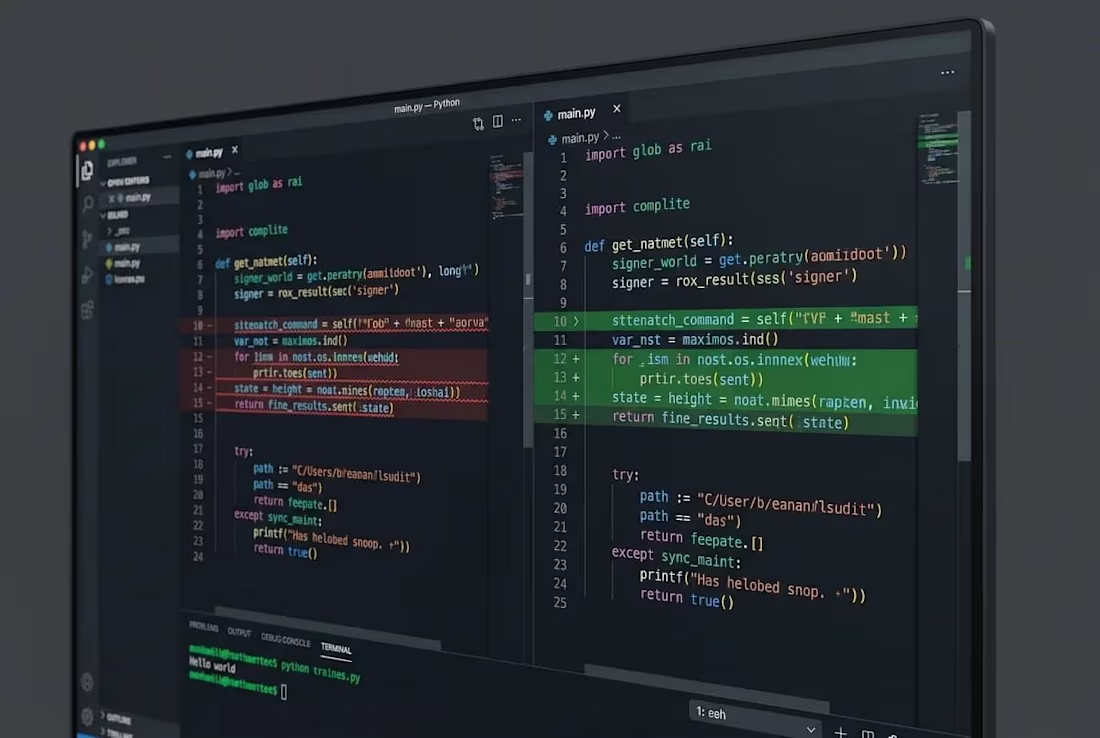
Hybrid Code Clone Detection System | AI-Powered Code Similarity Analysis
Developed a full-stack web application that identifies duplicated and logically similar code using a hybrid detection engine combining traditional algorithms with deep learning. The system helps developers and educators identify code duplication, assess similarity, and improve software maintainability.
Key Features
Type-1 Detection — Textual Similarity: Identifies exact or near-exact code matches using difflib, with comments and unnecessary whitespace removed.
Type-2 Detection — Token Similarity: Normalizes identifiers and variable names to detect copied code despite renaming and formatting changes.
Type-3 Detection — Structural Similarity: Extracts control-flow keywords and structural patterns to identify code with added, removed, or modified statements.
Type-4 Detection — Semantic Similarity: Uses CodeBERT embeddings and cosine similarity to identify logically equivalent code with different implementations.
Hybrid Similarity Scoring: Combines the four detection scores using weighted aggregation to produce an overall similarity percentage.
Interactive Visualizations: Displays similarity comparisons through bar charts and radar charts using Chart.js.
Performance Metrics: Reports individual algorithm execution times alongside similarity scores.
Robust Processing: Includes input validation, exception handling, and a fallback mechanism when the semantic model is unavailable.
Web-Based Interface: Provides a neon-themed interface for entering two code snippets and viewing detailed analysis results.
Tech Stack: Python, Flask, CodeBERT, Hugging Face Transformers, HTML, CSS, JavaScript, Chart.js, and REST APIs.
Applications: Code duplication analysis, academic plagiarism screening, software quality assurance, code review, and software maintenance.
1
14
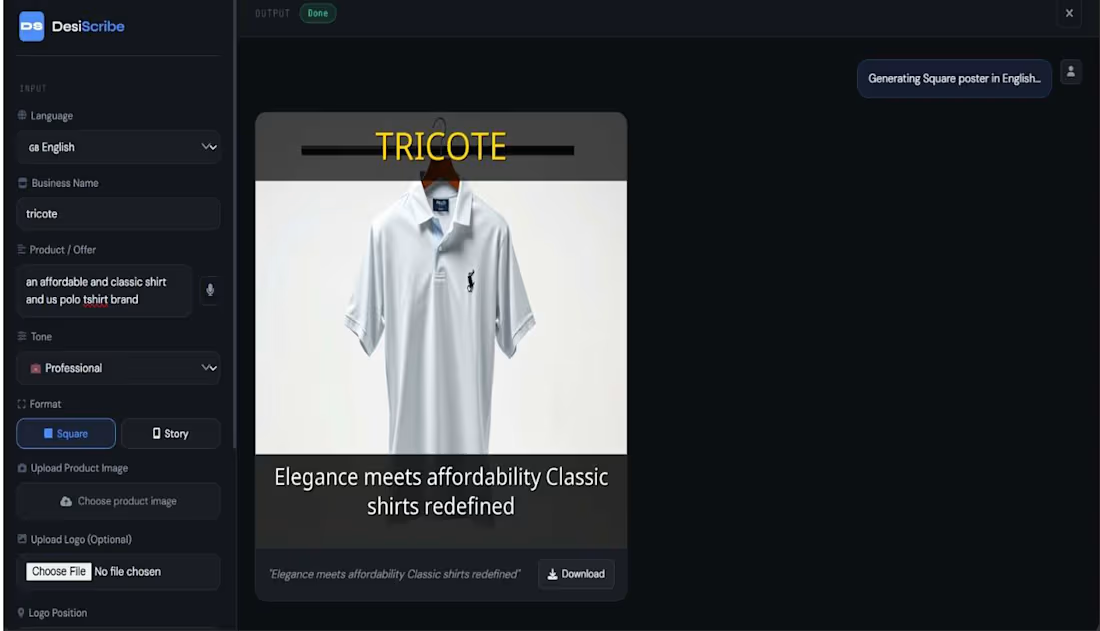
Desi-Scribe AI | AI-Powered Advertisement Generator
Desi-Scribe AI is a web-based application that automates advertisement creation by combining computer vision, large language models (LLMs), and generative image AI into a single workflow.
Key Features
AI Image Analysis: Analyzes uploaded product images using BLIP-based image captioning to identify visual details and generate product descriptions.
Intelligent Slogan Generation: Uses LLMs to create catchy, context-aware marketing slogans tailored to the product, business category, and advertising tone.
Multilingual Content: Generates promotional content in English and Hindi to reach diverse audiences.
AI Image Generation: Creates visually appealing advertisement backgrounds using generative image models.
Automated Poster Composition: Combines product visuals, generated slogans, and layout elements into a cohesive advertisement poster.
Customizable Inputs: Supports product descriptions, business categories, advertising styles, language preferences, and poster formats.
Logo Integration: Supports adding a business logo and selecting its placement within the poster.
Downloadable Outputs: Displays the generated advertisement and provides an option to download the final poster.
Input Validation & Error Handling: Handles unsupported or invalid image uploads and API failures through validation and error responses.
Tech Stack: Python, Flask/FastAPI, HTML, CSS, JavaScript, BLIP, Qwen2.5, Hugging Face Inference API, Google Gemini, and generative image models including FLUX and Stable Diffusion XL.
Impact: Reduces manual design effort and simplifies the creation of promotional content, making AI-assisted advertising more accessible to entrepreneurs, startups, and small businesses.
1
18