The network for creativity
Join 1.25M professional creatives like you
Connect with clients, get discovered, and run your business 100% commission-free
Creatives on Contra have earned over $150M and we are just getting started
Back to feedPost

Hybrid Code Clone Detection System | AI-Powered Code Similarity Analysis
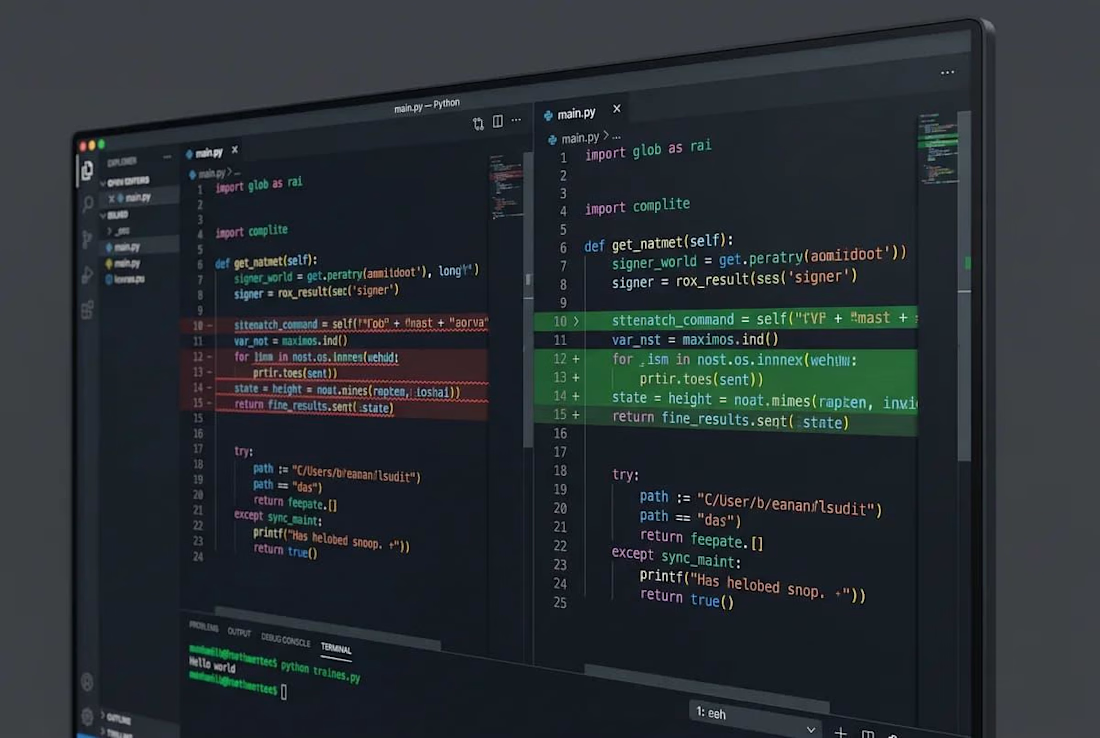
Developed a full-stack web application that identifies duplicated and logically similar code using a hybrid detection engine combining traditional algorithms with deep learning. The system helps developers and educators identify code duplication, assess similarity, and improve software maintainability.
Key Features
Type-1 Detection — Textual Similarity: Identifies exact or near-exact code matches using difflib, with comments and unnecessary whitespace removed.
Type-2 Detection — Token Similarity: Normalizes identifiers and variable names to detect copied code despite renaming and formatting changes.
Type-3 Detection — Structural Similarity: Extracts control-flow keywords and structural patterns to identify code with added, removed, or modified statements.
Type-4 Detection — Semantic Similarity: Uses CodeBERT embeddings and cosine similarity to identify logically equivalent code with different implementations.
Hybrid Similarity Scoring: Combines the four detection scores using weighted aggregation to produce an overall similarity percentage.
Interactive Visualizations: Displays similarity comparisons through bar charts and radar charts using Chart.js.
Performance Metrics: Reports individual algorithm execution times alongside similarity scores.
Robust Processing: Includes input validation, exception handling, and a fallback mechanism when the semantic model is unavailable.
Web-Based Interface: Provides a neon-themed interface for entering two code snippets and viewing detailed analysis results.
Tech Stack: Python, Flask, CodeBERT, Hugging Face Transformers, HTML, CSS, JavaScript, Chart.js, and REST APIs.
Applications: Code duplication analysis, academic plagiarism screening, software quality assurance, code review, and software maintenance.


The network for creativity
Join 1.25M professional creatives like you
Connect with clients, get discovered, and run your business 100% commission-free
Creatives on Contra have earned over $150M and we are just getting started





Related posts

"We can't afford a data analyst."
I've heard this from 3 different startups this year.
So I built one.
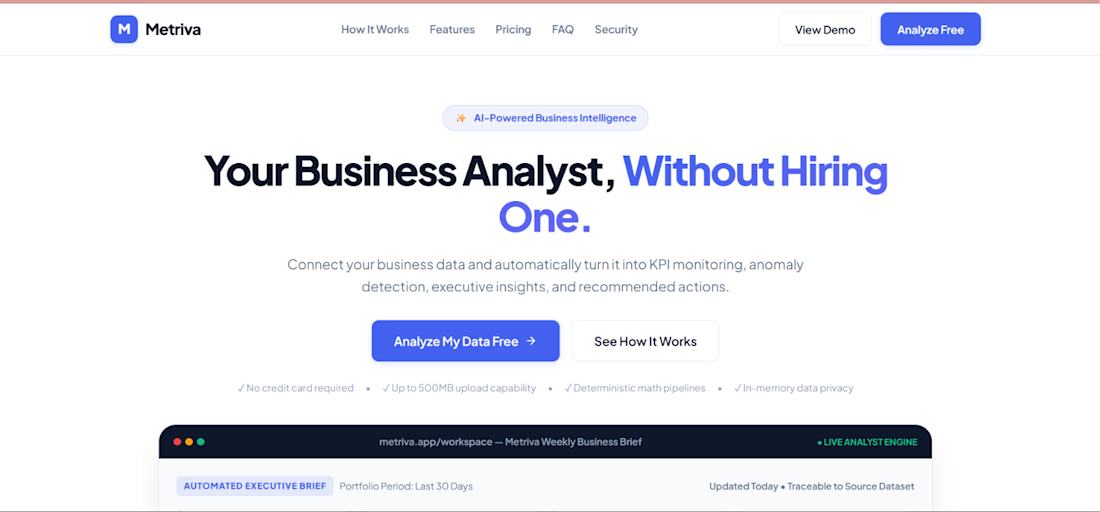
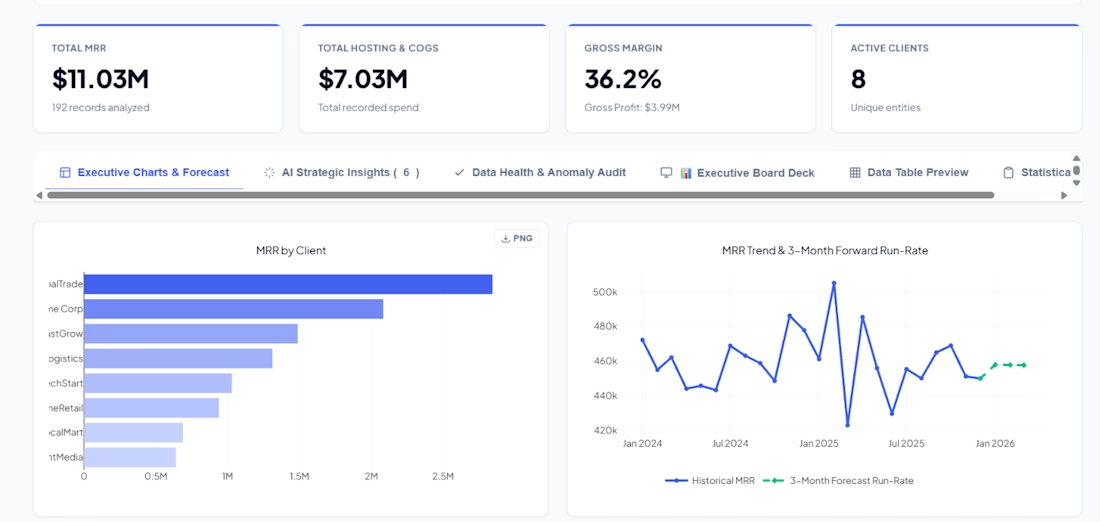
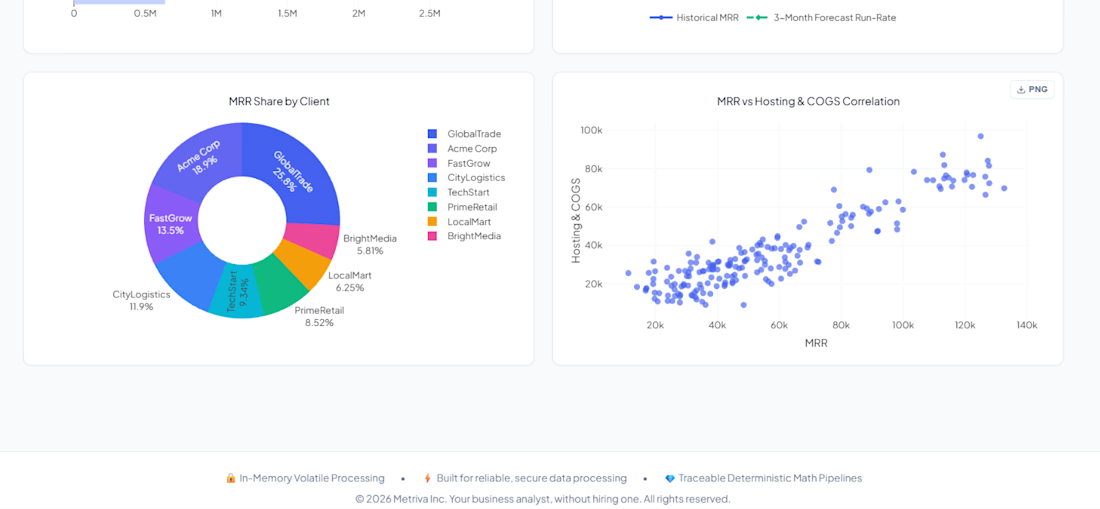
Metriva is an AI-powered business analyst that:
📊 Turns messy spreadsheets into executive dashboards
🧠 Writes C-level business briefs automatically
📈 Forecasts trends + detects anomalies
💬 Answers questions about your data in plain English
🎯 Finds your Pareto 80/20 — who drives 80% of your revenue?
No SQL. No Python. No data team.
Just upload your file and get answers.
Built with Flask, vanilla JS, and a lot of late nights.
🔗 Try it: metriva.ai1.vercel.app
#AI #BusinessIntelligence #Founder #IndieHacker #DataScience

The brief-writing piece is interesting — curious how you handle the validation step. AI-generated language tends to sound confident even when the underlying data is sparse or the trend is ambiguous. One pattern that helps: have the model output a confidence signal alongside the...


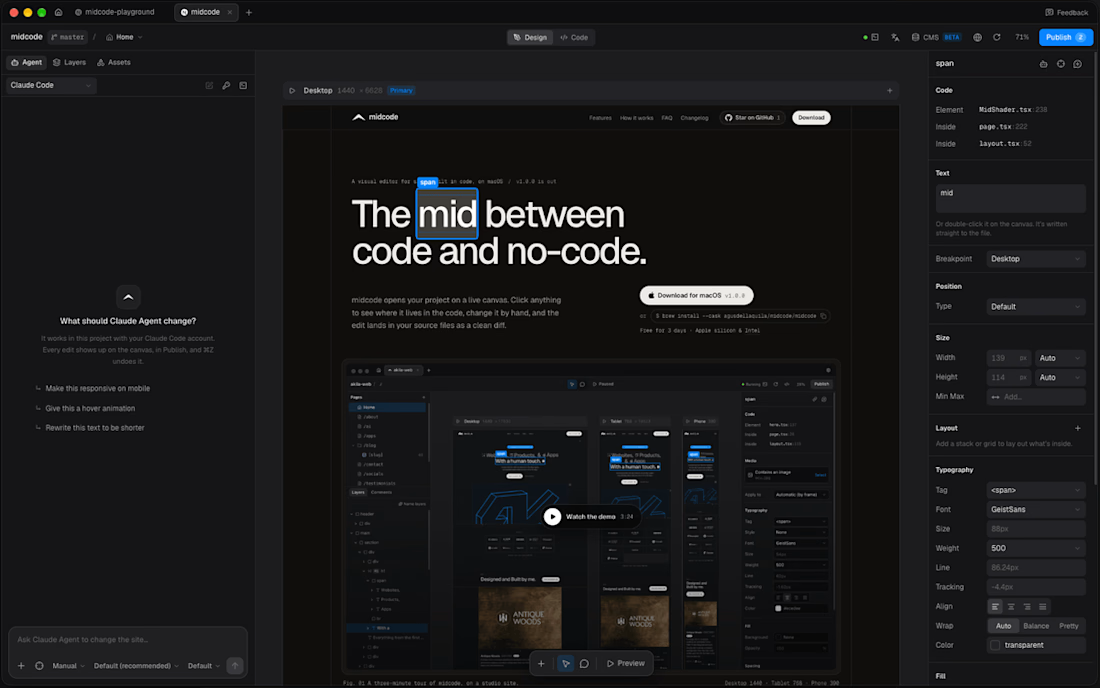
midcode is built on midcode

16:3 Studio is my independent software studio website, designed and developed from the ground up to showcase selected work, services, and my approach to building digital products.
The site combines an editorial-inspired visual system with a clean, structured layout, subtle interactions, and responsive design. I focused on creating a distinct studio identity while keeping the experience fast, accessible, and easy to navigate across devices.
Built with Next.js, TypeScript, Tailwind CSS, and Framer Motion, with an emphasis on reusable components, performance, responsive behavior, and polished frontend details.
My role: Design, Frontend Development & Engineering
Stack: Next.js · TypeScript · Tailwind CSS · Framer Motion




The studio site has a clear way to show both the work and how you build it. I like that you kept the motion subtle. Did you have to make any tradeoffs to keep it fast on mobile?