
pro
Armughan Shahid
AI SaaS Dev | LLMs, Agents, Voice & Automation | Web, Mobile
New to Contra
Armughan is ready for their next project!
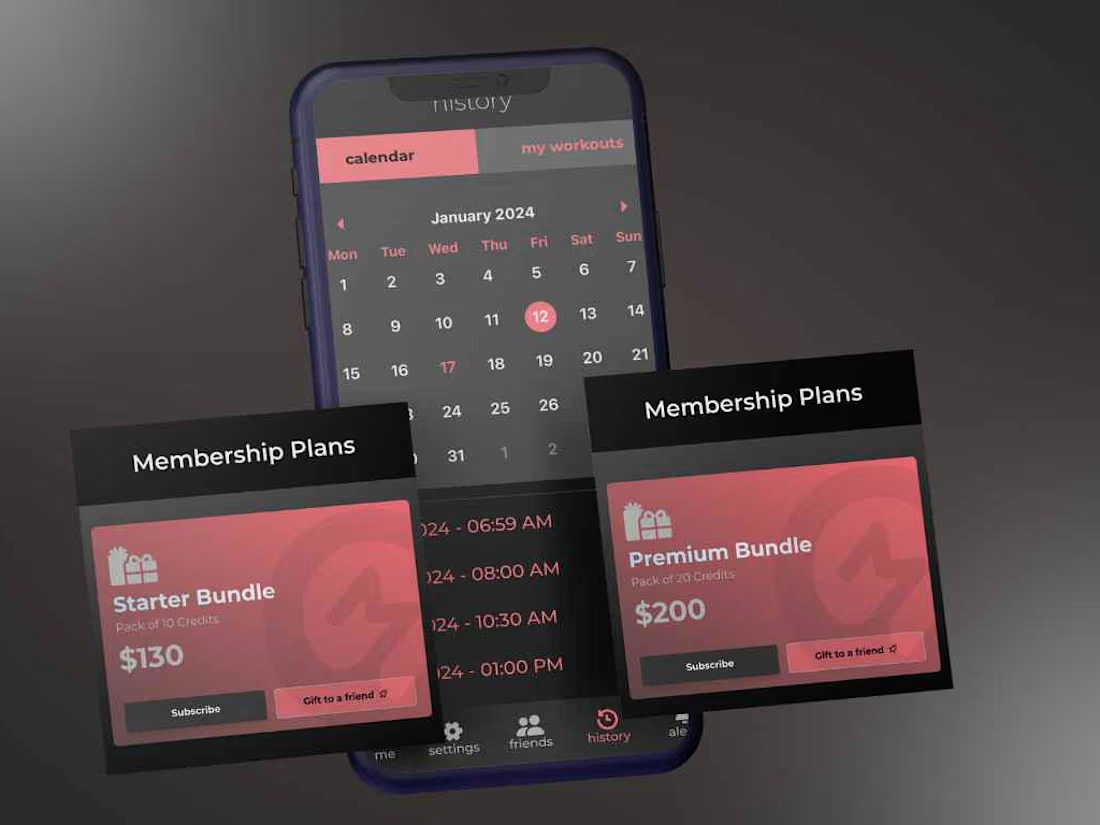
GYMYG - Case Study
0
0
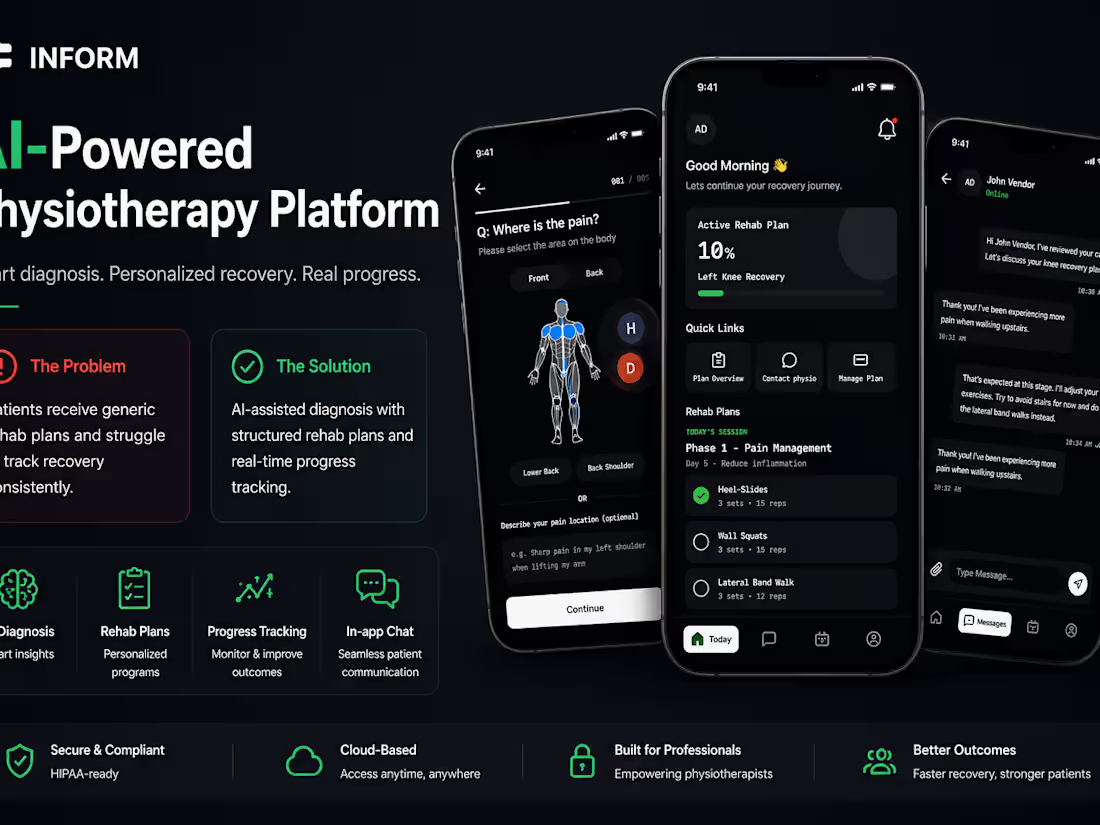
InForm - AI-Driven Physiotherapy App for Diagnosis, Rehab & Recovery Tracking
The core problem it solves:
Patients struggle to get timely, structured physiotherapy guidance, while physiotherapists are overwhelmed managing cases, tracking progress, and creating personalized rehab plans manually. Existing systems either lack intelligence or lack control.
This product creates a complete digital workflow where diagnosis, communication, and recovery are all connected into a single system.
What was built:
A full AI-powered physiotherapy platform with mobile apps for patients and a web-based admin system for physiotherapists.
Patients begin by submitting structured symptom data through guided questionnaires. Instead of jumping directly to conclusions, the system uses an AI diagnosis engine to analyze patterns and generate internal clinical suggestions. These suggestions are never shown to patients, they act as decision support for physiotherapists, ensuring every diagnosis remains human-approved.
Once a case is created, physiotherapists review patient data, validate or override AI recommendations, and communicate directly through an in-app messaging system. Every interaction is tied to a structured case, ensuring context is never lost.
The system then moves into recovery management.
Physiotherapists create personalized rehab plans with multi-phase programs, exercise libraries, and video guidance. Patients follow these plans inside the app, logging progress, completing KPI-based milestones, and moving through recovery phases in a structured way.
A key part of the system is the progress tracking engine. Patients log metrics, complete phase-based goals, and unlock new stages only when criteria are met. Physiotherapists get real-time visibility into adherence, performance, and patient feedback, making the system both trackable and measurable.
Alongside this, an intelligent chatbot handles general queries and reduces load on physiotherapists. When confidence is low or cases become complex, the system escalates conversations into structured cases with full context preserved.
Technical architecture:
Built as a scalable mobile-first system using React Native for patient apps and React.js for the admin panel, with a Node.js/Nest.js backend and Python powering AI-driven diagnosis logic. Data is managed through PostgreSQL, with secure authentication and encrypted communication layers.
The AI layer is designed as a support system, not a replacement. It uses LLM-based reasoning to assist diagnosis and continuously improves through feedback loops based on physiotherapist decisions, creating a human-in-the-loop learning system.
Deployed on cloud infrastructure (AWS/GCP), with Stripe integration for subscription-based access and a modular architecture designed for future AI expansion.
Business model built in from day one:
Subscription-based access for patients, with clear pathways to expand into AI-assisted rehab recommendations, outcome analytics, and protocol optimization.
The system is designed to evolve into a data-driven recovery platform where every patient interaction improves future treatment accuracy, turning clinical workflows into scalable intelligence.
0
22
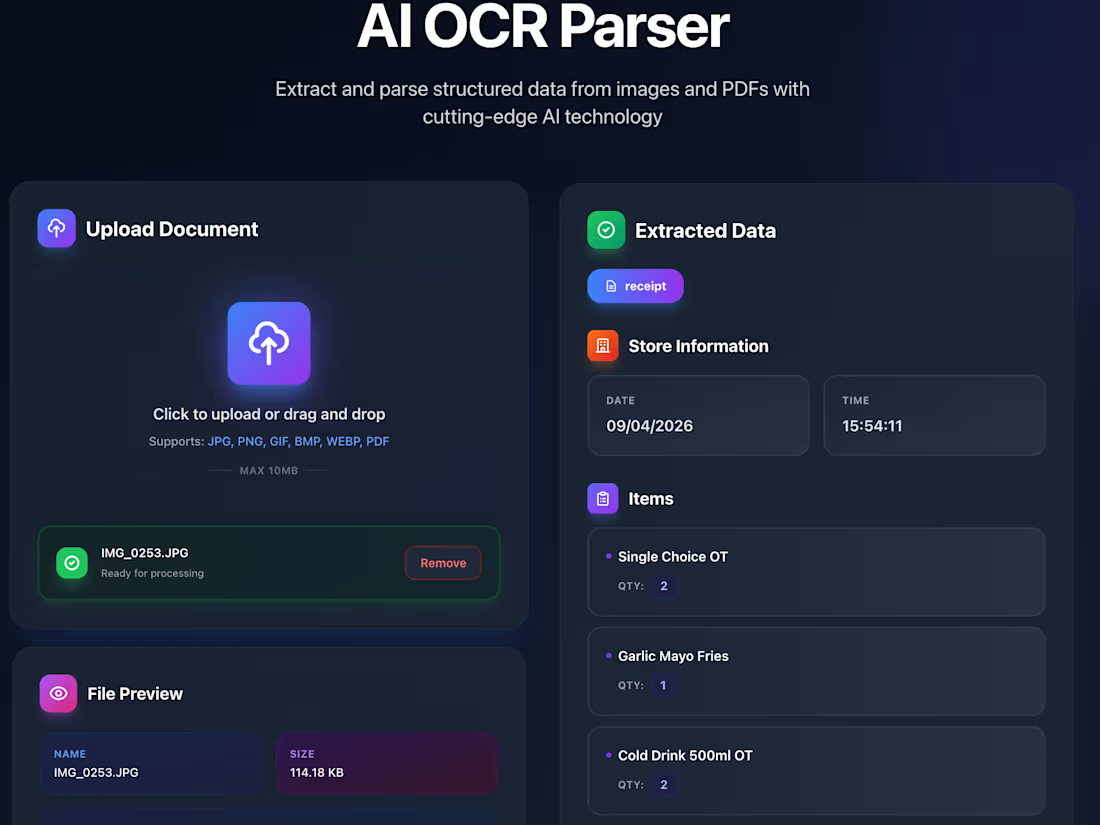
OCR Receipt Parsing Microservice (AI-Powered Backend System)
Most receipt-based systems fail because the data is messy, inconsistent, and spread across formats that machines don’t naturally understand. People don’t realise it, but the real problem isn’t capturing receipts, it’s turning them into reliable, structured data that can actually be used.
This system removes that friction entirely. You send a receipt (image or PDF), and it comes back as clean, structured JSON ready to plug into any workflow.
The core problem it solves:
Receipt data is chaotic. Different formats, inconsistent naming, missing structure, and OCR noise make it hard to extract anything usable. Even when OCR works, the output is raw text, not something you can build logic on top of.
This project builds a full processing layer that doesn’t just read receipts, it understands and standardises them.
What was built:
A backend microservice that acts as a structured data engine for receipts. The system accepts images or PDFs via an API, runs OCR, extracts merchant details, dates, totals, and line items, and converts everything into a strict JSON schema.
But the real value sits in what happens after OCR.
A normalization layer cleans and standardises item names so inconsistent inputs like “BANANA”, “Bananas”, or “Banana 1lb” all map to a single canonical item. Quantities and prices are cleaned, structured, and validated so the output becomes consistent across different stores and formats.
The system can also plug directly into Airtable, pushing structured items into a live database, enabling automated workflows like pantry tracking, expense logging, or analytics pipelines without needing a full backend system.
Everything is exposed through a simple /parse-receipt API, making it easy to integrate into mobile apps, SaaS products, or internal tools.
Technical architecture:
FastAPI-based microservice designed for simplicity and performance, with OCR powered by Tesseract or cloud services like AWS Textract and Google Vision depending on accuracy requirements. The parsing layer combines rule-based extraction with AI-assisted cleanup to handle real-world receipt noise.
The system is fully containerized using Docker, deployable on platforms like Render or Heroku, and comes with OpenAPI (Swagger) documentation for quick testing and integration.
Designed as a stateless service, it avoids database complexity and instead integrates with external systems (like Airtable), making it lightweight and easy to scale.
Business value built in:
This isn’t just an OCR tool, it’s a data standardization engine. The same system can power expense tracking apps, inventory systems, meal planning products, or financial analytics platforms.
Because the parsing and normalization layers are modular, the microservice can be exposed as a standalone API, creating opportunities for reuse across multiple products or even external licensing.
0
27
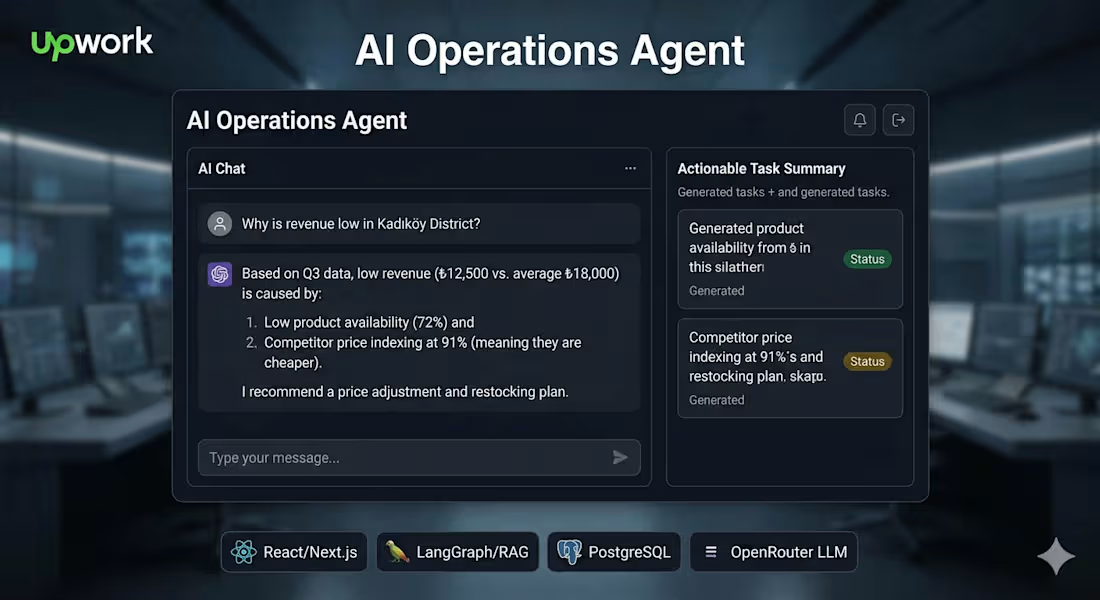
AI Operations Agent: RAG-Powered Retail Intelligence & Task Automation
This project was built for large-scale restaurant groups and multi-unit retail operators who manage high volumes of data across dozens or hundreds of locations. Specifically designed for Regional Managers and Operations Directors, the system serves as an enterprise-grade "Digital Consultant" that bridges the gap between fragmented POS/inventory data and daily on-the-ground execution. By transforming millions of rows of restaurant performance metrics into high-priority tasks, it provides a centralized platform for leadership to monitor KPIs, approve AI-suggested corrective actions, and ensure operational consistency across their entire portfolio.
1. What We Built
We developed a production-ready Autonomous AI Operations Agent designed to bridge the gap between complex retail data analysis and daily execution. The system acts as a digital consultant for regional managers, transforming raw KPIs into actionable tasks.
Analytical AI Chat: A free-form conversational interface where users can query performance data (e.g., "Show me the top 5 worst profitable stores in Istanbul for the last 3 months").
Task Management Dashboard: A structured workflow where AI-suggested actions are automatically logged for manager approval or rejection.
Automated Action Logic: The agent uses an "Action Suggestion Map" to identify specific defects (like low audit scores or high food waste) and suggest precise corrective measures.
Persistent Memory: Includes both short-term memory for the current chat session and long-term RAG memory to maintain context over time.
2. How We Built It (The Stack)
The system was engineered for scalability and reliability using a modern, containerized stack:AI Orchestration: LangGraph was used to manage complex, multi-turn reasoning and agentic workflows.
Frontend: React/Next.js 14 for a responsive, real-time user interface.
Backend & Data: Node.js paired with a PostgreSQL database capable of handling 1M+ records.
LLM Access: Integrated via OpenRouter to allow for flexible model selection and switching.
Infrastructure: Fully Dockerized to ensure consistent deployment across environments.
3. Challenges We Faced
As the system scaled from prototype to processing millions of records, we encountered several critical engineering hurdles:
Response Latency: The initial monolithic prompt architecture led to response times exceeding 60 seconds, far slower than the required "ChatGPT-like" speed.
Prompt Verbosity & Errors: Complex questions involving multiple variables caused the LLM to lose focus, leading to "reasoning errors" and incorrect SQL generation.
Hallucination Risks: In multi-branch queries, the model occasionally fabricated data points, particularly around manager hours and performance metrics.
Context Switching Bugs: The agent sometimes struggled to "let go" of a previous topic, continuing to reference an old store when the user had asked about a new city.
4. How We Solved It
We re-engineered the core pipeline to transition from a single, heavy agent into a Modular Multi-Step Architecture:
75% Latency Reduction: By decomposing the main logic into smaller, task-specific nodes, we dropped processing time from 60s down to 15s.
Task Decomposition & Specialized Models: We stopped using a "one-size-fits-all" model. Instead, we implemented a router that uses lighter, specialized models for SQL generation and action identification, and flagship models only for final reasoning.
Granular SQL Generation: Breaking the metadata analysis into narrow sub-steps eliminated SQL hallucinations. The model now only "sees" the specific schema needed for the current sub-task, ensuring 100% accuracy.
10-Point Testing Protocol: We implemented a rigorous QA protocol that specifically verified bug fixes for context switching, task duplication, and chart coverage before final delivery.
0
50
BudgetNest — AI-Powered Personal Finance SaaS
Most people don't track their finances because the friction is too high. BudgetNest removes that friction entirely, every transaction captured automatically, categorised intelligently, and surfaced through analytics that actually help people make better decisions.
The core problem it solves:
Manual expense logging fails because people forget, get lazy, or simply don't have time. BudgetNest built an automated capture layer that works across every channel a user already operates in i.e.
SMS alerts,
bank emails,
receipt photos,
WhatsApp messages, and voice notes in English and Urdu.
The system deduplicates intelligently across all input sources so nothing gets logged twice regardless of how it came in.
What was built:
A complete AI finance platform with five distinct automated capture modes SMS and email parsing for bank transaction alerts, PDF and image bank statement upload with AI extraction, OCR receipt scanning via camera, a WhatsApp bot that accepts text, images, and voice notes, and multilingual voice input for manual cash payments. Every transaction flows through an LLM-powered categorisation engine that auto-assigns
categories and subcategories, recognises vendors, and learns from behaviour over time.
Beyond capture, the system includes smart budgeting with AI-driven suggestions based on spending patterns, subscription detection for recurring transactions, shared expense and split-bill tracking, fraud detection for unusual transactions, and forecasting that projects deficit against income. Dashboards surface everything through charts, trend lines, and weekly and monthly summaries.
Technical architecture:
React Native across iOS and Android, Node.js and FastAPI backend, PostgreSQL and MongoDB, AWS infrastructure with EC2, S3, and RDS, Python-based NLP and OCR pipeline using Transformers and Tesseract, Twilio WhatsApp integration, Gmail API for email parsing, and Firebase for push notifications.
Business model built in from day one:
Freemium with premium automation features, B2B white-label capability for microfinance institutions and NGOs, and the OCR and SMS parsing logic architected as standalone APIs for third-party licensing meaning the AI layer has revenue potential independent of the consumer app.
1
61