
Antonio Castañeda
Spatial Strategist and Creative Director
- 4
- Followers



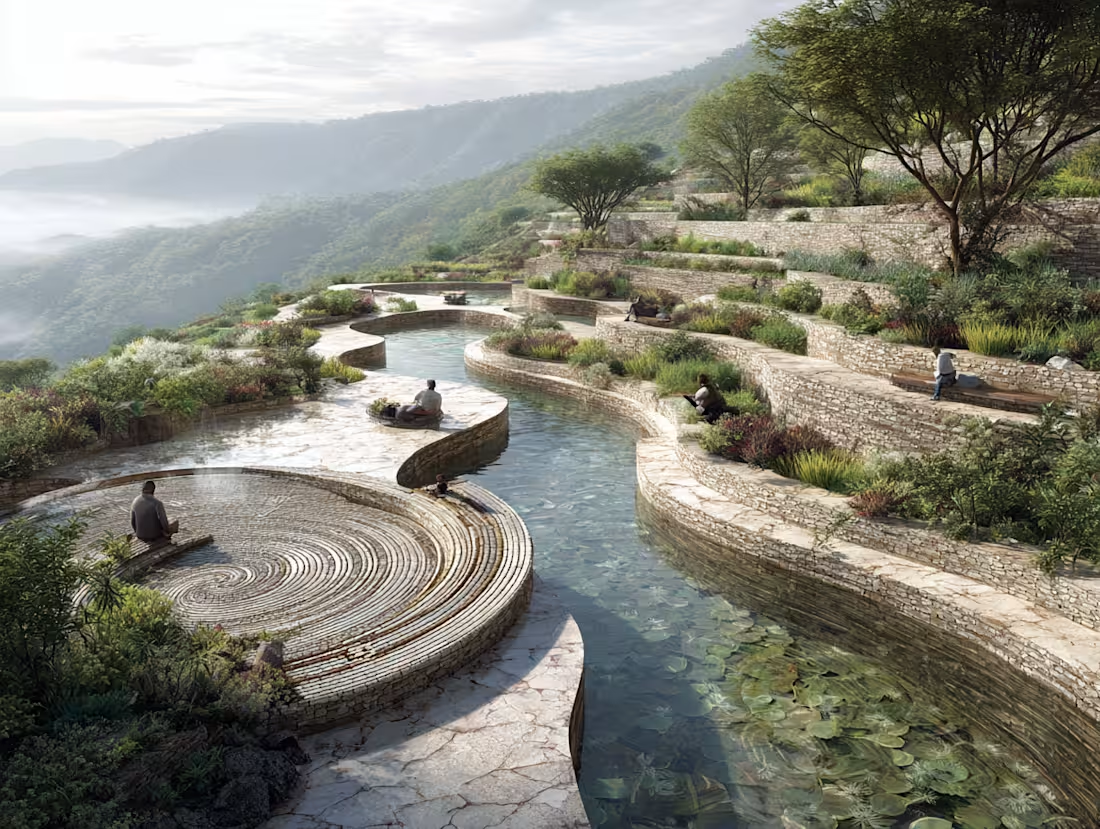
EL QUINTO SOL: Master Plan & Regenerative Territorial Strategy
Zempoala / Zinguilucán, Hidalgo (2025)
Project Narrative:
El Quinto Sol is a Cultural, Agro-industrial, and Tourism Master Plan spanning 140 hectares in a strategic transition zone between industrial corridors and ancient archaeological sites. This project represents a shift from designing buildings to designing ecosystems, acting as a regenerative node that articulates ecology, community, and pre-Hispanic roots.
The strategy was born from a deep territorial diagnosis of oak forests and agricultural lands. Rather than imposing forms, the design "listens" to the landscape—its slopes, water flows, and biological corridors—to define low-impact development zones while preserving fragile areas for environmental education.
The Symbolic Framework:
The master plan is organized around four symbolic axes—Water, Earth, Air, and Fire—which manifest as physical experiences:
Earth & Water: Agricultural terraces and artificial wetlands that integrate production with landscape restoration.
Air & Fire: Observatories, ceremonial forums, and open-air galleries that invite ritual and collective experiences.
Cultural Fabric: The program includes a Maguey Museum, craft workshops, and regenerative housing, all designed to activate local economies through low-impact tourism.
Architectural Impact:
This project allowed me to expand my practice into the territorial scale, understanding architecture as a catalyst for relationships between tradition and modernity, and between intimate space and the collective landscape.
Professional Scope:
Master Planning & Urban Design: Zoning and infrastructure design for a 140-hectare site.
Architectural & Furniture Design: Creating the formal language for key cultural and hospitality structures.
1
165
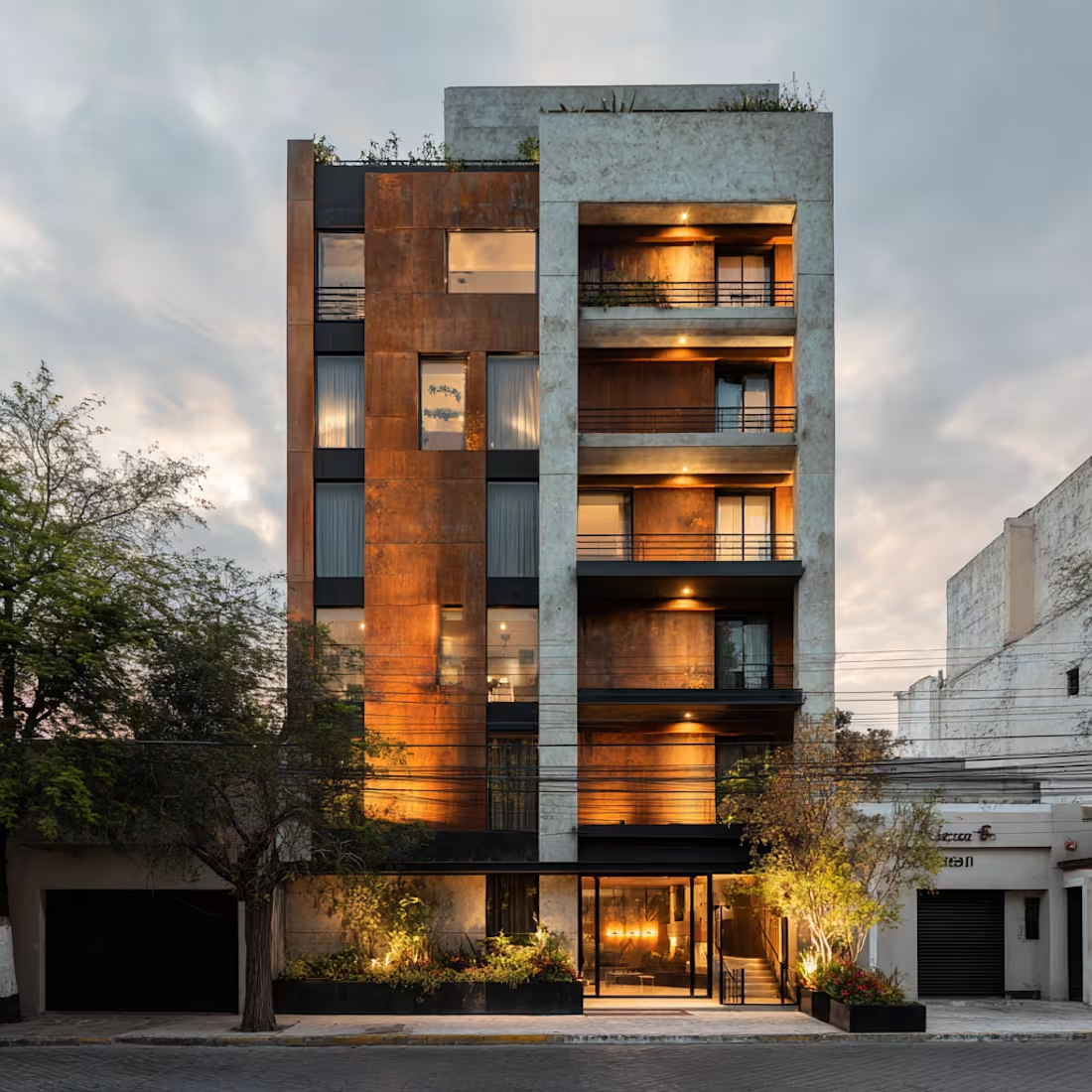
Challenging the local habit of single-family dwellings, this project proposes a shift toward density and urban compactness. The design features 9 apartments ranging from 45–50 m², complemented by a ground-floor commercial unit. By bifurcating the main volume into two distinct towers, a central courtyard emerges as the heart of the project, facilitating both vertical circulation and a constant flow of natural light and air for every unit.
Inspired by the industrial character of Tulancingo, the material palette—concrete, steel, and glass—stands in dialogue with minimalist interiors. More than just a structure, this building represents the architect’s responsibility toward evolving urban landscapes: projecting quality of life within compact programs and fostering a new sense of community living.
1
228
Mon Petit Chou
Branding as a total act · 2023 · Pachuca
Scope Naming · Brand identity · Interior design · Custom furniture · Construction management · Experience design
Clients Karla and Julio
Karla and Julio were serious about sourdough — the best flour, the right fermentation, no shortcuts. The price would be double any traditional bakery in Pachuca, and they wanted to open between two of the oldest, most beloved panaderías in the city. The only way this could work was to never compete on familiar terms.
The first question I asked was not about the space. It was about them: what were they not willing to compromise on, even if it cost them? The answer was immediate — everything. From that came the name and the philosophy: Sans remords. Without remorse.
While researching sourdough culture we found the conceptual core: real bread has three ingredients — water, salt, flour — and a fourth: air. Not as metaphor but as material. The structure of a sourdough loaf is formed by air trapped in fermentation. Air is what makes bread bread. This became the organizing principle of everything: the recipe, the space, the visual language, the experience of being inside.
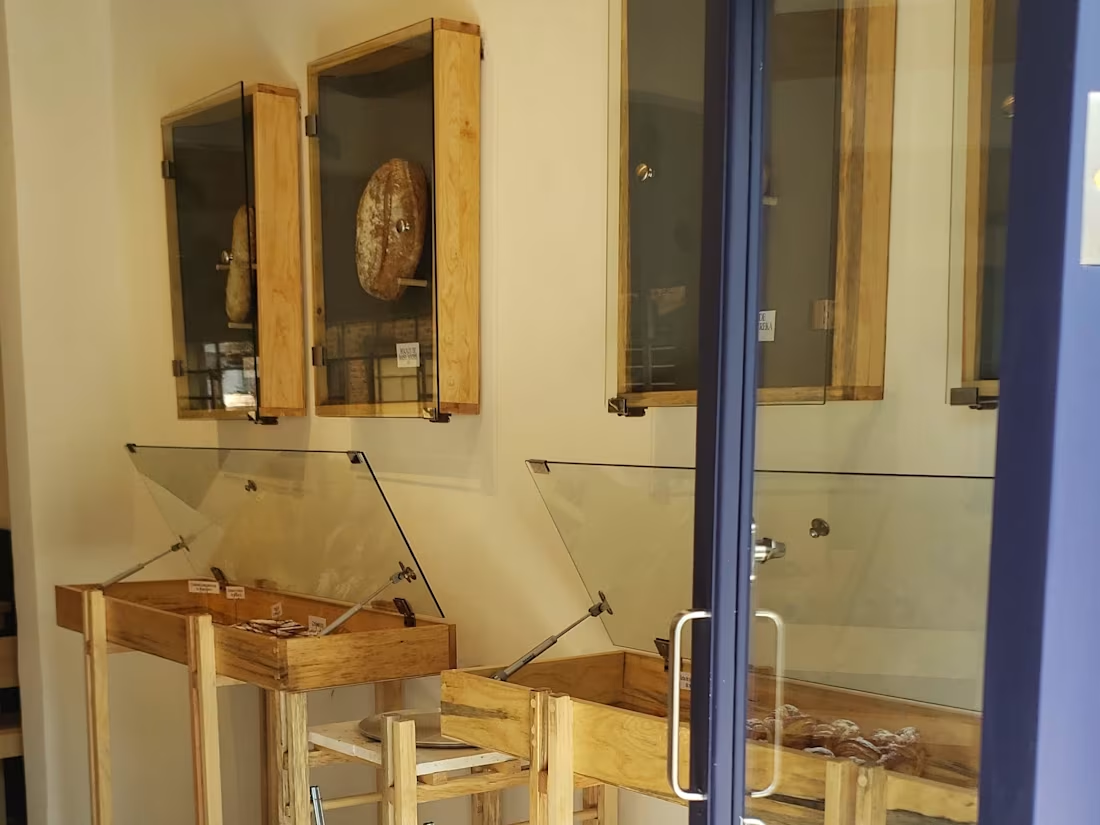
The interior was designed as a gallery in three movements. First room: exhibition — slender furniture, gallery lighting on the bread, display frames mounted on the wall with glass you lift to take your piece and eat it. Second room: interactive — tables where eating is the performance, each lit from above. Third room: open kitchen, fully visible — the baker at work, the craft unhidden, the reason for everything.
The visual identity came from an unexpected place: both clients had a shared passion for tattoo culture. In tattoo practice, apprentices learn technique on cherubs — detailed enough to develop skill, simple enough to begin. We took that figure, stylized it, paired it with a serif typeface for elegance and contrast. A logo that looked Parisian but had been drawn by someone who understood permanent commitment. Pastel tones from the bread itself completed the palette, carried into packaging designed to be kept.
Bread has three ingredients and a fourth: air. The space that holds it should have the same.
1
3
256
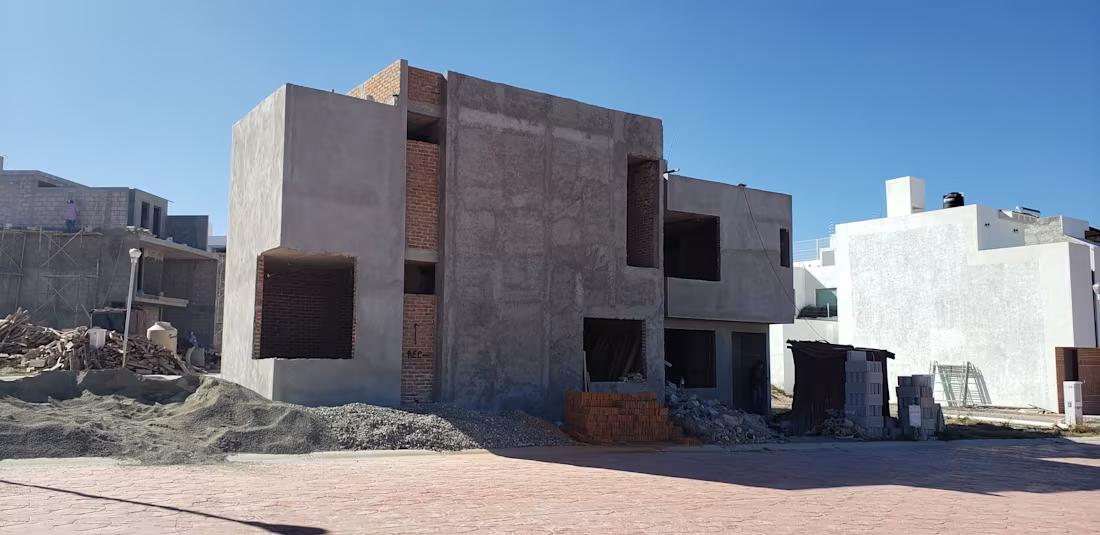
FRAILES HOUSE: A Sanctuary of Light and Raw Materials
2. Role & Services (Lo que hiciste)
Lead Architect
Interior Architecture
Custom Furniture Design
3. Project Description
In Frailes House, the architectural challenge was to create a private sanctuary that balances industrial strength with domestic warmth. This residence is a profound study on the dialogue between light and shadows.
Drawing from the architectural heritage of Mexico, the design reinterprets the traditional central courtyard as the heart of the home. The entire project was born from a single, definitive decision: a central patio with a maple tree at its core. This tree acts as a living witness to the passing of time, changing its colors with the seasons and growing alongside the client’s children.
The courtyard is not just an aesthetic feature; it is a functional engine that generates a private microclimate and strategic separation. It provides the father with a personal corner—a space for a quiet smoke—physically separated from his children by the open air and the rustle of leaves, yet eternally connected through the glass.
Inside, the house features twin rooms, equal in area but deliberately distinct in character. As the only residence in the entire development featuring a central patio, Frailes House stands as a testament to the power of a single courtyard to define privacy, climate, and the rhythm of family life.
1
3
227