
Amine Baghouil
Python Data Automation Engineer | Data Cleaning, ETL, Report
New to Contra
Amine is building their profile!
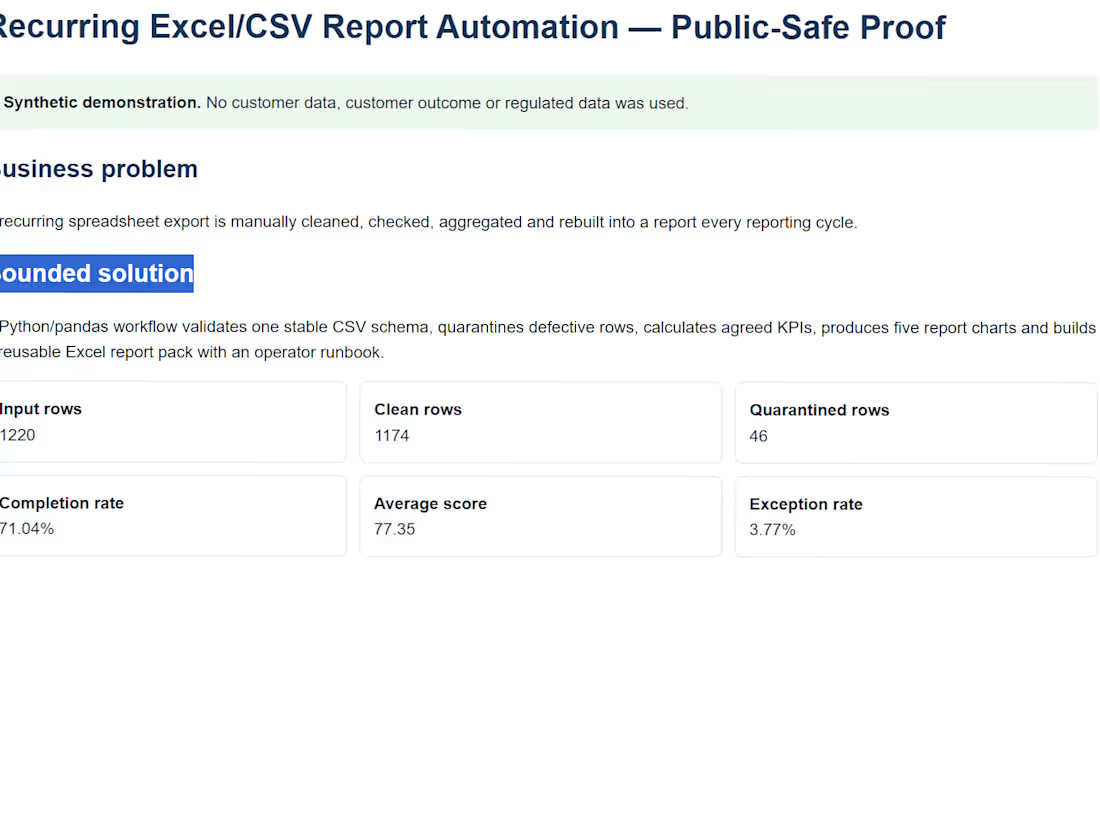
Recurring Excel/CSV Report Automation — Synthetic Proof
0
0
Short Description
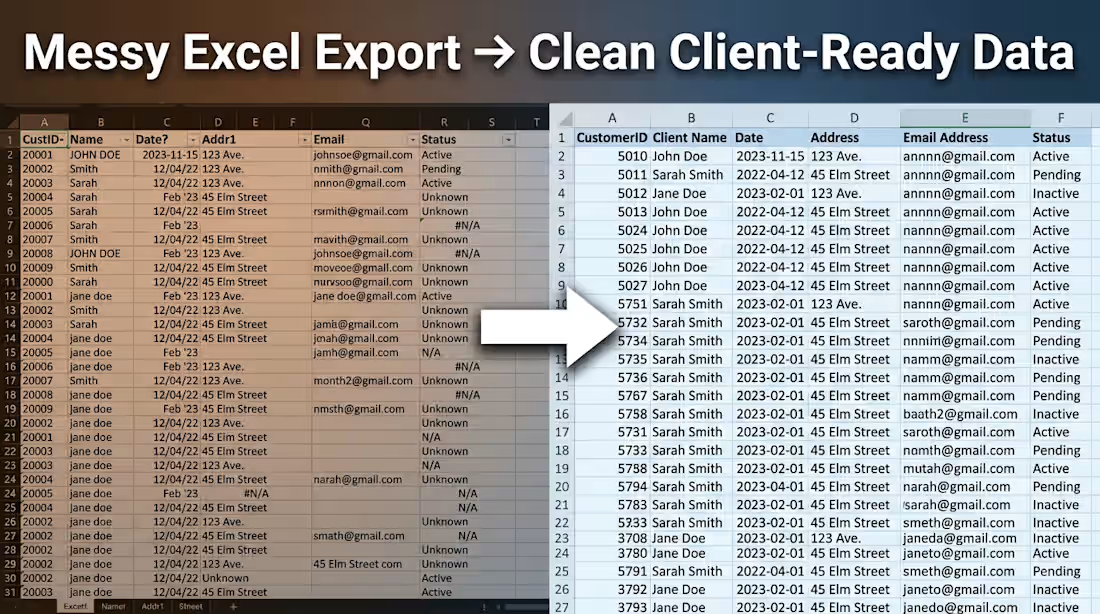
Built a Python workflow that cleans messy customer exports, normalizes fields, detects duplicates, validates rows, and exports clean data, review files, quality reports, and processing logs.
Problem
Business data exports often contain inconsistent emails, phone numbers, countries, dates, revenue fields, duplicate records, and missing values. Manual cleanup is repetitive and creates reporting risk.
Solution
I built a Python cleanup workflow that loads Excel/CSV customer data, maps raw columns to a target schema, normalizes fields, detects duplicates, validates rows, and exports clean and review-ready outputs.
Tools
Python, Pandas, OpenPyXL, YAML configuration, validation rules, CSV/XLSX input, automated reports.
Deliverables
Excel/CSV cleanup pipeline
Clean customer CSV
Duplicate/review output
Data quality report
Processing log
Reusable configuration files
Result
The workflow processed a messy customer export, removed duplicate records, separated clean and review rows, and produced a repeatable data-cleanup process for similar business data tasks.
0
14
Short Description
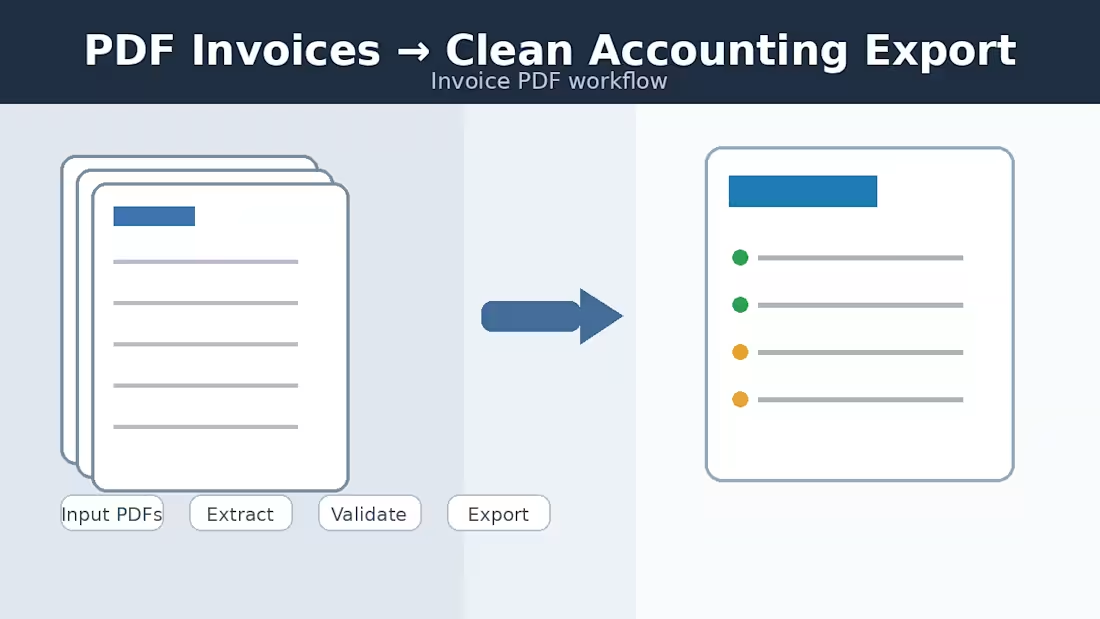
Built a Python workflow that extracts invoice data from PDF files, normalizes fields, validates records, and exports clean CSV outputs, review queues, summary reports, and processing logs.
Problem
Invoices and document-based data often arrive as separate PDF files. Manually extracting invoice numbers, dates, totals, vendor names, and validation issues is slow, repetitive, and error-prone.
Solution
I built a Python-based document workflow that reads multiple PDF invoice files, extracts structured fields, normalizes dates and numeric values, validates the records, separates clean rows from review items, and exports reusable output files.
Tools
Python, PyMuPDF, Pandas, YAML configuration, CSV exports, validation rules, processing logs.
Deliverables
PDF input processing workflow
Clean invoice CSV export
Review queue for problematic records
Summary report
Processing log
Reusable validation/config structure
Result
The workflow processed 10 PDF invoices, extracted structured data, produced clean and review-ready outputs, and created a repeatable process for document-based invoice handling.
0
9
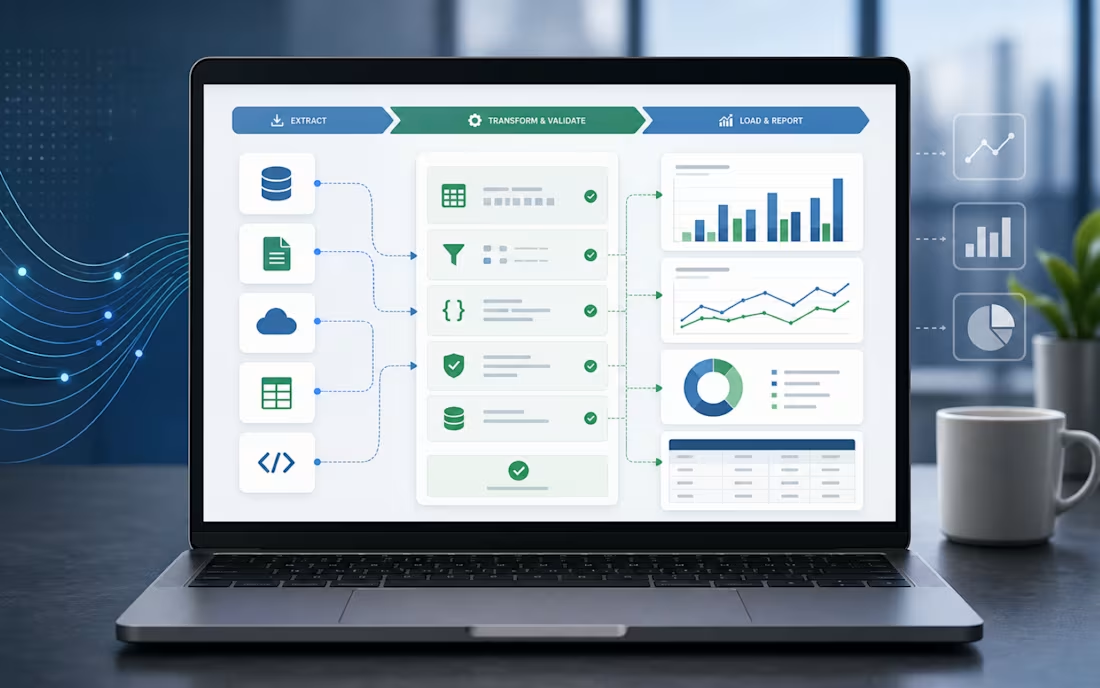
Representative project
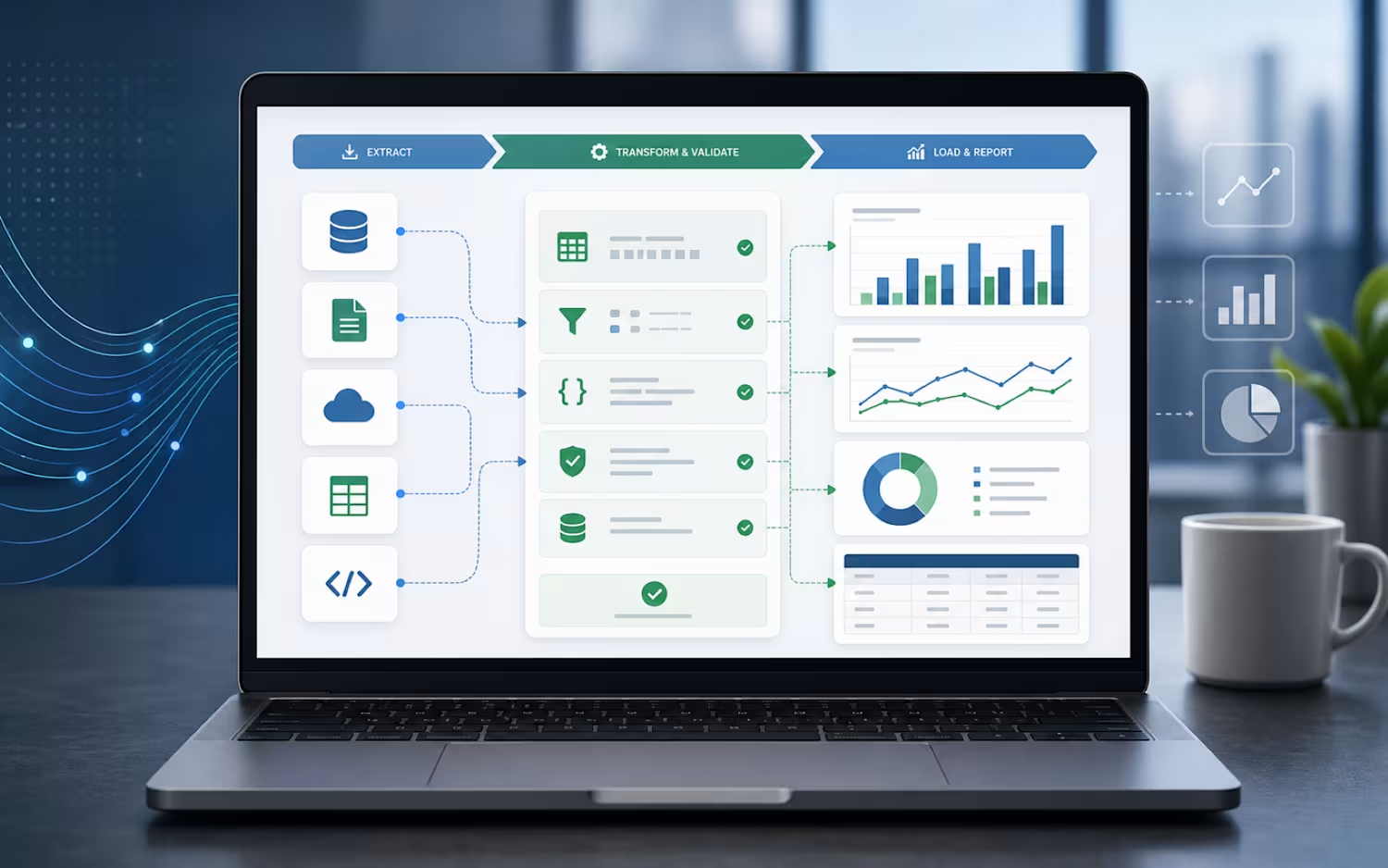
This project shows how I design lightweight ETL workflows in Python to import, transform, validate, and prepare operational data from multiple sources for reporting and recurring business use.
Typical scope:
Import data from files, exports, or APIs
Transform and standardize datasets into a consistent structure
Apply validation checks to catch missing, broken, or inconsistent records
Prepare clean output tables for reporting, dashboards, or internal workflows
Reduce repetitive manual steps with a maintainable automation process
Tools and approach:
Python, Pandas, ETL logic, file-based workflows, API integration where needed, and pragmatic data validation focused on stable output.
Business value:
This type of ETL workflow helps teams save time, reduce reporting errors, and create a more reliable process for recurring data preparation.
Typical deliverables:
Cleaned Excel/CSV dataset
Deduplicated and standardized data files
Reusable Python cleanup script
Validation and transformation logic
Reporting-ready output export
0
11