

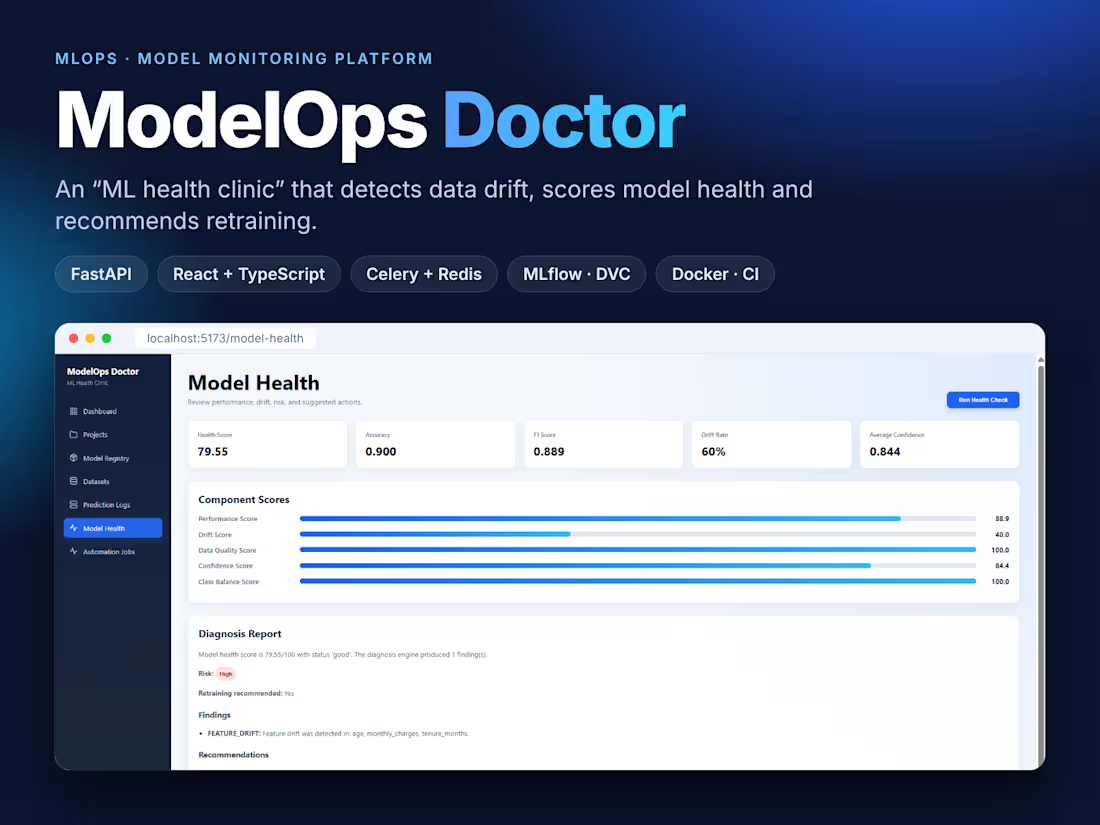
ModelOps Doctor – ML Model Monitoring & Drift Detection Platform
0
7
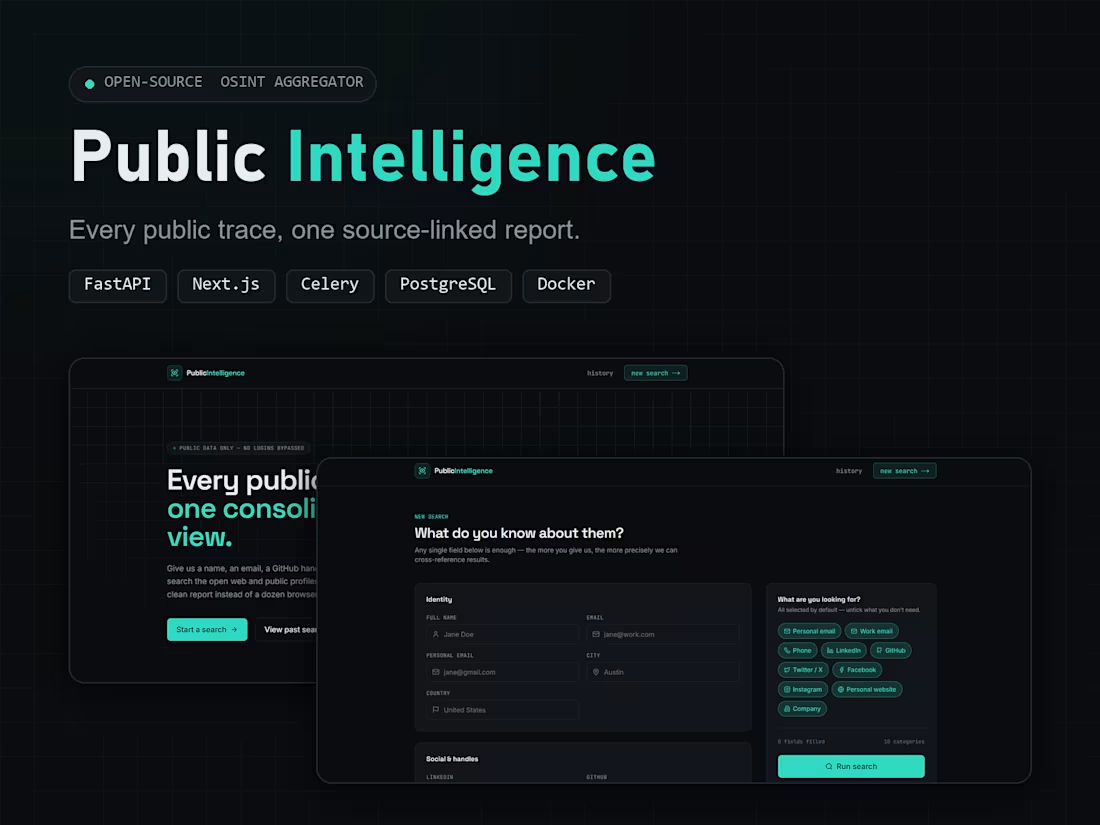
Public Intelligence: Open-Source OSINT Aggregator (Full-Stack)
0
15
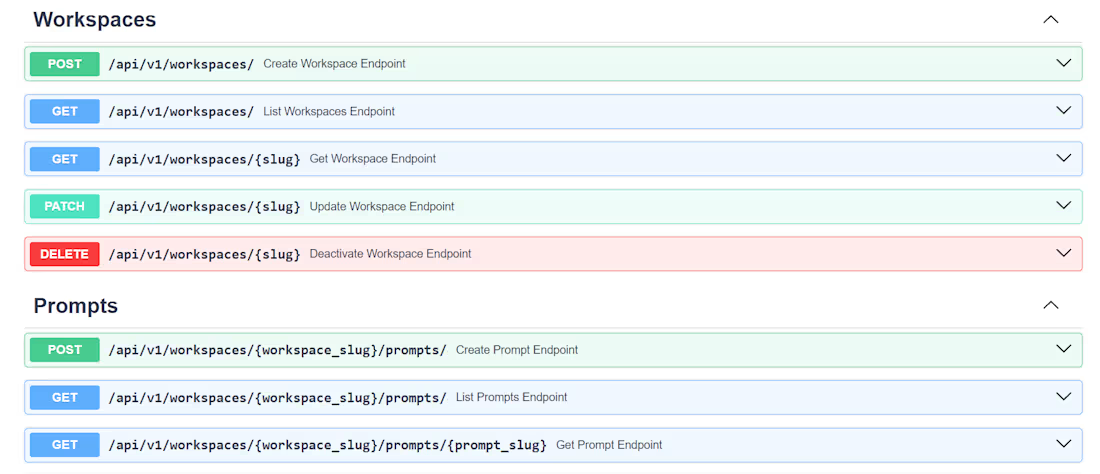
PromptVault is a production-grade AI Prompt Lifecycle Management API backend designed to help teams store, organize, evaluate, and monitor AI prompts as structured, testable assets. I built this project as a backend engineering portfolio system using FastAPI, PostgreSQL, async SQLAlchemy, Alembic, Redis, Celery, Apache Airflow, Docker, GitHub Actions, and structured JSON logging.
The system provides RESTful APIs for workspace and prompt management, including CRUD operations, Pydantic validation, pagination, soft deletion, and scalable database modeling. PostgreSQL handles persistent storage, while Redis implements a cache-aside strategy for faster API responses, TTL-based expiry, and cache invalidation.
PromptVault includes asynchronous background evaluation workflows using Celery with Redis as the broker and result backend. Users can trigger prompt evaluation jobs through the API, receive an immediate job ID, and poll for job status and results. Apache Airflow DAGs automate scheduled prompt regression checks and weekly cleanup workflows.
To make the project production-ready, I added async testing with pytest, fakeredis, and integration tests using a dedicated test database, achieving around 63% test coverage. The application is fully containerized with Docker Compose, running FastAPI, PostgreSQL, Redis, and Celery Worker as separate services.
Key engineering challenges solved included PostgreSQL enum/default issues, Alembic migration debugging, WSL2 PostgreSQL access configuration, Airflow metadata database separation, SQLAlchemy version conflicts, async pytest connection handling, and Docker dependency separation using requirements.docker.txt.
This project demonstrates backend API development, distributed systems, caching, background task processing, workflow orchestration, DevOps, CI/CD, and observability best practices for AI/LLM application infrastructure.
0
27
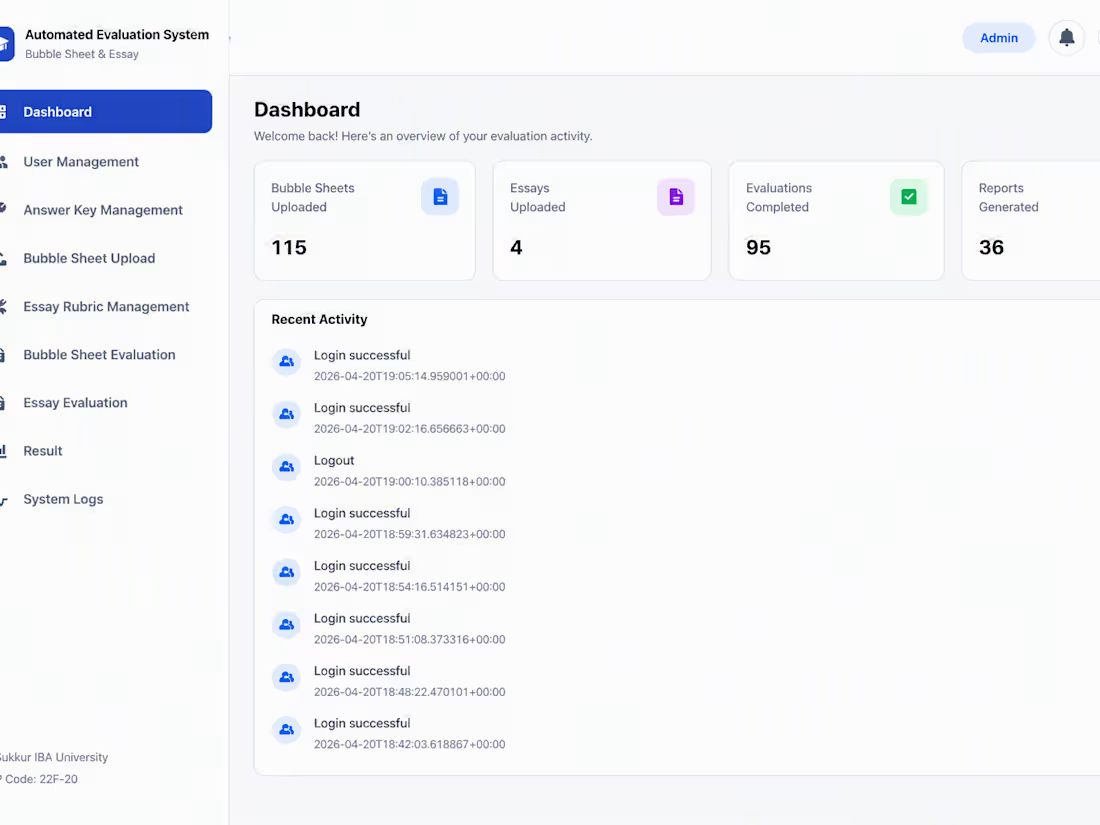
I developed an AI-powered Automated Bubble Sheet & Essay Evaluation System to modernize academic assessment by reducing manual grading effort, improving evaluation consistency, and enabling faster result processing.
This system combines Computer Vision, Optical Mark Recognition (OMR), Optical Character Recognition (OCR), Machine Learning, Deep Learning, and Natural Language Processing (NLP) into one end-to-end assessment workflow. It evaluates both objective bubble-sheet responses and descriptive essay answers using a modular, scalable, and cost-efficient architecture.
Key Features:
• Automated OMR-based bubble sheet grading using image preprocessing, thresholding, fold detection, and answer-mark recognition.
• CNN-based classification model for accurate bubble detection, with the best model achieving 98.2% accuracy.
• OCR-based text extraction using Google Cloud Vision API for processing scanned/written essay responses.
• AI-assisted essay evaluation using GPT-4.1 for rubric generation, semantic analysis, relevance checking, and automated scoring.
• Modular architecture with separated OMR, OCR, ML, and NLP layers for better maintainability, scalability, and future enhancement.
• Support for structured academic evaluation workflows, including answer key comparison, scoring logic, and result generation.
0
51