
Ajay Singh
From Rough Idea to Deployed Product — Solo, Fixed Price
New to Contra
Ajay is building their profile!

Payment Authorization for Variable-Cost Work
When the final cost of a job isn't known upfront — variable hours, adjustments,
extras — charging afterward means chasing failed payments. Pre-authorizing the
full amount for a long engagement is equally wrong.
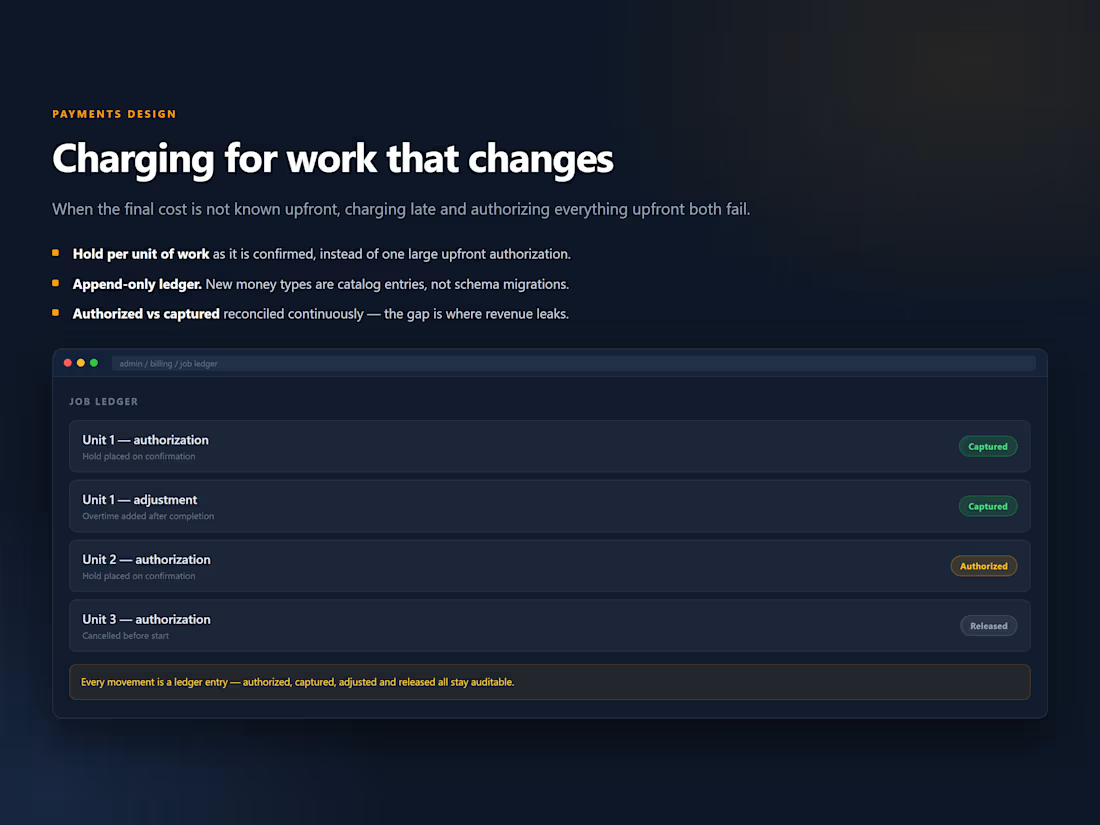
I designed a per-unit authorization model that holds funds incrementally as work
is confirmed, rather than one large upfront authorization. An append-only ledger
records every money event, so new transaction types are catalog entries rather
than schema migrations.
The audit that came with it surfaced the gaps that matter: costs incurred but
never invoiced, and the difference between what was authorized and what was
actually captured.
1
6
Per-Market Rules Engine
One platform, several countries, each with different tax forms, currency,
regional eligibility, and compliance requirements. The naive approach — country
conditionals scattered through the codebase — becomes unmaintainable by the
third market.
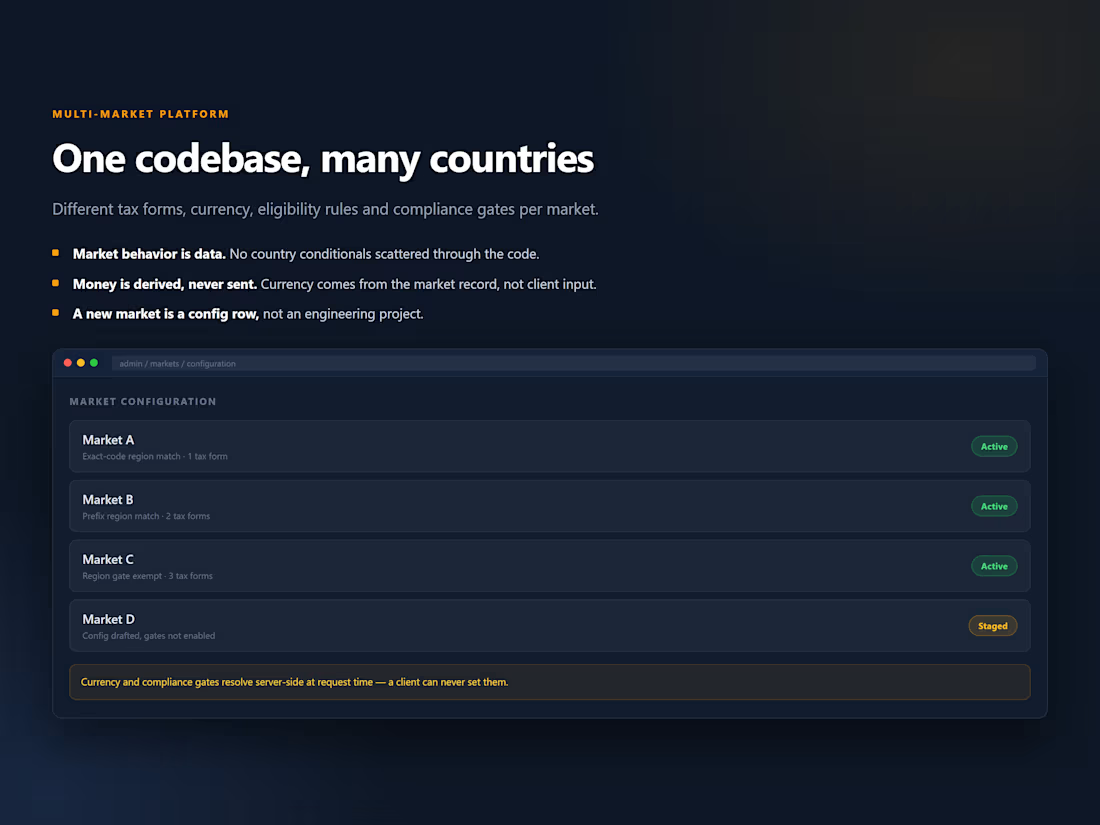
I moved market behavior into configuration resolved server-side at the point of
use. Currency derives from the market record rather than user input. Regional
eligibility matches through country-specific logic. Form requirements are
selected per market at posting time.
The governing rule: anything a client can send is a value a client can get
wrong, or manipulate. Money and compliance values are derived, never accepted.
1
11
Multi-Vendor Webhook Foundation
Several third-party providers — identity, e-signature, background checks — each
push status updates via webhooks with different payloads, signing schemes, and
retry behavior. Ad-hoc handlers meant duplicated verification logic and
inconsistent failure handling.
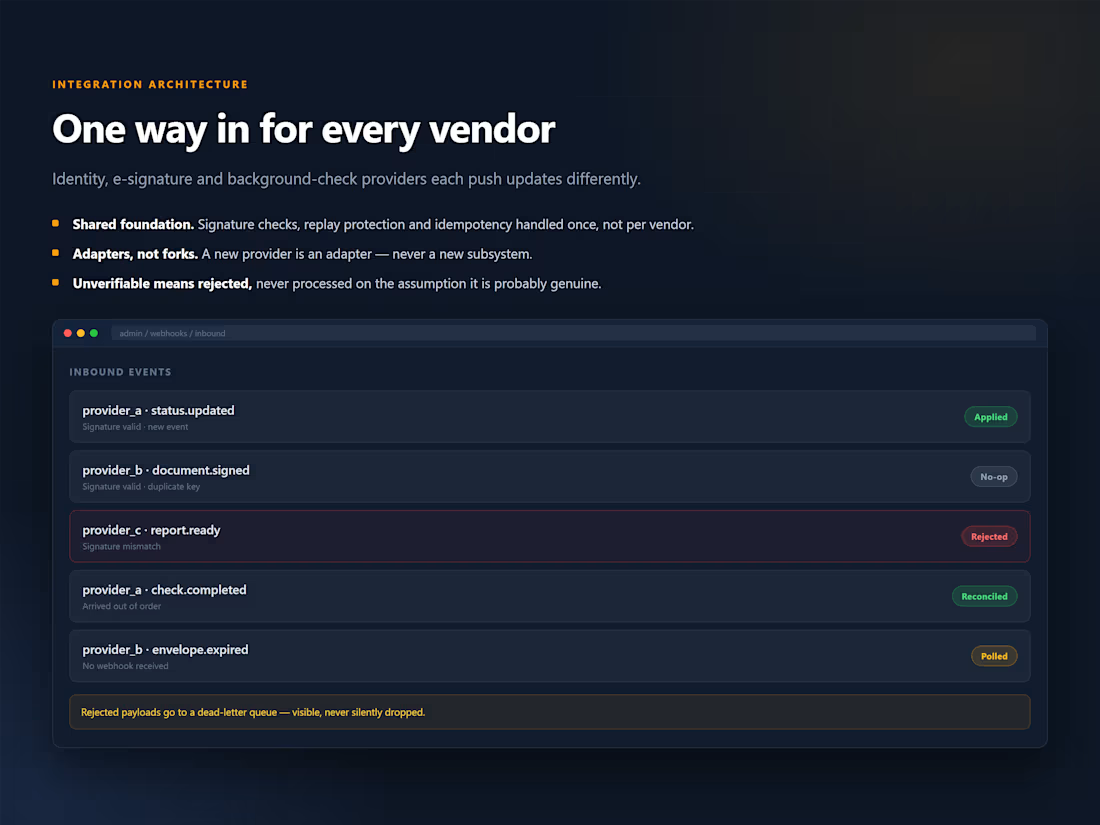
I built a shared foundation handling signature verification, replay protection,
idempotency, and dead-letter capture, with per-vendor adapters extending the base
rather than forking it. Adding a provider became an adapter, not a subsystem.
Verification is fail-closed: an unverifiable webhook is rejected outright, never
processed on the assumption it's probably genuine. A reconciliation job covers
the case where a webhook never arrives at all.
1
12
Compliance-Gated Worker Onboarding
A marketplace needed workers verified before their first shift — identity
documents, signed agreements, background checks, tax forms — with different
requirements per country. Manual review didn't scale and blocked earnings.
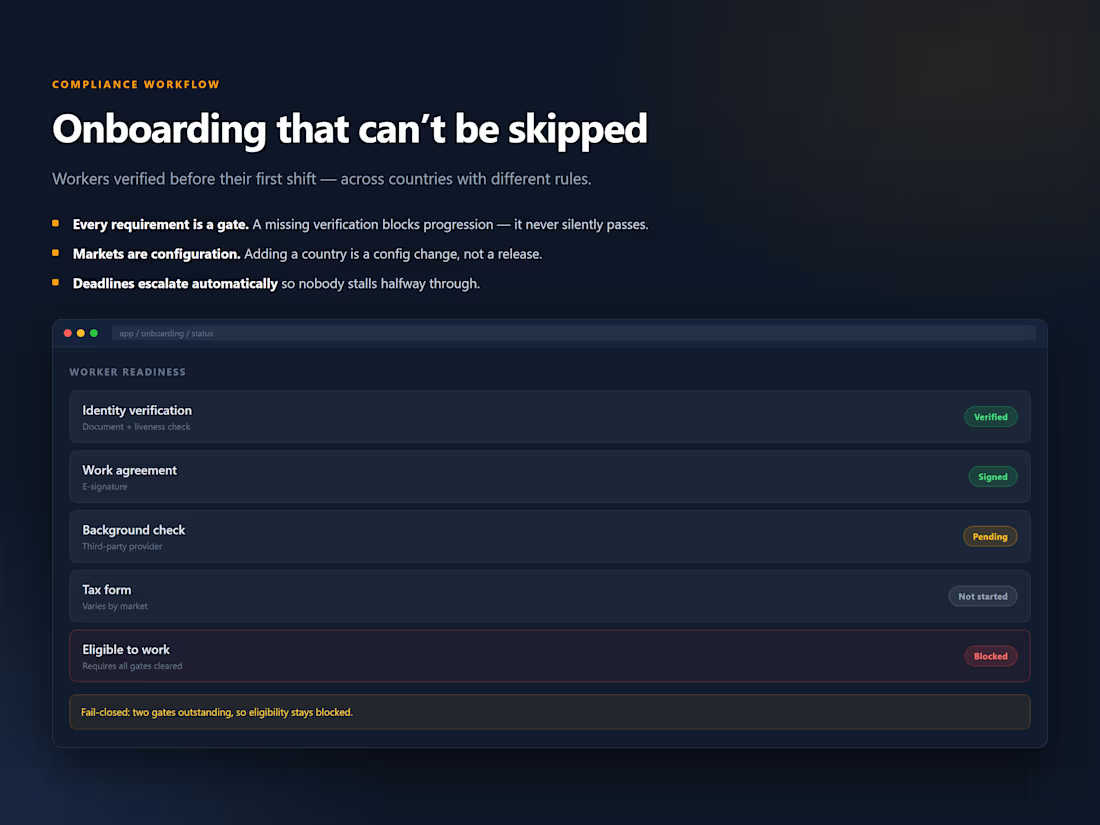
I designed a state machine where each requirement is an independent gate with
its own status. Requirements are configured per market rather than hard-coded,
so adding a country is configuration, not a release. Deadline logic with
automatic escalation stops workers stalling mid-flow.
The hard part was fail-closed design: a missing verification blocks progression
rather than silently passing. Vendor webhooks arrive out of order, so every
transition had to be idempotent and reconcile against provider status.
Delivered: schema and migrations, service layer, admin review UI, worker-facing
mobile flow.
1
16