
Aftab Rehan
Frontend Engineer & Next.js Specialist | Figma to Production



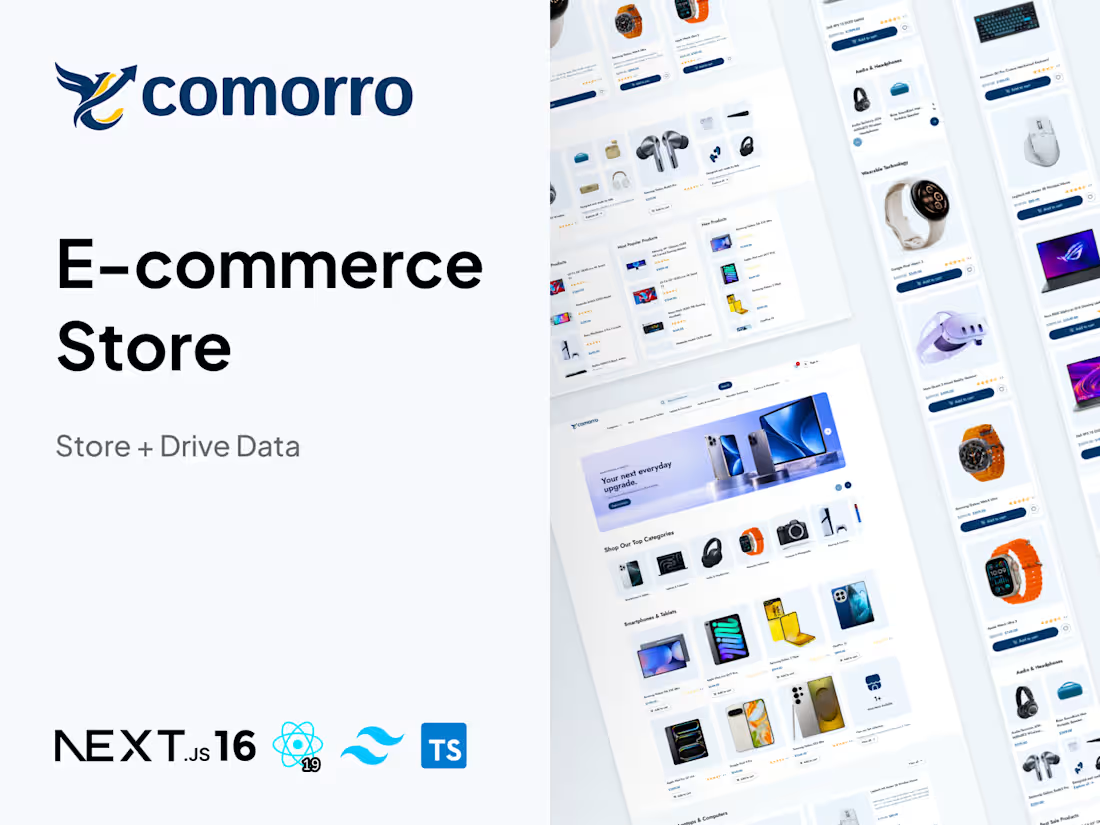
Comorro — Redesigning an e-commerce platform
I worked on Comorro for an external client through my role at SyncClouds. I redesigned the website from scratch and built the new interface in Next.js, giving it a consistent, modern light design.
My contribution
I handled both the desig:n and frontend implementation. I paid close attention to spacing, typography, and layout so the website matched the design across screen sizes.
The main challenge
The hardest part was managing API calls and keeping data available without requesting it repeatedly.
I used Redux to store and reuse data across the application, alongside Vercel’s SWR for fetching and caching API responses. This helped reduce unnecessary requests and made me think carefully about when to fetch fresh data and when to reuse what was already available.
I also built loading states and skeleton screens so users could see the shape of the content while it loaded, rather than being left with empty areas.
Project status
The design was completed, and the website implementation was almost finished. Payment integration was still pending when I moved on to another project at work.
The work shown here represents that stage: a completed redesign and a largely implemented website, with the payment flow unfinished.
What I learned
Comorro helped me get better at caching, managing API requests, and building thoughtful loading states. It also gave me more practice taking a design into a working application, where the details of how a page loads matter alongside how it looks.
2
318
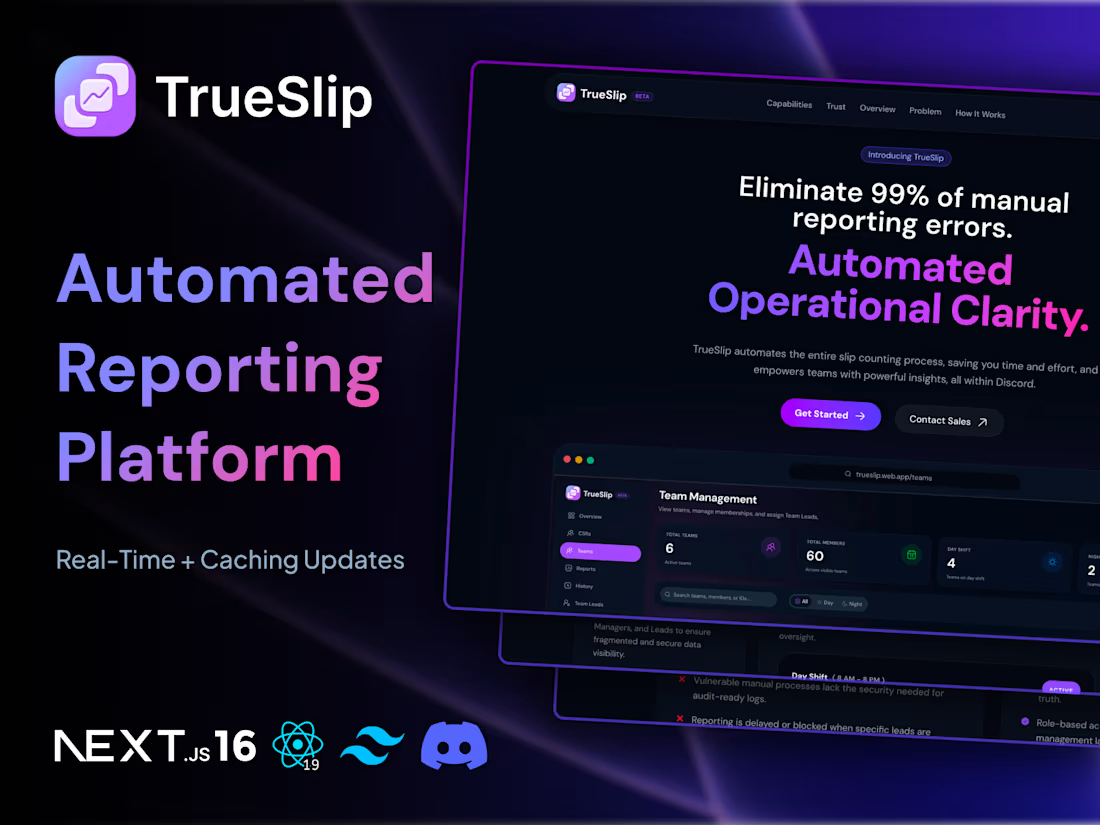
TrueSlip — Reporting Dashboard & Discord Workflow Automation
A reporting platform exploring automated CSR slip collection and classification through Discord, with a dashboard for managerial review. Development paused before completion.
Overview
TrueSlip began with a partly manual reporting process. Managers needed to review daily, weekly, and monthly customer support activity, and counting slips was part of that work. An earlier Chrome extension helped with counting, but the process still required manual steps.
I designed and developed the reporting website and landing page myself, working with Team Leads to understand what managers needed to review. The project explored how more of the collection and reporting workflow could be automated.
Approach and implementation
I moved the collection workflow toward a Discord bot that could collect messages and classify submissions. Rather than rebuild the classification logic from scratch, I reused functions from the earlier Chrome extension and adapted them to the new workflow.
The reporting dashboard brought submissions, verification statuses, and transaction histories together for review, connecting the collection process to the information managers needed to see.
Technical challenge
Keeping recurring automation costs low was a central design consideration. I used Firebase Functions to run the automation and Google Cloud Tasks to schedule it. Each completed task scheduled its next execution programmatically, allowing the process to continue without a separate Google Cloud Scheduler job.
This approach made operating cost part of the implementation decision, alongside the functionality of the automation itself.
Outcome and current status
TrueSlip received positive feedback, but I paused development and delivery before completion. It is not currently being used.
The work demonstrates experience designing reporting interfaces around Team Lead requirements, adapting existing classification logic to a Discord workflow, and building recurring automation with operating costs in mind. It also strengthened my understanding of how to connect a partly manual support process to a reporting system.
0
283
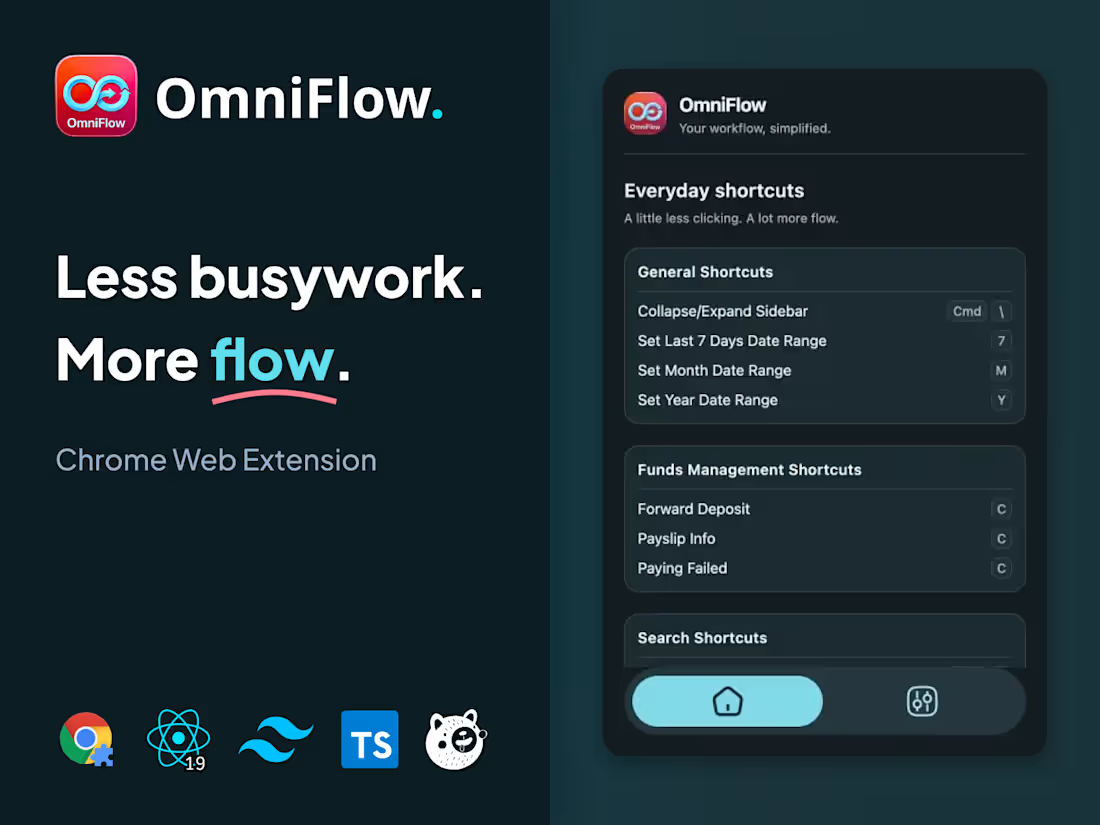
OmniFlow — Chrome Extension for Customer Support Workflows
A Chrome extension that simplifies repetitive CRM work with automatic formatting, data insertion, and keyboard shortcuts. Built for and still used by customer support representatives.
Overview
Customer support representatives were repeating the same small CRM tasks throughout the day: copying information, formatting it, selecting dates, and navigating between pages. I built OmniFlow to make those daily workflows easier and reduce manual effort.
I developed the extension independently, along with its website and documentation. Its features grew from the tasks CSRs needed help with in their existing workspace.
Approach and implementation
I started with plain JavaScript, then rebuilt the extension with React and CRXJS as its scope expanded. The most useful feature combined formatting with automatic data insertion, placing information into the required format without repeated copying and pasting.
One of the more demanding features was automating the CRM’s Ant Design date picker. Through repeated testing and adjustments to the programmatic click sequence, I turned a date-range selection process into a single keyboard action. I also built shortcuts for opening the transaction page and setting requested dates, alongside custom audio alerts and notification controls.
Results
OmniFlow remains in use by CSRs and has received five positive testimonials, including feedback from a customer support Team Lead and senior CSRs. Users described easier formatting, faster navigation, and a smoother daily workflow.
Within the team using the extension, we observed formatting-workflow mistakes drop to almost zero. This was a team observation rather than a formally measured error rate.
What this project demonstrates
OmniFlow shows my ability to translate everyday operational needs into practical browser tools, work through difficult interactions with an existing CRM, and refine features through repeated testing and user feedback.
0
253
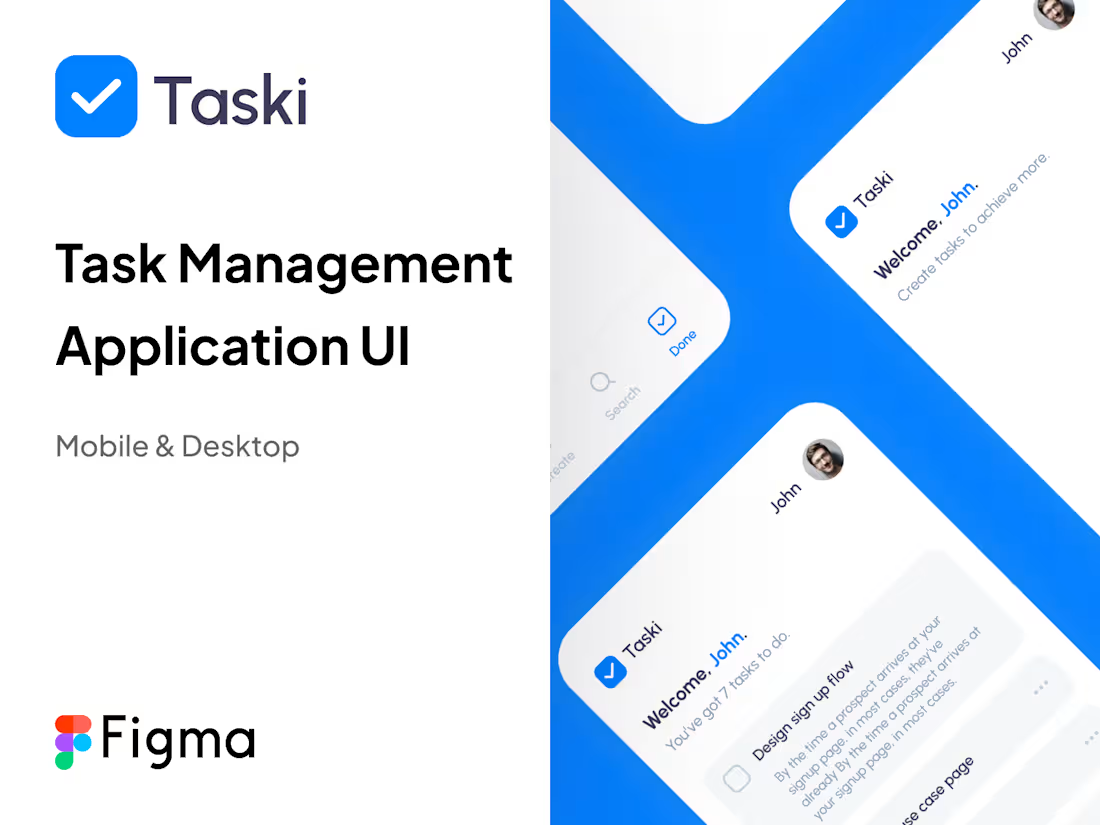
Taski — Keeping task management simple
Taski is a clean, user-friendly to-do app I designed in Figma as a learning project in 2023. It is one of my early designs, and it helped me understand how much value a simple, focused product can have.
I designed both the web and mobile experience using one consistent design language. The app focuses on the essentials: creating tasks and marking them complete. I kept the interface calm and distraction-free, using white space so users can focus on their tasks.
I also created the logo, reusable components, and responsive layouts with Figma Auto Layout. It was a fun project where I could experiment and turn a small idea into a complete product without adding unnecessary complexity.
I published Taski on the Figma Community, where it has been used and duplicated by almost 700 people. Seeing people use an early project like this encouraged me to keep creating.
1
2
243