
Abdullah Tariq
I build AI voice agents & automations that run 24/7.
New to Contra
Abdullah is ready for their next project!
Most real estate leads die in the first hour. Not because they're bad leads — because follow-up happens too slow.
That gap can run itself.
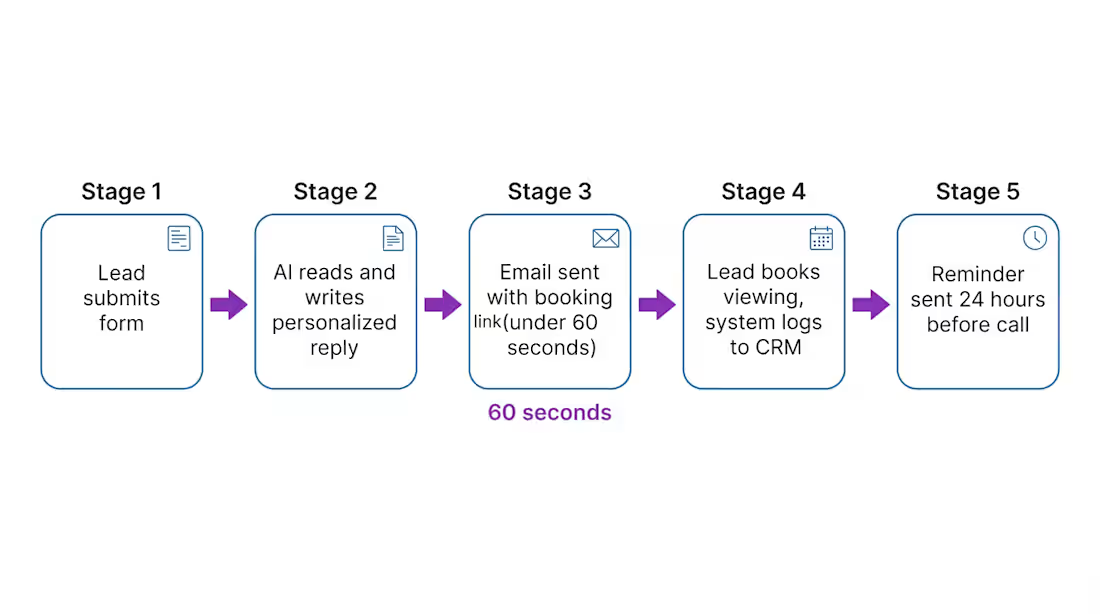
Lead submits a form. AI reads it, writes a personalized reply with property details and a booking link. Email goes out in under 60 seconds.
They book a viewing. The system logs everything to your CRM, updates the deal stage, schedules a reminder 24 hours before the call.
Zero manual steps between form and phone call.
The system uses n8n for orchestration, Claude for writing, Calendly for scheduling, and HubSpot for tracking. Every connection runs through APIs. Nothing breaks.
Most agencies lose leads in that first gap. This closes it to under a minute.
If you need this built, message me on Contra.
0
31
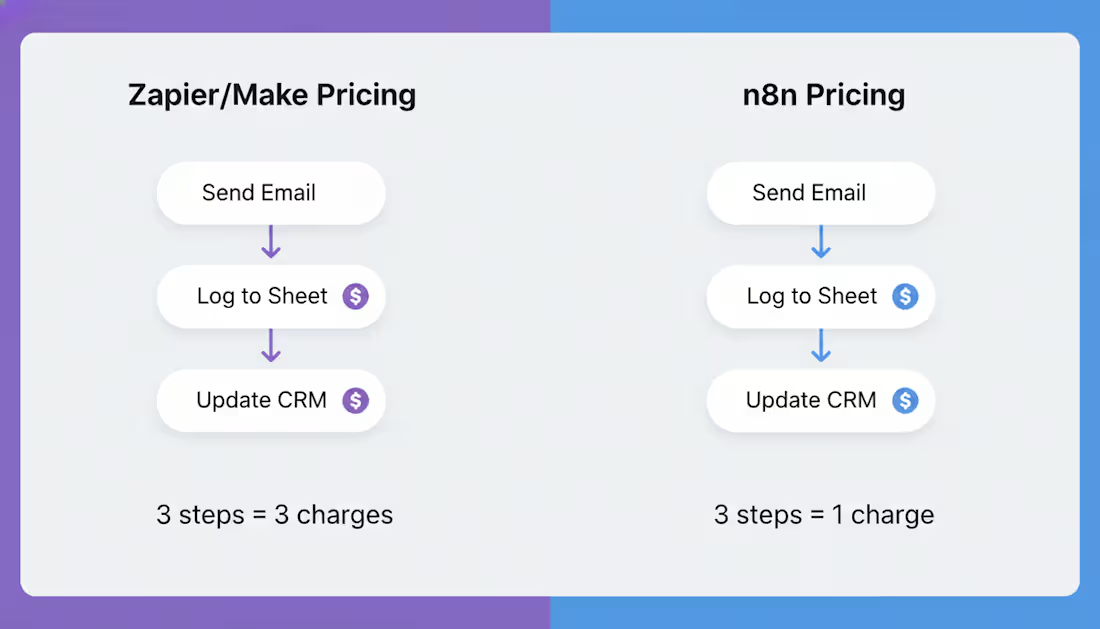
Most workflows have 5–10 steps. Every action inside counts as a billable event on platforms like Zapier and Make. That adds up fast.
n8n charges per workflow run, not per step. A 10-step workflow costs the same as a 2-step workflow. One execution, no matter how many actions happen inside it.
This matters when you're running automation at scale. The same workflow that costs $300/month on Zapier can run for $50/month on n8n.
Complexity stops being a cost problem. You can build smarter systems without worrying about usage creep.
I build custom n8n workflows for small businesses — lead routing, client onboarding, document processing, CRM syncs. The systems run lean and scale without surprise billing.
If you need this built, message me on Contra.
0
31
I built a system that writes, images, and schedules my LinkedIn + Contra posts every day automatically.
Here's exactly how it works:
Every morning at 8am it:
→ Searches the web for what's trending in AI and automation (Tavily)
→ Picks the best topic based on my past posts (no duplicates)
→ Researches it with a live deep-dive
→ Drafts two versions — one for LinkedIn, one for Contra — using Claude Sonnet 4.6
→ Generates a branded image card
→ Emails me a preview to review
→ Posts automatically once I approve
Total running cost: $1.57/month
The stack I used:
n8n (self-hosted workflow engine)
Claude Sonnet 4.6 — post drafting and rewriting
Tavily API — real-time trend research
Google Sheets — content calendar, idea bank, post log
HCTI — branded image cards
Kie AI — AI-generated visuals
Gmail OAuth2 — daily preview emails
The whole thing runs on Docker on my local machine. Zero monthly SaaS fees. I still review every post before it goes live — the system handles the research, writing, and scheduling.
If you're a founder or business spending hours on content every week, this is the kind of automation I build.
DM me if you want one for your brand.
2
1
122
Had a fun weekend building Lumina ⚡
Designed with Google Stitch.
I'm a developer who's been putting off rebuilding my portfolio for months. My question going into this challenge: could Stitch help me ship a real product — not just a mockup — in a single sitting?
So I built Lumina. Paste your GitHub URL, watch a fully animated portfolio stream onto the canvas in 60 seconds. Real repos, real data, live and shareable immediately.
How Stitch fit in:
I designed all five screens in Stitch before touching any code. The streaming canvas generation was the moment that changed everything — watching the portfolio build itself section by section made me realise: that's exactly what I want users to feel. The feature inspired the feature.
From there I worked almost entirely through in-place edits. Clicked the project cards, typed "stronger 3D hover with a glow matching the language color." Clicked the hero, typed "mesh gradient with a grid pattern." Changes in seconds. No re-prompting from scratch.
The motion work was where Stitch surprised me most — particle backgrounds, animated skill rings, 3D card hovers, all authored inside Stitch. Then one push to Netlify.
Features I used:
Streaming canvas generation
In-place AI edits via prompts + point-and-click
Import from existing website (used Vercel.com (http://Vercel.com) as style reference)
Native motion and hover states on HTML canvas
Netlify export
Feedback:
The streaming canvas collapses the describe → wait → judge → re-prompt loop into something that actually feels like designing. In-place editing is where I spent most of my time — clicking and describing beats tweaking properties in a panel every time.
Stitch didn't feel like a tool I was prompting. It felt like a canvas that understood what I meant.
Check it out:
Live site → https://grand-pixie-01f370.netlify.app
(https://grand-pixie-01f370.netlify.app)GitHub → https://github.com/AbdullahTariq74/Lumina-Stitch
3
1
102