
WenJu Hsieh
Psychology-trained UX researcher for AI-powered products
New to Contra
WenJu is ready for their next project!

Project title: TAIHU: User Research for a Conversational AI Knowledge Discovery Platform
(https://taihu.ntu.edu.tw/)Context: A multi-year research project at National Taiwan University to build a conversational AI platform that helps humanities scholars explore primary-source databases.
My role: As a research assistant, I drafted the interview guide, conducted the year-2 interviews, analyzed interview data to develop personas, supported journey mapping through qualitative coding, and analyzed survey data quantitatively.
Methods: Interviews, qualitative coding, personas, journey mapping, survey analysis.
Scale: Interviews with 10+ scholars; a year-2 usability study with 130+ participants (system trial, A/B testing of model responses, surveys, interviews); a year-3 two-week longitudinal study with 30+ participants.
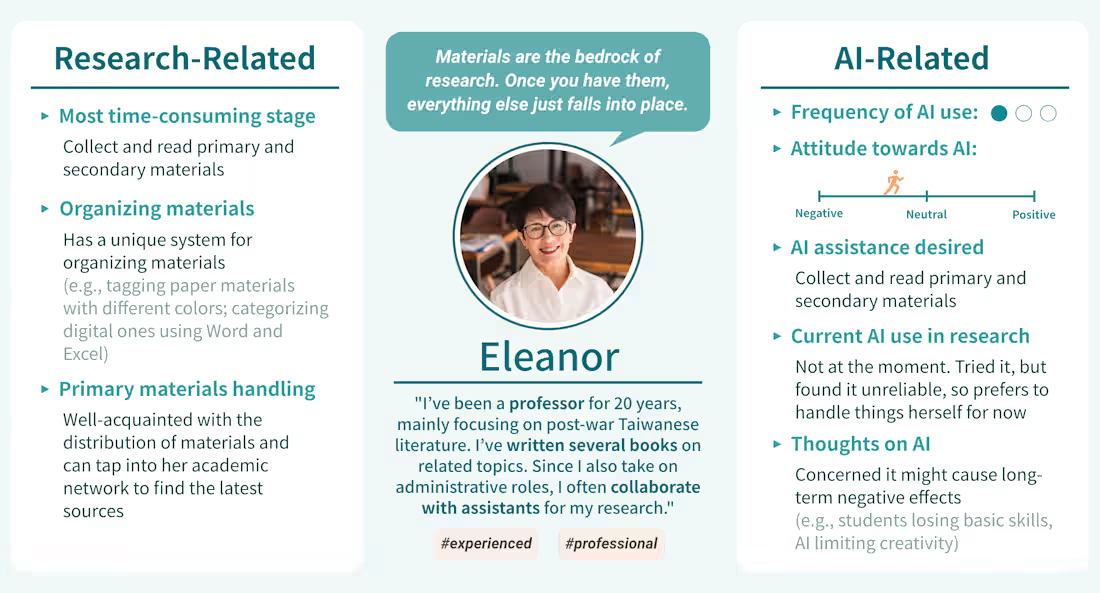
Outcome: The persona "Eleanor" represents an experienced humanities professor who uses AI rarely and holds a cautious attitude toward it, somewhere between negative and neutral. She finds collecting and reading primary and secondary materials the most time-consuming stage of her research, and that is where she would most want AI assistance. She has tried AI before but found it unreliable, so she prefers to handle things herself for now, and she worries about long-term effects such as students losing basic skills and AI limiting creativity. The persona captures a group of scholars who want help with materials but need to be able to trust it.
Design implication: For scholars like Eleanor, assistance with finding and reading materials needs to be reliable and verifiable before it can earn trust.
0
37

Project title: E-commerce Brand Preference and Inventory Strategy
Context: Analyzed real shopper data provided by e-commerce platform 91APP through a university course partnership. The brief was open, so our team had to find its own insights and decide how to use the data. We examined shopper behavior across three categories (health supplements, snacks, daily necessities) and sales channels to inform category management and inventory planning.
My role: Team project. I led team discussions, helped develop and narrow down our ideas, worked on the analysis, and prepared the final report. My analysis covered brand preference concentration (HHI, the Herfindahl-Hirschman Index), shopper segmentation into stable and diverse groups (K-means), and channel-level behavior comparisons across categories.
Methods and tools: Python, Excel. Regression, HHI, K-means clustering.
Outcome: Brand preference concentration split shoppers into stable (high concentration) and diverse groups, and their behavior varied strongly with product category, which pointed to category-specific marketing and operations strategies.
Customer value differs: stable shoppers bought less often but had a significantly higher average unit price than diverse shoppers (health supplements: NT$459.16 vs NT$367.64; personal care: NT$441.64 vs NT$241.77).
Categories where the two groups behave very differently (e.g., health supplements): recommended introducing new brands to diverse shoppers, and offering repurchase reminders and same-brand extension recommendations to stable shoppers.
Categories where both groups buy across many brands (e.g., snacks): recommended cross-brand recommendations supported by market basket analysis.
Categories dominated by one brand (e.g., oral care, where one brand held about 50% share in the data): recommended shifting the focus to precise inventory management, keeping choice available while lowering overstock cost and avoiding stockouts.
0
34
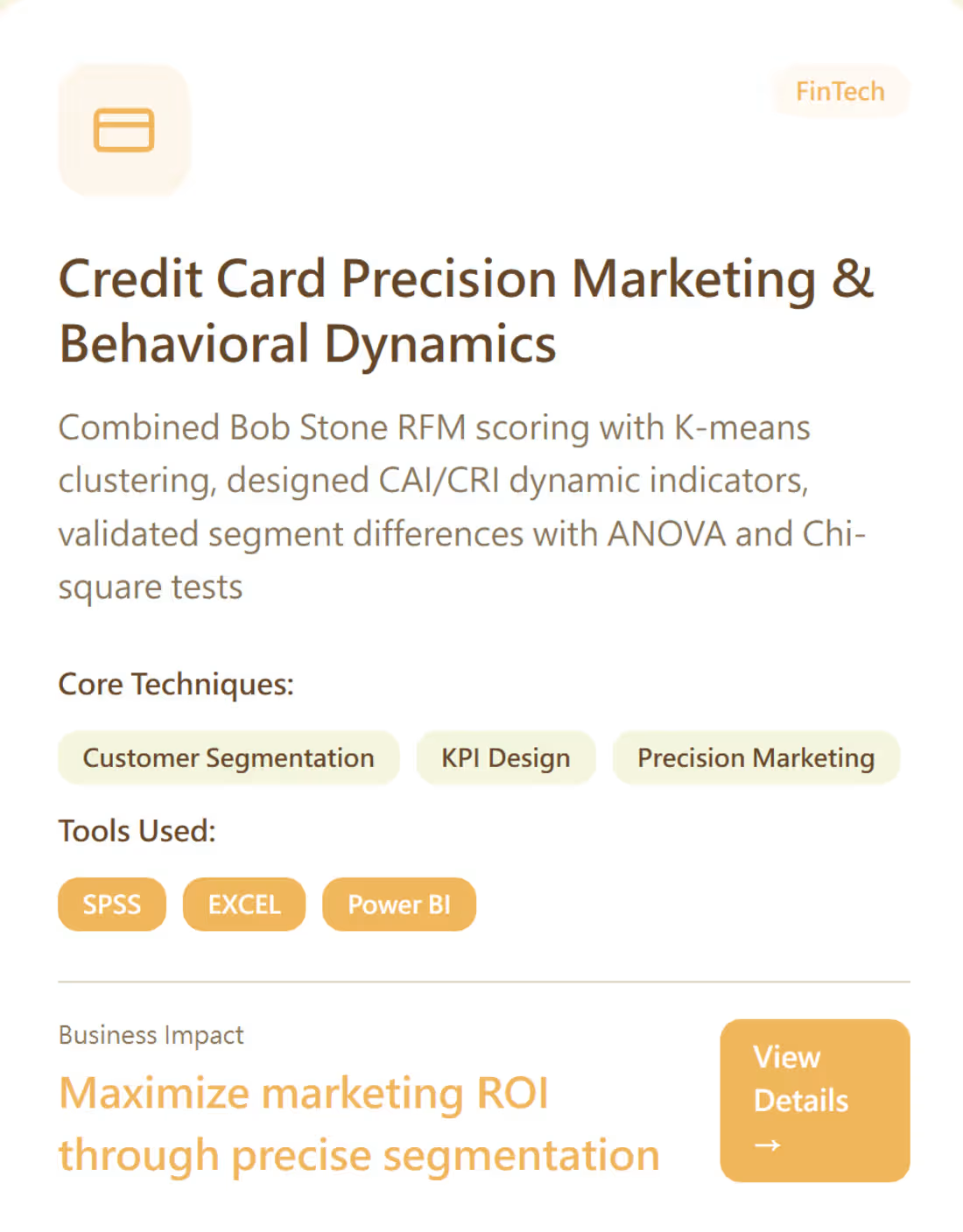
Project title: Credit Card Customer Segmentation and Behavior Analysis
Context: Analyzed 7,000+ credit card transactions from a course dataset, which I cleaned and preprocessed, to understand customer value and spending behavior and to design differentiated marketing and promotion strategies.
My role: Individual project. I built a structured dataset from the raw data, ranked customers with an RFM model, and designed two custom indicators for activity (CAI) and stability (CRI) to track behavior changes over time.
Methods and tools: R, SPSS, Excel. RFM, K-means clustering, ANOVA, chi-square tests, t-tests.
Outcome: A single demographic variable such as age or gender is a limited basis for targeting. Adding behavioral indicators made differences between customer groups visible over time and supported more precise resource allocation. For example, within the "about to churn" segment, customers aged 21-30 showed a declining CAI and a significantly stronger churn trend than other age groups. I recommended targeted campaigns for this group, such as partnering with apparel brands they prefer and offering rewards to raise card usage.
0
45
Project title: TAIHU: User Research for a Conversational AI Knowledge Discovery Platform (https://taihu.ntu.edu.tw/)
Context: A multi-year research project at National Taiwan University to build a conversational AI platform that helps humanities scholars explore primary-source databases.
My role: As a research assistant, I drafted the interview guide, conducted the year-2 interviews, analyzed interview data to develop personas, supported journey mapping through qualitative coding, and analyzed survey data quantitatively.
Methods: Interviews, qualitative coding, personas, journey mapping, survey analysis.
Scale: Interviews with 10+ scholars; a year-2 usability study with 130+ participants (system trial, A/B testing of model responses, surveys, interviews); a year-3 two-week longitudinal study with 30+ participants.
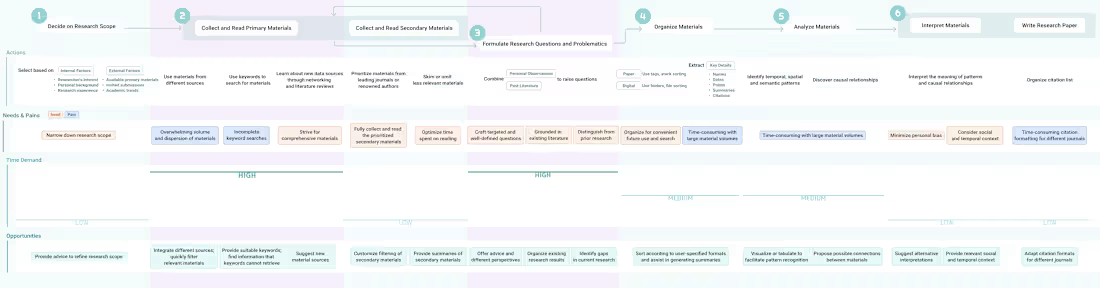
Outcome:The journey map charted scholars' research workflow in six stages, from scoping a topic to writing a paper, and captured their actions, needs, pains, and time demand at each stage. It showed that collecting and reading primary materials and formulating research questions are the most time-intensive stages. It also translated scholars' pains, such as overwhelming and scattered materials and incomplete keyword searches, into concrete opportunities for AI support, including filtering sources, summarizing materials, and identifying gaps in current research.
0
36