
Written by Ellie Official
I write the sentence that ends the search


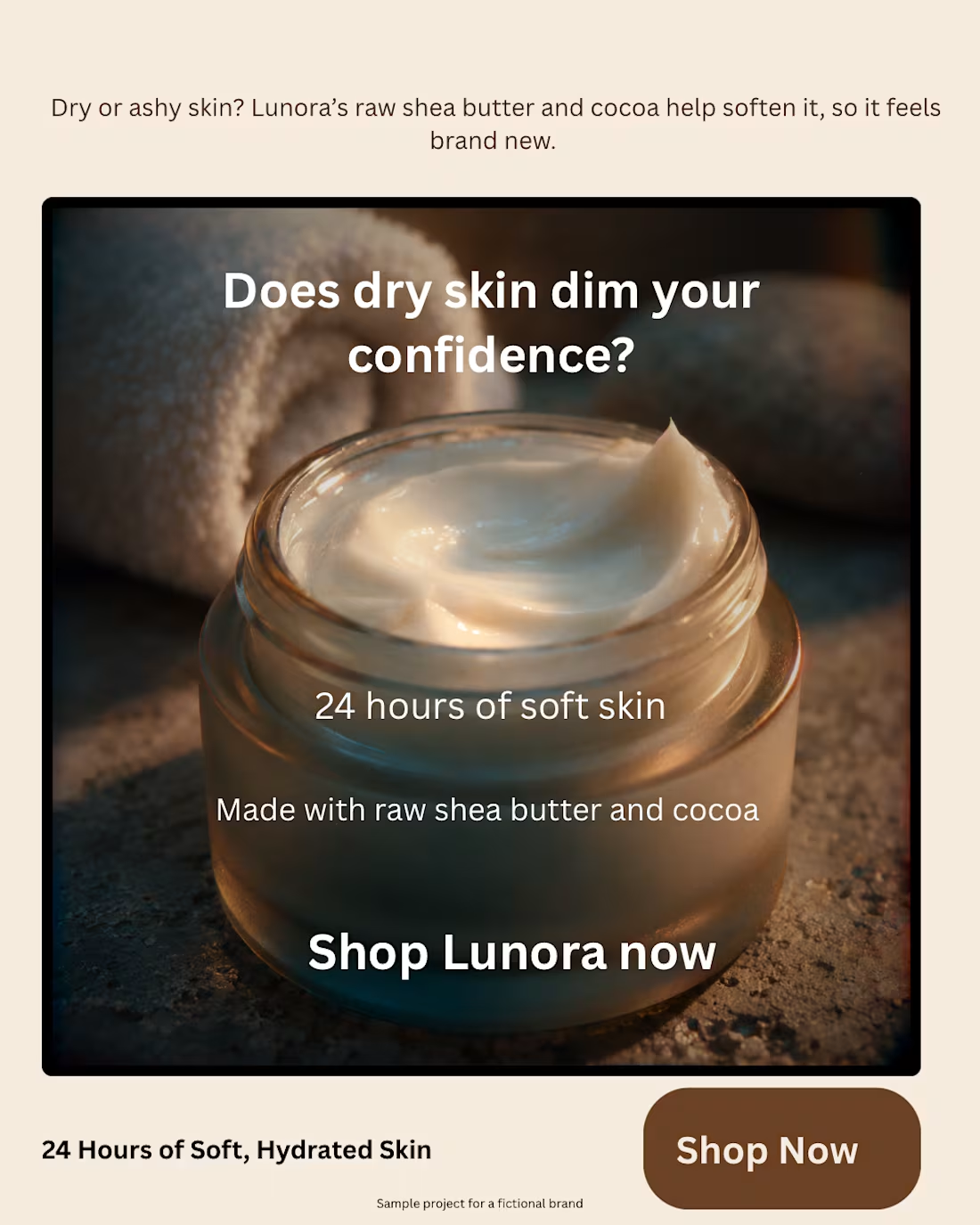
A sample Meta ad for Lunora, a fictional body care brand made with raw shea butter and cocoa.
The ad speaks to dry and ashy skin and promises 24 hours of soft skin. It includes the caption, the on-image copy, the headline and the call-to-action button.
Sample project for a fictional brand.
0
8
Most product descriptions I read online could belong to any brand. Soft, premium, perfect for every occasion. I read the whole thing and still don't know why I'd buy it.
When I write one, I start somewhere else. Before the features, I ask what the buyer is worried about.
Someone looking at a serum has probably bought a few that did nothing. Someone looking at leggings has had a pair fall apart or go see-through. That worry is what you answer first. For my Marrow serum sample, I opened with "The 10% serum for people who've stopped trusting 'brightening.'" It speaks to someone who's been let down before, so they keep reading.
Then I cut the adjectives. "Durable" and "high-quality" are claims anyone can make. A detail is harder to fake. Compare "Our leggings are durable and comfortable" with "The seams are where most leggings fail in month three. These are flat-locked and reinforced at every pivot point." The second one never says durable, and you believe it more. Fabric percentages, measurements, and ingredients do the same job.
I also run one check on every line: could a competitor paste this onto their own page? If yes, it goes. "Made with love" and "perfect gift" get deleted every time.
A word on search, since most people find a product by typing something into Google. Use the words a shopper would actually type, like "high-waist leggings" or "niacinamide serum," once in the title and once near the top. Any more than that and it sounds stuffed, and the reader notices before Google does.
Write for one person, too. "Built for the hour after your workout" sounds like it's talking to somebody. "Our customers love our products" sounds like nobody.
Then finish with something useful, like price, colors, or sizing. "Available in charcoal, cream, and sage" is a small line, but a nearly convinced buyer needs exactly that.
A good description reads like a friend who already answered your question. Be specific, and write to one person.
0
25
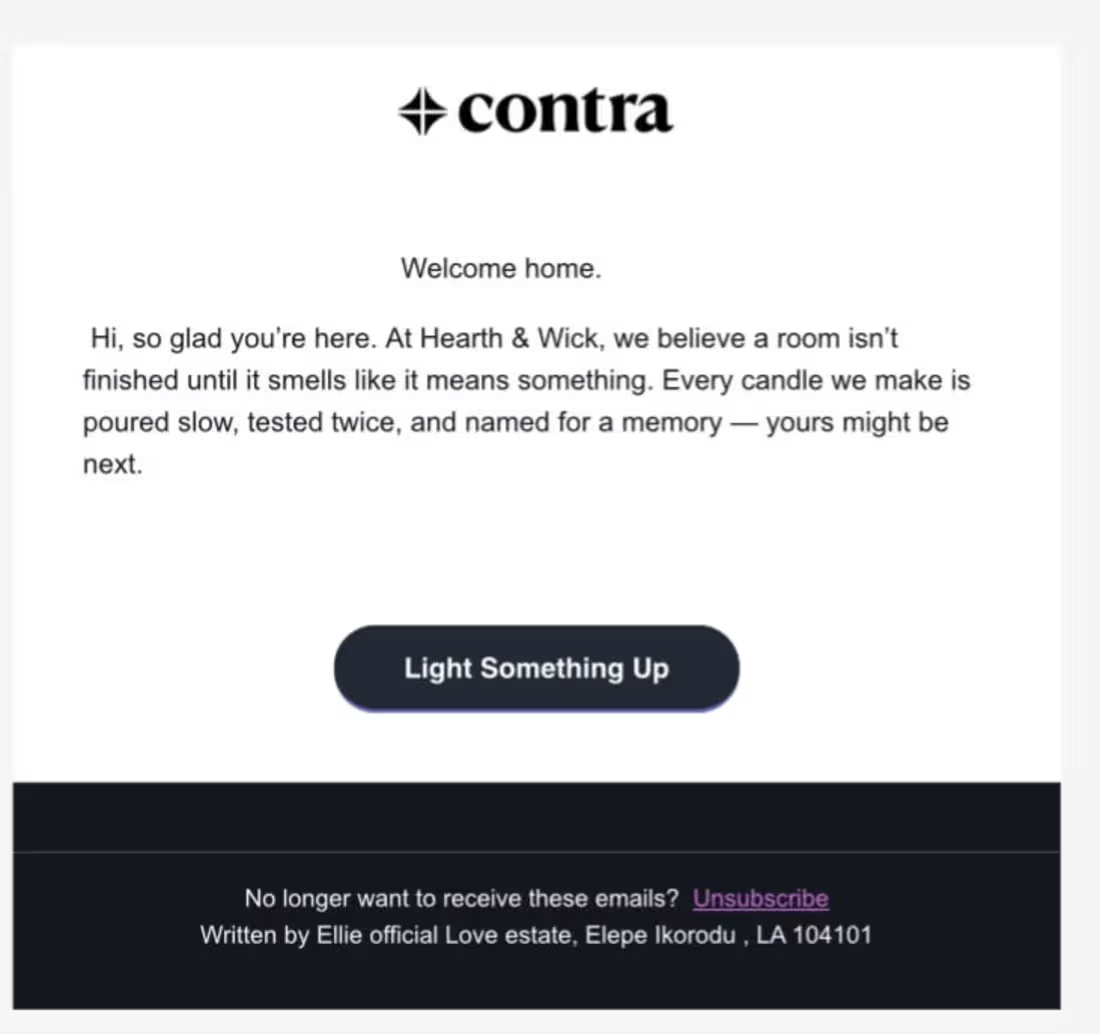
A warm, no-pressure welcome flow email written for a fictional home fragrance brand. Built and designed inside Klaviyo to demonstrate real email marketing platform experience — from subject line to CTA.
2
144
I love this project because it shows what really happens in professional copywriting: the same product, three completely different stories. This is a standing desk converter, and I wrote three variations for paid social ads targeting different buyers.
The first one speaks to anyone who's felt back pain at their desk — it leads with the problem and shows the solution. The second variation is for the specs-obsessed buyer who needs to know exactly what they're getting: weight capacity, dimensions, shipping time, everything. The third takes a lifestyle angle — it's for the person who loves their current desk but just needs an upgrade.
What makes this meaningful is that none of these are generic. Each one uses different psychological triggers, different word choices, different rhythms. Variation A is empathetic. Variation B is reassuring with authority. Variation C is warm and relatable.
This is what clients actually need: not one ad copy, but the ability to write the same product three ways so they can test which message resonates with which audience segment. A/B testing is everything in paid ads, and copywriting that can shift angles like this is what moves revenue.
1
232