
Vladimir Shumilov
B2B SEO & Content Strategist | CIS & Caucasus Markets
New to Contra
Vladimir is ready for their next project!


When we think about SEO growth, the conversation usually revolves around "more": more content, more backlinks, more keywords.
Working on complex B2B systems recently, I’ve realized that the most impactful growth often comes from "SEO Archaeology" - digging into the legacy layers of a product to find what’s silently draining the crawl budget.
For example, we often overlook how server-side conflicts (like Nginx/PHP-FPM misconfigurations) or outdated plugin remnants create 'digital noise' that search bots struggle to bypass. It’s not just a technical glitch; it’s a form of product debt that directly suppresses organic visibility.
By treating the website as a living product rather than just a marketing channel, we managed to stabilize the 'heartbeat' of the site, which led to a significant ranking recovery without adding a single new page initially.
I’m curious to hear from other strategists: How often do you find that the solution to a ranking plateau lies in the server architecture rather than the content strategy? And how do you communicate the value of this 'invisible' work to stakeholders who only want to see new blog posts?
2
25
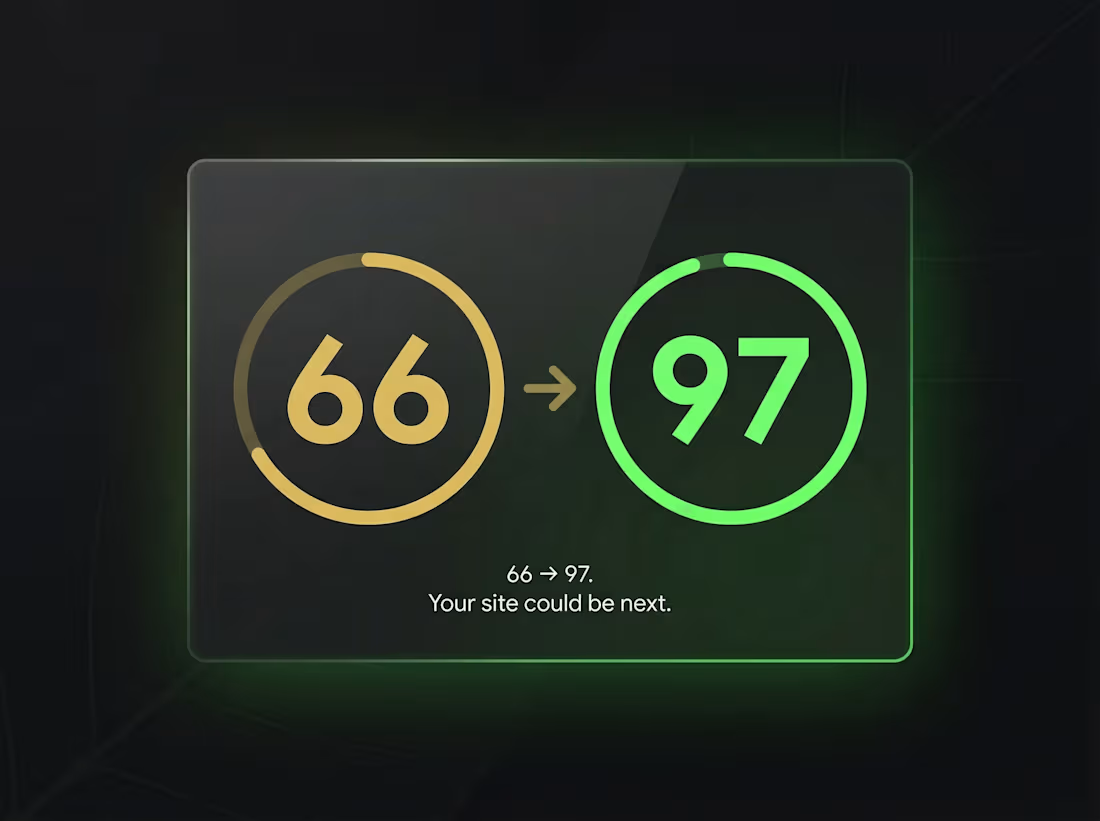
Mobile PageSpeed: 66 → 97. Same site. Same hosting. No redesign.
Here's what actually moved the score — on any CMS, in 2026:
Remove unused JavaScript and CSS. Most sites carry 50–70% of stylesheet rules that apply to nothing. Strip what isn't used, defer what isn't critical.
Convert images to AVIF. Not WebP. AVIF. 30–50% smaller at the same visual quality. Your LCP element is probably an image. This is the fastest single win.
Lazy load everything below the fold. One attribute. Measurable LCP improvement on almost every site.
Clean up font loading. Unused weights and character subsets add silent weight. Add font-display: swap to eliminate render-blocking.
Set proper cache headers. Static assets should be cached for at least a year. Most sites cache nothing or cache everything for 10 minutes. Both are wrong.
And one metric that matters more in 2026 than before: INP. Interaction to Next Paint is now a confirmed Google ranking signal. 43% of sites still fail the 200ms threshold.
Speed is not a luxury. It's infrastructure.
0
15
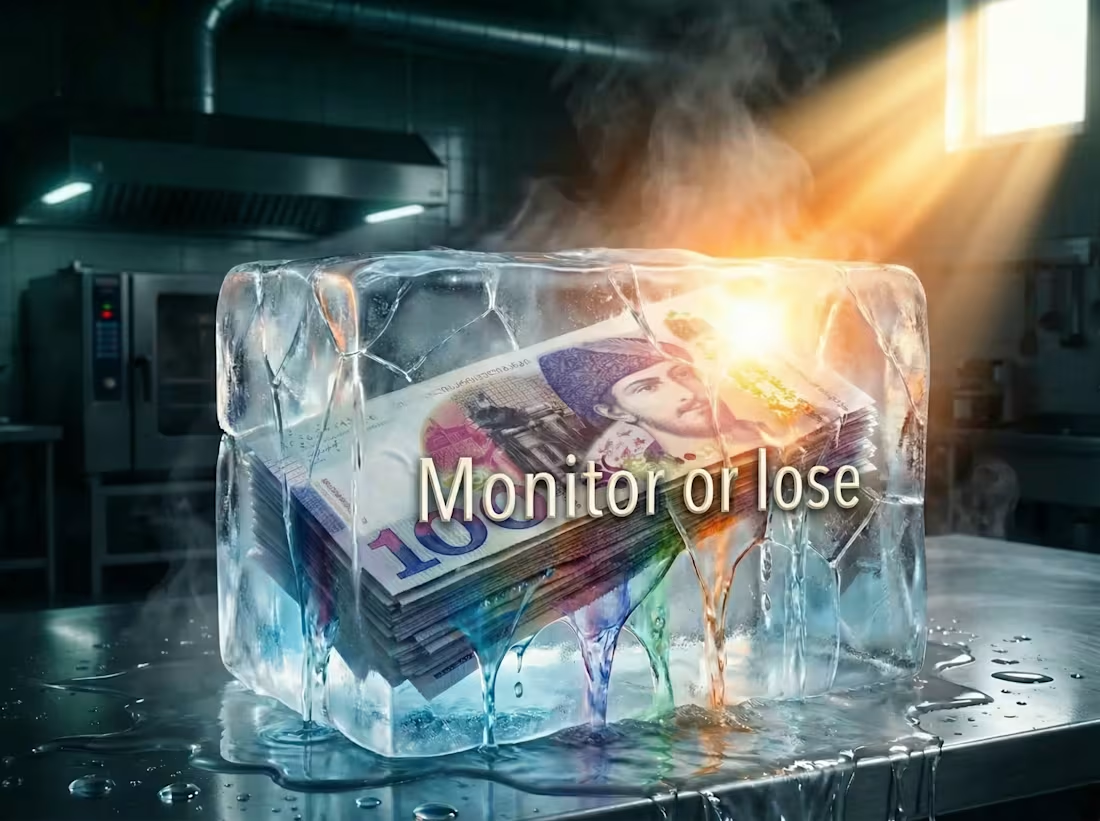
A restaurant refrigerator fails at night. By morning: 3,000–8,000 GEL in spoiled stock. An NFA fine of 3,000–5,000 GEL. Possible suspension.
The system that prevents this costs less than one incident.
For Innocom, we launched a new service line from scratch — end to end: market research, competitive analysis, regulatory landscape (HACCP requirements in Georgia), semantic core in three languages, full service page built and published, and a content strategy to support it.
First expert page in the niche. First to rank. Zero local competitors producing content on this topic.
This is what happens when SEO strategy meets a gap in the market.
0
18

Audited 24 dental clinic websites in Georgia. Mobile speeds, content strategy, technical health, Google visibility.
Only 1 out of 24 passed every check.
Most clinics were paying aggregators up to 25% per patient — while their own websites couldn't rank for anything.
Full research series published on LinkedIn.
0
23
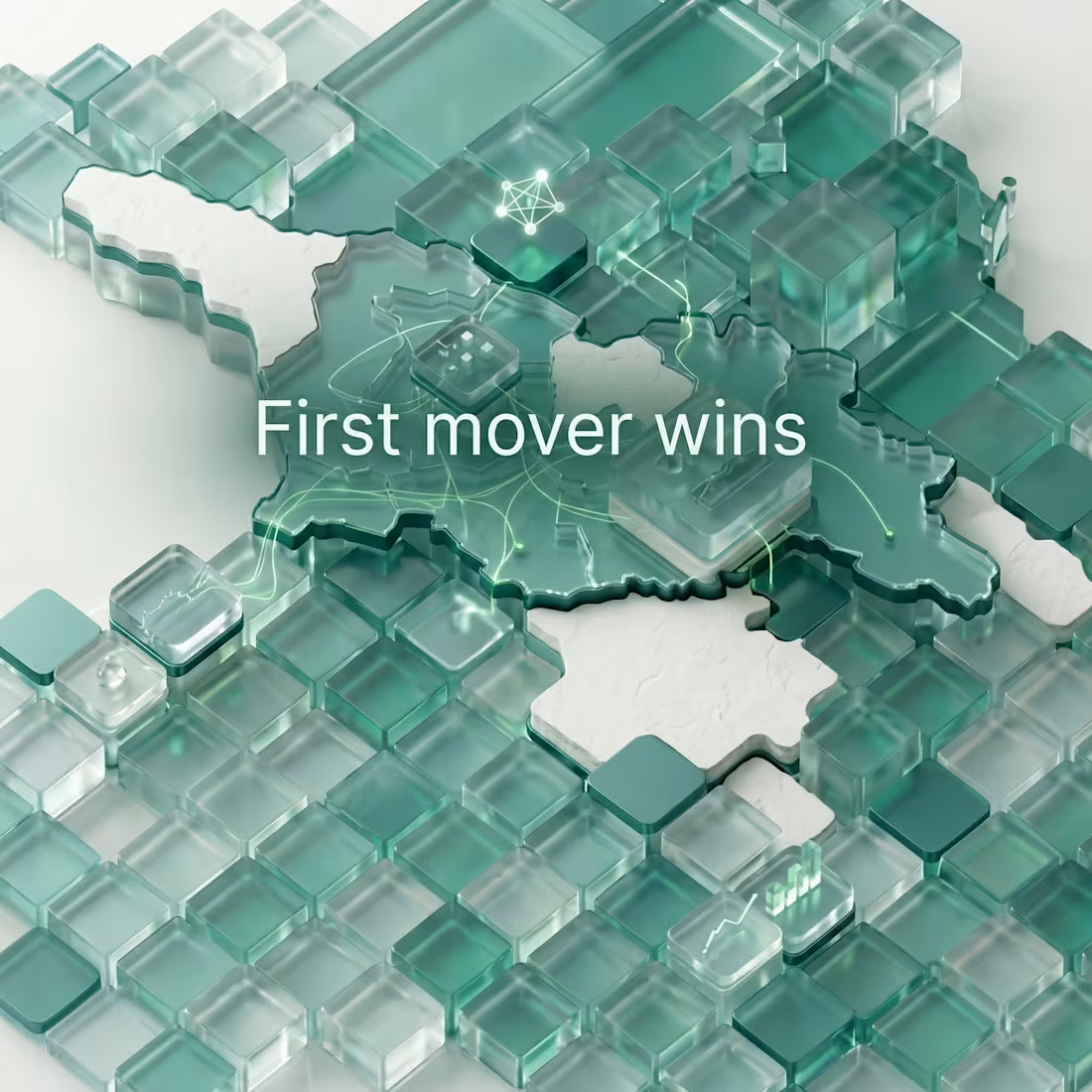
SEO and content strategy audit across 7 B2B niches in the Georgian market. Research revealed zero competitors producing expert content in IT infrastructure, cybersecurity, fiber optics, and related sectors. Resulted in first-mover positioning for the client through multilingual service pages, external publications, and technical SEO.
0
34