
VJ Sojitra
AI Engineer | Agentic Systems & Automation | MLOps
New to Contra
VJ is ready for their next project!


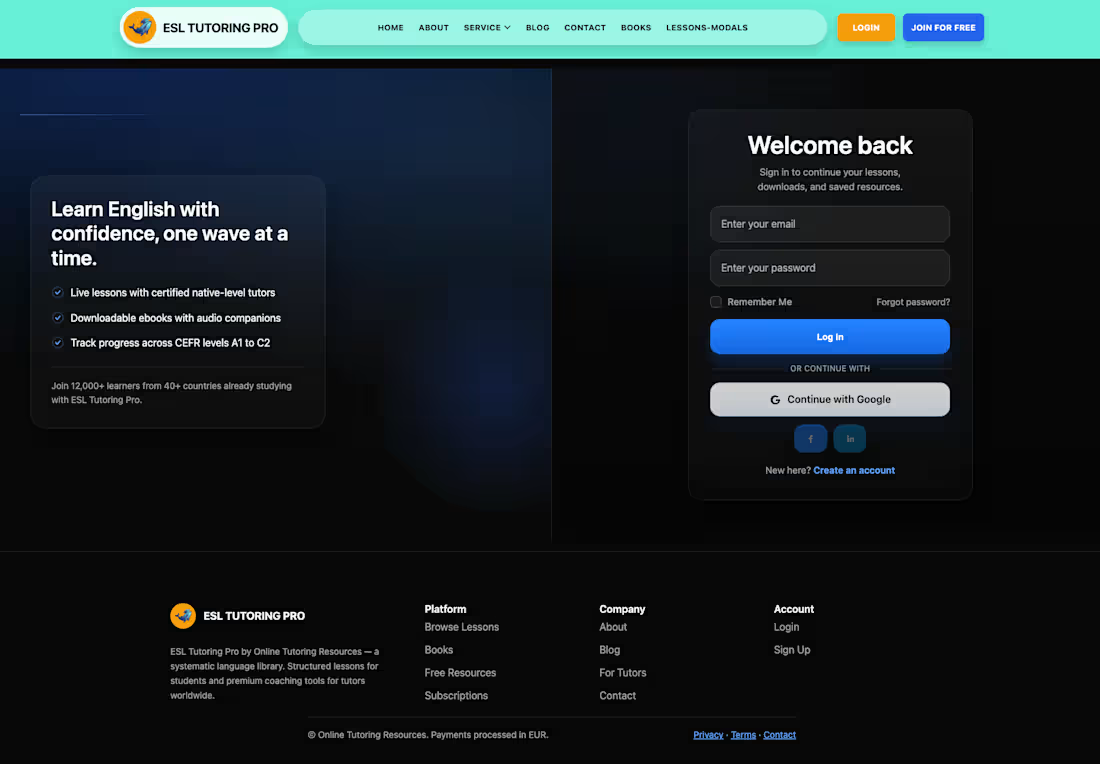
Last week I shipped a full learning platform: two audience journeys (students + tutors), subscriptions and digital-product sales, lead capture, blog — built solo, end to end.
1
163
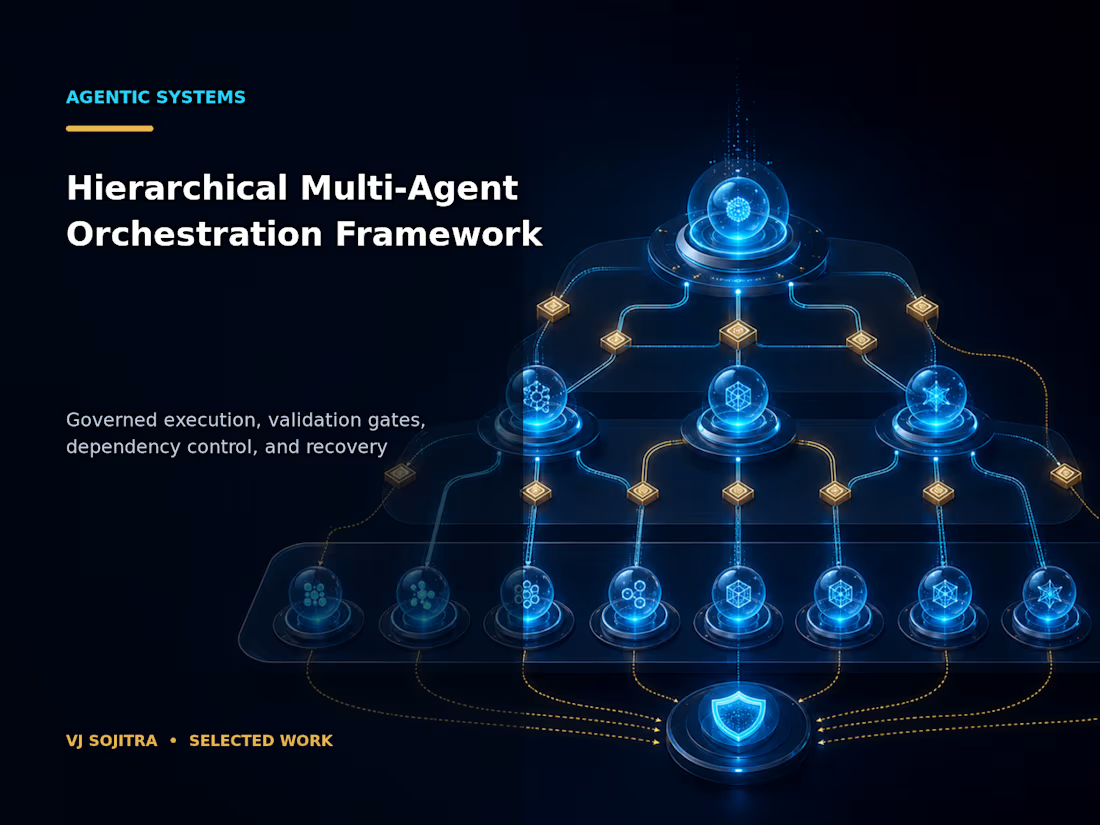
I designed and engineered a hierarchical multi-agent orchestration framework for coordinating complex AI-assisted engineering and analytical work.
A central orchestrator assigns bounded tasks to specialized builder, analyst, reviewer, and verification agents. Execution follows an explicit dependency graph, while shared evidence, acceptance gates, negative-path testing, and checkpointed state prevent agents from declaring work complete without proof.
The framework supports targeted retries, rollback, and recovery from the first incomplete node instead of restarting an entire workflow. It also separates implementation from independent review, reducing the risk of an agent validating its own unsupported conclusions.
This independent engineering project demonstrates how agentic systems can be made more controlled, observable, and recoverable. The architecture and control interface are representative views of the framework rather than screenshots containing private execution data.
0
103
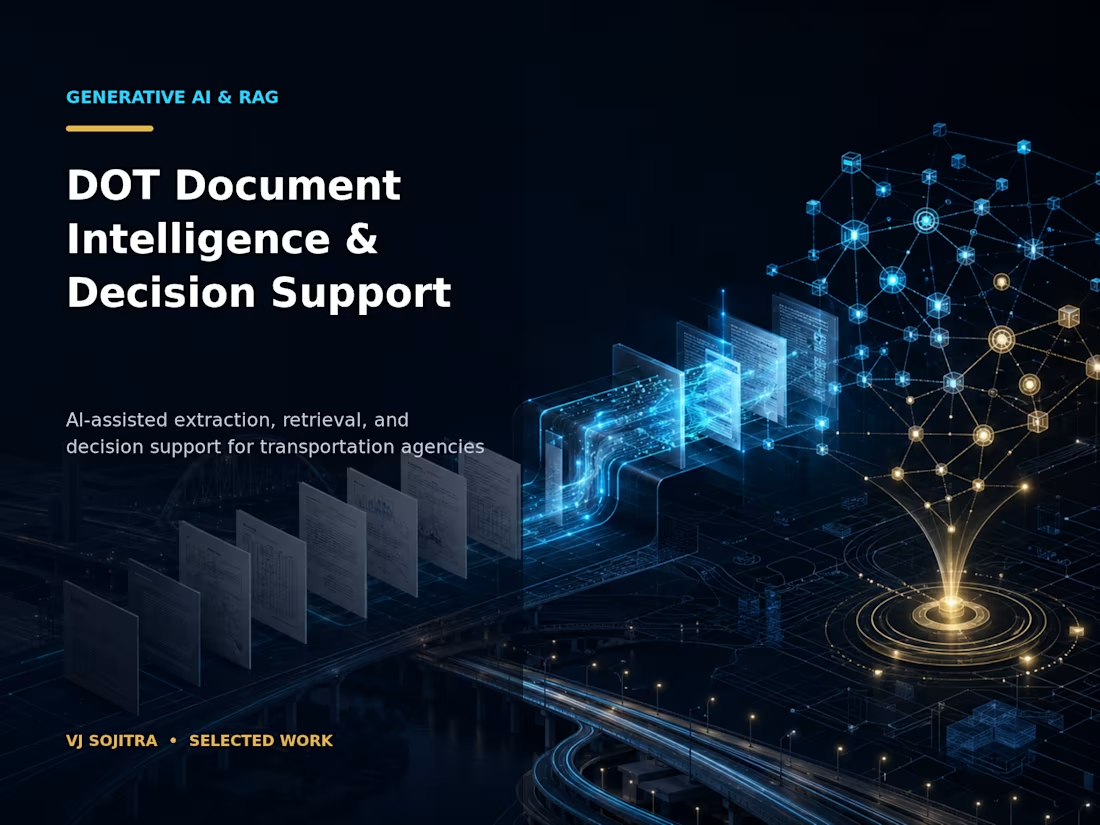
I developed an AI-assisted document-intelligence workflow for transportation-agency teams working with large collections of reports, standards, studies, scanned documents, and project records.
The system combined document extraction, OCR, structured metadata, semantic retrieval, knowledge relationships, and grounded LLM responses. Analysts could ask questions in natural language, review the supporting evidence, inspect source citations, and approve, revise, or reject generated findings.
The workflow was designed around human review, access controls, traceability, and safe failure rather than treating an LLM response as an unquestionable answer. Related work reduced decision time by approximately 60% and improved data accuracy by approximately 35%.
The displayed architecture and interface are sanitized representations and contain no client documents, production data, proprietary prompts, or confidential system details.
0
156
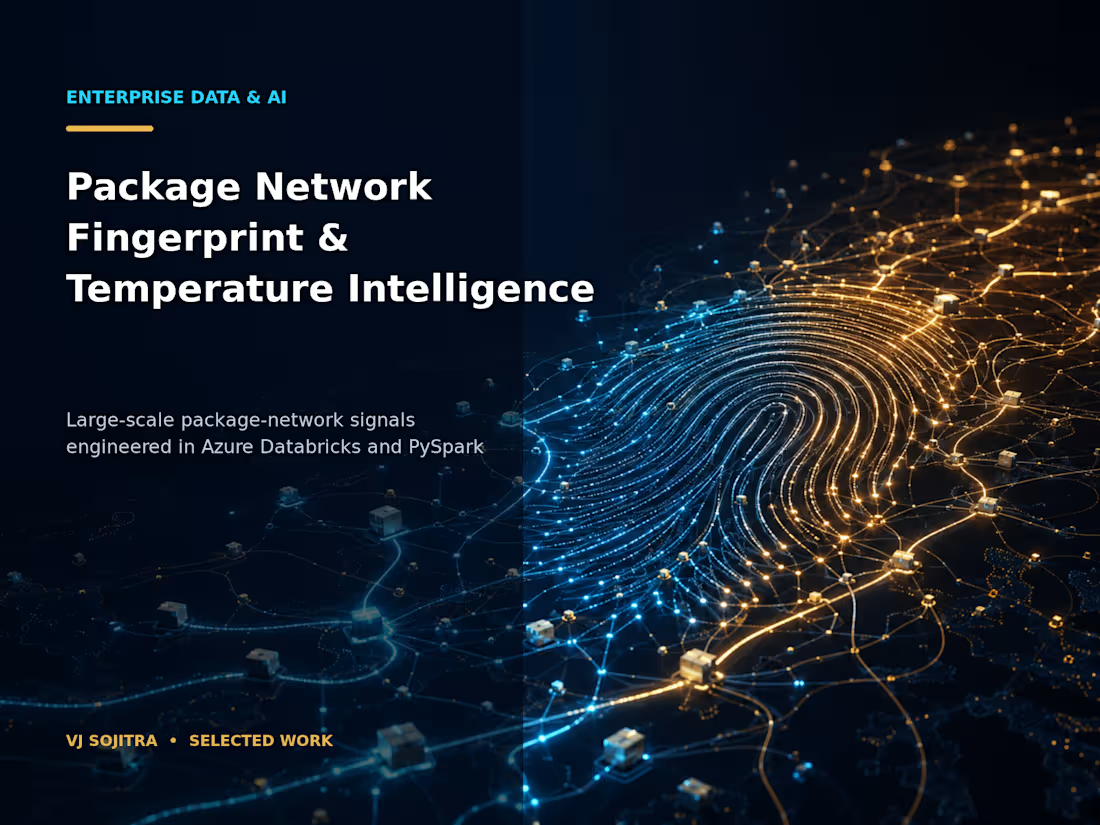
I engineered a large-scale package-network intelligence pipeline using Azure Databricks and PySpark. The system joined approximately 4.5 billion historical records and transformed them into reusable fingerprint signals covering package movement and network behavior.
I developed time-windowed feature logic using native Spark expressions rather than Python UDFs, preserving distributed performance at scale. The pipeline produced an approximately 200-million-row fingerprint dataset and a 22-million-row operational output that classified package activity along a cold-to-hot temperature scale.
The resulting signals supported downstream monitoring, prioritization, and operational analysis. The architecture shown here is a sanitized representation; client identifiers, proprietary schemas, infrastructure paths, and business rules have been removed.
1
244