
Victor Goico
Full-Stack Web Developer building modern UIs | Fintech & AI
New to Contra
Victor is ready for their next project!
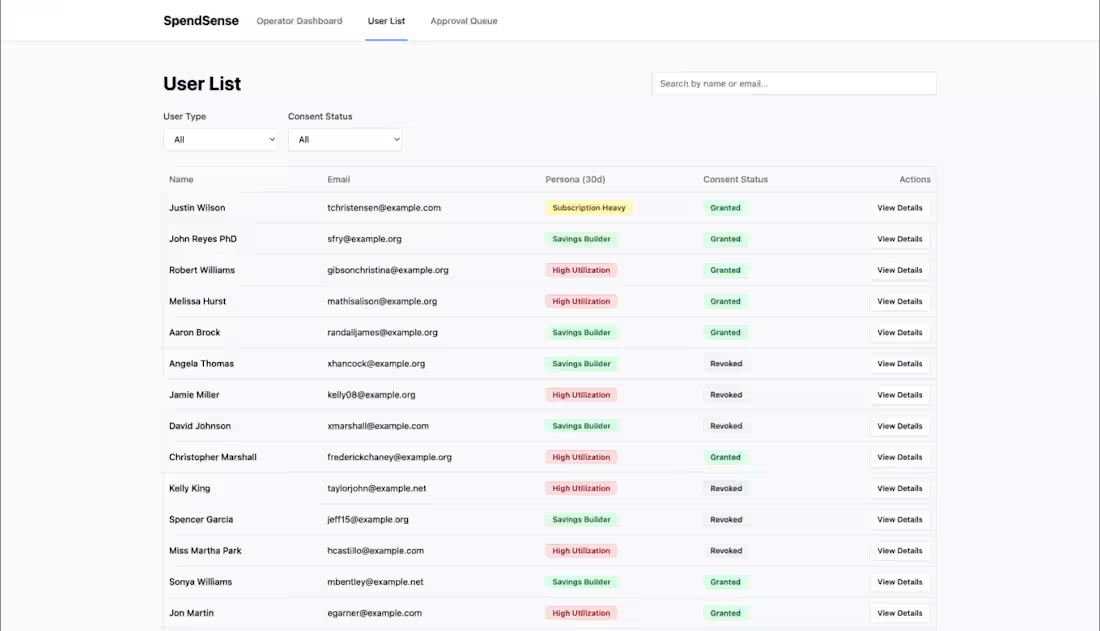
SpendSense is another powerful real world use case of how to superpower existing applications using AI. In this case, I built an AI-powered recommendation engine. After being granted permission, the system outlines a "persona" based off of a user's spending, saving, and investment habits.
The system can then recommend relevant products OR learning resources that fit the exact usecase. A good saver might want to learn about investing. Someone with lots of subscriptions might want a subscriptions manager! The recommendations are tailored to each user's unique financial situation and goals.
Considering the reasoning required for accurate recommendations, I used GPT-4o-mini to power the recommendation engine. Persona assignment uses rule-based logic. All deployed to a Python FastAPI backend using OpenAI's SDK.
2
20
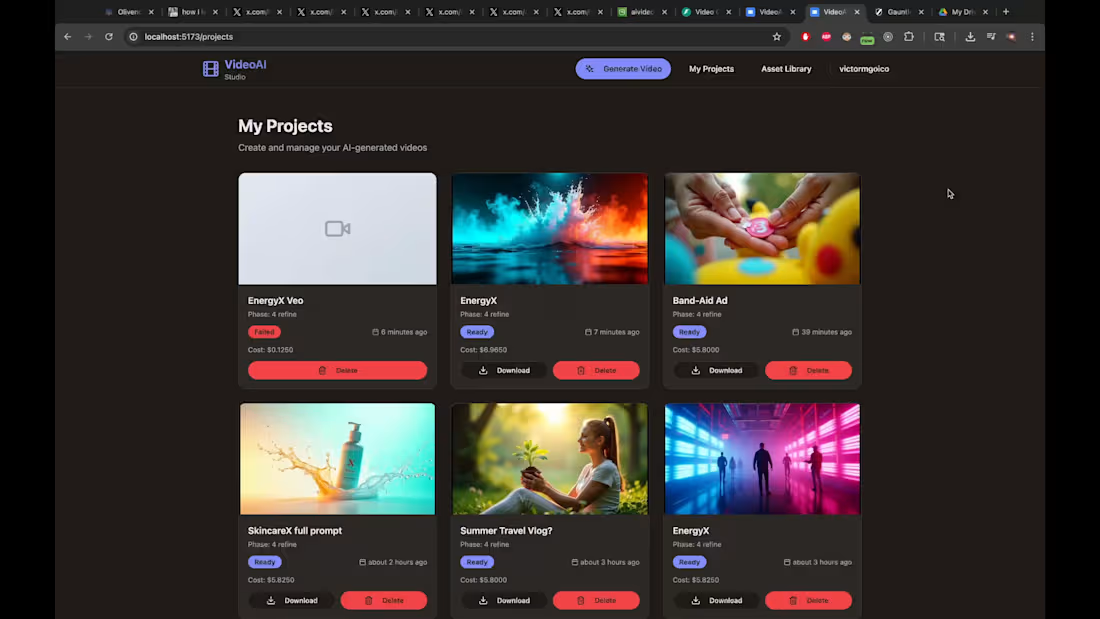
Imagine if a single, simple (or long and complex as needed!) prompt generated TV-ready video advertisements within 3-4 minutes. That's our VideoAI Studio! With optional product/logo reference image upload, we implemented a multi-step video generation pipeline.
Models used include GPT-4o-mini for reasoning steps (checking for relevant assets step, planning step), GPT-4 Turbo for image analysis, Flux Dev for image gen, and Flux Dev-ControlNet for image gen with reference asset. All deployed using Python FastAPI, and celery + redis task queues to scale for multiple videos and multiple users.
1
27
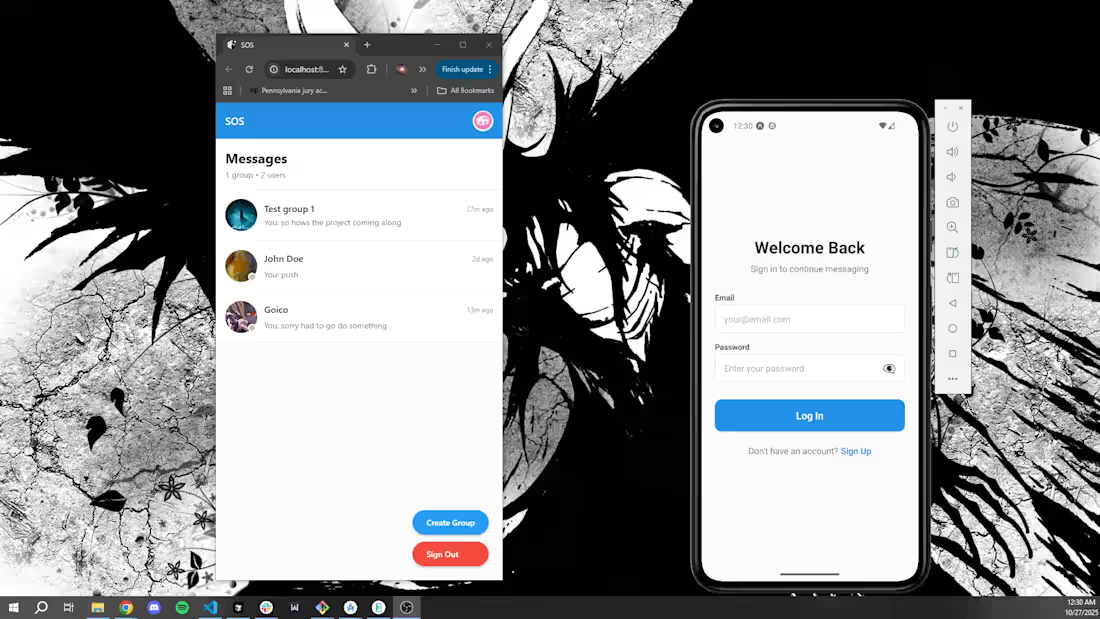
Viewable Remote teams drown in chat messages, and things falling through the cracks is just an accepted fact of life. SOS helps by providing AI-powered summarization, key decision and action item extraction, and semantic search (keyword weight + vector embedding comparison). It's a React Native Expo app built with remote workers in mind.
I used GPT-4o-mini for all LLM functionality, and OpenAI Text Embedding 3 Small for semantic search capabilities, allowing users to find relevant messages even when they don't remember the exact keywords used.
1
36
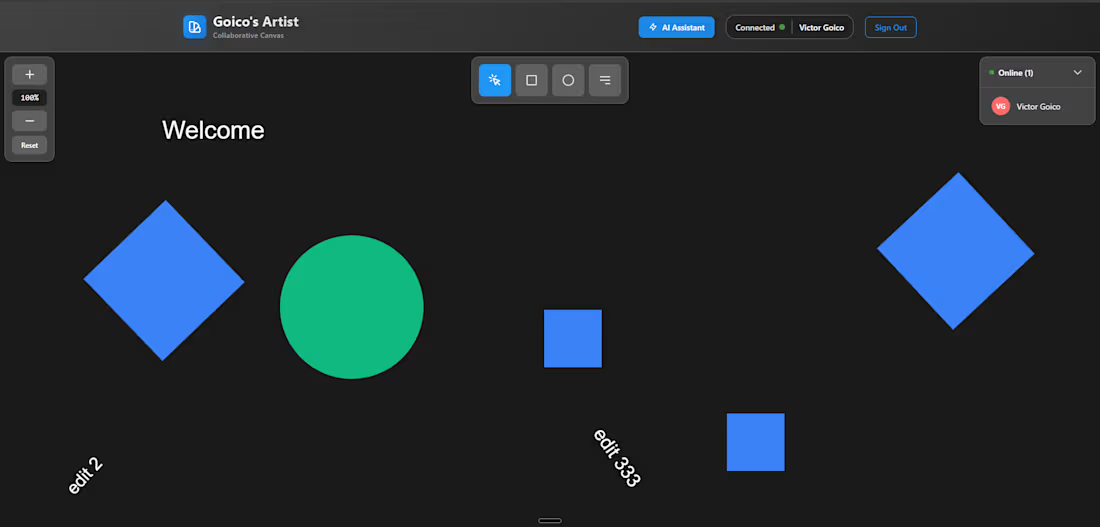
A collaborative canvas tool similar to Figma.
It features real-time database sync for user presence, object selection, cursor movement, and object dragging. The rest of the persisted data is handled by the Firebase store, ensuring seamless collaboration between users.
I also used this project to learn how to build my first agent. It's very basic, using the OpenAI SDK and GPT-4 Turbo to assist with object creation and even login forms! The AI assistant can help users create complex shapes and designs with simple natural language commands.
1
27