
Hikari Builds
AI SaaS Engineer | MVPs, Agents, Automation, Next.js, Python
- 1x
- Hired
- 7
- Followers


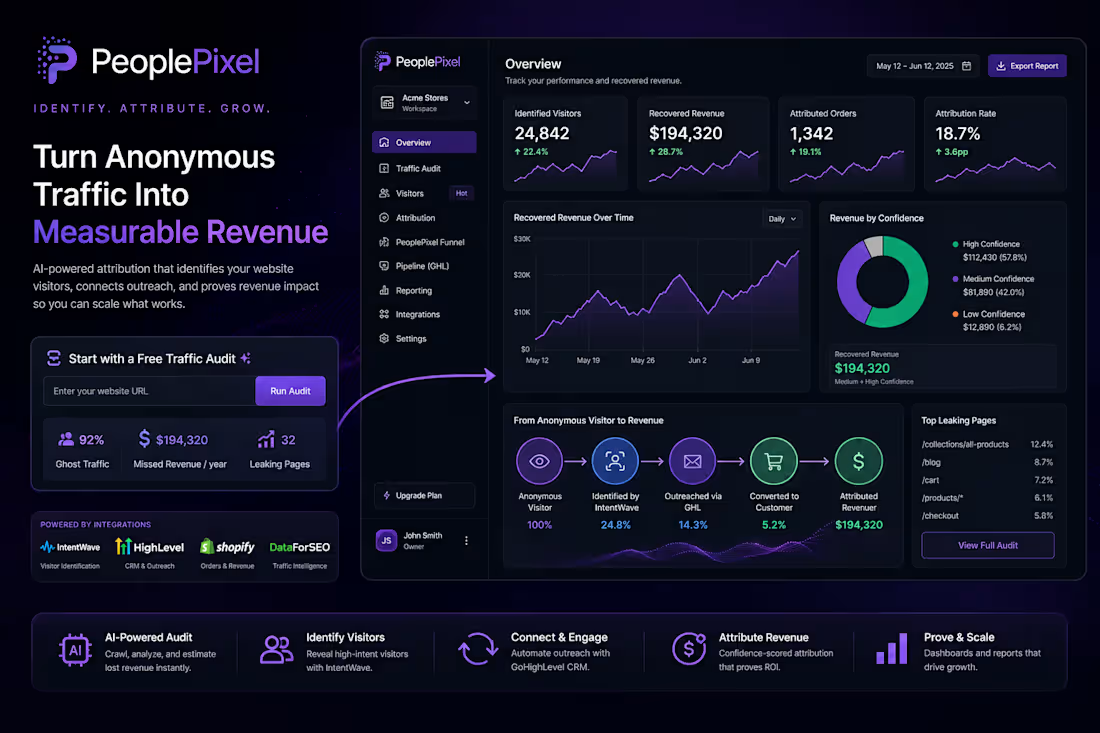
AI Marketing Attribution SaaS with CRM & Revenue Tracking
I built PeoplePixel, an AI-powered SaaS platform designed to help businesses turn anonymous website traffic into identifiable leads and measurable revenue.
The core problem was that most websites lose the majority of their visitors as “ghost traffic” without any way to identify, follow up, or measure impact. PeoplePixel solves this by combining visitor identification, CRM integration, and revenue attribution into one unified system.
I designed and developed the platform end-to-end using Next.js, TypeScript, and Supabase, building a multi-tenant SaaS with authentication, team workspaces, billing, and secure data access using Row-Level Security.
A key part of the product is the free traffic audit funnel. Users can enter their website URL to receive an automated analysis of missed revenue opportunities using Firecrawl and DataForSEO. This creates a strong entry point into the platform and drives conversion into the full product.
On the data side, I integrated IntentWave for visitor identification and GoHighLevel as the CRM layer, syncing contacts, outreach activity, and purchase data. I then built a custom attribution engine that matches visitors to revenue using confidence-based scoring derived from email, SMS, and call engagement signals.
The system runs on background pipelines using scheduled jobs and webhook ingestion to continuously process attribution data and update reporting in near real-time.
The final product provides a complete ROI dashboard, including visitor insights, attributed revenue, funnel analytics, and pipeline performance, enabling businesses to clearly understand and recover lost revenue.
This project highlights my ability to design and build complex SaaS platforms that combine data pipelines, third-party integrations, and product-driven user experiences into a cohesive system.
2
231
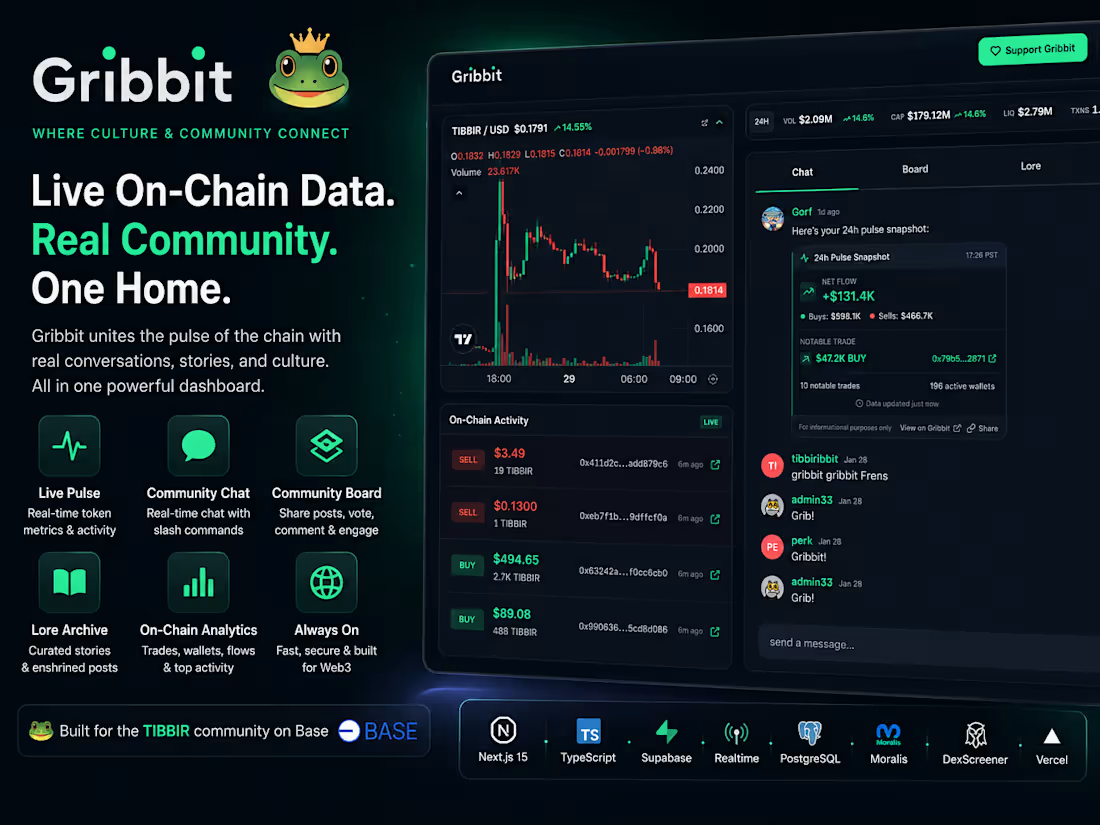
Gribbit – Real-Time Crypto Community Platform with On-Chain Analytics
I built Gribbit, a full-stack crypto community platform that unifies on-chain data, real-time interaction, and social features into a single dashboard.
The goal was to reduce fragmentation in crypto communities by combining price tracking, discussions, and content discovery into one cohesive experience.
I developed the platform end-to-end using Next.js, TypeScript, and Supabase. It includes live token metrics, real-time chat, a community board, and curated content in a responsive, high-performance app.
For on-chain data, I integrated Moralis Streams to process live swap activity into structured data powering trade feeds, wallet tracking, and Pulse dashboards. I also used DexScreener for real-time price, liquidity, and volume data.
On the community side, I built real-time chat with Supabase Realtime and a Reddit-style board with posts, comments, voting, and moderation. I also created a “lore” system for curating and preserving important content.
The platform emphasizes user experience with a responsive dual-layout dashboard, smooth animations, and performance optimizations for handling live updates.
This project demonstrates my ability to build complex, real-time, full-stack applications that integrate external data and deliver a polished user experience.
2
2
294
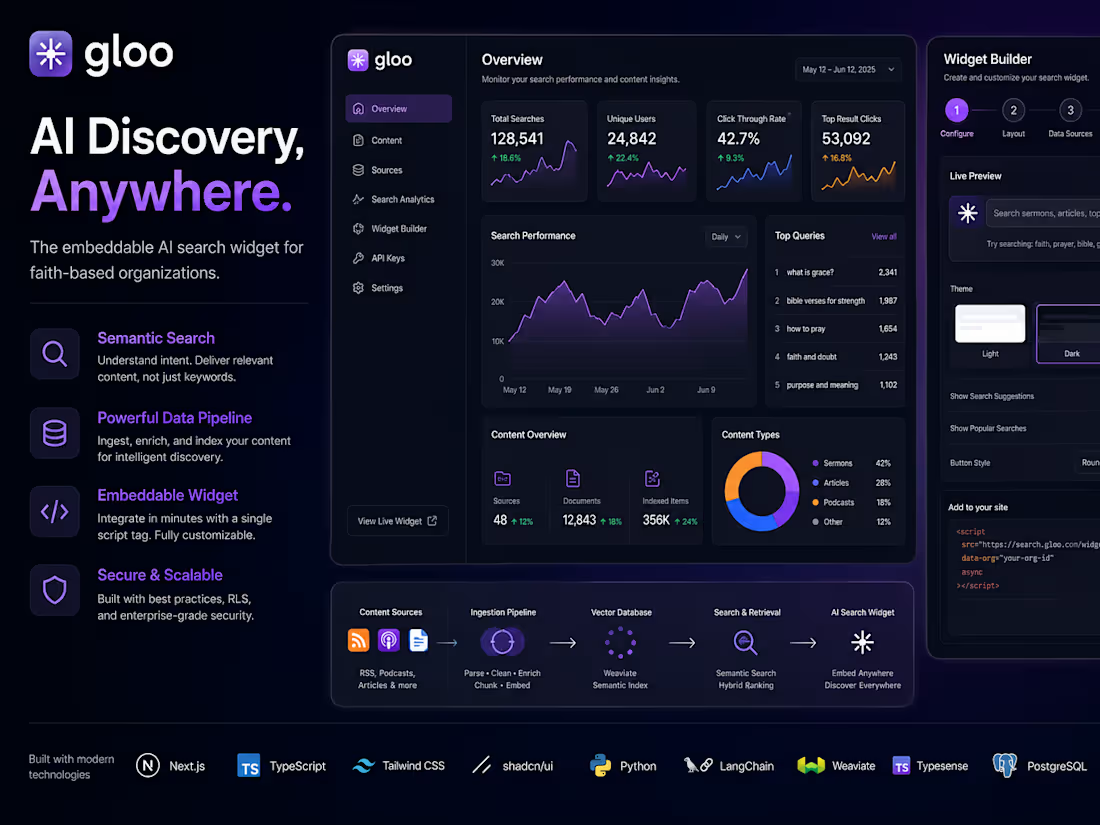
Enterprise AI Search System with Embeddings, Pipelines & Widget Builder
I worked as a Full Stack Engineer at Gloo, contributing to the architecture and development of an AI-powered discovery widget designed for large-scale content platforms.
The product is an embeddable search system that enables semantic content discovery across podcasts, sermons, articles, and other media, allowing organizations to surface relevant content through intent-based search rather than traditional keyword matching.
I helped design and build the system end-to-end, working across frontend, backend, and data infrastructure. On the frontend, I developed a modular widget and configuration system using Next.js, TypeScript, and modern UI tooling, enabling partners to integrate the search experience with a single script tag.
A key part of the project was the widget builder interface. I built a multi-step configuration system with live preview, allowing non-technical users to customize layout, data sources, API keys, and embedding behavior in a simple and intuitive workflow.
On the backend and data layer, I implemented ingestion pipelines to process large volumes of publisher content via RSS feeds. This included generating embeddings, enriching metadata, and preparing data for semantic retrieval, enabling domain-specific AI search across diverse content types.
The search system itself was built using a hybrid approach. I combined vector-based semantic search using Weaviate with high-speed autocomplete and indexing via Typesense, resulting in accurate intent-based results alongside instant query suggestions.
I also contributed to system reliability and observability by integrating analytics and monitoring tools, enabling detailed tracking, debugging, and performance optimization across deployments.
The result is a scalable, production-grade AI search platform that can be embedded into external sites with minimal effort, providing powerful discovery capabilities backed by modern AI infrastructure.
This project highlights my ability to design and build complex AI systems that combine frontend experience, backend architecture, and data pipelines into a cohesive, high-performance product.
1
180
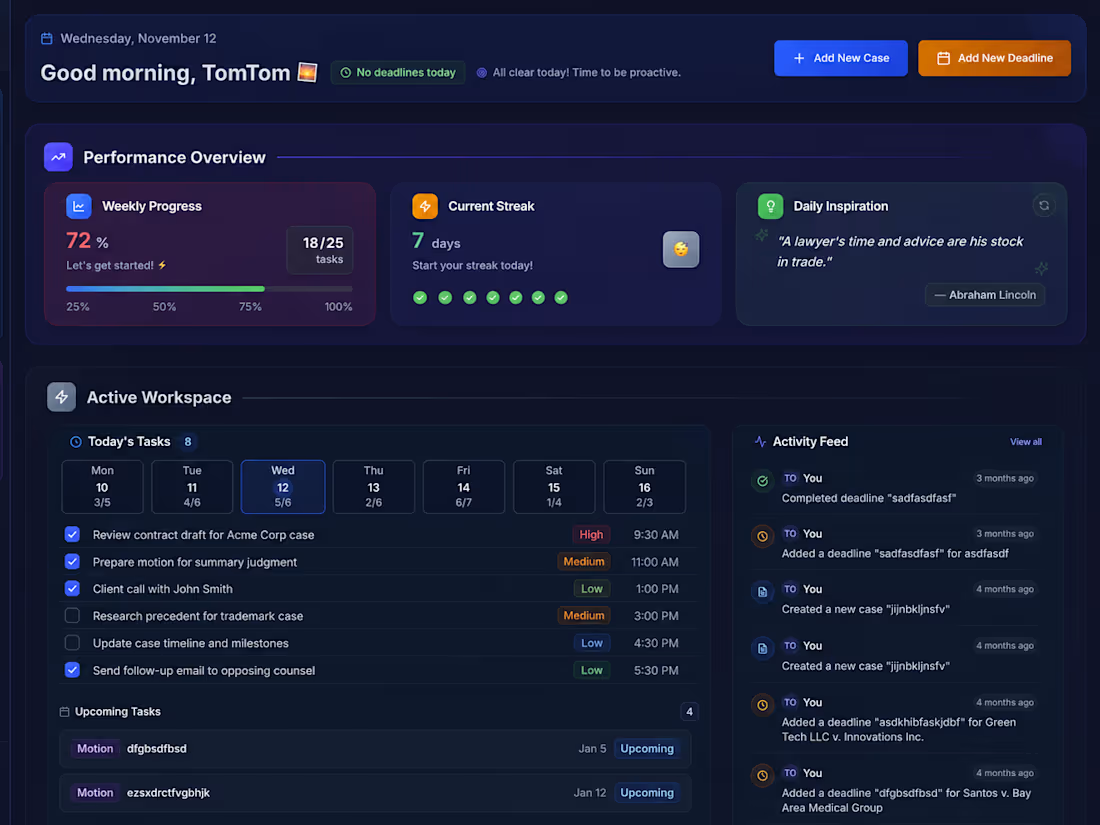
I designed and developed a full-scale SaaS platform for legal professionals to automate deadline tracking, case management, and compliance workflows.
The goal was to replace manual processes and reduce the risk of missed deadlines by building a system that could dynamically calculate and manage complex legal timelines. I built the entire product end-to-end as the sole developer, taking it from initial concept through to a production-ready platform.
The application was built using Next.js, TypeScript, Tailwind CSS, and PostgreSQL, with a modular architecture that allows reusable logic templates to power complex deadline calculations across different use cases. This made the system flexible, scalable, and easy to extend as new requirements emerged.
On the backend, I implemented secure authentication using NextAuth, including support for two-factor authentication, along with a complete Stripe integration for subscription billing. This included webhook-driven renewals, plan management, and a reliable billing workflow designed for SaaS scalability.
The result is a robust, secure, and highly functional platform that streamlines legal workflows, reduces manual overhead, and provides a strong foundation for future growth. 🚀
1
237