


Portfolio of Published Financial Analysis & Tech Research
0
37

Financial Market Research & Tech Sector Analysis
0
26

This is a sample of data entry created for a product list.
0
31
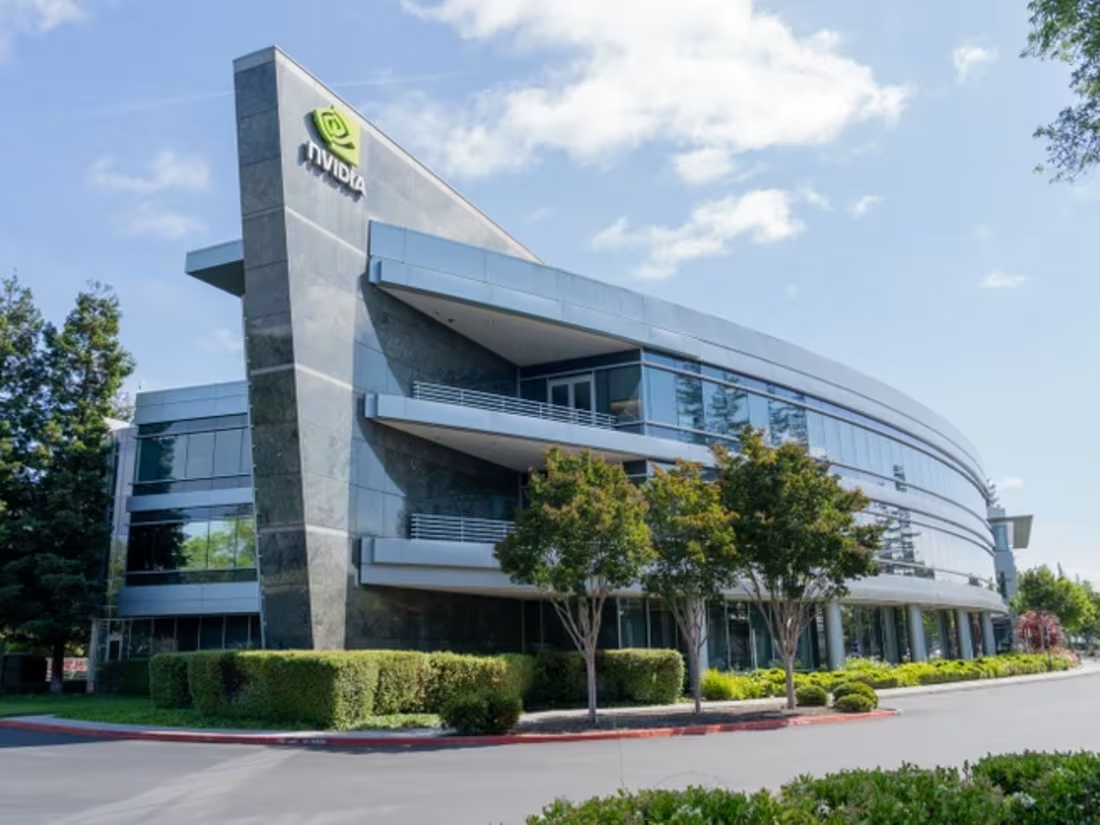
Nvidia Growth Visibility And Next-Gen Architecture Solidify The Bull Case
Summary
Nvidia's substantial forward visibility and massive order backlog provide a rock-solid foundation for sustained revenue growth through fiscal year 2024.
The upcoming Vera Rubin architecture represents a generational shift in AI computing that ensures the company maintains its dominant market share against competitors.
Strategic partnership with industry giants like Mercedes-Benz are transforming the business into a revenue powerhouse by diversifying income beyond hardware sales.
The stock presents a compelling valuation case for long-term investors as it currently trades at a forward P/E of approximately 24x.
Exceptional gross margins of 73% and leadership in the global in the global AI ecosystem support a clear trajectory for continued valuation upside.
Editor's note: Seeking Alpha is proud to welcome Sham Ghatchirle as a new contributing analyst. You can become one too! Share your best investment idea by submitting your article for review to our editors. Get published, earn money, and unlock exclusive SA Premium access. Click here to find out more » (https://about.seekingalpha.com/become-a-contributor#source=section%3Amain_content%7Cbutton%3Abody_link)
Investment Thesis
After analyzing Nvidia's (NVDA (https://seekingalpha.com/symbol/NVDA#source=section%3Amain_content%7Cbutton%3Abody_link)) performance and its future roadmap, I am giving it a strong buy rating. For the past few weeks, the stock has been stuck in a sideways trend. A clear sense of AI fatigue is being felt in the market. Investors are fearful and confused about whether the massive investments in AI will actually lead to real earnings. Due to this fear and uncertainty, the stock is hovering around $187, which is 13% below its peak. However, I believe this decline is not a sign of fundamental weakness in the company.
While some experts on Wall Street are talking about a drop in demand, the number of firm orders from the company tells a different story. When management speaks about $500 billion in sales visibility (https://finance.yahoo.com/news/nvidia-signals-500b-ai-chip-164627738.html), it means the reality is much better than the rumors being heard outside. Nvidia's true growth engine is not going to stop yet. We are seeing that projects like Vera Rubin and Sovereign AI are still in their early stages. My confidence is based on three main pillars, which are the unmatched technology of Rubin, the $500 billion guarantee provided by management and the software agreement with Mercedes-Benz.
Regarding valuation, thing's are very attractive. Currently, the PEG ratio of the stock is between 0.72 and 1.07, which means the stock is still at a reasonable price based on its future growth. With a 73% gross margin and such fast growth, a price of around $187 is nothing less than a gift. This current market slowdown is temporary. I believe this is a necessary pause before moving toward the $250 target. To understand these arguments more deeply, we need to look at the forward-looking insights that will change the market direction over the next 18 months.
Company Overview
Nvidia is much more than a gaming company now. It has evolved into the backbone of the entire AI world. Think of it this way. Nvidia is did not just a chipmaker. They became a full-scale computing giant that now owns nearly 90 percent of the AI market. This did not happen by accident.
Their real secret is how they combine powerful hardware with smart software. While everyone is talking about their new Blackwell and Vera Rubin chips, it is their CUDA software that really keeps developers locked in. This combination makes them the go to partner for everyone from massive data centers to car brands like Mercedes Benz. Simply put, Nvidia is building the engine that will run the future.
Business Analysis
It is often asked whether Nvidia still has anything left to offer. I believe the company's true momentum is only just beginning. The first and most important factor is the new Vera Rubin architecture (https://nvidianews.nvidia.com/news/rubin-platform-ai-supercomputer). To be precise, Vera is the CPU and Rubin is the GPU. The information revealed about this platform at CES 2026 is staggering. This is not just a minor upgrade. It can reduce the cost of inference by up to 10 times. Just think about it, when companies like OpenAI or Meta see such a massive reduction in costs, Why would they go anywhere else? This is the moat that makes Nvidia invincible in the market.
The second thing that very few people understand is physical AI. Until now, were only talking about chatbots, but now Nvidia is working on the reasoning brains for vehicles and machines. Their new model, Alpamayo, will appear directly in the 2026 Mercedes-Benz CLA class (https://media.mercedes-benz.com/article/63bff45a-d268-46ae-8515-60f1d40566c6). This is not a small partnership. It means Nvidia will no longer just sell a chip once and be done. Instead, it will earn recurring revenue every year through software. It is exactly like how we pay subscription for apps.
In addition, another major shift is happening at the national level, which is being called Sovereign AI. Countries like Saudi Arabia and the UAE have now become some of Nvidia's largest customers. These countries are not investing for just one quarter, but are committing over $100 billion for many years to come. When governments all over the world start depending on your technology, there is no question of a drop in demand. This stable demand will protect Nvidia from the fluctuations that are commonly seen in tech companies.
Financials and Balance Sheet
Nvidia is in a very strong financial position right now. According to our research, their latest quarterly revenue hit a record $57.0 billion (https://nvidianews.nvidia.com/news/nvidia-announces-financial-results-for-third-quarter-fiscal-2026). This represents a massive 62% increase (https://nvidianews.nvidia.com/news/nvidia-announces-financial-results-for-third-quarter-fiscal-2026) compared to the previous year. Most of this growth is coming from their dominant Data Center business. The company is consistently beating market expectations with every earnings report. This performance shows that the global demand for AI infrastructure is still accelerating.
Our research also highlights the strength of their balance sheet. Nvidia is currently sitting on a massive cash reserve of $34.8 billion. This much liquidity gives them a huge competitive advantage. It allows them to fund expensive new projects like the Vera Rubin platform without taking on debt. their gross margins are staying high at around 73 to 75 percent. This proves that Nvidia still has incredible pricing power in the AI market today.
Valuation Context
The biggest misunderstanding about Nvidia is its valuation, as investors call $185.81 expensive without looking at the growth. Based on our research and Zacks data, (https://www.zacks.com/stock/quote/NVDA/detailed-earning-estimates) we project a forward EPS of $6.40 for fiscal year 2027. Applying a 40x P/E multiple puts our target around $250. This target factors in the $500 billion order visibility while accounting for risks like 25% tax on China shipments. Even then a PEG ratio between 0.72 and 1.07 proves the stock is still undervalued compared to its massive growth. We believe $250 is a safe baseline that balances high growth with necessary risk adjustments.
Apart from the numbers, the company's revenue visibility gives us a lot of confidence. On January 6, 2026, CEO Jensen Huang has confirmed an unprecedented $500 billion in order pipeline (https://finance.yahoo.com/news/nvidia-signals-500b-ai-chip-164627738.html) for Blackwell and Rubin. This is not a small figure, and it secures the income for many quarters to come. Our research indicates that when a company has such a massive backlog and gross margins stay above 73 percent, the financial health is unquestionable. This order book acts as a strong safety net for the current valuation levels.
Finally, the current market consolidation is a sign of strength rather than weakness. Major financial institutions like Morgan Stanley and Goldman Sachs (https://www.tipranks.com/stocks/nvda/forecast) have recently supported the $250 price target. They believe that as the Vera Rubin cycle begins in 2026, the market will re-rate Nvidia's valuation even higher. According to our research, the current price around $187 represents a significant discount before the next big rally. We expect the valuation gap to close quickly as Nvidia continues to outperform its own financial estimates.
Competitive Landscape and Risks
Despite Nvidia's strength, as an unbiased investor, we must also understand the threats that could slow down this growth. The biggest discussion in the market right now is about AMD's new M1455X chip (https://www.amd.com/en/products/accelerators/instinct/mi350.html). If you only look at the technical specification, AMD's hardware with 432GB of memory is indeed impressive. Nvidia's CUDA ecosystem is so deep and established that it is almost impossible for developers to switch to AMD overnight. Therefore, AMD may take some market share, but Nvidia's fortress remains secure.
The second major aspect is geopolitical tension, especially with China. Recently, the Trump administration gave the green light for the sale of H200 chips in China, but this relief came with a big condition. These chips will now face a heavy 25% surcharge. This means there will be clear pressure on margins from the revenue generated in China. However, the hunger of the Chinese market is so great that growth in volume may still be seen despite the tax. Still, this is a risk that we cannot ignore.
Another concern haunting investors is AI fatigue or the return on investment. Companies like Microsoft and Meta are spending trillions of dollars on infrastructure. The question is whether they are getting enough profit in return for this expenditure. If Big Tech companies do not get the expected returns from AI, they could reduce their capital expenditure in the future. This could prove to be the biggest long-term risk for Nvidia. For now, the rising demand for physical AI is keeping this fear in check, but it is important to remain cautious. Furthermore, recent insider selling by Donald Robertson Jr. (https://www.sec.gov/Archives/edgar/data/1045810/000152611126000002/xslF345X05/wk-form4_1767737078.xml) has also been a point of discussion among cautious investors.
Technical Analysis
Nvidia is currently trading at $185.81 after its aggressive rally in November. The stock is effectively digesting its recent gains within a horizontal range while market participants await a fresh catalyst. Most importantly, the price remains comfortably above its 200-Day Moving Average of $162.9. This confirms the long-term bullish trend. Short-term moving averages at $186.8 and $185.6 have flattened out recently. This lack of momentum suggests that stock is building a base for its next major move.
A very clear horizontal corridor has been established, with the $170 to $175 zone acting as a formidable floor. This area is a high-conviction demand zone where buyers have intervened multiple times. Conversely, the $205 to $210 range remains a significant resistance barrier. This specific zone caused a sharp price rejection during the previous peak. A decisive breakout above $210 is required to validate the path toward the $250 target.
The RSI is currently neutral between 51 and 54. This indicates that NVDA is neither overbought nor oversold at this stage. Trading volume remains normal during this flat period. There is no evidence of aggressive institutional selling. This stable environment provides a healthy foundation for potential upside.
Final Thoughts
Nvidia remains the undisputed leader of the AI revolution. While some investors worry about a temporary slowdown, the company's long-term trajectory is stronger than ever. The upcoming transition from Blackwell to the Vera Rubin architecture in 2026 is a massive leap forward. This shift will fundamentally redefine performance and cost efficiency for the world's largest tech giants. With $500 billion in order visibility and an unmatched software ecosystem. Nvidia has built a fortress that competitors simply cannot breach.
Every unbiased investor must monitor geopolitical tensions and margin pressures in China. However, Nvidia's financial health provides a significant margin of safety. A company maintaining 73% gross margins with nearly $35 billion in cash is rarely in a weak position. The market has not yet fully priced in the recurring revenue potential from Sovereign AI and strategic partnerships like Mercedes-Benz. This represents a rare valuation gap for those who look beyond short-term noise.
Our final verdict is a high-conviction "Strong Buy." At the current price of around $187, the risk-to-reward ratio is highly attractive for long-term shareholders. Any minor fluctuations in the stock price should be viewed as a buying opportunity rather than a cause for concern. Nvidia is no longer just a chipmaker. It is the essential backbone of the future digital economy. Holding this stock is a direct stake in the technology of tomorrow.
0
29