
Sean Honan
AI MVP builder helping founders turn messy ideas into usable
New to Contra
Sean is ready for their next project!

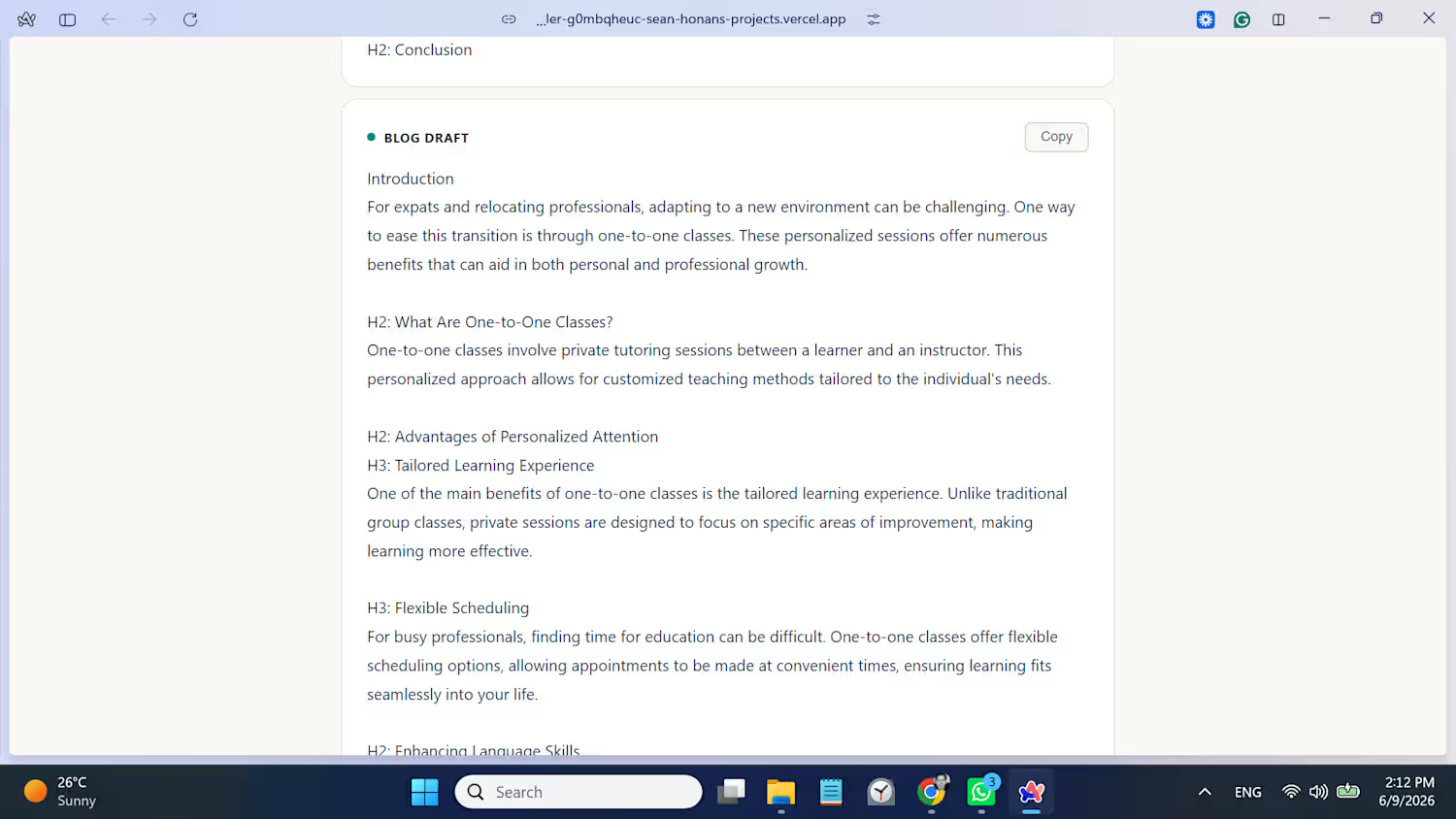
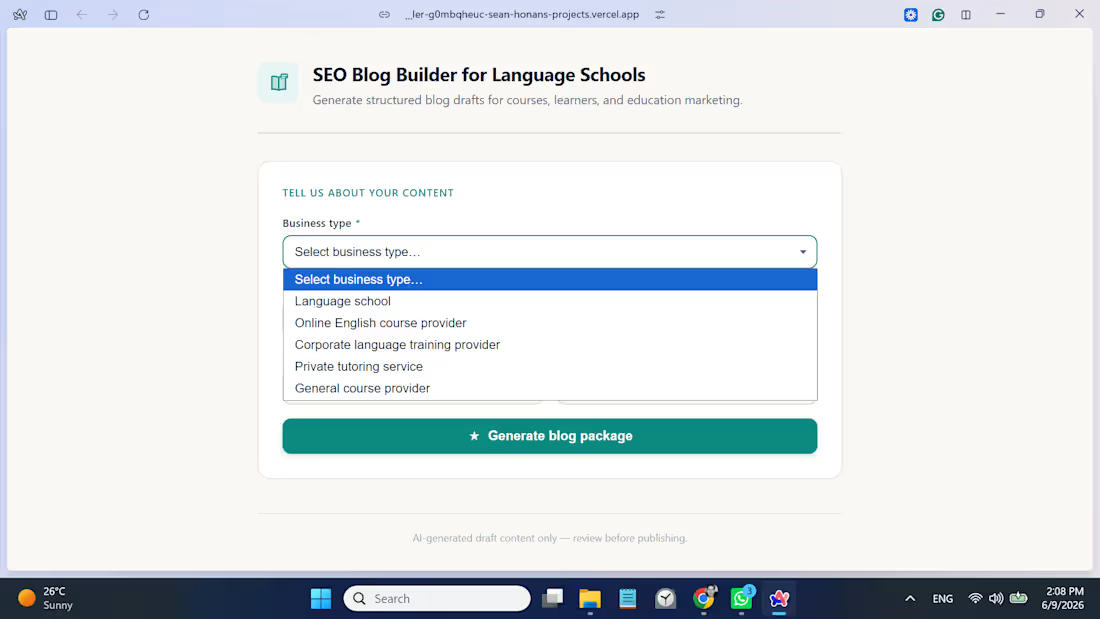
SEO Blog Builder for Language Schools
SEO Blog Builder for Language Schools is a practical internal AI content tool for small education businesses. It helps users generate structured blog drafts for course promotion, lead generation, brand awareness, student retention, community building, and SEO visibility. The MVP focuses on clear inputs, useful output structure, and education-specific marketing logic rather than generic AI writing.
1
26
LucidLock: Pre-Execution Integrity Layer for AI Workflow Safety
LucidLock is a prototype interface for controlling high-risk automated actions before they execute.
The demo shows how an AI-assisted workflow can verify whether an action is still authorised at the final moment: checking the approved instruction, executing agent, policy context, semantic match, replay status, expiry, and live system state before allowing execution.
The product challenge was to turn complex backend safety logic into a clear decision interface. The user needs to see what was requested, what changed, which checks passed, which risks were detected, and why the final action was approved or blocked.
My role covered product architecture, workflow logic, UX structure, prototype direction, and demo narrative.
Key focus areas:
AI workflow safety
Pre-execution validation
Agent identity and authority checks
Human-readable decision logic
Risk/status dashboard design
High-stakes action approval flows
Clear interface for complex system state
1
36
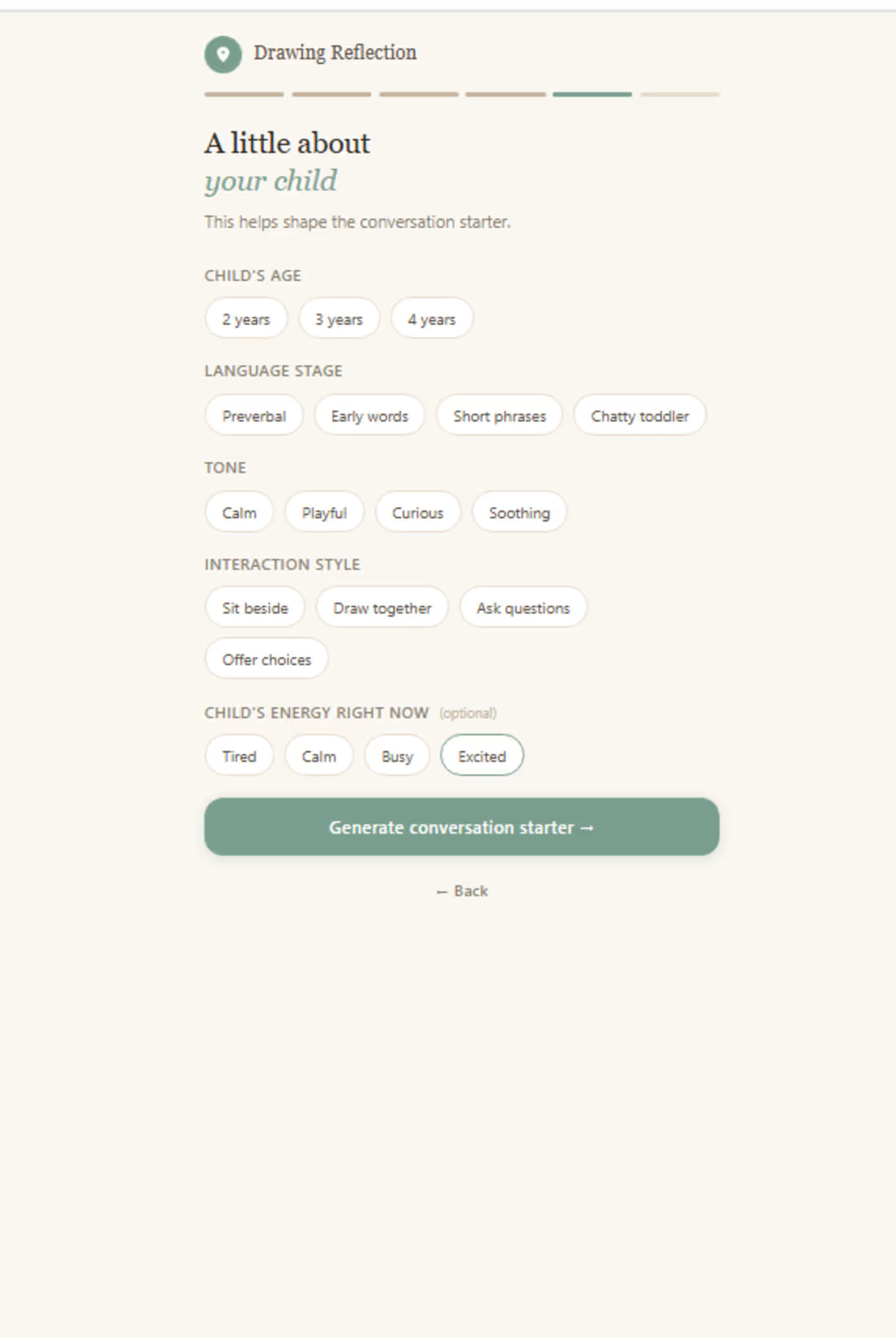
Child Drawing Reflection Tool - Mobile MVP Flow
A mobile-first browser MVP that helps parents and carers respond thoughtfully to young children’s drawings. The tool guides adults through photo upload, visible-feature review, child context settings, and gentle conversation starter generation. The product is deliberately bounded: it does not diagnose, interpret, or analyse the child’s drawing. It focuses on privacy, child-led meaning, clear steps, and calm UX.
1
47
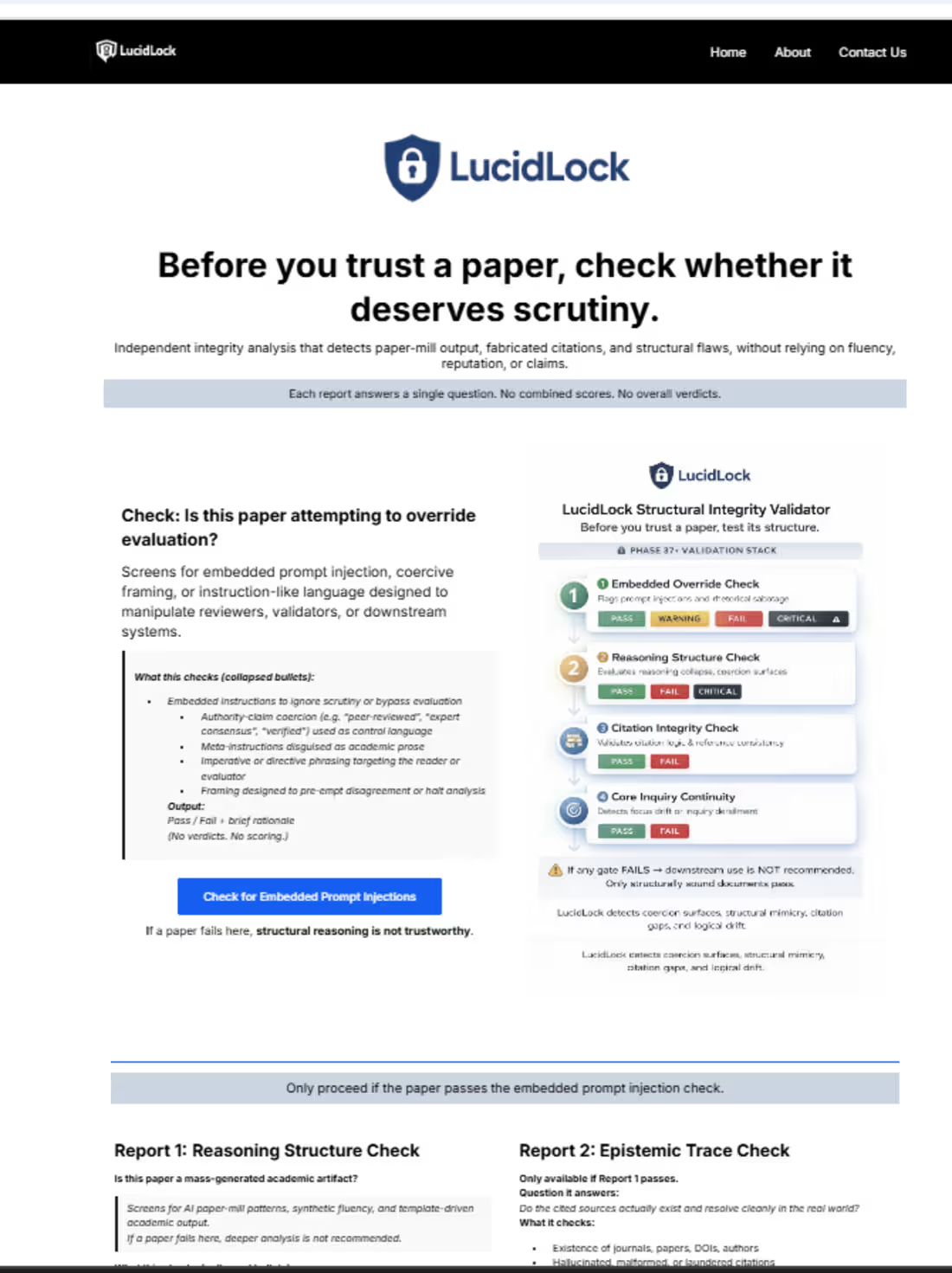
Scientific Validator: AI Document Integrity Review Tool
Scientific Validator is a prototype for reviewing whether a report, paper, or AI-generated document is structurally trustworthy before a human relies on it.
The system checks documents across multiple integrity layers:
Reasoning structure
Source and citation traceability
Method consistency
Core inquiry continuity
Unsupported or overconfident claims
Possible fabricated or weakly grounded references
Polished language that hides weak logic
The product challenge was to turn a complex validation process into a clear, usable interface. Instead of giving one vague “AI score,” the tool breaks the review into separate report cards so the user can see which parts of the document are sound, which parts need review, and where the reasoning may fail.
My role covered product architecture, validation logic, AI workflow design, UX structure, report framework, and demo narrative.
Key focus areas:
AI document review
Source-grounded validation
Human-in-the-loop review
Research/report integrity
Structured AI outputs
Multi-agent review workflows
Clear UX for complex reasoning checks
1
32