
Sam Sipasseuth
Lead Product Designer | Complex Systems, AI & SaaS
New to Contra
Sam is building their profile!
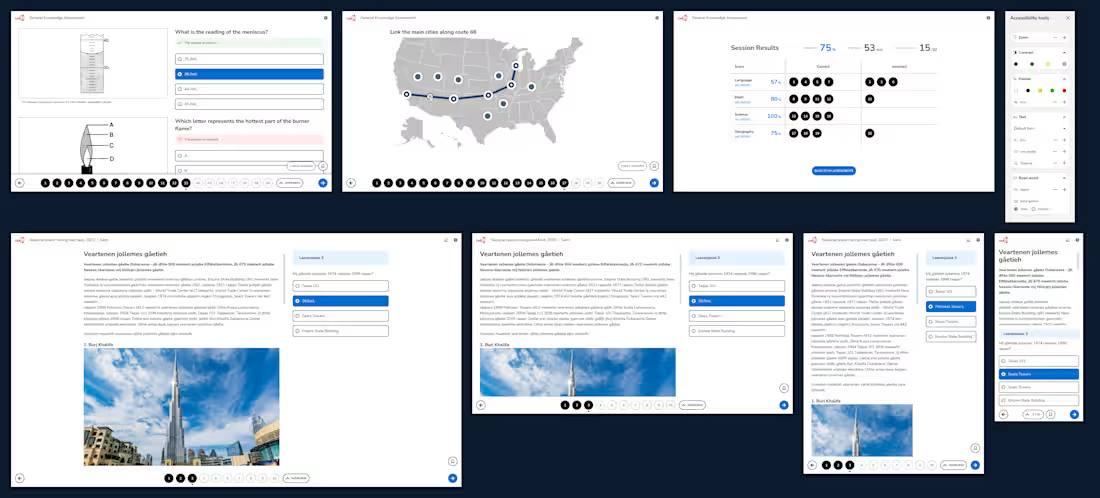
An international SaaS platform used in 70+ countries needed to serve users of all abilities: blind and low-vision users, K-12 students on iPads, and national exam contexts with strict regulatory constraints. I turned WCAG compliance into the design foundation.
120+ component system: tokenized architecture (Minor Third 1.20 scale, 8px grid), WCAG 2.2 AA across all states and interactions, full Figma variant management. Validated through 4 testing phases including blind users and OECD PISA international coordination.
· 60% faster new product launches (system reuse across 6 products)
· WCAG 2.2 AA validated across 4 continents
· EdTech Cool Tool Awards
· Platform selected for OECD PISA international assessment
1
3
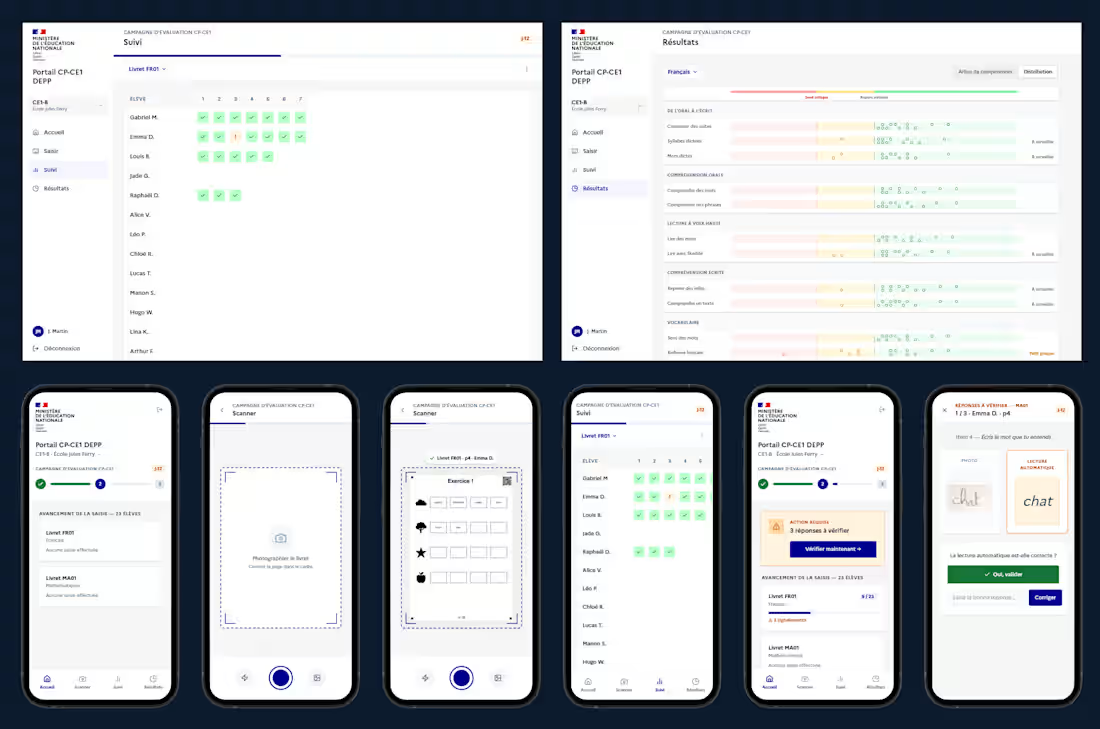
The French Ministry of Education needed national classroom data, collected by teachers on personal devices, between school and home, under no controlled conditions. I designed the full chain: physical capture forms, mobile OCR pipeline, web portal, analytics, and back office.
Physical forms co-designed with psychometricians: OCR zone sizing, QR placement, contrast ratios, upstream design decisions that determined downstream digital performance.
Mobile workflow: photograph each page → OCR reads QR → auto-identifies student → high-confidence responses auto-validated, low-confidence queued for manual review.
· 5× faster data collection: 3–4 hrs → 35–50 min
· 85%+ responses auto-validated
· SUS 81
· Deployed nationally across thousands of classrooms
1
7
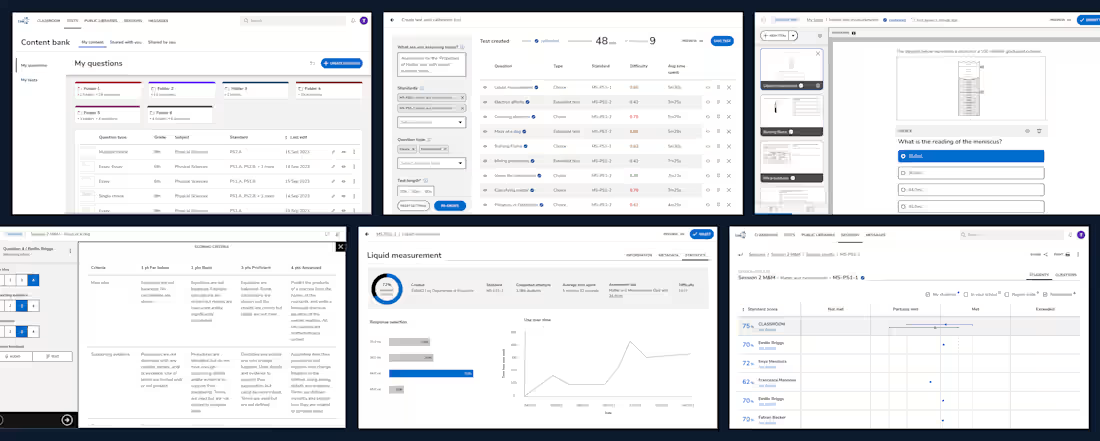
A 10-year-old assessment platform deployed in 70+ countries needed a modern authoring experience. I led the redesign: AI-assisted workflows, familiar interaction patterns, and a stakeholder analytics layer.
Applied Triple Diamond + IDEO DVF framework. Built a "Preview Alpha" satisfying Marketing, Engineering, and Product simultaneously, before a single engineering commitment was made.
Research: 400+ participants across EU, Japan, and US markets. 30+ in-depth interviews. Validated strategic pivot from B2C to B2G before engineering investment.
· +16 SUS (68→84) — Japan Ministry of Education pilot
· 50% faster content creation
· 3× adoption increase (A/B testing, n=400)
· Strategic pivot validated before engineering committed
1
16
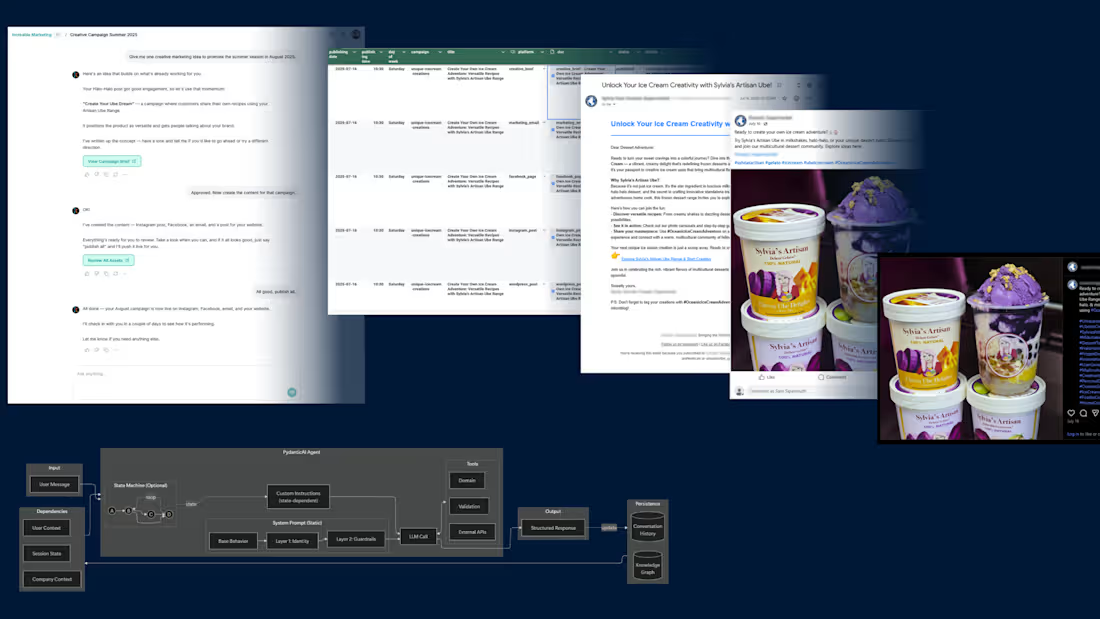
A London agency needed to scale output without adding headcount. I designed a multi-agent AI system: three specialized agents (WordPress, support, marketing), each with confidence scoring, escalation logic, and a human review gate before every output.
Not just prompts — real architecture: FastAPI + Redis Streams, Pydantic state machines, multi-channel integration (web, email, WhatsApp). Governance aligned with ISO/IEC 42001 and NIST AI RMF.
· 45% faster content delivery
· 58% faster campaign turnaround
· 41% automated support resolution — humans in control at every step
The real design challenge: defining AI behavior. Autonomy boundaries, trust signals, and when the system defers to a human.
1
2
32
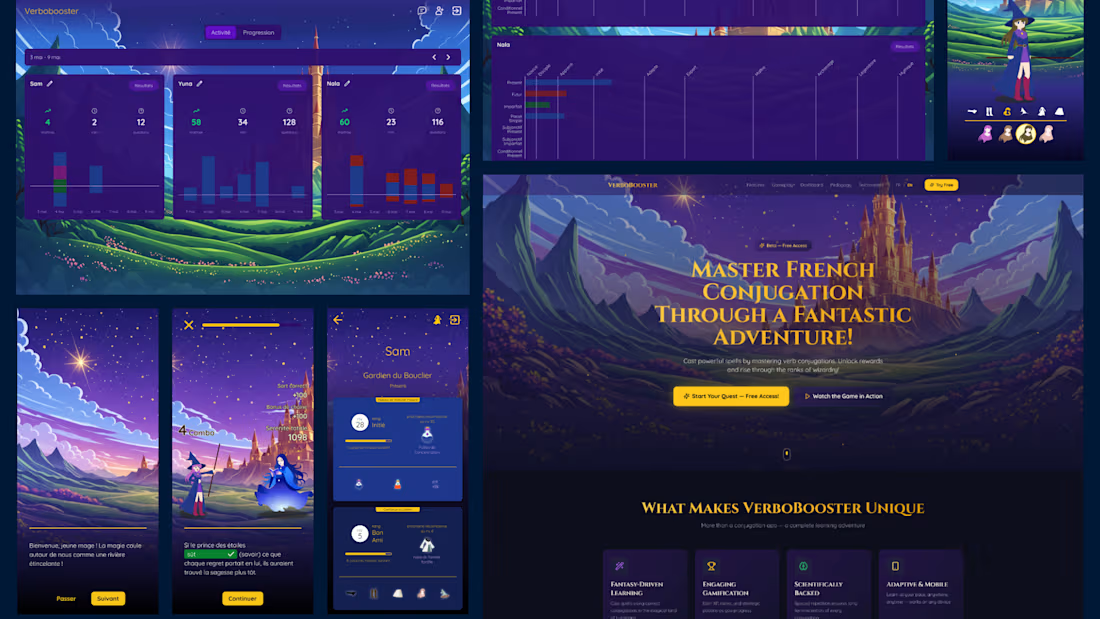
Repetitive practice is the hardest engagement problem. I designed and shipped a dual-experience platform — gamified learner app + stakeholder analytics — from research to production in 16 weeks.
Learner side: white-hat gamification (Octalysis framework), spaced repetition, self-guided progression. Stakeholder side: real-time analytics surfacing difficulty patterns before they become problems.
AI-assisted throughout: LLM pipeline (80% less exercise creation time), code assistants (60% faster dev velocity), Stable Diffusion + ComfyUI for character assets.
· Production MVP, WCAG 2.2 AA compliant
· Validated with teachers, parents, and K-12 learners
· Research to shipped product: 16 weeks
1
27
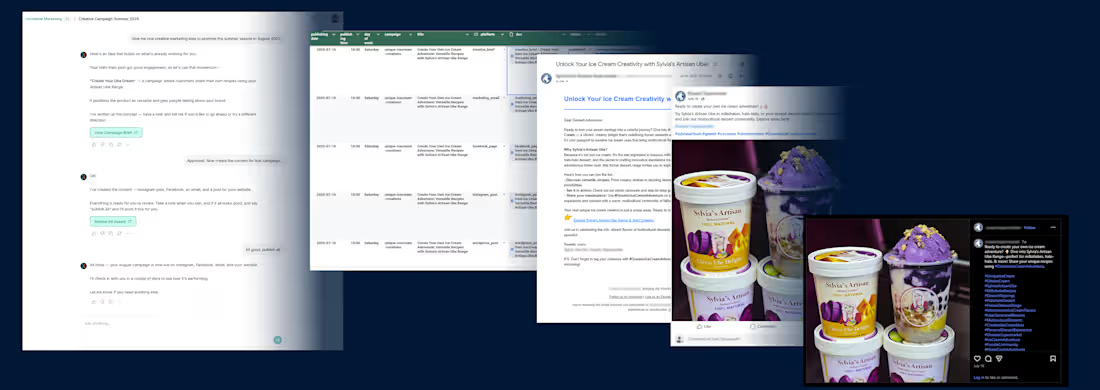
Marketing Content Automation
To scale a London agency’s creative output without increasing headcount, I designed an AI workflow that transforms a single campaign request into a multi-platform strategy.
What was achieved:
By moving from a rigid, sequential process to a tool-equipped agent mode, I integrated AI directly into the team’s existing Google Workspace. This eliminated platform friction and preserved human creative flexibility. The system handles competitive research, UTM tagging, and drafting, while humans maintain final creative approval.
Efficiency: Reduced campaign prep from 12h to 5h (58% faster).
Seamless UX: Content delivers directly to Google Sheets/Docs for instant collaboration.
Result: Enabled the agency to onboard 40% more client capacity.
0
96