
🧭📊 Presentation Structure & Narrative AuditJeff Padget
🧭📊 Presentation Structure & Narrative Audit
Make the argument visible.
Your slides may be individually fine.
The problem is that nobody can tell why slide 17 follows slide 16, the important point is buried under six competing ideas, and the conclusion arrives looking vaguely surprised to be there. 🤭
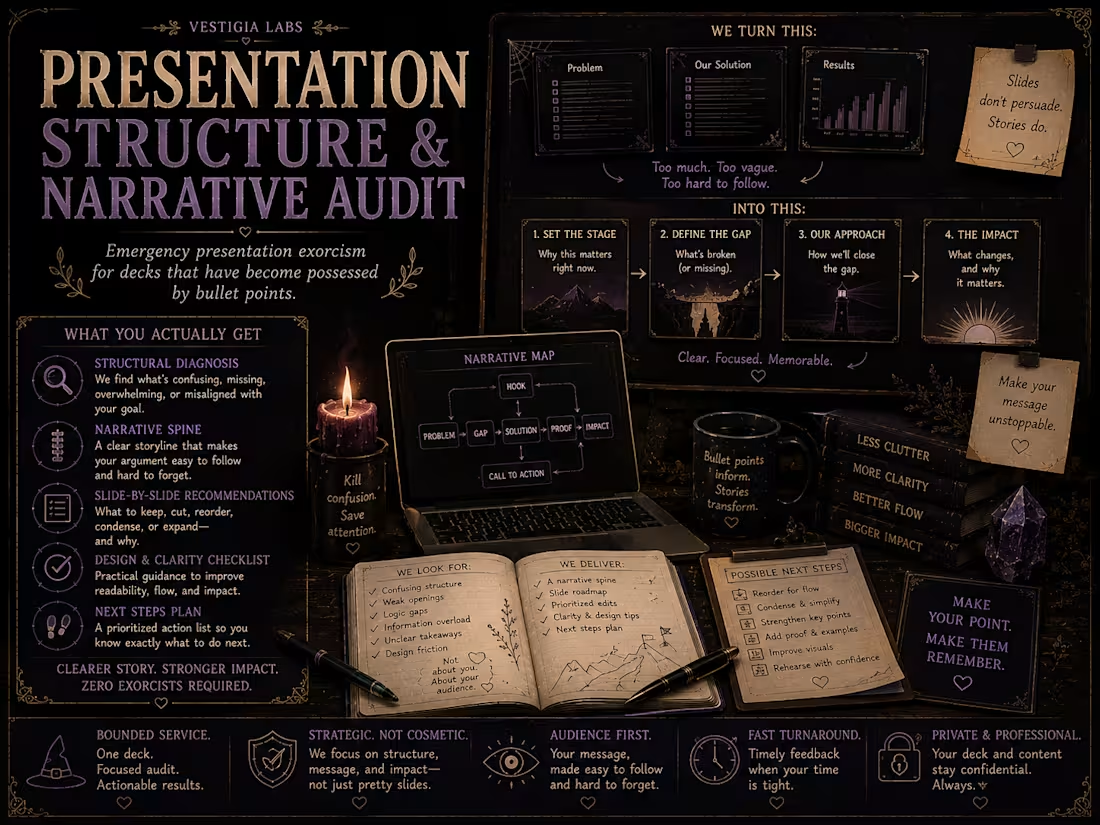
This is a focused structural audit for one existing presentation or deck.
I review the presentation as a communication system: what the audience needs to understand first, how each section supports the next, where attention gets lost, what information is doing useful work, and whether the deck actually delivers the argument or story you intended.
This is not primarily a graphic-design critique.
It is a structure, narrative, clarity, and information-flow audit.
I’ll identify where the presentation becomes confusing, overloaded, repetitive, unsupported, or difficult to follow—and give you a concrete revision path.
Or, in less professional terminology:
Emergency presentation exorcism for decks possessed by bullet points.
What you actually get
• Structural diagnosis of the deck
• A clearer beginning → middle → end
• Narrative spine / argument flow mapped
• Slide-order recommendations
• Information-density problems identified
• Missing logic, evidence, or transitions flagged
• Recommendations for what to cut, combine, expand, or move
• A prioritized revision checklist
How it works
1. You send the deck.
PowerPoint, PDF, exported slides, or another readable format, plus a little context about the audience and purpose.
2. I reconstruct the intended story.
What should the audience understand, believe, remember, or do by the end?
3. I trace the actual path through the slides.
I look for structural breaks, buried premises, abrupt transitions, redundancy, competing messages, and places where visual organization fights the narrative.
4. You get a revision map.
Not merely “slide 12 is too busy,” but what the problem is, why it matters, and what to change.
What I need from you
• The current presentation
• Who the audience is
• What the presentation is supposed to accomplish
• Any time limit or presentation constraints
• Anything you already know feels wrong
You do not need to diagnose the problem first.
“I hate this deck and I don't know why”
is sufficient intake information. 🤣
Good fit for
Pitch decks, student presentations, lectures, research talks, conference decks, internal briefings, proposals, product demos, explainers, and other presentations where the information exists but the story isn't landing.
Scope boundary
This service covers one bounded presentation audit and revision plan.
It does not include a full slide-by-slide redesign or rebuilding the deck from scratch.
If you want me to implement the recommendations, restructure the full deck, rewrite slide content, or produce a finished presentation, that can be scoped separately.
This boundary is important because we are not accepting a 143-slide corporate necromancy tome for thirty dollars. 💀
Clearer story. Stronger impact. Fewer bullet-point demons.
Slides don't persuade. Stories do.
Starting at$30
Duration1 day
Tags
Presentation Designer
Audit
Cognitive Red-Teaming
Coherence
Narrative Consistency
Service provided by
Jeff Padget Oxford, USA
🧭📊 Presentation Structure & Narrative AuditJeff Padget
Starting at$30
Duration1 day
Tags
Presentation Designer
Audit
Cognitive Red-Teaming
Coherence
Narrative Consistency
🧭📊 Presentation Structure & Narrative Audit
Make the argument visible.
Your slides may be individually fine.
The problem is that nobody can tell why slide 17 follows slide 16, the important point is buried under six competing ideas, and the conclusion arrives looking vaguely surprised to be there. 🤭
This is a focused structural audit for one existing presentation or deck.
I review the presentation as a communication system: what the audience needs to understand first, how each section supports the next, where attention gets lost, what information is doing useful work, and whether the deck actually delivers the argument or story you intended.
This is not primarily a graphic-design critique.
It is a structure, narrative, clarity, and information-flow audit.
I’ll identify where the presentation becomes confusing, overloaded, repetitive, unsupported, or difficult to follow—and give you a concrete revision path.
Or, in less professional terminology:
Emergency presentation exorcism for decks possessed by bullet points.
What you actually get
• Structural diagnosis of the deck
• A clearer beginning → middle → end
• Narrative spine / argument flow mapped
• Slide-order recommendations
• Information-density problems identified
• Missing logic, evidence, or transitions flagged
• Recommendations for what to cut, combine, expand, or move
• A prioritized revision checklist
How it works
1. You send the deck.
PowerPoint, PDF, exported slides, or another readable format, plus a little context about the audience and purpose.
2. I reconstruct the intended story.
What should the audience understand, believe, remember, or do by the end?
3. I trace the actual path through the slides.
I look for structural breaks, buried premises, abrupt transitions, redundancy, competing messages, and places where visual organization fights the narrative.
4. You get a revision map.
Not merely “slide 12 is too busy,” but what the problem is, why it matters, and what to change.
What I need from you
• The current presentation
• Who the audience is
• What the presentation is supposed to accomplish
• Any time limit or presentation constraints
• Anything you already know feels wrong
You do not need to diagnose the problem first.
“I hate this deck and I don't know why”
is sufficient intake information. 🤣
Good fit for
Pitch decks, student presentations, lectures, research talks, conference decks, internal briefings, proposals, product demos, explainers, and other presentations where the information exists but the story isn't landing.
Scope boundary
This service covers one bounded presentation audit and revision plan.
It does not include a full slide-by-slide redesign or rebuilding the deck from scratch.
If you want me to implement the recommendations, restructure the full deck, rewrite slide content, or produce a finished presentation, that can be scoped separately.
This boundary is important because we are not accepting a 143-slide corporate necromancy tome for thirty dollars. 💀
Clearer story. Stronger impact. Fewer bullet-point demons.
Slides don't persuade. Stories do.
$30