
Web & Mobile DevelopmentPreston Zen

As a full-stack developer specializing in web and mobile development, I transform your ideas into high-quality software products using cutting-edge JavaScript libraries and frameworks like React, React Native, Next.js, Flutter and Node.js. My service covers the entire development lifecycle, from initial consultation to post-launch support.
What's included
Requirement Gathering and Analysis
- Initial Consultation: Discuss client’s vision, goals, and requirements for the web and mobile software product. - Requirement Documentation: Document all functional and non-functional requirements, ensuring a clear understanding of project scope.
Tech Stack Selection
- Tech Stack Consultation: Recommend appropriate JavaScript libraries and frameworks (e.g., React, React Native, Next.js, Node.js), Databases(e.g., MongoDB, PostgreSQL) or BaaS(e.g., Supabase, Firebase, AWS Amplify) based on project requirements and goals. - Tech Stack Report: Provide a detailed report outlining the chosen tech stack and its advantages for the project.
Design and Prototyping
- UI/UX Design: Create wireframes and mockups for both web and mobile interfaces, ensuring intuitive user experiences. - Prototype Development: Develop interactive prototypes using tools like Figma or Adobe XD for client feedback and validation.
Development
- Dynamic Web Interfaces: Harness the power of React for building interactive UIs, coupled with Next.js for server-side rendering and optimized performance. This combination enables the creation of responsive, fast-loading web applications that offer seamless user experiences across devices. Leverage React's component-based architecture for maintainable code, while Next.js provides features like automatic code splitting and simplified routing. Implement state management solutions such as Redux or Recoil for efficient data flow, ensuring a robust and scalable frontend architecture that delivers exceptional customer experiences. - Cross-Platform Mobile Solutions: Leverage modern frameworks like React Native or Flutter to create efficient, feature-rich mobile applications that run seamlessly on both iOS and Android platforms. These technologies enable rapid development with a single codebase, ensuring consistent user experiences across devices while significantly reducing time-to-market and maintenance costs. Incorporate native modules when necessary to access platform-specific features, balancing cross-platform efficiency with native performance. - Backend Architecture: Utilize Node.js for efficient server-side operations. Integrate Backend-as-a-Service (BaaS) solutions like Supabase, Firebase or AWS Amplify to streamline development and enhance scalability. This approach ensures smooth frontend-backend communication while offering features such as real-time data sync and authentication. Consider Express.js or Nest.js for structured API development. - Data Insights Integration: Implement robust analytics solutions like Google Analytics or Mixpanel to capture user interactions, assess system performance, and extract valuable insights. This data-driven approach enables informed decision-making, facilitates continuous product enhancement, and helps identify opportunities for optimization and growth.
Testing and Quality Assurance
- Unit Testing: Write unit tests to validate the functionality of individual components. - Integration Testing: Test the interaction between different modules and components. - User Acceptance Testing: Conduct testing with real users to ensure the product meets their expectations.
Deployment and Launch
- Preparation: Configure servers and databases for hosting the web and mobile applications. - Deployment: Deploy the applications to production environments, ensuring scalability and reliability. - Launch Support: Provide support during the launch phase to address any issues and ensure a successful rollout.
Example work

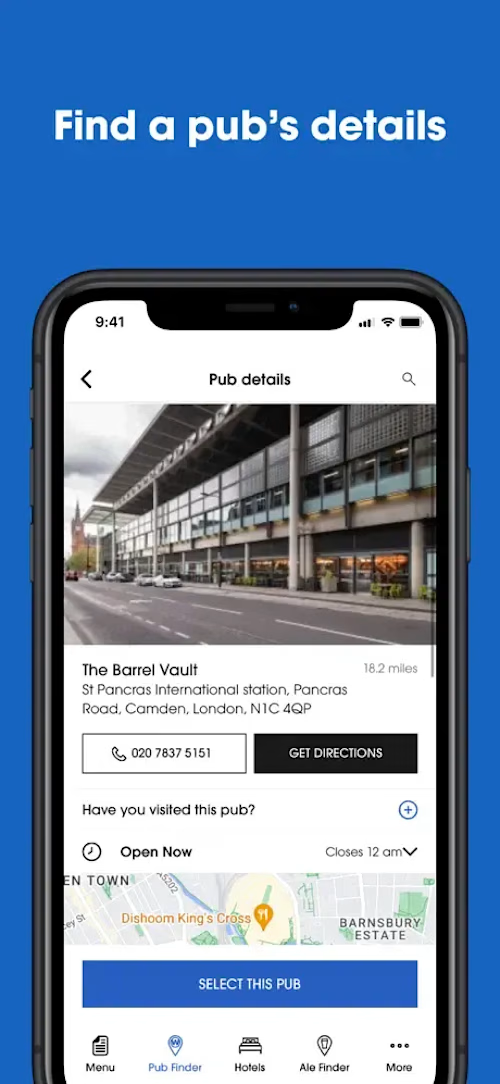


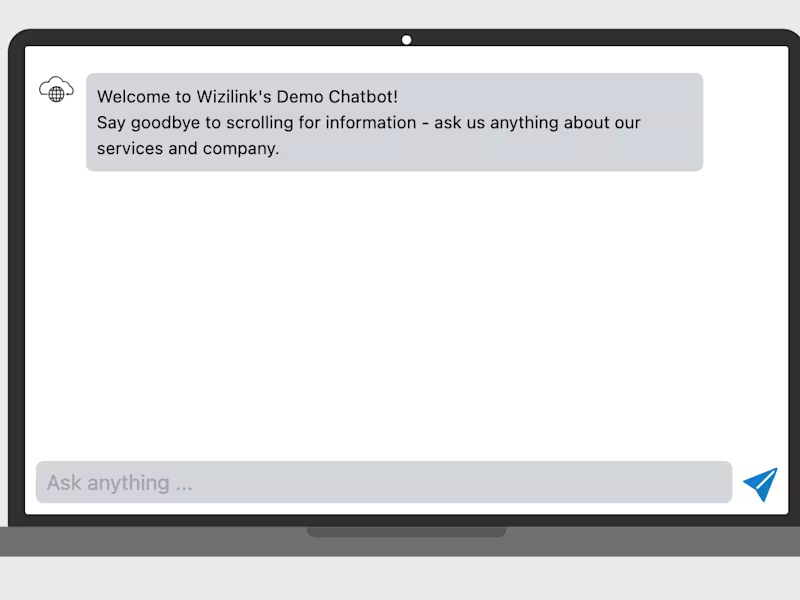
Contact for pricing
Tags
Next.js

Node.js

React

React Native

AI Application Developer
Fullstack Engineer
Mobile Engineer
Service provided by
Preston Zen Manassas, USA
- 7
- Followers
Web & Mobile DevelopmentPreston Zen
Contact for pricing
Tags
Next.js
Node.js
React
React Native
AI Application Developer
Fullstack Engineer
Mobile Engineer
As a full-stack developer specializing in web and mobile development, I transform your ideas into high-quality software products using cutting-edge JavaScript libraries and frameworks like React, React Native, Next.js, Flutter and Node.js. My service covers the entire development lifecycle, from initial consultation to post-launch support.
What's included
Requirement Gathering and Analysis
- Initial Consultation: Discuss client’s vision, goals, and requirements for the web and mobile software product. - Requirement Documentation: Document all functional and non-functional requirements, ensuring a clear understanding of project scope.
Tech Stack Selection
- Tech Stack Consultation: Recommend appropriate JavaScript libraries and frameworks (e.g., React, React Native, Next.js, Node.js), Databases(e.g., MongoDB, PostgreSQL) or BaaS(e.g., Supabase, Firebase, AWS Amplify) based on project requirements and goals. - Tech Stack Report: Provide a detailed report outlining the chosen tech stack and its advantages for the project.
Design and Prototyping
- UI/UX Design: Create wireframes and mockups for both web and mobile interfaces, ensuring intuitive user experiences. - Prototype Development: Develop interactive prototypes using tools like Figma or Adobe XD for client feedback and validation.
Development
- Dynamic Web Interfaces: Harness the power of React for building interactive UIs, coupled with Next.js for server-side rendering and optimized performance. This combination enables the creation of responsive, fast-loading web applications that offer seamless user experiences across devices. Leverage React's component-based architecture for maintainable code, while Next.js provides features like automatic code splitting and simplified routing. Implement state management solutions such as Redux or Recoil for efficient data flow, ensuring a robust and scalable frontend architecture that delivers exceptional customer experiences. - Cross-Platform Mobile Solutions: Leverage modern frameworks like React Native or Flutter to create efficient, feature-rich mobile applications that run seamlessly on both iOS and Android platforms. These technologies enable rapid development with a single codebase, ensuring consistent user experiences across devices while significantly reducing time-to-market and maintenance costs. Incorporate native modules when necessary to access platform-specific features, balancing cross-platform efficiency with native performance. - Backend Architecture: Utilize Node.js for efficient server-side operations. Integrate Backend-as-a-Service (BaaS) solutions like Supabase, Firebase or AWS Amplify to streamline development and enhance scalability. This approach ensures smooth frontend-backend communication while offering features such as real-time data sync and authentication. Consider Express.js or Nest.js for structured API development. - Data Insights Integration: Implement robust analytics solutions like Google Analytics or Mixpanel to capture user interactions, assess system performance, and extract valuable insights. This data-driven approach enables informed decision-making, facilitates continuous product enhancement, and helps identify opportunities for optimization and growth.
Testing and Quality Assurance
- Unit Testing: Write unit tests to validate the functionality of individual components. - Integration Testing: Test the interaction between different modules and components. - User Acceptance Testing: Conduct testing with real users to ensure the product meets their expectations.
Deployment and Launch
- Preparation: Configure servers and databases for hosting the web and mobile applications. - Deployment: Deploy the applications to production environments, ensuring scalability and reliability. - Launch Support: Provide support during the launch phase to address any issues and ensure a successful rollout.
Example work
Contact for pricing