
Learning Product Strategy SprintMaryia Malukha

Turn an early EdTech idea, learning feature, or content-led product concept into a focused direction before investing in detailed design and production.
Why this service exists
Early learning-product ideas often begin with strong content, an interesting mechanic, or a genuine educational problem.
What is usually less clear is:
Who the first version is specifically for
What learners should be able to do or understand
Which problem deserves attention first
Why the experience would matter to the learner
What belongs in the first version
Which assumptions still need evidence
Without those decisions, teams can move into content production or feature design too early and build more than they need.
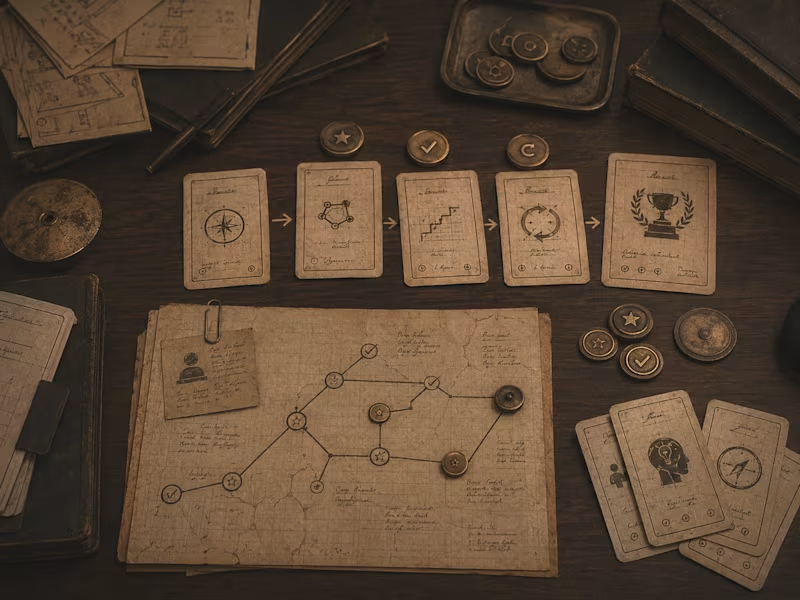
This sprint turns an early idea into a focused learning-product direction. It defines the problem, learner, intended outcome, core experience, and realistic first scope while making assumptions and evidence gaps visible.
What you get
A clearly framed learning problem or opportunity
A primary learner group and relevant context
Defined learning goals and intended outcomes
A learner-focused value proposition
A core product promise and experience principle
A high-level recommendation for the central learning mechanic
An outline of the core learner journey
A prioritised MVP scope: essential, later, and out of scope
Key assumptions, constraints, risks, and unanswered questions
Recommended evidence or research needed next
A practical next-step plan
A concise product-direction brief
A walkthrough of the decisions and reasoning
How it works
1. Idea and context review
You share the product idea, intended learner, source materials, existing evidence, platform context, and known constraints.
2. Decision framing
I examine the learning problem, learner context, intended outcome, and assumptions behind the idea.
3. Product direction
I shape the learner value proposition, core experience, high-level journey, central mechanic, and focused MVP scope.
4. Brief and next steps
You receive the product-direction brief, open questions, recommended next actions, and a walkthrough of the proposed direction.
This is a good fit if…
You have an early EdTech or learning-product idea and need to decide what the first version should be
You are considering an AI-enabled learning concept but need a clear learning purpose before choosing features
You have strong educational content but do not yet have a focused product direction
Your team has several possible ideas and needs to identify the most coherent starting point
You are planning a new learning feature and need to define its learner, purpose, and role
You want to reduce unnecessary production before moving into detailed design
You need a concise direction that can be shared with content, product, design, or development collaborators
Starting scope
The starting package covers:
One early-stage learning product, feature, or concept
One primary learner group
One central learning problem
One intended learning outcome or closely related outcome set
One high-level learner journey
One recommended MVP direction
One delivery platform or product context
One product-direction brief
Multiple audiences, product concepts, markets, or competing strategic directions require an expanded scope.
What I need from you
A description of the idea, feature, or learning product
The intended learner group, even if it is still a working assumption
The learning problem or opportunity you want to address
Existing content, briefs, research, or source materials
Any available learner feedback or behavioural information
The intended platform or delivery format
Known technical, curriculum, time, or business constraints
Access to the relevant decision-maker for the initial context and final review
Important limitation
This sprint creates a focused direction from the evidence and context currently available.
It does not represent market validation or prove that every learner assumption is correct. Unsupported assumptions and missing evidence will be clearly identified rather than presented as confirmed findings.
If the idea requires deeper evidence before a direction can be chosen, Learner & Content Research may be the better first step.
What is not included
This service defines the initial learning-product direction.
It does not include:
Market sizing
Financial modelling
Pricing strategy
Go-to-market planning
Full business strategy
Professional user interviews or a complete research study
Comprehensive competitor research
Detailed module or curriculum architecture
Full activity, narrative, or gamification design
UI screens or visual product design
Engineering requirements
Product-team workshop facilitation
Product implementation
Detailed architecture can be developed through Learning Product Concept & Structure.
Detailed learner activities, feedback, motivation, and engagement mechanics can be developed through Learning Product Design & Gamification.
FAQs
Maryia's other services

Starting at$600
Duration1 week
Tags
Learning Experience Design
Content Strategist
Curriculum Design
Gamification Specialist
Instructional Designer
Product Strategist
EdTech
Service provided by
Maryia Malukha Warsaw, Poland
- 2
- Followers
Learning Product Strategy SprintMaryia Malukha
Starting at$600
Duration1 week
Tags
Learning Experience Design
Content Strategist
Curriculum Design
Gamification Specialist
Instructional Designer
Product Strategist
EdTech
Turn an early EdTech idea, learning feature, or content-led product concept into a focused direction before investing in detailed design and production.
Why this service exists
Early learning-product ideas often begin with strong content, an interesting mechanic, or a genuine educational problem.
What is usually less clear is:
Who the first version is specifically for
What learners should be able to do or understand
Which problem deserves attention first
Why the experience would matter to the learner
What belongs in the first version
Which assumptions still need evidence
Without those decisions, teams can move into content production or feature design too early and build more than they need.
This sprint turns an early idea into a focused learning-product direction. It defines the problem, learner, intended outcome, core experience, and realistic first scope while making assumptions and evidence gaps visible.
What you get
A clearly framed learning problem or opportunity
A primary learner group and relevant context
Defined learning goals and intended outcomes
A learner-focused value proposition
A core product promise and experience principle
A high-level recommendation for the central learning mechanic
An outline of the core learner journey
A prioritised MVP scope: essential, later, and out of scope
Key assumptions, constraints, risks, and unanswered questions
Recommended evidence or research needed next
A practical next-step plan
A concise product-direction brief
A walkthrough of the decisions and reasoning
How it works
1. Idea and context review
You share the product idea, intended learner, source materials, existing evidence, platform context, and known constraints.
2. Decision framing
I examine the learning problem, learner context, intended outcome, and assumptions behind the idea.
3. Product direction
I shape the learner value proposition, core experience, high-level journey, central mechanic, and focused MVP scope.
4. Brief and next steps
You receive the product-direction brief, open questions, recommended next actions, and a walkthrough of the proposed direction.
This is a good fit if…
You have an early EdTech or learning-product idea and need to decide what the first version should be
You are considering an AI-enabled learning concept but need a clear learning purpose before choosing features
You have strong educational content but do not yet have a focused product direction
Your team has several possible ideas and needs to identify the most coherent starting point
You are planning a new learning feature and need to define its learner, purpose, and role
You want to reduce unnecessary production before moving into detailed design
You need a concise direction that can be shared with content, product, design, or development collaborators
Starting scope
The starting package covers:
One early-stage learning product, feature, or concept
One primary learner group
One central learning problem
One intended learning outcome or closely related outcome set
One high-level learner journey
One recommended MVP direction
One delivery platform or product context
One product-direction brief
Multiple audiences, product concepts, markets, or competing strategic directions require an expanded scope.
What I need from you
A description of the idea, feature, or learning product
The intended learner group, even if it is still a working assumption
The learning problem or opportunity you want to address
Existing content, briefs, research, or source materials
Any available learner feedback or behavioural information
The intended platform or delivery format
Known technical, curriculum, time, or business constraints
Access to the relevant decision-maker for the initial context and final review
Important limitation
This sprint creates a focused direction from the evidence and context currently available.
It does not represent market validation or prove that every learner assumption is correct. Unsupported assumptions and missing evidence will be clearly identified rather than presented as confirmed findings.
If the idea requires deeper evidence before a direction can be chosen, Learner & Content Research may be the better first step.
What is not included
This service defines the initial learning-product direction.
It does not include:
Market sizing
Financial modelling
Pricing strategy
Go-to-market planning
Full business strategy
Professional user interviews or a complete research study
Comprehensive competitor research
Detailed module or curriculum architecture
Full activity, narrative, or gamification design
UI screens or visual product design
Engineering requirements
Product-team workshop facilitation
Product implementation
Detailed architecture can be developed through Learning Product Concept & Structure.
Detailed learner activities, feedback, motivation, and engagement mechanics can be developed through Learning Product Design & Gamification.
FAQs
Maryia's other services
$600