
Learning Product Design & GamificationMaryia Malukha
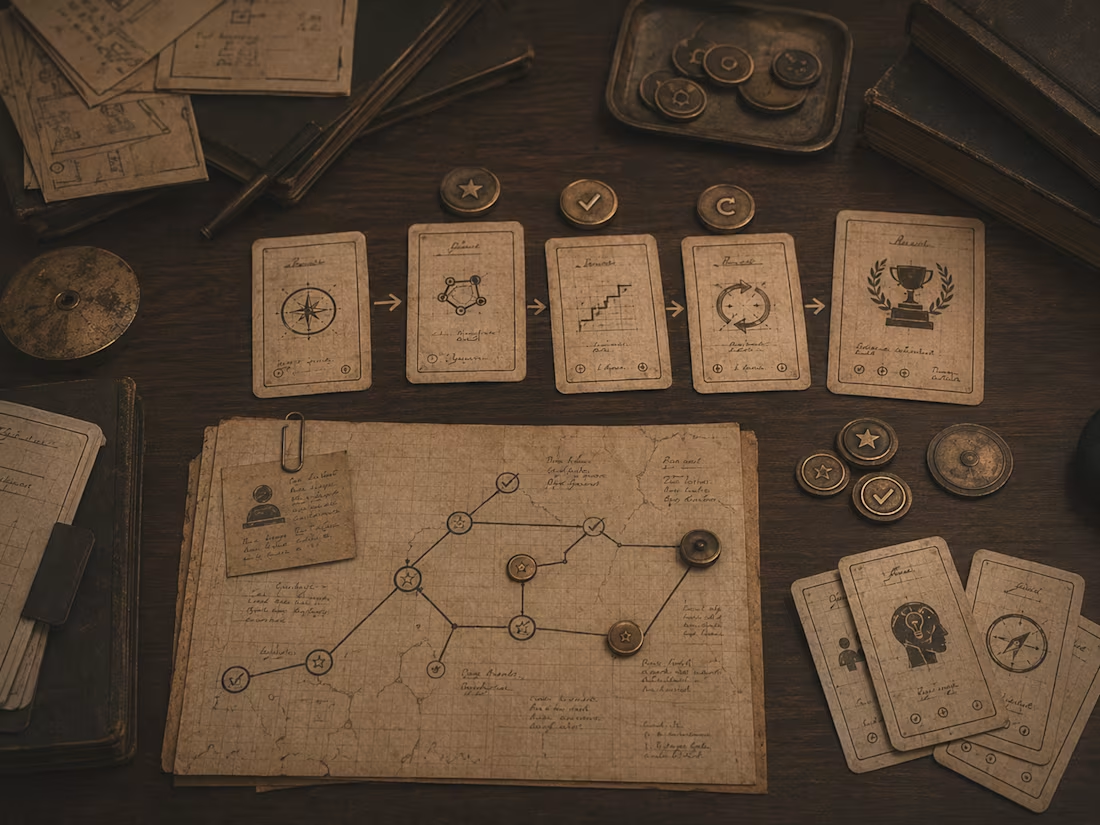
Design a learning experience that gives learners a clear reason to begin, continue, practise, reflect, and recognise their progress.
Why this service exists
Gamification does not work when it is added as a decorative layer of points, badges, and rewards around an unclear experience.
Learners stay engaged when they understand where they are going, take meaningful action, receive useful feedback, overcome appropriate challenges, and can see that their effort is leading somewhere.
This service designs that system around a defined learning goal.
I create the detailed logic connecting activities, feedback, narrative, progress, reflection, motivation, and rewards. Every mechanic must have a clear purpose in the learning experience — otherwise it does not belong there.
What you get
A detailed learner-experience map for one core journey
A step-by-step activity and interaction flow
Identification of moments where learners need clarity, motivation, feedback, or support
Practice, reflection, and application mechanics
Progress and milestone logic
Feedback loops and response patterns
Motivation and reward mechanics connected to meaningful learner actions
A narrative or thematic concept where it supports the experience
Clear links between each mechanic and its learning purpose
Technical and platform considerations for implementation
An implementation handoff brief for content, product, design, or development teams
A walkthrough explaining how the system works and why each decision was made
How it works
1. Learning and product context
You share the learning goal, intended learner group, existing product direction, available content, platform context, and known constraints.
This service works best when the broad concept and intended outcome have already been defined.
2. Experience and motivation mapping
I map the selected journey and identify where learners need to act, practise, make decisions, receive feedback, reflect, or regain momentum.
3. Mechanics system
I design the activity flow, progress logic, feedback loops, motivation, reflection, narrative, and reward mechanics as one connected system.
4. Handoff and implementation direction
You receive the detailed experience map, mechanics documentation, implementation notes, and recommended priorities for production.
This is a good fit if…
You have a defined learning product but need to design the detailed learner experience
Your course has content and structure but lacks momentum or meaningful interaction
You are designing an educational feature that needs clear progress and feedback logic
Your onboarding flow needs learners to practise and understand, not only read instructions
You want to use gamification without making the experience feel childish or superficial
Your team needs a documented mechanics system before moving into content production, UI design, or development
You need to connect engagement decisions directly to learning goals
Starting scope
The starting package covers:
One clearly defined learning goal
One primary learner group
One core learner journey, feature, module, or short learning experience
Up to six major learner steps or activities
One connected progress and motivation system
One narrative direction, if appropriate
One implementation context or platform
A complete course, multi-feature product, multiple learner groups, or a system with several interconnected journeys requires an expanded scope.
What I need from you
The intended learning goal
A description of the learner group
The existing product concept or structure
Available content, materials, or source information
The intended platform or delivery format
Known technical capabilities and limitations
Brand, tone, curriculum, time, or compliance constraints
Information about the team that will implement the design
The preferred format for the final handoff
If the audience, problem, or product direction is still unclear, start with the Learning Product Strategy Sprint or Learner & Content Research.
If the idea is defined but the overall journey and module structure are not, Learning Product Concept & Structure may be the better first step.
What is not included
This service designs the logic and mechanics of the learning experience.
It does not include:
Final UI screens
High-fidelity visual design
Illustration or animation production
Engineering specifications or development
Writing every lesson, script, or content asset
Platform setup or configuration
Full user research or usability testing
Complete business or product strategy
Guaranteed increases in retention, completion, or conversion
Implementation and production can be scoped separately with the appropriate specialists.
FAQs
Maryia's other services
Starting at$1,000
Duration2 weeks
Tags
Learning Experience Design
Curriculum Design
Gamification Specialist
Instructional Designer
Product Designer
Product Strategist
EdTech
User Journey
Service provided by
Maryia Malukha Warsaw, Poland
- 2
- Followers
Learning Product Design & GamificationMaryia Malukha
Starting at$1,000
Duration2 weeks
Tags
Learning Experience Design
Curriculum Design
Gamification Specialist
Instructional Designer
Product Designer
Product Strategist
EdTech
User Journey
Design a learning experience that gives learners a clear reason to begin, continue, practise, reflect, and recognise their progress.
Why this service exists
Gamification does not work when it is added as a decorative layer of points, badges, and rewards around an unclear experience.
Learners stay engaged when they understand where they are going, take meaningful action, receive useful feedback, overcome appropriate challenges, and can see that their effort is leading somewhere.
This service designs that system around a defined learning goal.
I create the detailed logic connecting activities, feedback, narrative, progress, reflection, motivation, and rewards. Every mechanic must have a clear purpose in the learning experience — otherwise it does not belong there.
What you get
A detailed learner-experience map for one core journey
A step-by-step activity and interaction flow
Identification of moments where learners need clarity, motivation, feedback, or support
Practice, reflection, and application mechanics
Progress and milestone logic
Feedback loops and response patterns
Motivation and reward mechanics connected to meaningful learner actions
A narrative or thematic concept where it supports the experience
Clear links between each mechanic and its learning purpose
Technical and platform considerations for implementation
An implementation handoff brief for content, product, design, or development teams
A walkthrough explaining how the system works and why each decision was made
How it works
1. Learning and product context
You share the learning goal, intended learner group, existing product direction, available content, platform context, and known constraints.
This service works best when the broad concept and intended outcome have already been defined.
2. Experience and motivation mapping
I map the selected journey and identify where learners need to act, practise, make decisions, receive feedback, reflect, or regain momentum.
3. Mechanics system
I design the activity flow, progress logic, feedback loops, motivation, reflection, narrative, and reward mechanics as one connected system.
4. Handoff and implementation direction
You receive the detailed experience map, mechanics documentation, implementation notes, and recommended priorities for production.
This is a good fit if…
You have a defined learning product but need to design the detailed learner experience
Your course has content and structure but lacks momentum or meaningful interaction
You are designing an educational feature that needs clear progress and feedback logic
Your onboarding flow needs learners to practise and understand, not only read instructions
You want to use gamification without making the experience feel childish or superficial
Your team needs a documented mechanics system before moving into content production, UI design, or development
You need to connect engagement decisions directly to learning goals
Starting scope
The starting package covers:
One clearly defined learning goal
One primary learner group
One core learner journey, feature, module, or short learning experience
Up to six major learner steps or activities
One connected progress and motivation system
One narrative direction, if appropriate
One implementation context or platform
A complete course, multi-feature product, multiple learner groups, or a system with several interconnected journeys requires an expanded scope.
What I need from you
The intended learning goal
A description of the learner group
The existing product concept or structure
Available content, materials, or source information
The intended platform or delivery format
Known technical capabilities and limitations
Brand, tone, curriculum, time, or compliance constraints
Information about the team that will implement the design
The preferred format for the final handoff
If the audience, problem, or product direction is still unclear, start with the Learning Product Strategy Sprint or Learner & Content Research.
If the idea is defined but the overall journey and module structure are not, Learning Product Concept & Structure may be the better first step.
What is not included
This service designs the logic and mechanics of the learning experience.
It does not include:
Final UI screens
High-fidelity visual design
Illustration or animation production
Engineering specifications or development
Writing every lesson, script, or content asset
Platform setup or configuration
Full user research or usability testing
Complete business or product strategy
Guaranteed increases in retention, completion, or conversion
Implementation and production can be scoped separately with the appropriate specialists.
FAQs
Maryia's other services
$1,000