
Framer Website — Design + Build, Multi-PageEaxi Agu
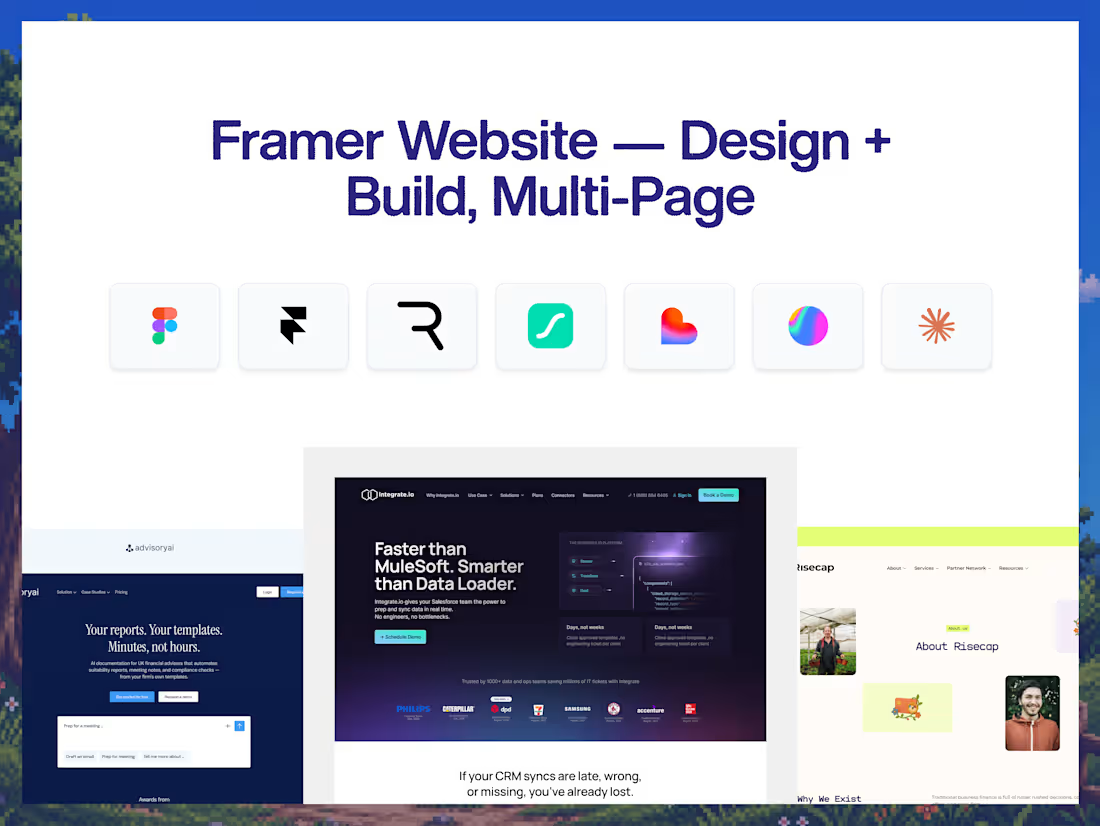
Most website projects fail in the gap between design and development.
The designer creates the Figma file. Someone else interprets it. The developer makes compromises. Mobile becomes an afterthought. Interactions get simplified. Components become inconsistent. By the time the website launches, it looks like a weaker version of what was originally designed.
This engagement removes that gap.
I handle the strategy, UX, visual design, and Framer development as one continuous process. The same design system that informs the Figma file informs the actual Framer build. No unnecessary handoffs. No translation loss.
A complete Framer website, designed and built to work together from day one.
Why this engagement model exists
I work across both design and development, which means I don't design something and then throw it over the wall for someone else to figure out.
I think about how the website will actually be built while I'm designing it.
That means components are created with reusability in mind. Responsive behavior is considered before development. Animations are designed around the actual experience. And the final Framer website stays faithful to the original design instead of becoming a compromised implementation.
The result is a website that isn't just visually polished.
It's intentional from strategy to screen.
Who this is for
Startups, SaaS companies, agencies, personal brands, and growing businesses that need a professional website that communicates what they do clearly and looks credible from the first interaction.
Founders launching a new product. Businesses replacing an outdated website. Teams preparing for a launch or repositioning. Agencies that need a reliable Framer designer and developer to bring their designs to life.
Teams who want to work with one person across the entire website process instead of coordinating separate designers and developers.
Not for: large e-commerce stores, complex web applications, or websites requiring heavy backend functionality. Those projects are better suited to a different development stack.
What you walk away with
A strategic discovery: business goals, target audience, positioning, conversion goals, sitemap, content structure, and user journey.
A complete high-fidelity website design in Figma: homepage, core pages, supporting pages, and responsive direction. Every page is designed around a specific purpose rather than simply filling a sitemap.
A reusable design system: typography, colors, buttons, cards, navigation, sections, spacing, components, and interaction language.
A production-ready Framer build: responsive across desktop, tablet, and mobile, with reusable components and clean structure.
CMS setup for the dynamic content your website needs: blog, case studies, projects, testimonials, team members, careers, or resources.
Interactions and animations: subtle motion that supports the brand and improves the experience without slowing the website down.
Performance optimization: compressed assets, optimized images, font tuning, efficient components, and performance-conscious animations.
SEO foundation: page titles, meta descriptions, semantic heading structure, Open Graph setup, sitemap, robots.txt, and clean page structure.
Integrations: analytics, forms, CRM connections, scheduling tools, chat, newsletters, and other essential third-party tools.
Full ownership: Framer project access, editable components, CMS access, and guidance so your team can manage the website after launch.
Post-launch support to fix issues, make final adjustments, and ensure everything is working as expected.
How it ships
Week 1: Strategy and architecture — Discovery, goals, sitemap, content structure, competitor/reference review, and wireframe direction.
Weeks 2-3: UX and visual design — Wireframes, high-fidelity Figma designs, responsive layouts, components, typography, color, and interaction direction.
Weeks 4: Framer development — Production build, responsive implementation, components, CMS, animations, integrations, and content implementation.
Week 5: Testing and optimization — Responsive testing, browser checks, SEO setup, performance improvements, and final refinements.
Week 6: Launch and handoff — Domain connection, final QA, launch, Framer handoff, editing guidance, and post-launch support.
The Framer advantage
Framer is ideal for marketing websites where speed, visual quality, animation, and ease of editing matter.
It's fast to build in, easy for teams to update, and gives me enough flexibility to create custom experiences without introducing unnecessary development complexity.
If your project needs a heavy CMS, complex commerce, or application-level functionality, I'll recommend a different platform rather than forcing Framer into the wrong job.
The goal isn't to sell you Framer.
The goal is to build the right website on the right platform.
FAQs
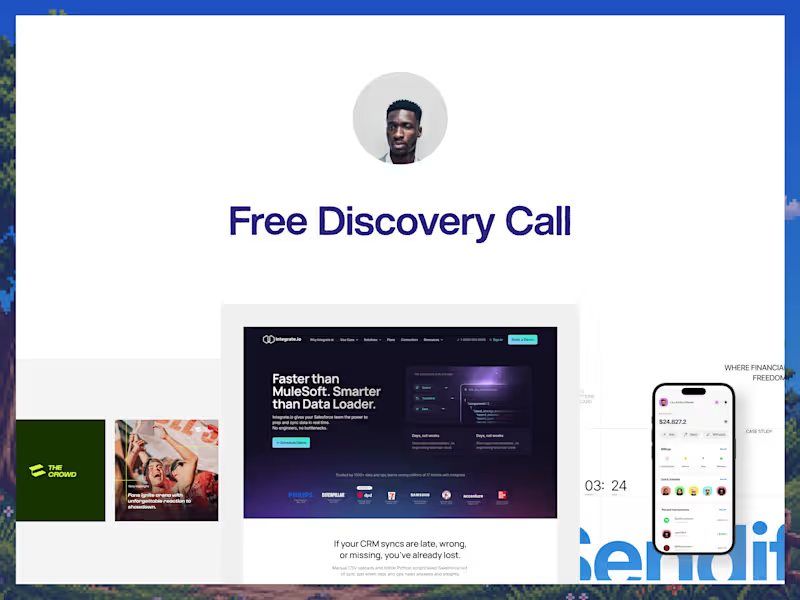
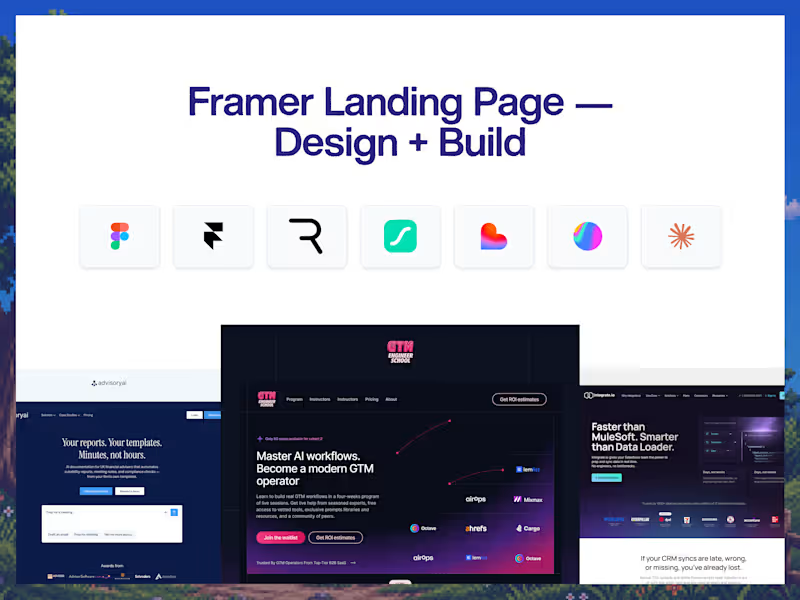
Example work
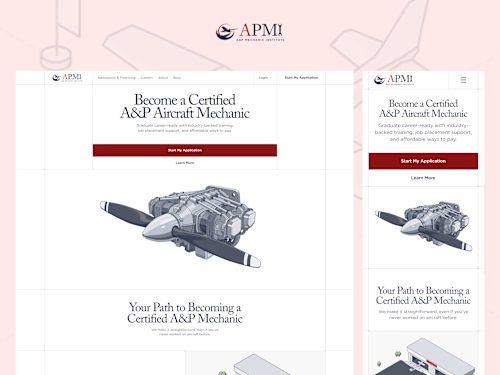
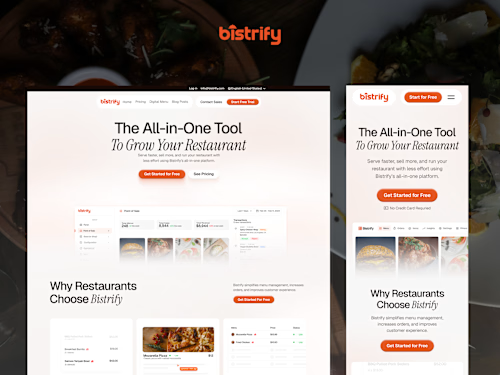
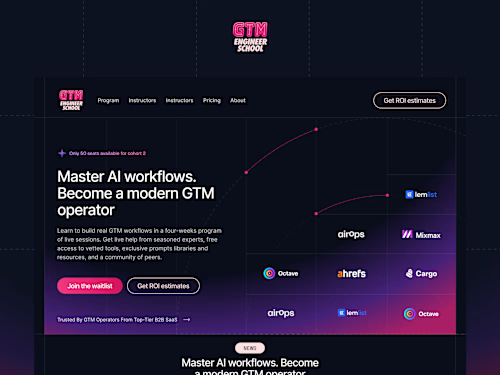
Eaxi's other services
Starting at$2,999
Duration6 weeks
Tags
Figma

Framer

Slack

Framer Designer
Framer Developer
Web Designer
Web Developer
Service provided by
Eaxi Agu proNigeria
- $25k+
- Earned
- 9
- Paid projects
- 5.00
- Rating
- 32
- Followers
Framer Website — Design + Build, Multi-PageEaxi Agu
Starting at$2,999
Duration6 weeks
Tags
Figma
Framer
Slack
Framer Designer
Framer Developer
Web Designer
Web Developer
Most website projects fail in the gap between design and development.
The designer creates the Figma file. Someone else interprets it. The developer makes compromises. Mobile becomes an afterthought. Interactions get simplified. Components become inconsistent. By the time the website launches, it looks like a weaker version of what was originally designed.
This engagement removes that gap.
I handle the strategy, UX, visual design, and Framer development as one continuous process. The same design system that informs the Figma file informs the actual Framer build. No unnecessary handoffs. No translation loss.
A complete Framer website, designed and built to work together from day one.
Why this engagement model exists
I work across both design and development, which means I don't design something and then throw it over the wall for someone else to figure out.
I think about how the website will actually be built while I'm designing it.
That means components are created with reusability in mind. Responsive behavior is considered before development. Animations are designed around the actual experience. And the final Framer website stays faithful to the original design instead of becoming a compromised implementation.
The result is a website that isn't just visually polished.
It's intentional from strategy to screen.
Who this is for
Startups, SaaS companies, agencies, personal brands, and growing businesses that need a professional website that communicates what they do clearly and looks credible from the first interaction.
Founders launching a new product. Businesses replacing an outdated website. Teams preparing for a launch or repositioning. Agencies that need a reliable Framer designer and developer to bring their designs to life.
Teams who want to work with one person across the entire website process instead of coordinating separate designers and developers.
Not for: large e-commerce stores, complex web applications, or websites requiring heavy backend functionality. Those projects are better suited to a different development stack.
What you walk away with
A strategic discovery: business goals, target audience, positioning, conversion goals, sitemap, content structure, and user journey.
A complete high-fidelity website design in Figma: homepage, core pages, supporting pages, and responsive direction. Every page is designed around a specific purpose rather than simply filling a sitemap.
A reusable design system: typography, colors, buttons, cards, navigation, sections, spacing, components, and interaction language.
A production-ready Framer build: responsive across desktop, tablet, and mobile, with reusable components and clean structure.
CMS setup for the dynamic content your website needs: blog, case studies, projects, testimonials, team members, careers, or resources.
Interactions and animations: subtle motion that supports the brand and improves the experience without slowing the website down.
Performance optimization: compressed assets, optimized images, font tuning, efficient components, and performance-conscious animations.
SEO foundation: page titles, meta descriptions, semantic heading structure, Open Graph setup, sitemap, robots.txt, and clean page structure.
Integrations: analytics, forms, CRM connections, scheduling tools, chat, newsletters, and other essential third-party tools.
Full ownership: Framer project access, editable components, CMS access, and guidance so your team can manage the website after launch.
Post-launch support to fix issues, make final adjustments, and ensure everything is working as expected.
How it ships
Week 1: Strategy and architecture — Discovery, goals, sitemap, content structure, competitor/reference review, and wireframe direction.
Weeks 2-3: UX and visual design — Wireframes, high-fidelity Figma designs, responsive layouts, components, typography, color, and interaction direction.
Weeks 4: Framer development — Production build, responsive implementation, components, CMS, animations, integrations, and content implementation.
Week 5: Testing and optimization — Responsive testing, browser checks, SEO setup, performance improvements, and final refinements.
Week 6: Launch and handoff — Domain connection, final QA, launch, Framer handoff, editing guidance, and post-launch support.
The Framer advantage
Framer is ideal for marketing websites where speed, visual quality, animation, and ease of editing matter.
It's fast to build in, easy for teams to update, and gives me enough flexibility to create custom experiences without introducing unnecessary development complexity.
If your project needs a heavy CMS, complex commerce, or application-level functionality, I'll recommend a different platform rather than forcing Framer into the wrong job.
The goal isn't to sell you Framer.
The goal is to build the right website on the right platform.
FAQs
Example work
Eaxi's other services
$2,999