
Technical Documentation Audit: Specs, SOPs and GuidesSridhar Rayasam
What you get
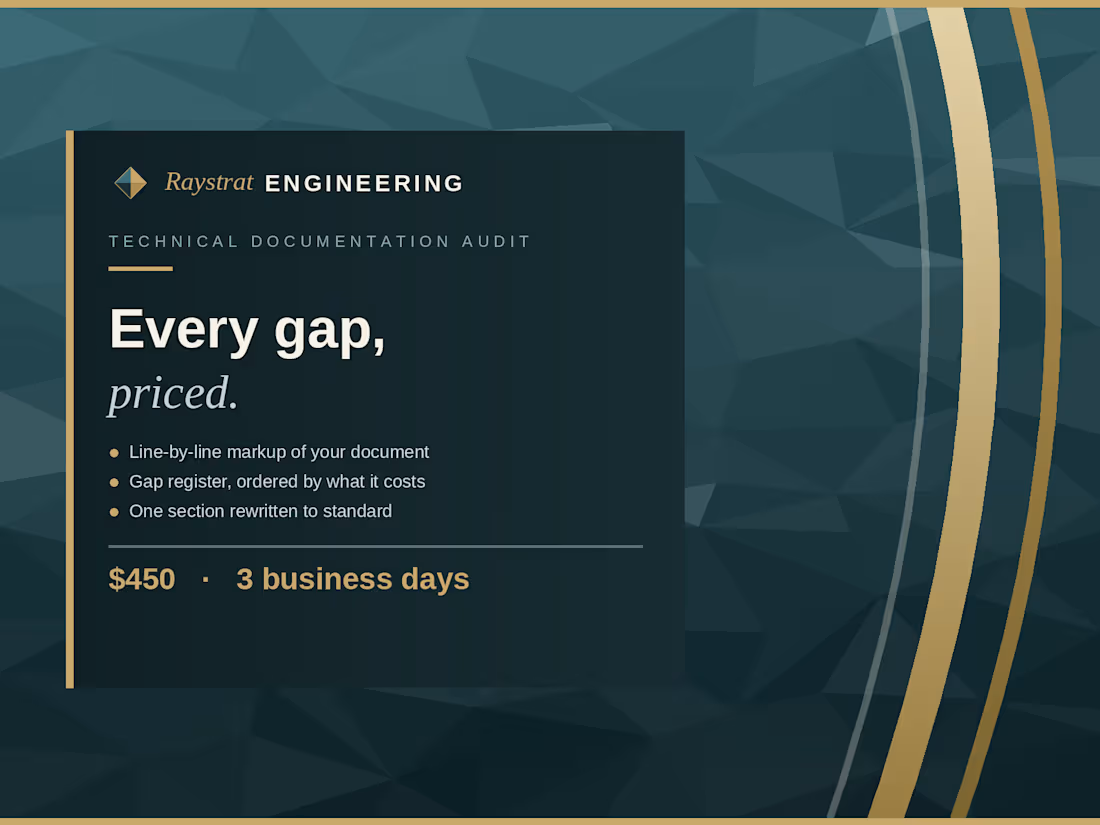
Full markup of your document. I read your spec, PRD, SOP or test plan line by line and mark every gap: undefined terms, untestable requirements, missing tolerances, assumptions stated as facts, and steps no reader could actually follow. Comments go inline, in your tool.
Gap register. Every issue found, sorted by what it costs you if it ships uncorrected. Each entry states the gap, where it is, why it matters, and the specific fix. Not "this section is unclear." Instead: "REQ-14 says 'low power' with no number. A supplier will quote against their definition, not yours."
Rewritten sample section. I rewrite one section of your choice to the standard I would hold the whole document to, so you see the target rather than read about it.
30-minute walkthrough call. We go through the register together, so your team learns the pattern instead of receiving a list they cannot apply next time.
Who this is for
Teams about to send a document to a supplier, a customer, an auditor, or a new hire, and quietly worried it is not ready. Also teams who inherited documentation from someone who left and cannot tell what is still true.
What you get out of it
The specific reason your document will cause an argument later, identified before it causes one. Most documentation disputes trace back to a single sentence that two people read differently, and that sentence is almost always visible before anyone builds anything.
Why a hardware background matters for this
In hardware, an ambiguous requirement surfaces as a physical object that is wrong, months later, after tooling. I learned to read documents for that failure long before I applied it anywhere else. The read is the same whether the document describes a battery pack or an API.
Process
You send the document and tell me who reads it next: supplier, customer, auditor, engineer, new hire. The audience sets the standard.
Days 1 and 2: I audit and mark up.
Day 3: you get the gap register and the rewritten section.
The 30-minute call happens the same week.
Requirements
One document up to about 40 pages. Longer is fine, quoted separately.
Comment or edit access in your tool, or a file I can mark up and return.
One line on who the document is for.
FAQs
Starting at$450
Duration1 week
Tags
Consultant
Design Engineer
Product Manager
Product Strategist
Program Manager
Technical Writer
Documentation Specialist
Technical Project Manager,
Service provided by
Sridhar Rayasam proBengaluru, India
Technical Documentation Audit: Specs, SOPs and GuidesSridhar Rayasam
Starting at$450
Duration1 week
Tags
Consultant
Design Engineer
Product Manager
Product Strategist
Program Manager
Technical Writer
Documentation Specialist
Technical Project Manager,
What you get
Full markup of your document. I read your spec, PRD, SOP or test plan line by line and mark every gap: undefined terms, untestable requirements, missing tolerances, assumptions stated as facts, and steps no reader could actually follow. Comments go inline, in your tool.
Gap register. Every issue found, sorted by what it costs you if it ships uncorrected. Each entry states the gap, where it is, why it matters, and the specific fix. Not "this section is unclear." Instead: "REQ-14 says 'low power' with no number. A supplier will quote against their definition, not yours."
Rewritten sample section. I rewrite one section of your choice to the standard I would hold the whole document to, so you see the target rather than read about it.
30-minute walkthrough call. We go through the register together, so your team learns the pattern instead of receiving a list they cannot apply next time.
Who this is for
Teams about to send a document to a supplier, a customer, an auditor, or a new hire, and quietly worried it is not ready. Also teams who inherited documentation from someone who left and cannot tell what is still true.
What you get out of it
The specific reason your document will cause an argument later, identified before it causes one. Most documentation disputes trace back to a single sentence that two people read differently, and that sentence is almost always visible before anyone builds anything.
Why a hardware background matters for this
In hardware, an ambiguous requirement surfaces as a physical object that is wrong, months later, after tooling. I learned to read documents for that failure long before I applied it anywhere else. The read is the same whether the document describes a battery pack or an API.
Process
You send the document and tell me who reads it next: supplier, customer, auditor, engineer, new hire. The audience sets the standard.
Days 1 and 2: I audit and mark up.
Day 3: you get the gap register and the rewritten section.
The 30-minute call happens the same week.
Requirements
One document up to about 40 pages. Longer is fine, quoted separately.
Comment or edit access in your tool, or a file I can mark up and return.
One line on who the document is for.
FAQs
$450