
QA and Test Documentation PackageSridhar Rayasam
What you get
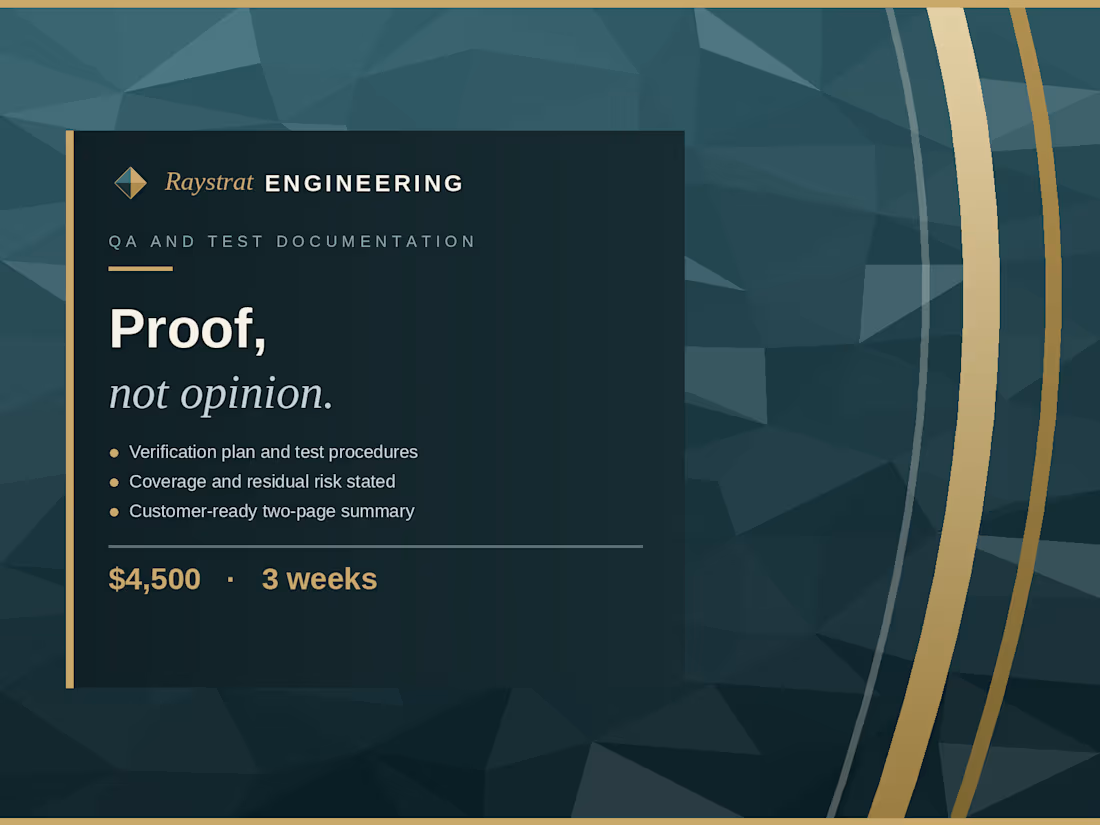
Verification plan. Every requirement mapped to a verification method: test, analysis, inspection or demonstration. Pass and fail criteria stated numerically before anything runs, so results cannot be argued into passing afterwards.
Test procedures. Step-by-step procedures someone can run without calling you: setup, equipment, sample size, and exactly what to record. Written to be repeatable by a person who did not design the product.
Verification and QA report. What was verified, how, against what criteria, with what result. Failures documented with the same rigour as passes, including root cause where determinable and the corrective action recommended.
Coverage and risk statement. An explicit statement of what was not verified and what risk that leaves open. Most reports omit this section. Most customers eventually ask for it.
Customer-ready summary. A two-page version your client, investor or auditor can read without a technical background.
Who this is for
Teams that have built something and now have to prove it works, to a customer, an auditor, an investor, or their own board. Also teams whose testing happened but was never written up, which is more common than anyone admits.
The honest framing
I write and structure the verification work. Whether I run physical tests depends on your setup and location. Usually your team runs them against my procedures and I own the analysis and the report. We agree that split before you pay anything.
Why the pass and fail criteria come first
Because a criterion written after the result is not a criterion. Stating the numbers before the test is the only thing that stops a marginal result from becoming a pass by consensus. This is standard practice in hardware verification and startlingly rare everywhere else.
Process
Week 1: requirements review, verification plan, method selection.
Week 2: test procedures written, dry run with your team, execution begins.
Week 3: results analysis, report, coverage statement, handover.
Requirements
A requirements document or specification. If you do not have one, start with my PRD writing service.
Access to test data, results, or your test engineer.
Agreement on who runs the physical tests, settled before kickoff.
FAQs
Starting at$4,500
Duration3 weeks
Tags
Consultant
Design Engineer
Product Analyst
Product Manager
Program Manager
Technical Writer
Documentation Specialist
Technical Project Manager
Service provided by
Sridhar Rayasam proBengaluru, India
QA and Test Documentation PackageSridhar Rayasam
Starting at$4,500
Duration3 weeks
Tags
Consultant
Design Engineer
Product Analyst
Product Manager
Program Manager
Technical Writer
Documentation Specialist
Technical Project Manager
What you get
Verification plan. Every requirement mapped to a verification method: test, analysis, inspection or demonstration. Pass and fail criteria stated numerically before anything runs, so results cannot be argued into passing afterwards.
Test procedures. Step-by-step procedures someone can run without calling you: setup, equipment, sample size, and exactly what to record. Written to be repeatable by a person who did not design the product.
Verification and QA report. What was verified, how, against what criteria, with what result. Failures documented with the same rigour as passes, including root cause where determinable and the corrective action recommended.
Coverage and risk statement. An explicit statement of what was not verified and what risk that leaves open. Most reports omit this section. Most customers eventually ask for it.
Customer-ready summary. A two-page version your client, investor or auditor can read without a technical background.
Who this is for
Teams that have built something and now have to prove it works, to a customer, an auditor, an investor, or their own board. Also teams whose testing happened but was never written up, which is more common than anyone admits.
The honest framing
I write and structure the verification work. Whether I run physical tests depends on your setup and location. Usually your team runs them against my procedures and I own the analysis and the report. We agree that split before you pay anything.
Why the pass and fail criteria come first
Because a criterion written after the result is not a criterion. Stating the numbers before the test is the only thing that stops a marginal result from becoming a pass by consensus. This is standard practice in hardware verification and startlingly rare everywhere else.
Process
Week 1: requirements review, verification plan, method selection.
Week 2: test procedures written, dry run with your team, execution begins.
Week 3: results analysis, report, coverage statement, handover.
Requirements
A requirements document or specification. If you do not have one, start with my PRD writing service.
Access to test data, results, or your test engineer.
Agreement on who runs the physical tests, settled before kickoff.
FAQs
$4,500