
Functional Prototype: Interactive User Flow BuildAmy Frank
Prototype Overview
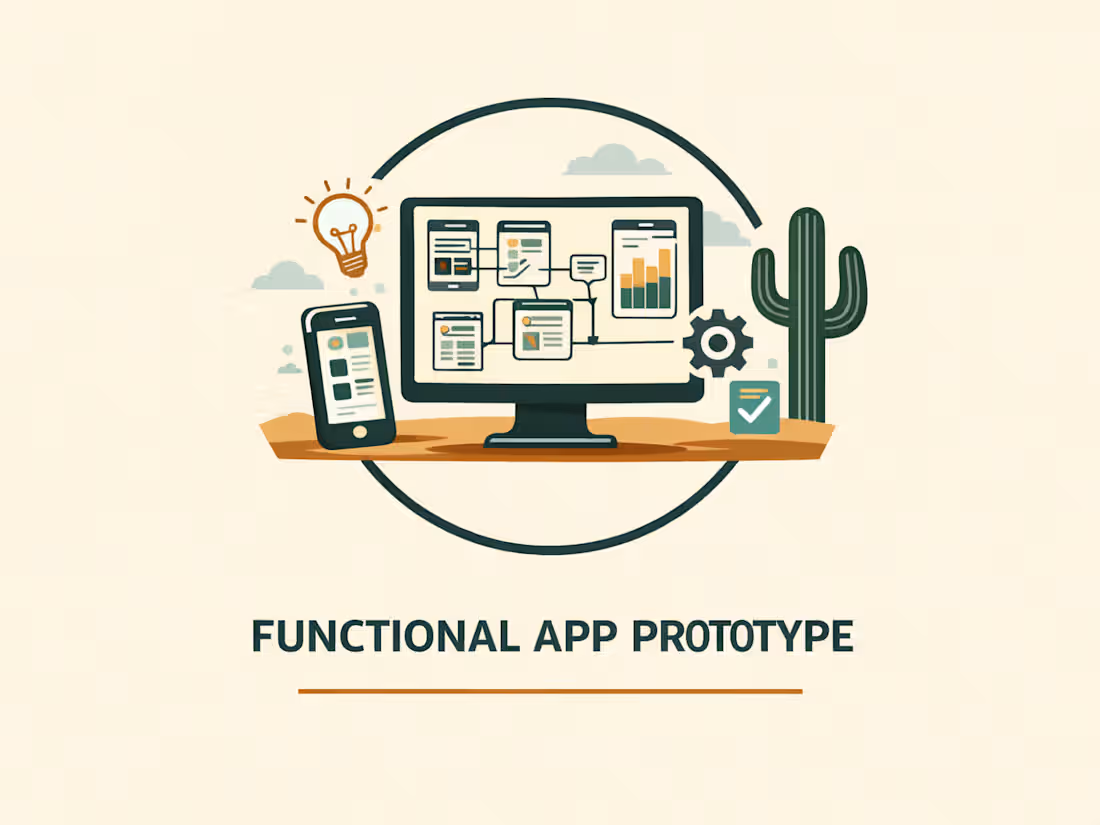
A functional, clickable app prototype designed to demonstrate how a product, internal tool, or workflow would work in practice before committing to full development.
This offering goes beyond initial concept validation by creating a more complete, demo-ready experience with realistic interaction logic, allowing you to clearly see how the core product functions.
Before building begins, the concept, primary user flow, and key screens are defined and locked so the prototype stays focused, structured, and aligned with the intended outcome.
You receive a working prototype you can demo, share with stakeholders, and use for feedback, pitching, or decision-making.
This approach helps validate ideas, communicate functionality, and reduce risk before investing in a full product build.
What’s Included in the Prototype Build
Defined Scope and Core Experience
The prototype is scoped around a single, focused experience before development begins, including the primary user flow and the key screens required to demonstrate the concept.
The prototype typically includes up to five key screens that clearly represent the core experience. Scope is confirmed upfront to ensure the prototype remains efficient, structured, and aligned with your goals.
The focus is on demonstrating a complete, usable experience rather than covering every possible feature or edge case.
Functional Prototype Delivered
A working, browser-based prototype is delivered for review and validation.
You’ll receive:
• A shareable prototype link for testing and demonstration
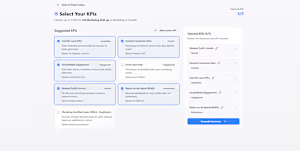
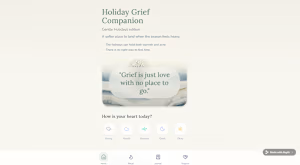
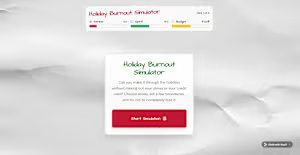
• Screenshots of key screens
• A short demo video walking through the experience
The prototype can be viewed on desktop and mobile browsers. It is designed for demonstration and validation, not as a fully optimized or production-ready application.
The build may include simple to moderate interaction logic to support the core experience, but does not include complex backend systems, authentication, multi-user roles, integrations, or production infrastructure.
Refinements and Build Summary
One round of refinements to the defined core experience is included.
You’ll also receive a product validation summary outlining:
• the prototype flow
• key assumptions
• limitations
• recommended next steps
Note: This service builds on early-stage concept work. If you need a smaller, faster validation step, a Prototype Sprint may be a better starting point.
FAQs
You receive a functional, browser-based prototype that demonstrates a core product experience or workflow. It can be used for demos, stakeholder feedback, internal alignment, or early product validation before committing to full development.
No. This is a prototype designed to demonstrate how the product should work, not a production-ready application. It does not include full backend systems, authentication, integrations, or deployment infrastructure.
This includes clarifying the core concept, primary user flow, and key screens before development begins. The goal is to define the smallest version of the idea that clearly demonstrates the product, while keeping the build structured and focused.
Most prototypes are completed within 5–10 business days after scope is confirmed and all required inputs are provided, depending on complexity and feedback timing.
Yes. One round of refinements to the defined core experience is included. Additional changes or expanded scope can be addressed separately.
No. The prototype is shared via a browser-based link for review. If you later want to continue development, it can be transferred or recreated in your own account on the respective platform.
You receive access to the prototype, along with screenshots, a short demo video, and a summary outlining the structure, assumptions, limitations, and suggested next steps.
In some cases, yes. This prototype is designed to serve as a strong foundation for further development. Full builds, backend systems, and production deployment would be scoped separately.
Yes. You own the concept and deliverables created for you. Platform transfer or duplication can be arranged if you want to continue development independently.
Ongoing hosting, maintenance, or updates are not included unless explicitly agreed.
The Prototype Sprint focuses on quickly validating an idea through a smaller, more lightweight prototype.
This service builds on that by creating a more complete, demo-ready experience with expanded screens and interaction logic.
To keep the build focused and efficient, the scope is defined before development begins. Additional features, flows, or expanded functionality can be scoped as a follow-up phase.
This service does not include full product development, backend systems, integrations, or ongoing feature expansion beyond the defined prototype scope.
Example work

Starting at$2,500
Duration2 weeks
Tags
Figma Make


Glide

Lovable

Replit

Business Analyst
Low-Code/No-Code Developer
Product Analyst
Service provided by
Amy Frank Phoenix, USA
- 27
- Followers
Functional Prototype: Interactive User Flow BuildAmy Frank
Starting at$2,500
Duration2 weeks
Tags
Figma Make
Glide
Lovable
Replit
Business Analyst
Low-Code/No-Code Developer
Product Analyst
Prototype Overview
A functional, clickable app prototype designed to demonstrate how a product, internal tool, or workflow would work in practice before committing to full development.
This offering goes beyond initial concept validation by creating a more complete, demo-ready experience with realistic interaction logic, allowing you to clearly see how the core product functions.
Before building begins, the concept, primary user flow, and key screens are defined and locked so the prototype stays focused, structured, and aligned with the intended outcome.
You receive a working prototype you can demo, share with stakeholders, and use for feedback, pitching, or decision-making.
This approach helps validate ideas, communicate functionality, and reduce risk before investing in a full product build.
What’s Included in the Prototype Build
Defined Scope and Core Experience
The prototype is scoped around a single, focused experience before development begins, including the primary user flow and the key screens required to demonstrate the concept.
The prototype typically includes up to five key screens that clearly represent the core experience. Scope is confirmed upfront to ensure the prototype remains efficient, structured, and aligned with your goals.
The focus is on demonstrating a complete, usable experience rather than covering every possible feature or edge case.
Functional Prototype Delivered
A working, browser-based prototype is delivered for review and validation.
You’ll receive:
• A shareable prototype link for testing and demonstration
• Screenshots of key screens
• A short demo video walking through the experience
The prototype can be viewed on desktop and mobile browsers. It is designed for demonstration and validation, not as a fully optimized or production-ready application.
The build may include simple to moderate interaction logic to support the core experience, but does not include complex backend systems, authentication, multi-user roles, integrations, or production infrastructure.
Refinements and Build Summary
One round of refinements to the defined core experience is included.
You’ll also receive a product validation summary outlining:
• the prototype flow
• key assumptions
• limitations
• recommended next steps
Note: This service builds on early-stage concept work. If you need a smaller, faster validation step, a Prototype Sprint may be a better starting point.
FAQs
You receive a functional, browser-based prototype that demonstrates a core product experience or workflow. It can be used for demos, stakeholder feedback, internal alignment, or early product validation before committing to full development.
No. This is a prototype designed to demonstrate how the product should work, not a production-ready application. It does not include full backend systems, authentication, integrations, or deployment infrastructure.
This includes clarifying the core concept, primary user flow, and key screens before development begins. The goal is to define the smallest version of the idea that clearly demonstrates the product, while keeping the build structured and focused.
Most prototypes are completed within 5–10 business days after scope is confirmed and all required inputs are provided, depending on complexity and feedback timing.
Yes. One round of refinements to the defined core experience is included. Additional changes or expanded scope can be addressed separately.
No. The prototype is shared via a browser-based link for review. If you later want to continue development, it can be transferred or recreated in your own account on the respective platform.
You receive access to the prototype, along with screenshots, a short demo video, and a summary outlining the structure, assumptions, limitations, and suggested next steps.
In some cases, yes. This prototype is designed to serve as a strong foundation for further development. Full builds, backend systems, and production deployment would be scoped separately.
Yes. You own the concept and deliverables created for you. Platform transfer or duplication can be arranged if you want to continue development independently.
Ongoing hosting, maintenance, or updates are not included unless explicitly agreed.
The Prototype Sprint focuses on quickly validating an idea through a smaller, more lightweight prototype.
This service builds on that by creating a more complete, demo-ready experience with expanded screens and interaction logic.
To keep the build focused and efficient, the scope is defined before development begins. Additional features, flows, or expanded functionality can be scoped as a follow-up phase.
This service does not include full product development, backend systems, integrations, or ongoing feature expansion beyond the defined prototype scope.
Example work
$2,500