
AI Product DesignPamela Dodera
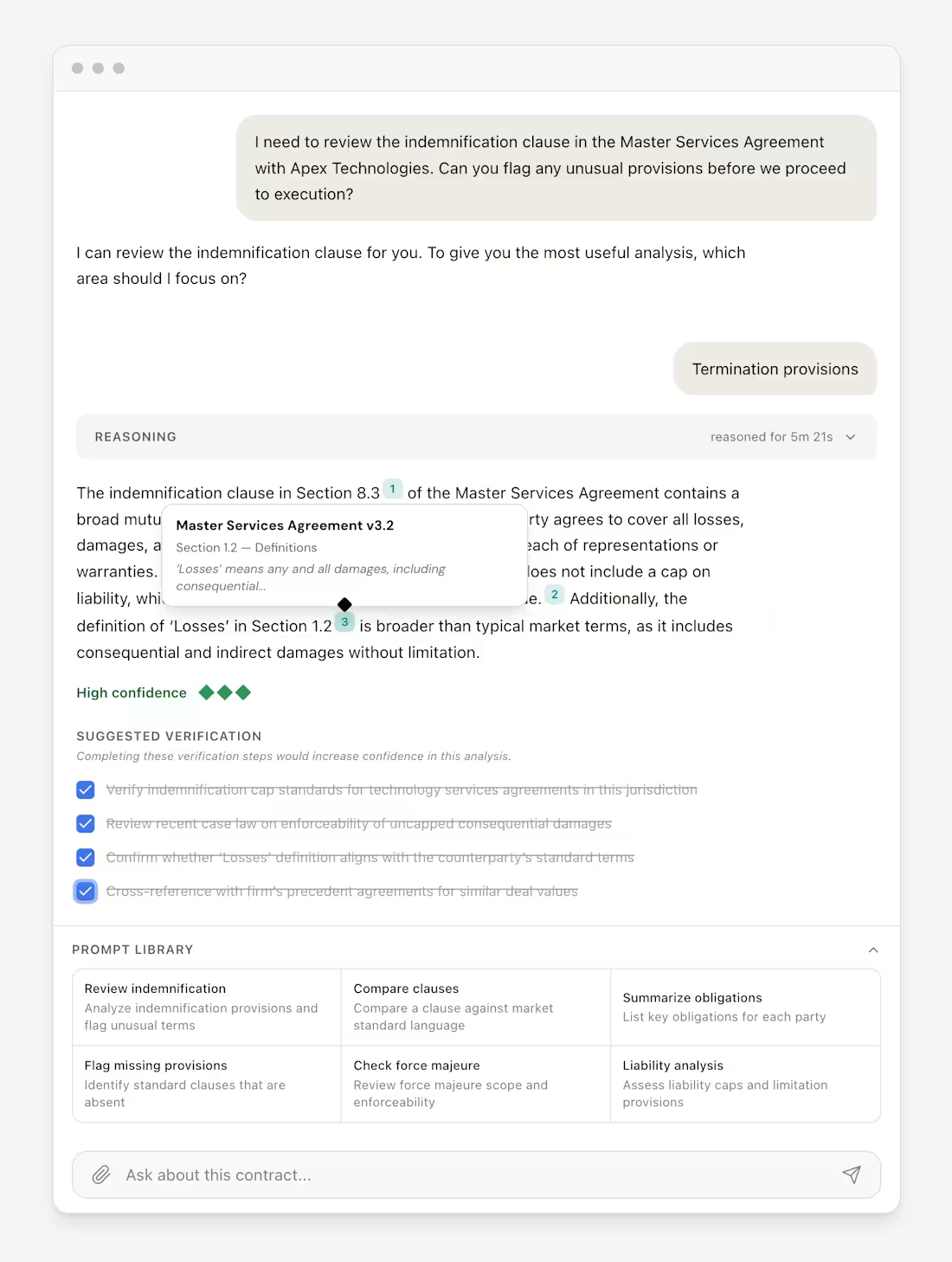
I design interfaces for AI-powered products that users actually trust and want to use.
Most AI features fail not because the model is bad, but because the interface doesn't help users understand what the AI did, why it did it, or how to correct it. I specialize in solving exactly that.
Over the past two years, I've designed AI trust-building patterns for a legal AI company, including trust-building frameworks (letting users gradually rely on AI as confidence builds), human-in-the-loop review flows, AI chat interfaces, confidence indicators, and transparency mechanisms that make complex AI outputs feel controllable.
I don't just hand off static screens. I work across the full product design process from research through to functional prototypes. With working knowledge of React, TypeScript, and Tailwind CSS, I build interactive, coded prototypes that let you test real AI interactions with users before committing to full development. You get something you can click through, react to, and validate with, not just a Figma file.
Industries I've designed for: Legal tech, health tech, ed tech, B2B SaaS.
Deliverables
Deliverable 1: AI Interaction Design Design of AI-facing features including trust-building patterns, human-in-the-loop flows, error handling, and confidence/transparency UI. Delivered as high-fidelity Figma designs with all interaction states mapped.
Deliverable 2: Functional Prototype A coded, interactive prototype (React + Tailwind CSS / v0 version) that simulates the core AI interactions in your product. This isn't a static clickthrough. It's something your team and users can interact with to validate the experience before you invest in full development. Scope depends on the project, but typically covers 1-3 key flows.
Deliverable 3: AI Trust Patterns Documentation A documented set of the trust-building patterns used in your product: what each pattern does, when it applies, and how it should behave across states and edge cases. This gives your team a reusable reference they can apply as the product evolves, even after our engagement ends.
My Process
Discovery. I start by understanding your AI's capabilities and limitations, your users' mental models, and where trust breaks down. This usually involves reviewing the product, talking to your team, and (if possible) observing users.
Interaction mapping. I map out where AI appears in the user journey and design the trust, transparency, and control patterns for each touchpoint. This starts in Figma as high-fidelity designs.
Build the prototype. I take the highest-priority flows and build them as a functional coded prototype (React + Tailwind). This gives you something tangible to test and react to, and often surfaces edge cases that static designs miss.
Document and refine. I document the trust-building patterns used in your product as a reusable reference for your team. I also iterate on the prototype based on your team's feedback and deliver clear specs for engineering to build from. If user validation is needed, that can be scoped separately.
Requirements (what I need from you to start):
Access to your product (or detailed demo/walkthrough)
A brief on what your AI product does and its known limitations
Access to at least one Engineer or PM for technical questions
Pricing
Typical engagements range $6,000–$12,000 depending on scope and number of surfaces covered.
FAQs
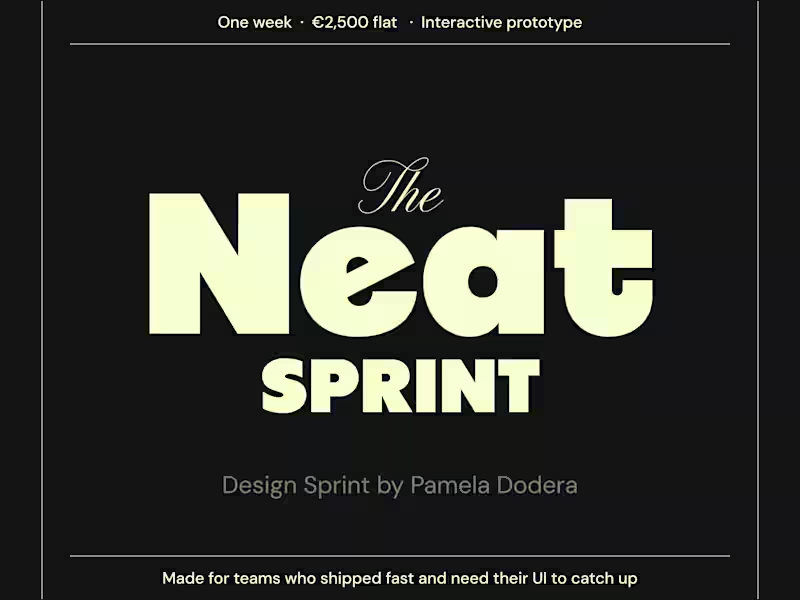
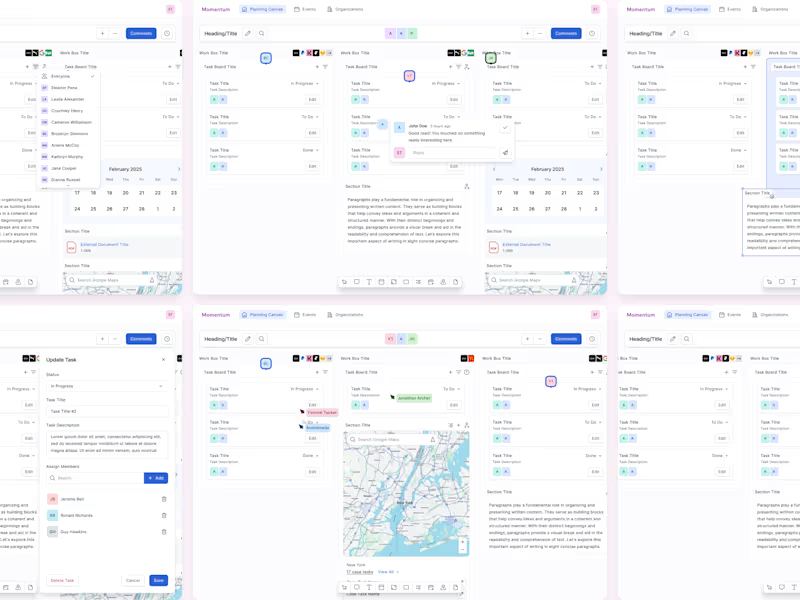
Pamela's other services
Starting at$6,000
Duration4 weeks
Tags
AI Product Design
Figma

React

B2B SaaS
Interaction Designer
Product Designer
Prototyper
UI Designer
UX Designer
Service provided by
Pamela Dodera proPrague, Czechia
- 2
- Followers
AI Product DesignPamela Dodera
Starting at$6,000
Duration4 weeks
Tags
AI Product Design
Figma
React
B2B SaaS
Interaction Designer
Product Designer
Prototyper
UI Designer
UX Designer
I design interfaces for AI-powered products that users actually trust and want to use.
Most AI features fail not because the model is bad, but because the interface doesn't help users understand what the AI did, why it did it, or how to correct it. I specialize in solving exactly that.
Over the past two years, I've designed AI trust-building patterns for a legal AI company, including trust-building frameworks (letting users gradually rely on AI as confidence builds), human-in-the-loop review flows, AI chat interfaces, confidence indicators, and transparency mechanisms that make complex AI outputs feel controllable.
I don't just hand off static screens. I work across the full product design process from research through to functional prototypes. With working knowledge of React, TypeScript, and Tailwind CSS, I build interactive, coded prototypes that let you test real AI interactions with users before committing to full development. You get something you can click through, react to, and validate with, not just a Figma file.
Industries I've designed for: Legal tech, health tech, ed tech, B2B SaaS.
Deliverables
Deliverable 1: AI Interaction Design Design of AI-facing features including trust-building patterns, human-in-the-loop flows, error handling, and confidence/transparency UI. Delivered as high-fidelity Figma designs with all interaction states mapped.
Deliverable 2: Functional Prototype A coded, interactive prototype (React + Tailwind CSS / v0 version) that simulates the core AI interactions in your product. This isn't a static clickthrough. It's something your team and users can interact with to validate the experience before you invest in full development. Scope depends on the project, but typically covers 1-3 key flows.
Deliverable 3: AI Trust Patterns Documentation A documented set of the trust-building patterns used in your product: what each pattern does, when it applies, and how it should behave across states and edge cases. This gives your team a reusable reference they can apply as the product evolves, even after our engagement ends.
My Process
Discovery. I start by understanding your AI's capabilities and limitations, your users' mental models, and where trust breaks down. This usually involves reviewing the product, talking to your team, and (if possible) observing users.
Interaction mapping. I map out where AI appears in the user journey and design the trust, transparency, and control patterns for each touchpoint. This starts in Figma as high-fidelity designs.
Build the prototype. I take the highest-priority flows and build them as a functional coded prototype (React + Tailwind). This gives you something tangible to test and react to, and often surfaces edge cases that static designs miss.
Document and refine. I document the trust-building patterns used in your product as a reusable reference for your team. I also iterate on the prototype based on your team's feedback and deliver clear specs for engineering to build from. If user validation is needed, that can be scoped separately.
Requirements (what I need from you to start):
Access to your product (or detailed demo/walkthrough)
A brief on what your AI product does and its known limitations
Access to at least one Engineer or PM for technical questions
Pricing
Typical engagements range $6,000–$12,000 depending on scope and number of surfaces covered.
FAQs
Pamela's other services
$6,000