
Framer Website — Design + Build, Multi-PageDaniel G Bright
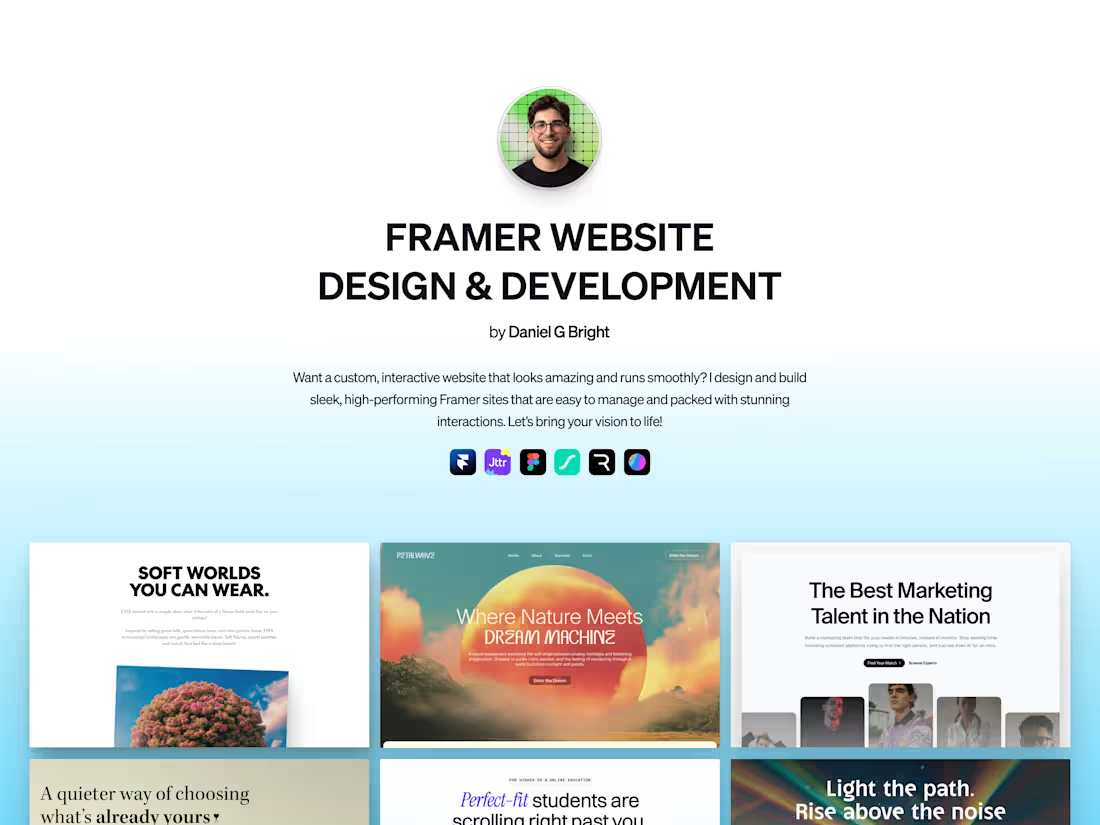
Give buyers a clear explanation of your product, and give your team a website they can update.
I lead the strategy and creative direction, with specialist support for production and development. I remain your lead from the brief through launch.
Eight weeks. $11,000. Six pages plus CMS, designed in Figma and built in Framer.
Who this is for
B2B software and AI teams replacing a starter site, preparing a launch or bringing the website up to date with the product. We review the existing identity and approved messaging before defining the website work.
If you have finished designs, the build-only engagement may fit your brief. A landing page or a larger content-heavy website is scoped separately.
What you receive
Strategic intake covering audience, positioning, conversion goals, competitive context and an information architecture workshop.
Six high-fidelity page designs: home, product or solution, pricing, about and two supporting pages.
Reusable components, typography, color and motion rules.
A responsive Framer build for desktop, tablet and mobile.
CMS setup for the agreed dynamic content, such as a blog, case studies, customer logos or careers.
Performance work covering loading, compression and fonts, with a sub-two-second desktop LCP target.
SEO foundations: metadata, social previews, semantic structure, sitemap and robots.txt.
Agreed integrations for analytics, forms, CRM webhooks, chat or scheduling.
Ownership transfer, editing access and training for routine content changes.
Three weeks of post-launch support.
We define page scope, content responsibilities and integrations before work begins. At handover, we check that your team has access and can make the routine edits covered by training. New features or structural changes may require further work.
How it runs
Weeks 1–2: intake, sitemap and wireframes.
Weeks 3–5: page design and components.
Weeks 6–7: Framer build, CMS and integrations.
Week 8: checks, launch and handover.
Credit and ongoing work
The $2,000 audit fee is credited once toward this engagement when it starts within 30 days of the audit readout. A separate paid audit is optional.
Any other credit for prior identity, website or retainer work must be agreed in the written proposal. Existing agreed terms are preserved.
Send your website, required pages and launch date, if there is one.
FAQs
Example work

Daniel G's other services
Starting at$11,000
Duration8 weeks
Tags
Brand Identity
Figma

Framer

B2B SaaS
Framer Designer
Framer Developer
Visual Identity
Web Designer
Web Developer
Service provided by
Daniel G Bright maxBarcelona, Spain
- $1M+
- Earned
- 88
- Paid projects
- 4.93
- Rating
- 6655
- Followers
Framer Website — Design + Build, Multi-PageDaniel G Bright
Starting at$11,000
Duration8 weeks
Tags
Brand Identity
Figma
Framer
B2B SaaS
Framer Designer
Framer Developer
Visual Identity
Web Designer
Web Developer
Give buyers a clear explanation of your product, and give your team a website they can update.
I lead the strategy and creative direction, with specialist support for production and development. I remain your lead from the brief through launch.
Eight weeks. $11,000. Six pages plus CMS, designed in Figma and built in Framer.
Who this is for
B2B software and AI teams replacing a starter site, preparing a launch or bringing the website up to date with the product. We review the existing identity and approved messaging before defining the website work.
If you have finished designs, the build-only engagement may fit your brief. A landing page or a larger content-heavy website is scoped separately.
What you receive
Strategic intake covering audience, positioning, conversion goals, competitive context and an information architecture workshop.
Six high-fidelity page designs: home, product or solution, pricing, about and two supporting pages.
Reusable components, typography, color and motion rules.
A responsive Framer build for desktop, tablet and mobile.
CMS setup for the agreed dynamic content, such as a blog, case studies, customer logos or careers.
Performance work covering loading, compression and fonts, with a sub-two-second desktop LCP target.
SEO foundations: metadata, social previews, semantic structure, sitemap and robots.txt.
Agreed integrations for analytics, forms, CRM webhooks, chat or scheduling.
Ownership transfer, editing access and training for routine content changes.
Three weeks of post-launch support.
We define page scope, content responsibilities and integrations before work begins. At handover, we check that your team has access and can make the routine edits covered by training. New features or structural changes may require further work.
How it runs
Weeks 1–2: intake, sitemap and wireframes.
Weeks 3–5: page design and components.
Weeks 6–7: Framer build, CMS and integrations.
Week 8: checks, launch and handover.
Credit and ongoing work
The $2,000 audit fee is credited once toward this engagement when it starts within 30 days of the audit readout. A separate paid audit is optional.
Any other credit for prior identity, website or retainer work must be agreed in the written proposal. Existing agreed terms are preserved.
Send your website, required pages and launch date, if there is one.
FAQs
Example work
Daniel G's other services
$11,000